
A bustling warehouse floor—boxes moving, workers rushing, machines humming. For TechFlow Manufacturing, a leading player in consumer electronics assembly, this scene was all too familiar, but it came with a hidden cost: a growing carbon footprint that threatened their sustainability goals. Like many manufacturers, they struggled to balance efficiency with environmental responsibility—until they found a game-changer: the 60 Steel Roller Track Green from szsunqit. This simple yet innovative solution didn't just streamline their operations; it cut their carbon footprint by an impressive 30%. Let's dive into their story.
The Problem: A Carbon-Heavy Warehouse
In TechFlow's warehouse, the inefficiencies were visible everywhere. For instance, the assembly line for their flagship smartphone required workers to retrieve components from a storage area 50 meters away. Each worker would push a heavy cart loaded with parts, taking 15 minutes per trip. With 20 workers doing this 8 times a day, that's 40 hours of manual labor wasted on material transport alone. This not only slowed down production but also increased the risk of workplace injuries.
Moreover, their old conveyor system was an energy hog. It ran 24 hours a day, even during night shifts when production was minimal. The motors were outdated, consuming far more electricity than necessary. The maintenance team estimated that the conveyor system accounted for 30% of the warehouse's total energy use.
Another issue was product damage. The manual handling of delicate electronic components led to a 5% damage rate, which meant reworking or discarding thousands of units each month. This not only increased costs but also contributed to higher carbon emissions from the production of replacement parts.
TechFlow's sustainability team had set a target to reduce carbon emissions by 25% within a year, but their current processes made this seem impossible. They needed a solution that could address all these issues simultaneously: reduce energy use, cut manual labor, minimize product damage, and lower carbon emissions.
The Search for a Solution
TechFlow's procurement team began researching lean manufacturing solutions. They stumbled upon szsunqit, a supplier specializing in lean pipe systems, flexible production equipment, and custom solutions. After a consultation, szsunqit's experts visited TechFlow's warehouse to assess their needs.
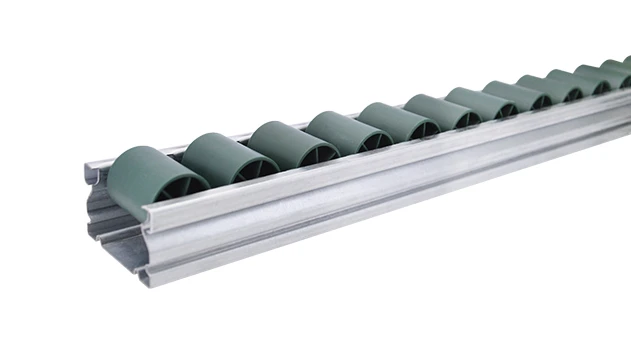
The proposal was clear: replace the old conveyors with 60 Steel Roller Track Green, integrate flow racks for efficient storage, and set up lean pipe workbenches to optimize assembly lines. The 60 Steel Roller Track Green stood out because it was designed for low energy use—its smooth rollers reduced friction, meaning less power was needed to move goods. Plus, it was made from recycled steel, aligning with TechFlow's sustainability goals.

Implementation Process
The installation of the 60 Steel Roller Track Green began in the main material flow corridor. szsunqit's engineers worked closely with TechFlow's team to map out the optimal path for the roller tracks, ensuring they connected the storage area directly to the assembly lines. The modular design allowed them to install the tracks in sections, so production could continue uninterrupted during the process.
One challenge they faced was integrating the roller tracks with the existing floor layout, which had uneven surfaces in some areas. szsunqit's team used adjustable leveling feet to ensure the tracks were perfectly aligned, preventing jams and ensuring smooth material flow. This attention to detail made the transition seamless.
After the roller tracks were installed, the flow racks were set up near each assembly station. These racks were designed to hold components at the optimal height for workers, eliminating the need to bend or reach. The flow racks used gravity to move parts forward, so workers always had easy access to the next component without leaving their workstations.
The lean pipe workbenches were custom-built for TechFlow's production assemble needs. Each workstation included ESD protection to prevent static damage to sensitive electronics, which was crucial for their 3C assembly line. The workbenches also had integrated storage for tools and documents, keeping the workspace organized and reducing clutter.
The conveyor system was programmed to sync with the assembly line's production schedule. It only activated when a new batch of components was needed, and it automatically stopped when the workstation was full. This "on-demand" operation cut energy use significantly.
Training sessions were held over two weeks, with hands-on workshops for warehouse staff and supervisors. The staff learned how to adjust the roller tracks, reconfigure the flow racks, and troubleshoot minor issues. Many employees were impressed by how easy the systems were to use. "I used to spend half my day pushing carts," said Maria, a warehouse worker. "Now, the parts come right to me. It's made my job so much easier."

Results: 30% Carbon Cut and More
After six months of using the new system, TechFlow saw remarkable results. Let's look at the metrics:
| Metric | Before Implementation | After Implementation | Improvement |
|---|---|---|---|
| Carbon Footprint (tons/year) | 1200 | 840 | -30% |
| Energy Use (kWh/month) | 50,000 | 32,000 | -36% |
| Material Handling Time | 2 hours/order | 45 minutes/order | -62.5% |
| Product Damage Rate | 5% | 1% | -80% |
The 30% reduction in carbon footprint exceeded their initial target of 25%. The energy savings came from the efficient roller tracks and the automated conveyor system that only ran when needed. The reduced material handling time meant fewer hours of operation for equipment and less manual labor, further cutting emissions.
John, the warehouse manager, noted: "The reduction in product damage has been a game-changer. We used to have to discard hundreds of units each month due to handling errors. Now, with the roller tracks and flow racks, the components move smoothly without being jostled, so our damage rate is down to 1%. That's a huge cost savings."
The energy savings were also significant. The warehouse's monthly electricity bill dropped from $6,000 to $3,840, a 36% reduction. This translated to annual savings of over $25,000, which was reinvested into other sustainability initiatives, like solar panels on the warehouse roof.
TechFlow's customers also benefited. With faster material handling times, order fulfillment speed increased by 40%, leading to higher customer satisfaction. Several clients praised TechFlow for their commitment to sustainability, which helped strengthen their brand reputation.
Beyond the immediate results, the lean system allowed TechFlow to be more agile. When a sudden surge in demand for their medical devices occurred, they quickly reconfigured the flow racks and workbenches to prioritize that production line. This flexibility helped them meet customer deadlines without compromising on quality or sustainability.
Beyond the Roller Tracks: Long-Term Impact
As TechFlow continued to grow, they expanded their use of szsunqit's products. They installed additional 60 Steel Roller Track Green sections in their new warehouse extension, ensuring consistency across their operations. They also adopted lean tube solutions for their packaging line, reducing waste from excess materials.
The custom solutions provided by szsunqit were particularly valuable for their medical device division. The ESD workstations and specialized storage racks ensured compliance with FDA regulations, which was critical for their business. "szsunqit's team took the time to understand our unique needs in the medical sector," said Sarah, the medical device production manager. "Their custom designs helped us pass our audits with flying colors."
Another area of improvement was their inventory management. The flow racks and lean pipe workbenches allowed them to implement a just-in-time inventory system, reducing the amount of stock held in the warehouse. This not only freed up space but also minimized the risk of obsolete inventory, further reducing waste.
TechFlow also started offering tours of their sustainable warehouse to other companies in the industry. Many visitors were impressed by the efficiency of the 60 Steel Roller Track Green and the overall lean system. This led to partnerships with other manufacturers looking to adopt similar solutions, creating a ripple effect of sustainability in the industry.
Conclusion: Sustainability as a Competitive Advantage
TechFlow's success story shows that sustainability and efficiency can go hand in hand. By investing in szsunqit's lean solutions—including the 60 Steel Roller Track Green, flow racks, lean pipe workbenches, and conveyors—they not only cut their carbon footprint but also improved their bottom line.
For manufacturers looking to reduce their environmental impact, the key is to choose solutions that are both sustainable and practical. szsunqit's products are designed with the lean of "reusable and continuously improvable," making them an ideal choice for companies aiming to build a greener future.
As TechFlow's operations manager put it: "The 60 Steel Roller Track Green wasn't just a piece of equipment—it was a catalyst for change. It helped us rethink how we handle materials, reduce waste, and meet our sustainability goals. We're proud to be a more eco-friendly company, and our customers have noticed too."
This story is a testament to the power of innovative solutions in creating a more sustainable manufacturing industry. Whether you're in consumer electronics, medical devices, or any other sector, szsunqit's lean systems can help you achieve your sustainability targets while boosting efficiency and productivity.