- Company Articles
- Products and Technology
- Product knowledge
- Warehouse Time-Saving: How Flat Swivel Castor Wheel with Brake Reduces Handling Delays

Warehouse Time-Saving: How Flat Swivel Castor Wheel with Brake Reduces Handling Delays
Related Product
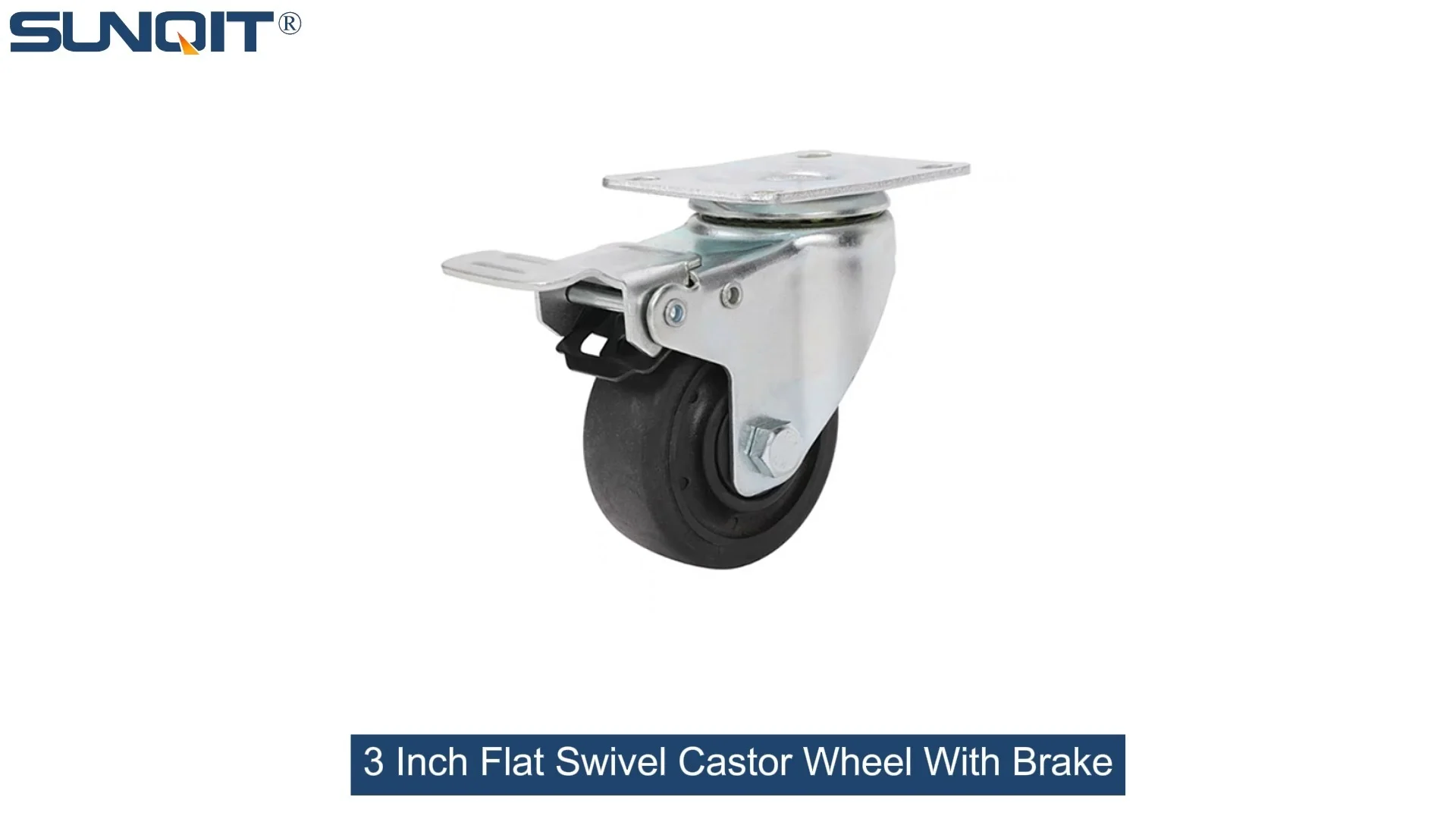
Flat Swivel Castor Wheel With Brake
Chair Casters Ball Bearing Wheels Rubber Base with brake design. Resistant to abrasion, impact and corrosion. Heavy payload can hold 70Kgs per pcs,which can make it works at a stable and smooth status.
Walk into any busy warehouse, and you'll quickly spot the unsung heroes keeping operations moving: the carts, trolleys, and racks that ferry goods from receiving docks to picking stations, assembly lines to shipping zones. But for all their importance, these workhorses often hide a frustrating secret: clunky, unreliable casters that turn simple tasks into time-consuming battles. A trolley that won't pivot around a corner, a brake that slips mid-transport, or a wheel that jams on uneven floors—these small annoyances add up to big delays, missed deadlines, and drained team morale. Today, we're diving into how one unassuming component—the flat swivel castor wheel with brake—is quietly revolutionizing warehouse efficiency, turning daily frustrations into smooth, seamless workflows.
The Hidden Cost of Handling Delays
Let's start with the numbers. According to the Material Handling Institute, the average warehouse worker spends 40% of their shift moving materials—pushing, pulling, and maneuvering loads between stations. If even 10% of that time is wasted on caster-related issues, a team of 50 workers could lose over 400 hours of productive time per month. That's not just time; it's money: overtime pay, expedited shipping fees to meet delayed orders, and the intangible cost of a team that's constantly playing catch-up.
Then there are the safety risks. A stuck trolley forces workers to overexert, leading to strained backs or pulled muscles. A brake that fails could send a loaded cart rolling into a colleague or crashing into expensive equipment. OSHA reports that overexertion and struck-by incidents account for 35% of warehouse injuries—and many of these trace back to poor material handling tools, including subpar casters.
Take Maria, a warehouse supervisor at a mid-sized electronics distributor I spoke with recently. "Last year, we had a stretch where three different turnover trolleys kept breaking down," she recalled. "One's caster seized up entirely, so two workers had to drag it—they strained their shoulders. Another's brake stopped working, and it rolled into a pallet of circuit boards, damaging $2,000 worth of inventory. By the time we replaced the casters, we'd lost a full day of shipping and had two team members on light duty. It wasn't just the cost; it was the stress. The team was frustrated, and morale tanked."
These stories aren't outliers. They're the norm in warehouses still relying on outdated, one-size-fits-all casters. The good news? The solution is simpler than you might think.
Meet the Game-Changer: Flat Swivel Castor Wheel with Brake
At first glance, a flat swivel castor wheel with brake might look like any other caster. But its design hides a host of upgrades tailored to warehouse chaos. Let's break down what makes it different:
360° Maneuverability That Actually Works
Traditional fixed or rigid casters lock movement to forward/backward, forcing workers to "shuffle" trolleys around corners—a tedious, time-consuming process. Flat swivel casters, by contrast, feature precision ball bearings and a low-profile design that lets them spin a full 360 degrees with minimal effort. Picture this: A worker needs to move a loaded turnover trolley from the receiving area to a workbench on the opposite side of the warehouse. With old casters, they'd stop, adjust the trolley's angle, push, stop again, and repeat—adding 2-3 minutes per trip. With flat swivel casters, they glide around corners in one smooth motion, cutting that trip time by half.
Brakes That You Can Trust (Even Under Pressure)
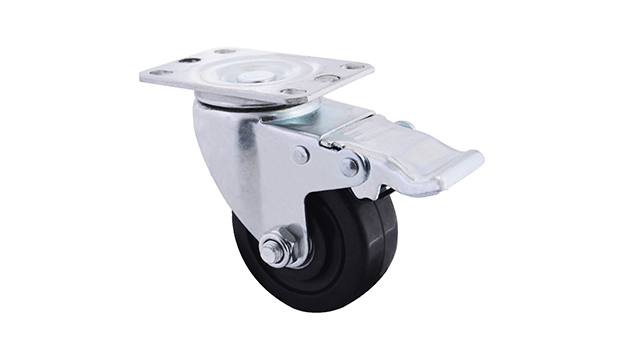
The "with brake" part is non-negotiable. Cheap casters often use flimsy, spring-loaded brakes that wear out quickly or slip under heavy loads. The flat swivel castor with brake, though, uses a robust, foot-operated locking mechanism that engages both the wheel and the swivel plate—meaning the caster won't roll or pivot once locked. This is a game-changer for tasks like loading a workbench: no more chasing a runaway trolley while trying to unload boxes, no more wedging a brick under the wheel "just in case."
Durability for the Long Haul
Warehouses are tough environments. Concrete floors, heavy loads (often 500+ pounds per trolley), and constant use take a toll on equipment. Flat swivel casters are built to withstand this: reinforced steel plates, polyurethane wheels that resist wear and tear, and sealed bearings that keep out dust and debris. Where a standard caster might need replacement every 6 months, a quality flat swivel caster can last 2-3 years—saving on maintenance costs and downtime.
Integration with Lean Systems: More Than Just a Wheel
Modern warehouses thrive on lean principles—eliminating waste, streamlining workflows, and focusing on continuous improvement. The flat swivel castor wheel with brake isn't just a tool; it's a lean system ally, designed to reduce "motion waste" (unnecessary movement) and "waiting waste" (delays caused by inefficient tools).
Consider turnover trolley and rack systems, which are backbone of lean material handling. These trolleys need to move quickly between stations, pause securely at workbenches, and even integrate with roller tracks for automated flow. A poorly designed caster disrupts this flow: a trolley that can't align with a roller track creates bottlenecks, while a brake that fails risks damaging goods mid-transfer. Flat swivel casters, with their smooth rolling and reliable braking, ensure that turnover trolleys integrate seamlessly into lean workflows—no more stopping to adjust, no more rework.
Take assembly lines, where workbenches are often positioned in "U" or "L" shapes to minimize movement. A workbench on fixed legs locks workers into one spot, forcing them to stretch or walk for tools. But add flat swivel casters with brakes, and suddenly that workbench becomes mobile. Need to reconfigure the line for a new product? Unlock the brakes, roll the bench into place, lock it down, and you're ready to go—no heavy lifting, no downtime. This flexibility is key to adapting to changing demand, a hallmark of agile, lean operations.
Real-World Impact: How One Warehouse Cut Delays by 30%
Let's look at a concrete example. A regional food distribution center in Ohio was struggling with late deliveries and rising labor costs. Their team of 30 warehouse staff spent hours daily moving pallets of frozen goods between cold storage, picking stations, and delivery trucks. The culprit? Outdated, rigid casters on their refrigerated trolleys that made maneuvering in tight cold-storage aisles nearly impossible. Workers reported spending 20 minutes just getting a single trolley from the rack to the loading dock—time that added up to 10+ delayed orders per day.
After switching to flat swivel castor wheels with brakes, the results were immediate. Trolleys now pivoted easily in narrow aisles, cutting trip times from 20 minutes to 8. The reliable brakes meant workers could safely park trolleys at loading bays without worrying about slips, reducing accidents by 40%. Within three months, the warehouse eliminated late deliveries, cut labor overtime by 15%, and even saw a boost in team morale—"It sounds silly, but not fighting with the trolleys makes the job feel easier," one worker noted in a follow-up survey.

Traditional Casters vs. Flat Swivel Castors with Brake: A Side-by-Side Comparison
Still on the fence? Let's put traditional casters and flat swivel castors with brakes head-to-head. The table below breaks down key metrics that matter most in warehouse operations:
| Feature | Traditional Fixed/Rigid Casters | Flat Swivel Castor Wheel with Brake |
|---|---|---|
| Maneuverability | Limited to forward/backward; requires multiple pushes to turn corners. | 360° swivel with precision bearings; glides around corners with minimal effort. |
| Brake Reliability | Basic spring-loaded brakes; often slip under heavy loads or wear out in 3-6 months. | Dual-locking (wheel + swivel plate); withstands 1,000+ pounds and lasts 2+ years. |
| Compatibility with Equipment | Often fits only specific trolleys; struggles with roller tracks or uneven floors. | Universal mounting plates; works with turnover trolleys, racks, workbenches, and roller tracks. |
| Maintenance Needs | Frequent lubrication; bearings clog with dust; wheels wear quickly on concrete. | Sealed bearings (no lubrication needed); polyurethane wheels resist wear; easy to replace caster accessories (e.g., brake pads). |
| Cost Over Time | Low upfront cost ($15-30 per caster), but frequent replacements add up ($60-120/year per trolley). | Higher upfront cost ($40-60 per caster), but 2-3 year lifespan cuts long-term costs by 50%. |
*Table optimized for mobile: Swipe left/right to view all columns.

Beyond the Wheel: Maintenance and Caster Accessories
Even the best casters need a little care to perform at their peak. The good news is that flat swivel casters with brakes are designed for easy maintenance, and a few simple habits can extend their lifespan even further.
First, regular cleaning. Warehouse floors are full of debris—dust, small screws, bits of packaging—that can get trapped in wheel bearings. A quick weekly wipe with a damp cloth or a blast of compressed air keeps wheels rolling smoothly. For (cold storage) environments, where condensation can cause rust, a light coat of silicone spray on the swivel plate prevents sticking.
Second, inspect brakes monthly. Test the brake lever to ensure it engages firmly and releases cleanly. If the brake feels "spongy" or slips, replace the brake pad—a simple caster accessory that costs $5-10 and takes 5 minutes to install. Most suppliers offer replacement kits, so you don't need to buy a whole new caster.
Finally, match the caster to the load. Overloading a caster (e.g., putting 800 pounds on a 500-pound-rated wheel) is the fastest way to cause premature failure. Keep a chart near your equipment room listing max loads for each trolley, and train teams to check before loading. When in doubt, opt for a higher weight rating—it's better to have extra capacity than to risk a breakdown.
Why This Matters for Your Bottom Line (and Your Team)
At the end of the day, investing in flat swivel castor wheels with brakes isn't just about buying better wheels—it's about investing in your team and your operations. When workers aren't fighting with equipment, they're more productive, more engaged, and less likely to burn out. When delays are cut, orders ship on time, customers stay happy, and your warehouse becomes a competitive advantage, not a bottleneck.
Think about it: What would your team do with an extra hour per day? Maybe they'd have time to restock shelves proactively, reducing out-of-stocks. Maybe they'd finally tackle that process improvement project they've been putting off. Or maybe they'd just go home on time, recharging for the next day. Whatever it is, that time is valuable—and it's within reach, thanks to a component as simple as a better caster.
So the next time you walk through your warehouse, take a closer look at those trolleys and racks. Are they moving smoothly, or are they fighting your team every step of the way? If it's the latter, it might be time to upgrade to flat swivel castor wheels with brakes. Your team will thank you, your bottom line will thank you, and those once-frustrating handling delays? They'll become a thing of the past.