- Company Articles
- Products and Technology
- Product knowledge
- Warehousing & Logistics: Four Way Straight Lean Pipe Joint in Material Rack B Construction

Warehousing & Logistics: Four Way Straight Lean Pipe Joint in Material Rack B Construction
Related Product
Four Way Straight Lean Pipe Joint
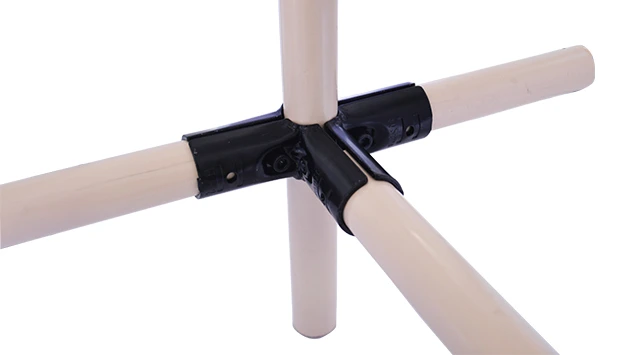
Four way lean pipe joint for 4 pcs 28MM lean pipe connection in straight angle, which used widely in workbench, flow rack, hand trolley frame connection.
Walk into any busy warehouse or manufacturing facility, and you'll quickly notice the unsung backbone of daily operations: material racks. These structures aren't just metal and pipes—they're the silent organizers that keep inventory flowing, workers moving efficiently, and deadlines on track. But not all racks are created equal. In the world of lean manufacturing and smart logistics, one combination has been turning heads for its flexibility, durability, and cost-effectiveness: the Material Rack B (3 row and 3 floor) built with lean pipe and, most importantly, the Four Way Straight Lean Pipe Joint . Today, we're diving deep into how this humble joint transforms a simple rack into a game-changer for warehouses everywhere.
Let's start with the basics. Lean systems have revolutionized how we think about workflow. They're all about eliminating waste, streamlining processes, and adapting quickly to change. And at the heart of many lean setups? Lean pipes—lightweight, modular tubes that can be assembled into almost any structure you need, from workbenches to trolleys. But what makes these pipes truly powerful is their accessories, and the Four Way Straight Lean Pipe Joint is the MVP of that toolkit.
Why Lean Pipe Systems Matter in Modern Warehousing
Before we zoom in on the Four Way Joint, let's talk about why lean pipe systems have become a staple in warehouses. Traditional fixed racks are like concrete—sturdy, but impossible to tweak when your needs change. If you introduce a new product line with larger boxes, or need to rearrange your floor plan for a seasonal rush, you're stuck either buying new racks or making do with inefficient setups. Lean pipes, on the other hand, are like building blocks for adults. They're easy to assemble, disassemble, and reconfigure, all without welding or heavy tools.
I recently spoke with Maria, a warehouse manager at a mid-sized electronics distributor, who summed it up perfectly: "We used to have these old steel racks that took two people and a forklift to move. When we switched to lean pipe systems last year, it was night and day. Now, if I need to adjust a shelf height or add a new row, my team can do it in 20 minutes with just a hex key. We've cut down on setup time for new product lines by 40%—that's huge for a business that launches 10+ new SKUs a month."
But lean pipes alone aren't enough. The magic happens when you pair them with the right accessories. That's where joints come in. They're the connectors that hold the system together, and the Four Way Straight Lean Pipe Joint is unique in how it balances strength and versatility. Unlike two-way or three-way joints, which limit your connection points, the four-way design lets you branch out in four directions—up, down, left, right—all from a single node. This might sound simple, but in practice, it opens up a world of possibilities for building complex, stable structures like the Material Rack B.
Material Rack B: The 3 Row, 3 Floor Workhorse
Let's get specific about the star of the show: Material Rack B (3 row and 3 floor). If you've ever struggled with racks that waste vertical space or make it hard to access items in the back, this design will feel like a breath of fresh air. As the name suggests, it features 3 horizontal rows and 3 vertical floors, creating 9 distinct storage compartments—perfect for categorizing inventory by SKU, size, or priority. But what really makes this rack stand out is how it's built: with lean pipe and the Four Way Straight Lean Pipe Joint.
Why 3 rows and 3 floors? It's a sweet spot between capacity and accessibility. Too many rows, and workers have to stretch or climb; too few, and you're not maximizing vertical space. The 3x3 layout keeps every shelf within arm's reach for most adults, reducing the risk of strains or accidents. And because it's built with lean pipe, you're not stuck with fixed dimensions. Need a taller top shelf for bulky items? Swap out a shorter pipe for a longer one. Have smaller parts that need more compartments? Add a fourth row using extra Four Way Joints. It's customization without the custom price tag.
John, a logistics coordinator at an automotive parts supplier, told me about their experience with Material Rack B: "We used to have a mix of wooden shelves and metal racks. The wood warped under heavy boxes, and the metal ones were so rigid—if a part was an inch too tall, we had to find a whole new spot for it. Now, with Material Rack B, we adjusted the shelf heights using lean pipe and Four Way Joints to fit everything from tiny washers to engine gaskets. Our pickers no longer waste time hunting for 'misfit' items—they know exactly which compartment to check, and it's always the right size."

The Four Way Straight Lean Pipe Joint: Small Part, Big Impact
Now, let's zoom in on the unsung hero here: the Four Way Straight Lean Pipe Joint. At first glance, it's a simple-looking metal connector—usually made of zinc-plated steel or aluminum—with four equally spaced ports, each designed to fit standard lean pipes (typically 28mm in diameter). But don't let its simplicity fool you. This joint is engineered to distribute weight evenly across all connected pipes, preventing the "wobble" that plagues poorly built racks. It also features internal threads that lock pipes in place when tightened, so you don't have to worry about shelves shifting under heavy loads.
What makes the four-way design so special? Let's compare it to other common joints:
| Joint Type | Number of Ports | Best For | Stability | Flexibility |
|---|---|---|---|---|
| Two Way Straight | 2 (straight line) | Simple beams or single-level racks | Medium (only two connection points) | Low (limited branching) |
| Three Way T-Joint | 3 (one straight, one perpendicular) | Basic L-shaped racks or corner supports | High (triangular stability) | Medium (can add one branch) |
| Four Way Straight | 4 (two perpendicular axes) | Multi-level, multi-row racks (e.g., Material Rack B) | Very High (even weight distribution across four points) | High (can branch in four directions) |
As the table shows, the Four Way Straight Lean Pipe Joint shines when you need both stability and flexibility—exactly what Material Rack B demands. With three rows and three floors, the rack has multiple horizontal and vertical pipes intersecting at every corner. Using four-way joints at these intersections ensures that each connection point can support the weight of the shelves above, the inventory on them, and the occasional bump from a pallet jack or trolley.
Another key advantage? Assembly speed. Traditional welded racks require skilled labor and time-consuming measurements. With lean pipe and four-way joints, the process is more like building with Legos. Each joint snaps onto the pipes, and a quick twist with a hex key tightens it in place. I watched a team of three warehouse workers assemble a full Material Rack B from scratch in under 90 minutes—including cutting the pipes to length. That's a fraction of the time it would take to build a comparable welded rack.

Building Material Rack B: A Step-by-Step Look
Curious how the Four Way Straight Lean Pipe Joint comes into play during assembly? Let's walk through the process of building Material Rack B (3 row and 3 floor) step by step. Don't worry—I'll keep it simple, even if you've never picked up a pipe cutter before.
Step 1: Gather Your Materials
First, you'll need the basics: lean pipes (usually 28mm diameter, cut to your desired lengths), Four Way Straight Lean Pipe Joints (you'll need one for each intersection of rows and floors), shelf boards (plywood, metal, or plastic), end caps (to protect pipe ends), and a few tools: a pipe cutter, hex key, level, and measuring tape. Pro tip: Always buy a few extra joints and pipes—you never know when you'll want to tweak the design later!
Step 2: Build the Vertical Frames
Start by building four vertical frames—these will be the "legs" of your rack. Each frame consists of two vertical lean pipes (typically 1.8m tall for a 3-floor rack) connected by horizontal pipes at the top, middle, and bottom. Here's where the four-way joints come in: at each horizontal-vertical intersection, use a Four Way Straight Lean Pipe Joint. For example, the bottom horizontal pipe connects to the vertical pipe via a four-way joint, leaving two ports open—one for the middle horizontal pipe and one for the top horizontal pipe. This creates a sturdy, square frame that won't bow under pressure.
Step 3: Connect the Frames with Rows
Once your four vertical frames are built, it's time to connect them with the 3 horizontal rows. Measure the distance between the frames (usually 1.2m for standard Material Rack B) and cut horizontal pipes to fit. Attach these pipes to the four-way joints on the vertical frames—each joint will now have a pipe running left, right, front, and back, creating a grid-like structure. This grid is what gives the rack its stability; even if one frame shifts slightly, the others pull it back into place.
Step 4: Add Floors and Shelves
With the frame complete, it's time to add the 3 floors. Cut horizontal pipes to span the width of the rack and attach them to the vertical frames using additional four-way joints (or two-way joints for simplicity). Once the floor supports are in place, lay your shelf boards on top—plywood works well for heavy items, while plastic boards are better for lightweight, small parts. Finally, add end caps to any exposed pipe ends to prevent snags on boxes or clothing.
Step 5: Test and Adjust
The last step is the most important: test the rack! Load it with representative inventory (don't skip this—empty racks feel sturdy, but full ones tell the real story) and check for wobbling or sagging. If a shelf dips, tighten the nearby four-way joints with a hex key. If a vertical pipe leans, adjust the floor supports. Lean pipe systems are all about iteration, so don't be afraid to tweak until it feels perfect.
Real-World Results: How Material Rack B Transforms Warehouses
Numbers and diagrams are great, but nothing beats hearing from teams that use this setup daily. Let's look at two case studies that highlight the impact of Material Rack B built with Four Way Straight Lean Pipe Joints.
Case Study 1: E-Commerce Fulfillment Center
A large e-commerce fulfillment center in Texas was struggling with seasonal spikes. During the holidays, they needed extra rack space for overflow inventory, but their fixed steel racks couldn't be adjusted. They turned to Material Rack B with lean pipe and four-way joints. "We built 20 of these racks in a week," said the operations director. "During peak season, we used them for fast-moving items like electronics and toys. After the rush, we disassembled half of them and reconfigured the rest into workbenches for returns processing. The Four Way Joints made it so easy to take apart and rebuild—we didn't waste a single pipe or joint." The result? A 25% reduction in seasonal labor costs and a 15% faster order picking time.
Case Study 2: Automotive Parts Manufacturer
An automotive parts manufacturer in Michigan needed racks that could handle heavy, irregularly shaped components. Their old wooden shelves were cracking under the weight, and metal racks were too expensive to customize. They switched to Material Rack B with steel lean pipes and Four Way Straight Lean Pipe Joints. "The four-way joints distribute the weight so evenly," said the plant manager. "We've got shelves holding 50kg engine blocks, and there's zero sagging after six months of use. Plus, when we redesigned our production line, we just moved the racks—no need to buy new ones. It's saved us over $10,000 in equipment costs alone."
Beyond the Rack: Other Uses for the Four Way Straight Lean Pipe Joint
While we've focused on Material Rack B, it's worth noting that the Four Way Straight Lean Pipe Joint is a versatile tool that shines in other applications too. Here are a few ways warehouses and manufacturers are putting it to work:
- Workbenches: Build custom workstations with overhead shelves, tool hooks, and material bins—all connected with four-way joints.
- Turnover Trolleys: Create mobile carts for transporting inventory, with adjustable shelves to fit different box sizes.
- Flow Racks: Combine with roller track (another key lean pipe accessory ) to build gravity-fed flow racks, where items slide forward as the front ones are picked.
- Assembly Lines: Construct temporary or permanent assembly line stations with built-in part holders and tool organizers.
The common thread? Flexibility. With four-way joints, you're not limited to a single design—you can adapt as your needs change, which is essential in today's fast-paced logistics world.
Maintenance Tips: Keeping Your Rack (and Joints) in Top Shape
Like any tool, your Material Rack B will perform best with a little TLC. Here's how to keep the Four Way Straight Lean Pipe Joints and lean pipes in great condition for years:
Check Joint Tightness Quarterly: Over time, vibrations from forklifts or heavy loads can loosen joints. A quick twist with a hex key every few months will prevent wobbling.
Clean Pipes Regularly: Dust and debris can build up on lean pipes, especially in busy warehouses. Wipe them down with a damp cloth to prevent corrosion (this is extra important for steel pipes—consider painting or powder-coating if you're in a humid environment).
replace Worn Joints: If a joint starts to strip or crack, replace it immediately. Most suppliers sell joints individually, so you don't have to buy a whole new set.
Adjust as Needed: Don't be afraid to reconfigure! If a shelf isn't working, take it apart and rebuild. That's the beauty of lean pipe systems—they're meant to evolve with your business.
Final Thoughts: Why the Four Way Joint and Material Rack B Are Here to Stay
In a world where warehouses are under pressure to do more with less—less space, less labor, less budget—the Material Rack B (3 row and 3 floor) built with lean pipe and the Four Way Straight Lean Pipe Joint is more than just a trend. It's a practical solution that delivers results: faster assembly, easier customization, and long-term durability. Whether you're running a small distribution center or a large manufacturing plant, this combination gives you the flexibility to adapt to changing needs without breaking the bank.
As Maria, the warehouse manager I mentioned earlier, put it: "At the end of the day, our job is to keep things moving. The Four Way Joint and Material Rack B let us do that—no fuss, no wasted time, no expensive upgrades. It's not just a rack; it's a tool that helps our team work smarter, not harder."
So, the next time you're evaluating your warehouse setup, don't overlook the power of a well-designed rack and a humble joint. Sometimes, the smallest parts make the biggest difference.