- Company Articles
- Products and Technology
- Application Cases
- Warehousing Efficiency Boost: Aluminum Workbench B Organizes Picking and Packing Stations

Warehousing Efficiency Boost: Aluminum Workbench B Organizes Picking and Packing Stations
Related Product
Aluminum Workbench B
Aluminum tube workbench is more flexible and durable, compared with traditional PE/ABS coated steel tube. It is easy to assemble, anti corrosion, rust protection, and recycle use after disassemble.
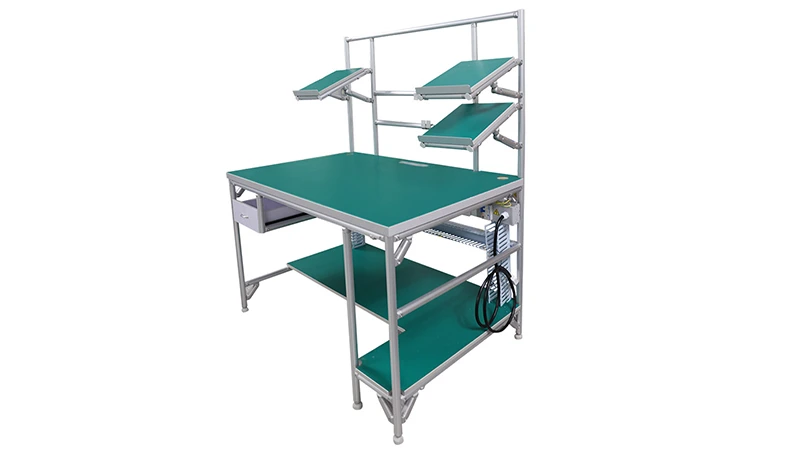
Walk into any busy warehouse, and you'll quickly spot the heartbeat of operations: the picking and packing stations. These are the spots where orders transition from digital lists to tangible packages, where speed and accuracy directly impact customer satisfaction. But too often, these stations become bottlenecks—cluttered with tools, overflowing with half-packed boxes, and plagued by disorganized workflows that turn even simple tasks into time-consuming struggles. A single misplaced label or a tool buried under a pile of packaging materials can delay an order, frustrate staff, and chip away at your bottom line. So, what if there was a solution that didn't just add another piece of furniture to the mix, but reimagined how these stations work? Enter Aluminum Workbench B—a tool designed to transform chaos into order, and inefficiency into productivity.
Meet Aluminum Workbench B: More Than Just a Table
At first glance, you might mistake Aluminum Workbench B for any other workbench. But lean in, and you'll notice the details that set it apart. Crafted from high-grade aluminum profile, this isn't just a surface to place boxes on—it's a modular, adaptable hub built to streamline every step of the picking and packing process. Unlike clunky wooden workbenches that warp over time or rigid steel tables that are impossible to reconfigure, Aluminum Workbench B is designed with one goal in mind: to grow and change with your warehouse's needs.
Picture this: Maria, a warehouse manager at a mid-sized e-commerce fulfillment center, had been struggling with her team's picking and packing stations for months. "We were using old wooden tables we'd inherited from a previous tenant," she recalls. "They were wobbly, the surfaces were scratched and stained, and we could never quite arrange the tools and packing materials in a way that made sense. Our pickers were spending more time searching for tape guns or scissors than actually packing orders. It was frustrating for everyone." Then, after switching to Aluminum Workbench B, she noticed a shift almost immediately. "The first thing the team commented on was how clean and organized everything felt. Tools had designated spots, packing materials were within arm's reach, and the workbench itself felt sturdy but lightweight—like it was built specifically for how we work."
But Aluminum Workbench B isn't just about aesthetics. It's about solving the root causes of inefficiency. Let's break down why this workbench is becoming a game-changer for warehouses across industries.
Design That Works: The Anatomy of Aluminum Workbench B
What makes Aluminum Workbench B different? Start with the material: aluminum profile. Unlike wood, which absorbs moisture and dents easily, or low-grade steel that rusts and adds unnecessary weight, aluminum is lightweight yet surprisingly durable. It resists scratches, wipes clean with a damp cloth, and stands up to the daily wear and tear of a busy warehouse—no more unsightly stains from spilled packing tape adhesive or water damage from leaky boxes. But the real magic lies in its modular design.
Aluminum Workbench B is built around a framework of aluminum profile, a material known for its flexibility. Think of it as a grown-up version of building blocks: the workbench's structure is made from interlocking aluminum tubes and joints that can be adjusted, extended, or modified with accessories to fit your exact needs. Need a shelf for extra packing peanuts? Add it. Want a side rail to keep boxes from sliding off? Attach it. Even better, these adjustments don't require power tools or a team of engineers—most can be done in minutes with basic hand tools, letting your team adapt the workbench as orders fluctuate or workflows change.
Take, for example, the workbench's surface. It's a single, smooth deck (without casters, making it stable for heavy tasks) that provides ample space for packing, but it's also designed to integrate with other tools. Drill a few holes, and you can mount a label printer or a barcode scanner directly onto the bench, eliminating the need for separate stands that take up valuable space. The edges are rounded to prevent snags on packaging materials, and the height is optimized for comfort—no more hunching over or straining to reach items on the far side of the table. It's these small, intentional details that turn a "good" workbench into a "great" one.

Lean System Integration: Cutting Waste, Boosting Flow
Aluminum Workbench B doesn't exist in a vacuum—it's part of a larger philosophy: the lean system. Lean is all about eliminating waste, whether that's wasted time, wasted space, or wasted effort. In a picking and packing context, waste often looks like a picker walking 10 extra steps to grab a tape dispenser, or a packer sorting through three different bins to find the right size box. Aluminum Workbench B is built to tackle these inefficiencies head-on by designing the workspace around the work itself.
Let's break down lean principles and how Aluminum Workbench B supports them:
- Sort (Seiri): The first step in lean is separating what's needed from what's not. Aluminum Workbench B's modular accessories—like tool hooks, drawer dividers, and side bins—give every item a designated home. Tape guns, scissors, and label rolls aren't scattered across the surface; they're hung neatly on the side rail. Unused packaging materials are stored in under-bench shelves, not cluttering the workspace. This means staff spend less time hunting for tools and more time packing.
- Set in Order (Seiton): Once you've sorted, you need to arrange items for easy access. Aluminum Workbench B's layout is customizable, so the most frequently used tools (like tape dispensers) are placed within arm's reach, while less common items (like specialty box cutters) go in lower shelves. This "5S" approach—"a place for everything, and everything in its place"—turns muscle memory into efficiency. A packer doesn't have to think about where the bubble wrap is; they just reach for the bin they know it's in.
- Shine (Seiso): A clean workspace is a productive workspace. Aluminum's smooth, non-porous surface is easy to wipe down at the end of each shift, preventing the buildup of dust, tape residue, or spilled liquids. Unlike wooden workbenches, which can stain or harbor bacteria, Aluminum Workbench B stays hygienic—important for warehouses handling food, cosmetics, or medical supplies.
- Standardize (Seiketsu): Consistency is key in lean systems. Aluminum Workbench B can be replicated across all picking and packing stations, ensuring every staff member knows exactly where to find tools and materials, no matter which station they're working at. This standardization reduces training time for new hires and minimizes errors when teams rotate shifts.
- Sustain (Shitsuke): The best systems are ones that last. Aluminum Workbench B's durability ensures it can handle the daily grind without breaking down, so your lean practices don't fall apart when the workbench does. Its modular design also means it can evolve as your processes improve—adding new accessories or adjusting the layout as you find new ways to cut waste.
John, a lean coordinator at a regional distribution center, put it best: "We'd tried lean initiatives before, but they always fizzled out because the workspace itself wasn't supportive. Staff would 'sort' on Monday, but by Wednesday, the workbench was cluttered again. With Aluminum Workbench B, the structure enforces the lean habits. The hooks, bins, and shelves make it easier to stay organized than to be messy. It's like having a silent coach that keeps everyone on track."

Flow Rack and Conveyor Compatibility: Creating a Seamless Workflow
A picking and packing station doesn't operate alone—it's part of a larger ecosystem that includes flow racks, conveyors, and material handling equipment. Aluminum Workbench B is designed to play well with others, integrating seamlessly with these tools to create a workflow that feels almost effortless.
Let's start with flow racks. Flow racks are the workhorses of inventory storage, using gravity to slide products forward as items are picked, ensuring easy access to the next item in line. Aluminum Workbench B can be positioned directly adjacent to a flow rack, with its surface aligned to the rack's height. This means a picker can grab items from the flow rack and place them directly onto the workbench without bending, reaching, or carrying heavy boxes across the floor. The workbench's smooth surface also makes it easy to slide items from the flow rack to the packing area—no more lifting and dropping, which saves energy and reduces the risk of injury.
Then there are conveyors. Once an order is packed, it needs to move to the shipping area. Aluminum Workbench B can be paired with a conveyor system, with the workbench's edge positioned just above the conveyor belt. A packer can slide the finished package onto the conveyor with a gentle push, eliminating the need to carry it to the shipping line. For warehouses using roller conveyors, Aluminum Workbench B's sturdy frame can even support lightweight roller track accessories, turning part of the workbench surface into a mini-conveyor for small items like envelopes or poly mailers.
Imagine a typical order at a warehouse using Aluminum Workbench B, a flow rack, and a conveyor: A picker retrieves a product from the flow rack (positioned 18 inches from the workbench), slides it onto the workbench, grabs a box from the under-shelf storage, packs the item, prints a label using the mounted printer, seals the box, and pushes it onto the adjacent conveyor. Total time? Maybe 2 minutes. Compare that to a traditional setup, where the picker has to walk 10 feet to the flow rack, carry the item back to a cluttered workbench, search for a box, hunt for tape, and then carry the packed box to the shipping area. That could take 5 minutes or more—time that adds up when you're processing hundreds of orders a day.
From Chaos to Order: A Day in the Life with Aluminum Workbench B
To truly understand the impact of Aluminum Workbench B, let's step into the shoes of a warehouse team using it for a full day. Meet the team at BrightStar Fulfillment, a mid-sized warehouse handling apparel and accessories for online retailers. Before Aluminum Workbench B, their picking and packing stations were a constant source of stress.
8:00 AM: Start of Shift
Before Aluminum Workbench B, the morning routine involved clearing off the workbenches—last night's leftover packing materials, stray labels, and misplaced tools had to be moved to a "junk pile" before anyone could start. It took 15 minutes per station, and by 8:15, the team was already behind. With Aluminum Workbench B? The night crew had simply wiped down the aluminum surface, returned tools to their hooks, and stacked empty boxes neatly in the under-shelf bins. At 8:00 sharp, the first picker logs in, grabs a picking list, and starts working—no cleanup required.
10:30 AM: Peak Order Rush
By mid-morning, orders are pouring in. In the old setup, the workbenches would be overflowing: boxes stacked haphazardly, tape guns rolling onto the floor, and packing peanuts spilling everywhere. A packer might spend 2 minutes searching for a scissors, only to find it under a pile of poly mailers. With Aluminum Workbench B, each tool has a spot: scissors hang from a hook on the left rail, tape dispensers are mounted on the right, and packing peanuts are in a labeled bin under the shelf. The workbench's surface stays clear except for the current order, so packers can focus on packing, not tidying. "I used to feel like I was constantly playing Tetris with boxes," says Lina, a packer at BrightStar. "Now, I just grab what I need, pack, and move on. It's like night and day."
1:00 PM: Material Restocking
Restocking packing materials used to be a disruption. With traditional workbenches, new boxes or bubble wrap would pile up next to the station, taking up floor space and creating trip hazards. Aluminum Workbench B's under-shelf storage and modular side racks mean restockers can slide new materials directly into the designated bins without interrupting the packers. The workbench's aluminum profile frame is strong enough to support heavy loads—even stacks of large boxes—so there's no need to leave materials on the floor.
4:00 PM: End of Shift
In the old days, end-of-shift cleanup meant sorting through piles of trash, hunting for lost tools, and trying to fit leftover materials into overstuffed cabinets. It took 20 minutes and left the team feeling drained. With Aluminum Workbench B? Wiping down the aluminum surface takes 2 minutes, tools go back on their hooks (a habit now second nature), and leftover materials are stored in the bins. The team walks out at 4:05, knowing the next shift will start fresh. "I used to dread cleanup," says Mike, another packer. "Now, it's just part of closing out my day—no stress, no mess."
By the end of the week, BrightStar's team had processed 15% more orders than the previous week, with 20% fewer errors. Staff morale was up, and overtime hours had dropped by 10%. "It's not just that the workbench is better," Maria, the warehouse manager, notes. "It's that it makes everyone's job easier. When your tools work with you, not against you, you'd be surprised how much more you can get done."
Traditional vs. Aluminum Workbench B: A Comparison
Still on the fence about whether Aluminum Workbench B is right for your warehouse? Let's put it head-to-head with traditional workbenches to see how it stacks up. The table below compares key features that matter most in a picking and packing environment:
| Feature | Traditional Wooden Workbench | Aluminum Workbench B |
|---|---|---|
| Material Durability | Prone to warping, staining, and scratches; absorbs moisture and bacteria. | Aluminum profile resists rust, scratches, and moisture; easy to sanitize and built to last 5+ years with minimal wear. |
| Flexibility & Customization | Fixed design; adding shelves or accessories requires drilling holes or using clunky brackets that damage the surface. | Modular aluminum profile framework; add shelves, hooks, bins, or tool mounts in minutes without permanent modifications. |
| Integration with Lean Systems | No built-in organization; relies on separate bins or trays that often get misplaced. | Designed for 5S principles with dedicated storage for tools and materials; standardizes workflows across stations. |
| Flow Rack & Conveyor Compatibility | Fixed height and design make alignment with flow racks/conveyors difficult; often requires extra space for material transfer. | Adjustable height and modular edges align seamlessly with flow racks and conveyors; reduces manual lifting and carrying. |
| Setup & Adjustment Time | Requires assembly with screws/nails; modifications take 1-2 hours and may damage the bench. | Tool-free assembly with aluminum joints; modifications (adding shelves, etc.) take 10-15 minutes. |
| Long-Term Cost-Effectiveness | Low upfront cost but needs replacement every 2-3 years due to wear; hidden costs in lost productivity from inefficiency. | Higher upfront cost but lasts 5+ years; reduces labor costs by cutting wasted time (estimated 10-15% productivity boost). |
The data speaks for itself: Aluminum Workbench B isn't just a better workbench—it's an investment in your warehouse's efficiency. While traditional workbenches may save you money upfront, the hidden costs of lost productivity, frequent replacements, and employee frustration add up quickly. Aluminum Workbench B, on the other hand, pays for itself through faster order processing, fewer errors, and a more sustainable workflow.
Beyond the Workbench: Building a Complete Ecosystem
Aluminum Workbench B is powerful on its own, but its true potential shines when paired with other tools in your warehouse ecosystem. Let's explore how it integrates with complementary equipment to create a fully optimized picking and packing process:
Flow Racks: The Perfect Partner
Flow racks are designed to keep inventory organized and accessible, and when positioned next to Aluminum Workbench B, they create a "pick-pack" loop that minimizes movement. For example, a material rack B (3 row and 3 floor) can be placed parallel to the workbench, with each row stocked with popular items. A picker grabs an item from the flow rack, places it on the workbench, packs it, and sends it off—all without taking a single step. The workbench's height matches the flow rack's shelves, so there's no bending or reaching, reducing fatigue and injury risk.
Conveyors: Moving Orders Forward
Once an order is packed, it needs to get to shipping. Aluminum Workbench B can be outfitted with roller track accessories (like plastic roller track guide rails) along its edge, turning the workbench into a mini-conveyor for small packages. For larger items, the workbench can be positioned next to a main conveyor belt, with its surface aligned to the belt's height. A packer simply slides the box onto the conveyor, and it's on its way—no heavy lifting required. This integration cuts down on manual material handling, a leading cause of warehouse injuries.
Aluminum Profile Accessories: Tailored to Your Needs
The beauty of aluminum profile is its ecosystem of accessories, and Aluminum Workbench B is no exception. Need to mount a barcode scanner? Use an aluminum profile bracket. Want to add a light to brighten the packing area? Clip on an aluminum profile light fixture. Even specialized tools, like swivel roller balls (1 inch or 0.5 inch) for sliding heavy boxes, can be attached to the workbench's edge. These accessories are designed to work seamlessly with the aluminum profile frame, so you never have to jury-rig a solution again.
David, a warehouse designer with over 15 years of experience, explains: "The best warehouse setups are ones where every tool works with the others. Aluminum Workbench B isn't just a standalone product—it's a hub that connects flow racks, conveyors, and accessories into a single, cohesive system. That's when you see real efficiency gains."
Conclusion: Invest in Efficiency, Invest in Your Team
Picking and packing stations are more than just workspaces—they're the engine that drives your warehouse's success. When these stations are disorganized, inefficient, or outdated, every part of your operation suffers. Aluminum Workbench B isn't just a tool to organize these stations; it's a statement that you value your team's time, your customers' satisfaction, and your company's profitability. By integrating lean system principles, working seamlessly with flow racks and conveyors, and offering the flexibility to adapt to your needs, it transforms chaos into order and inefficiency into productivity.
So, if you're tired of watching your team struggle with cluttered workbenches, if you're ready to cut down on wasted time and errors, and if you want to build a warehouse that's built for growth, it's time to consider Aluminum Workbench B. It's not just a workbench—it's a investment in a more efficient, more productive, and more sustainable future for your warehouse.
After all, in warehousing, every second counts. Why waste them on a workspace that doesn't work for you?