- Company Articles
- Products and Technology
- Product knowledge
- Warehousing Efficiency: Flat Swivel Castor Wheel with Brake for Mobile Material Racks

Warehousing Efficiency: Flat Swivel Castor Wheel with Brake for Mobile Material Racks
Related Product
Flat Swivel Castor Wheel With Brake
Chair Casters Ball Bearing Wheels Rubber Base with brake design. Resistant to abrasion, impact and corrosion. Heavy payload can hold 70Kgs per pcs,which can make it works at a stable and smooth status.
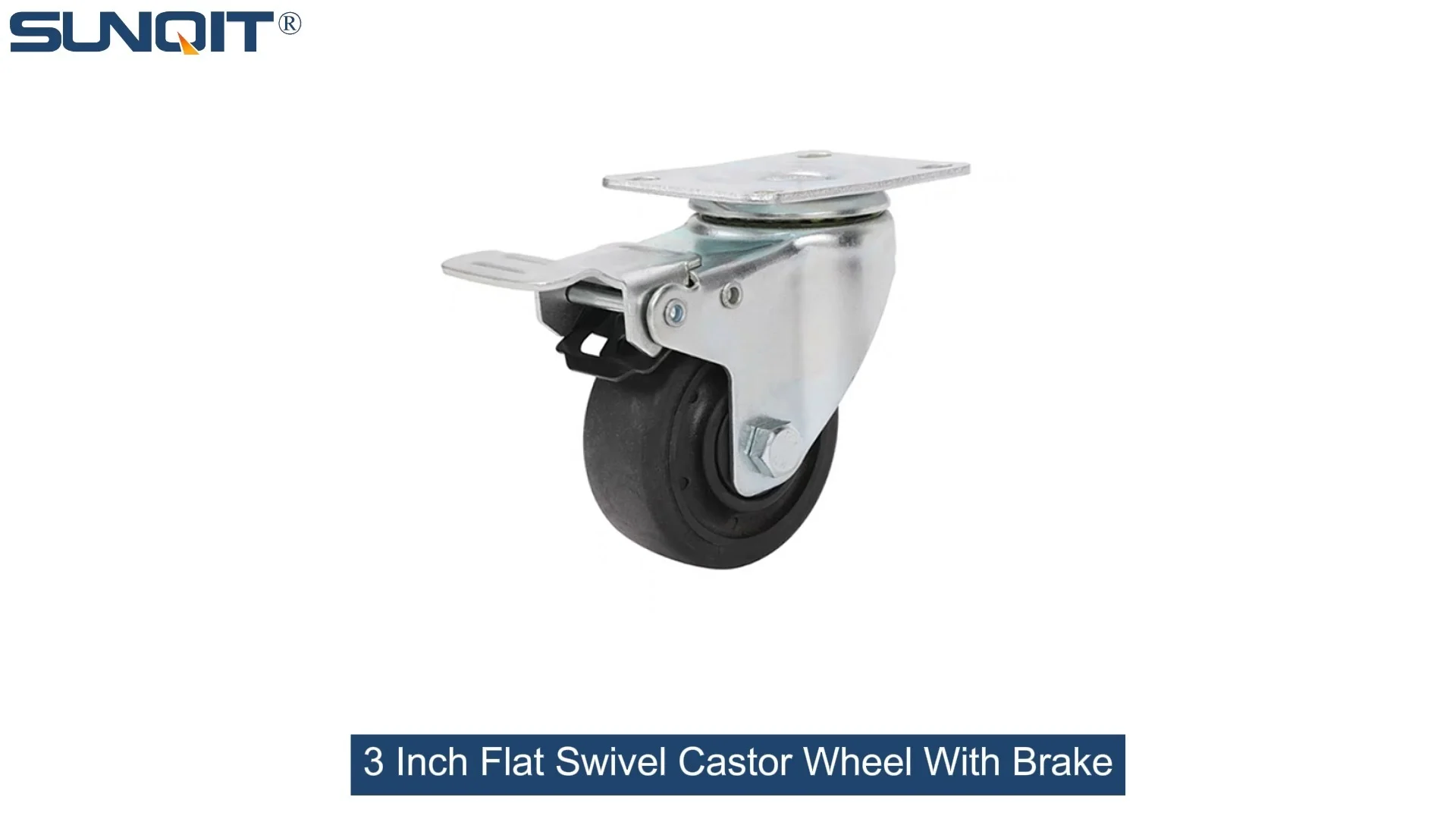
In the fast-paced world of modern warehousing, every second counts. From small distribution centers to large-scale manufacturing facilities, the ability to move materials quickly, safely, and efficiently can make or break operational success. Static storage racks, once the backbone of warehouse organization, are increasingly giving way to mobile solutions that adapt to changing needs. At the heart of this transformation lies a seemingly small but critical component: the caster wheel. Specifically, the Flat Swivel Castor Wheel with Brake has emerged as a game-changer, turning rigid material racks into dynamic tools that redefine how teams handle inventory, streamline workflows, and reduce operational bottlenecks.
The Hidden Cost of Static Storage: Why Mobility Matters
Traditional fixed racks have long been a staple in warehouses, offering stability and vertical storage space. But they come with hidden costs that eat into efficiency. Imagine a facility where a team spends 20 minutes maneuvering a forklift to retrieve a single pallet from a static rack, only to find the item they need is buried behind several others. Or consider the wasted floor space: static racks require fixed aisles, often leaving large areas unused because rearranging them is too time-consuming or expensive. These scenarios are all too common, and they add up—wasted labor hours, delayed order fulfillment, and increased risk of workplace injuries from manual lifting or equipment collisions.
Mobile material racks address these challenges by combining the storage capacity of traditional racks with the flexibility to move where they're needed most. But mobility alone isn't enough. A rack on wheels is only as good as its casters. A poorly designed caster might get stuck on uneven floors, fail under heavy loads, or lack the stability to keep the rack secure when stationary. That's where the Flat Swivel Castor Wheel with Brake shines. Its design prioritizes three key factors: smooth movement, reliable braking, and durability—all essential for transforming static storage into a dynamic, efficient system.
Anatomy of a Workhorse: What Makes the Flat Swivel Castor Wheel with Brake Special?
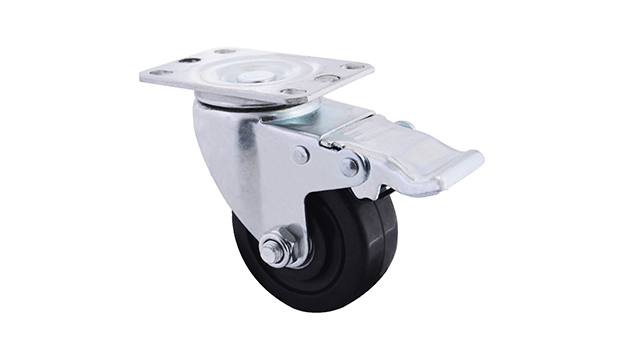
At first glance, a caster wheel might seem like a simple device, but the Flat Swivel Castor Wheel with Brake is engineered with precision to meet the demands of industrial environments. Let's break down its components and why they matter:
Flat Plate Design: Unlike stem-mounted casters, which attach via a rod, the flat plate design distributes weight evenly across the mounting surface. This makes it ideal for heavy-duty applications, such as Material Rack B (3 row and 3 floor) —a popular multi-tiered storage solution designed to hold bulk items. When paired with a flat swivel caster, the rack's weight (often hundreds of pounds when loaded) is spread out, reducing stress on both the caster and the rack itself. This not only extends the lifespan of the equipment but also minimizes the risk of floor damage from concentrated pressure.
Swivel Mechanism: The "swivel" in the name refers to the caster's ability to rotate 360 degrees, allowing the rack to move in any direction with minimal effort. This is crucial in tight spaces, where maneuverability can mean the difference between a smooth workflow and a frustrating bottleneck. Imagine a warehouse with narrow aisles: a rack on fixed casters would require multiple pushes and pulls to navigate, while one with swivel casters glides around corners and obstacles, saving time and reducing operator fatigue.
Brake System: The brake is perhaps the most critical feature. A reliable brake ensures that once the rack is in position, it stays put—no unwanted rolling, no risk of tipping, and no need for additional chocks or restraints. The best flat swivel casters with brakes use a foot-operated lever that engages both the wheel and the swivel plate, locking the caster in place. This dual-locking mechanism provides stability even on sloped floors or during loading/unloading, making it safe for workers to access items without worrying about the rack shifting.
Durable Materials: Warehouses are harsh environments. Floors are often concrete, debris is common, and loads can be heavy. The Flat Swivel Castor Wheel with Brake is built to withstand these conditions, with wheels made from high-quality rubber, polyurethane, or nylon. Rubber wheels offer excellent shock absorption and floor protection, while polyurethane combines durability with low rolling resistance—perfect for frequent movement. Nylon wheels, on the other hand, excel in high-temperature or chemical-exposed areas, making the caster versatile across industries.
Beyond the Rack: Compatibility with Turnover Trolleys and Workflows
The value of the Flat Swivel Castor Wheel with Brake extends beyond material racks. It's a versatile component that integrates seamlessly with other warehouse equipment, such as Turnover Trolley and Rack systems. Turnover trolleys are used to transport goods between workstations, and when equipped with these casters, they become extensions of the mobile rack system. For example, a team can load a turnover trolley with components at a storage area, wheel it directly to an assembly line using the swivel casters for easy navigation, then lock it in place with the brake to keep materials within arm's reach of workers. This eliminates the need for multiple trips or manual carrying, reducing fatigue and speeding up production cycles.
Consider a manufacturing facility that produces electronic components. Their assembly line requires frequent restocking of small parts, which are stored in Material Rack B (3 row and 3 floor) units. By mounting Flat Swivel Castor Wheels with Brakes on these racks, the team can roll the entire rack to the assembly line, lock it in place, and access parts directly from the rack—no more walking back and forth to a distant storage area. When the line needs a different set of parts, the rack is unlocked, moved aside, and replaced with another mobile rack, all in a matter of minutes. This level of flexibility turns the warehouse floor into a dynamic workspace that adapts to the day's production schedule, rather than the other way around.

Choosing the Right Caster: A Comparison of Common Types
Not all casters are created equal. To understand why the Flat Swivel Castor Wheel with Brake stands out, it helps to compare it with other common caster types. Below is a breakdown of how different casters perform in key areas like load capacity, maneuverability, and safety:
| Caster Type | Load Capacity (lbs) | Brake Mechanism | Swivel Range | Best For |
|---|---|---|---|---|
| Flat Swivel Castor Wheel with Brake | 500 – 2,000+ | Dual-locking (wheel + swivel plate) | 360° full rotation | Heavy material racks, turnover trolleys, workbenches |
| Swivel Stem Caster Wheel | 300 – 1,000 | Single-wheel brake (if included) | 360° limited by stem length | Light-duty carts, small storage units |
| Rigid Castor Wheel | 800 – 3,000+ | None (fixed direction) | 0° (only moves forward/backward) | Straight-line transport, heavy machinery |
| Heavy-Duty Caster Wheel | 2,000 – 10,000+ | Dual-locking or pneumatic brake | 360° with reinforced swivel | Industrial machinery, large pallet racks |
As the table shows, the Flat Swivel Castor Wheel with Brake strikes a balance between load capacity and maneuverability, making it ideal for most warehouse applications. Its dual-locking brake sets it apart from stem casters, which often lack the stability needed for heavy racks. Rigid casters, while strong, can't match the flexibility of swivel models, and heavy-duty casters, though powerful, are often overkill for standard material racks, adding unnecessary cost and weight.

Real-World Impact: Case Study – From Static to Dynamic
Case Study: A Mid-Sized Electronics Manufacturer
Challenge: A manufacturer of printed circuit boards (PCBs) was struggling with inefficient material handling. Their production floor used static Material Rack B (3 row and 3 floor) units to store components like resistors, capacitors, and wiring harnesses. Workers spent 15–20 minutes per hour walking to and from these racks, and retrieving small parts often required moving entire pallets to access items at the back. The facility also faced space constraints: fixed aisles between racks left little room for expansion as production demands grew.
Solution: The company partnered with a supplier to retrofit their existing Material Rack B units with Flat Swivel Castor Wheels with Brake . They also added Turnover Trolley and Rack systems to transport smaller batches of components directly to assembly stations. The casters were chosen for their 1,200-lb load capacity (enough to support fully loaded racks), 360° swivel range for tight spaces, and dual-locking brakes to ensure stability during loading.
Results:
Within three months, the changes yielded measurable improvements:
•
Labor efficiency:
Time spent retrieving materials dropped by 40%, freeing workers to focus on assembly tasks.
•
Space utilization:
Mobile racks allowed the facility to reduce aisle width by 30%, creating room for two additional assembly lines.
•
Safety:
Fewer manual lifting incidents and equipment collisions, thanks to stable, brake-equipped racks.
•
Scalability:
The team could now rearrange racks in minutes to accommodate new product lines, avoiding costly facility expansions.
Maintaining Your Investment: Tips for Long-Lasting Casters
A high-quality Flat Swivel Castor Wheel with Brake is built to last, but like any equipment, it requires regular maintenance to perform at its best. Neglecting caster care can lead to premature wear, reduced mobility, or even brake failure—all of which put efficiency and safety at risk. Here are simple steps to keep your casters in top shape:
Clean Regularly: Warehouse floors collect dust, debris, and spills that can jam caster wheels or damage bearings. Use a brush or compressed air to remove dirt from wheel treads and swivel joints weekly. For sticky substances like oil or grease, wipe wheels with a damp cloth and mild detergent.
Lubricate Moving Parts: Swivel joints and wheel bearings need lubrication to reduce friction and prevent rust. Use a lithium-based grease every 3–6 months, depending on usage. Avoid over-lubricating, as excess grease can attract dirt.
Inspect Brakes Monthly: Test the brake lever to ensure it engages smoothly and locks both the wheel and swivel plate. If the brake feels loose or doesn't hold, check for worn brake pads or damaged springs—these are often replaceable with Caster Accessories from your supplier.
replace Worn Components: Keep an eye on wheel treads for signs of wear, such as cracks, flat spots, or uneven wear patterns. Worn wheels can cause the rack to wobble or become difficult to move. Most suppliers offer replacement wheels, bearings, and brake parts, making repairs more cost-effective than replacing the entire caster.
Choosing the Right Supplier: Beyond the Product
Investing in Flat Swivel Castor Wheels with Brake is about more than buying a component—it's about partnering with a supplier who understands your unique needs. When evaluating potential suppliers, look for these key qualities:
Customization Options: Every warehouse is different. A good supplier will offer casters in various sizes, load capacities, and wheel materials (rubber, polyurethane, nylon) to match your specific environment. For example, if your facility uses anti-static flooring, they should provide ESD-safe casters to prevent electrostatic discharge.
Technical Support: Installing casters on existing racks can be tricky. A supplier with knowledgeable staff can help you calculate load requirements, recommend mounting hardware, and even provide installation guides or on-site support if needed.
Quality Assurance: Look for suppliers who test their casters to industry standards, such as ISO certifications for load capacity and durability. Ask for product specifications and warranty information—reputable suppliers stand behind their products with warranties of 1–5 years.
Inventory and Lead Times: Warehouses can't afford downtime waiting for replacement casters. Choose a supplier with a large inventory and short lead times, especially for common parts like wheels and Caster Accessories .
The Future of Warehousing: Mobility as a Competitive Edge
As e-commerce and just-in-time manufacturing continue to drive demand for faster order fulfillment, warehouses are under pressure to do more with less. Static storage systems, once a symbol of efficiency, are now seen as a barrier to agility. Mobile material racks, powered by reliable casters like the Flat Swivel Castor Wheel with Brake, are becoming essential tools for staying competitive.
But the impact of these casters goes beyond speed. They also support ergonomic workplaces, where workers move less and accomplish more, reducing fatigue and improving job satisfaction. They enable facilities to adapt to seasonal fluctuations, new product lines, or unexpected demand spikes without costly renovations. And they turn underutilized floor space into productive areas, maximizing the value of every square foot.
In the end, the Flat Swivel Castor Wheel with Brake is more than a wheel on a rack. It's a catalyst for change—a small component with a big role in building warehouses that are efficient, flexible, and ready for whatever the future brings. Whether you're managing a small workshop or a large distribution center, investing in quality casters is an investment in your team, your products, and your bottom line.