- Company Articles
- Products and Technology
- Solution
- Warehousing Solutions: Lean Pipe Clamp B Chrome for Material Rack Construction

Warehousing Solutions: Lean Pipe Clamp B Chrome for Material Rack Construction
Related Product
Lean Pipe Clamp B Chrome
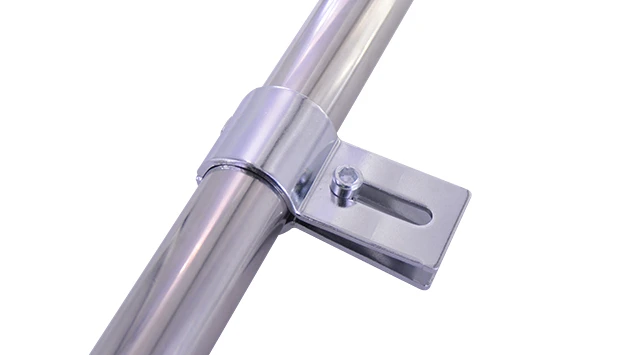
Lean pipe clamp is used for turnover trolley, workbench, flowrack adjust the frame or fix some accessory.
Every warehouse manager knows the drill: a sudden surge in inventory, a new product line with different storage needs, or a shift in workflow that leaves your once-efficient racking system feeling like a relic. In today's fast-paced manufacturing and logistics world, adaptability isn't just a nice-to-have—it's the difference between meeting deadlines and falling behind. That's where lean pipe solutions come in, and at the heart of many of these systems lies an unsung hero: the Lean Pipe Clamp B Chrome. This small but mighty component is changing the game for material rack construction, offering a level of flexibility, durability, and cost-effectiveness that traditional racking simply can't match. In this article, we'll dive deep into how Lean Pipe Clamp B Chrome transforms warehouse efficiency, explore its role in building practical solutions like the Material Rack B (3 Row and 3 Floor), and highlight why partnering with the right lean system supplier is key to unlocking your warehouse's full potential.
The Modern Warehousing Challenge: Why Flexibility Matters
Walk into any busy warehouse, and you'll quickly spot the common pain points: rigid metal racks that take days to reconfigure, welding and drilling that leave permanent marks, and storage systems that can't keep up with shifting product sizes or seasonal demands. Traditional racking solutions, while sturdy, are often designed with a "set it and forget it" mindset—great for static inventory, but disastrous when your business needs to pivot.
Consider this: a electronics manufacturer recently introduced a new line of smaller components. Their existing 4-foot deep racks, once perfect for larger devices, suddenly wasted 30% of vertical space and made picking slow and cumbersome. Rebuilding those racks with traditional methods would have required hiring contractors, halting operations for a week, and spending tens of thousands of dollars. Sound familiar?
This is where lean manufacturing principles meet warehousing: the goal isn't just to store materials—it's to store them in a way that minimizes waste, maximizes flow, and adapts to change. And that's exactly what lean pipe systems, anchored by components like Lean Pipe Clamp B Chrome, are built to do.
Lean Pipe Systems: A Foundation for Adaptable Storage
Lean pipe systems, also known as "kitchen pipe" systems for their early use with galvanized steel pipes and plastic joints, have evolved dramatically over the years. Today's systems combine durable materials like chrome-plated steel, aluminum, and stainless steel with precision-engineered joints and clamps to create structures that are both robust and remarkably flexible.
At the core of these systems are the connections—the joints and clamps that hold everything together. Unlike traditional welding or bolting, lean pipe connections allow for tool-free assembly and disassembly. Need to shorten a rack? Loosen a clamp, adjust the pipe, and tighten it back up. Want to add a shelf? Slide a new clamp into place and secure it. This modularity is why lean pipe systems have become a staple in industries ranging from automotive manufacturing to e-commerce fulfillment.
And among these connections, the Lean Pipe Clamp B Chrome stands out. Its chrome finish isn't just for aesthetics—though it does add a sleek, professional look to any workspace. Chrome plating provides superior corrosion resistance, making it ideal for warehouses with high humidity or frequent cleaning. More importantly, its design ensures a tight, wobble-free hold between pipes, even under heavy loads. Whether you're building a simple workbench or a multi-tiered material rack, this clamp is the quiet workhorse that keeps everything stable and secure.
Spotlight on Lean Pipe Clamp B Chrome: The Unsung Hero of Material Racks
Let's take a closer look at what makes Lean Pipe Clamp B Chrome so essential. At first glance, it might seem like just another metal clamp, but its design is a masterclass in practical engineering. The clamp features a U-shaped body that wraps around two perpendicular pipes, with a threaded bolt that tightens to create a vice-like grip. The chrome plating, typically 0.0005 inches thick, adds a layer of protection against rust and wear, ensuring the clamp maintains its strength even after years of adjustments.
What really sets it apart, though, is its versatility. Lean Pipe Clamp B Chrome works with standard 28mm lean pipes (the most common size in the industry) but can also accommodate variations with minor adjustments. This means you can mix and match pipe materials—galvanized steel for heavy-duty racks, aluminum for lighter, corrosion-resistant setups—without replacing your clamps.
Durability is another key advantage. A single Lean Pipe Clamp B Chrome can support up to 50kg of vertical load, and when used in pairs (as they often are in rack construction), that capacity doubles. This makes them perfect for holding up shelves, bins, and even roller tracks for material flow. And because they're made from high-grade steel, they won't crack or deform under stress, unlike cheaper plastic alternatives that can warp in high temperatures or snap under heavy weights.
Perhaps the biggest benefit, though, is cost savings. Traditional racking requires custom fabrication for every change, which adds up quickly. With Lean Pipe Clamp B Chrome, you can reconfigure a rack in minutes using the same components, reducing downtime and eliminating the need for new parts. Over time, this translates to lower maintenance costs, faster onboarding for new layouts, and a warehouse that can grow with your business without breaking the bank.
Building Material Rack B (3 Row and 3 Floor): A Step-by-Step Guide with Lean Pipe Clamp B Chrome
To truly understand the power of Lean Pipe Clamp B Chrome, let's walk through building one of the most popular lean pipe solutions: Material Rack B, a 3 row and 3 floor storage system designed for small to medium-sized parts. This rack is a favorite among manufacturers and distributors for its compact footprint and high storage density—and it's almost entirely assembled using Lean Pipe Clamp B Chrome.
Step 1: Gather Your Materials
For a standard Material Rack B (3 Row and 3 Floor), you'll need:
-
4 pieces of 1.5mm pe coated lean pipe (180cm long) for the vertical supports
-
6 pieces of 1.5mm pe coated lean pipe (120cm long) for the horizontal shelves (3 rows x 2 per floor)
-
12 Lean Pipe Clamp B Chrome (one for each vertical-horizontal connection)
-
8 pieces of aluminum profile (40mm x 40mm) for shelf reinforcement (optional, for heavier loads)
-
4 caster wheels with brakes (if mobility is needed)
-
A rubber mallet and hex key (for tightening clamps)
Step 2: Assemble the Frame
Start by laying out the four vertical pipes on a flat surface, spaced 60cm apart to form a rectangle. Attach the horizontal pipes to the bottom of the vertical pipes using Lean Pipe Clamp B Chrome: place a clamp around the end of a horizontal pipe, position it 10cm from the bottom of a vertical pipe, and tighten the bolt with the hex key until it's snug (but not over-tightened—you'll want to adjust later). Repeat for all four corners to create the base frame.
Step 3: Add the Shelves
Measure 60cm up from the base frame and attach the next set of horizontal pipes using Lean Pipe Clamp B Chrome—these will be your first floor shelves. Repeat this process at 120cm to create the second floor, ensuring the rows are aligned vertically for stability. For the third floor, attach the final set of horizontal pipes at 180cm, leaving a small gap at the top for overhead clearance.
Step 4: Reinforce and Level
If you're storing heavy items (over 20kg per shelf), add aluminum profile across the horizontal pipes, securing them with additional Lean Pipe Clamp B Chrome. Place a level on each shelf to ensure they're even, adjusting the clamps as needed. Finally, attach the caster wheels to the bottom of the vertical pipes using caster installation bases—now your Material Rack B is mobile, too!
In less than an hour, you've built a sturdy, 3-row, 3-floor rack that can hold hundreds of kilograms of materials. And if tomorrow you need to add a fourth floor or widen the shelves? Simply loosen the clamps, adjust the pipes, and you're done. No welding, no contractors, no downtime. That's the magic of Lean Pipe Clamp B Chrome.
Complementary Components: Aluminum Profiles, Roller Tracks, and More
While Lean Pipe Clamp B Chrome is the backbone of Material Rack B, it rarely works alone. To create a truly efficient storage system, you'll want to pair it with complementary components that enhance flow, organization, and accessibility. Let's break down a few key players:
Aluminum Profiles: Strength Meets Lightweight Design
Aluminum profiles, like the 4040 or 3030 series, are often used alongside lean pipes to add rigidity to shelves and workbenches. Their T-slot design allows for easy attachment of accessories like bins, tool holders, and labels, making them perfect for organizing small parts on Material Rack B. When combined with Lean Pipe Clamp B Chrome, aluminum profiles create a hybrid system that's both lightweight (easier to move) and strong (capable of supporting heavy loads).
Roller Tracks: Streamlining Material Flow
Roller tracks, such as the plastic roller track guide rail yellow or aluminum roller track black esd, are game-changers for moving materials along shelves. Installed on the horizontal pipes of Material Rack B, these tracks use gravity to slide bins or boxes from the back to the front, reducing the need for workers to reach or bend. To attach roller tracks to your rack, use roller track placon mount for aluminum profile flat—these small brackets secure the track to the aluminum profiles (or directly to lean pipes with Lean Pipe Clamp B Chrome), ensuring a smooth, wobble-free glide.
Swivel Roller Balls: 360-Degree Accessibility
For items that need to be rotated or moved in multiple directions (like large boxes or tooling plates), swivel roller balls (1 inch or 0.5 inch) are a must. These small, spherical rollers can be mounted on the shelves of Material Rack B using adhesive or screws, allowing materials to glide in any direction with minimal effort. Pair them with Lean Pipe Clamp B Chrome-secured guardrails to prevent items from sliding off, and you've got a shelf that's both functional and safe.
Casters and Accessories: Mobility on Demand
We touched on caster wheels earlier, but it's worth emphasizing how they transform static racks into dynamic tools. Heavy-duty flat swivel castor wheels with brakes, attached to the base of Material Rack B using castor installation bases, let you move the entire rack to where it's needed—whether that's next to an assembly line during production or into a storage area during slow periods. And with Lean Pipe Clamp B Chrome, you can even add adjustable caster accessories like height extenders to level the rack on uneven floors.
Together, these components create a system that's greater than the sum of its parts. Lean Pipe Clamp B Chrome holds it all together, while aluminum profiles, roller tracks, and casters turn a basic rack into a hub of efficiency.
Choosing the Right Lean System Supplier: What to Look For
You've decided to invest in lean pipe solutions—now comes the critical step: choosing a lean system supplier. With so many options on the market, it's easy to get swayed by low prices or flashy catalogs, but the wrong supplier can turn your efficiency dream into a logistical nightmare. Here's what to prioritize:
Quality of Components, Especially Clamps
The durability of your entire system hinges on the quality of its parts, and Lean Pipe Clamp B Chrome is no exception. Ask suppliers about the chrome plating thickness (aim for at least 0.0005 inches), the grade of steel used (high-carbon steel is best for strength), and whether the clamps undergo load testing. A reputable supplier will happily share certifications or test results—if they hesitate, walk away.
Range of Accessories
A good lean system supplier should offer more than just pipes and clamps. Look for a wide selection of aluminum profiles, roller tracks, swivel roller balls, and caster accessories to ensure you can customize your Material Rack B (or any other structure) to your exact needs. The last thing you want is to source components from multiple suppliers, leading to compatibility issues and delayed shipments.
Technical Support and Expertise
Even seasoned warehouse managers can use a little help when designing a new system. Does the supplier offer design consultations or layout templates for common setups like Material Rack B? Do they have a team that can answer questions about load capacities or assembly techniques? Opt for suppliers with in-house experts who understand lean principles—they'll help you avoid costly mistakes and maximize your investment.
Lead Times and Reliability
In warehousing, downtime is money. A supplier with long lead times or inconsistent stock can derail your project before it starts. Ask about their inventory levels for core components like Lean Pipe Clamp B Chrome and aluminum profiles, and check reviews from other customers to ensure they deliver on time, every time.
Pricing Transparency
Beware of hidden fees for shipping, customization, or small orders. A trustworthy supplier will provide clear, upfront pricing and even offer bulk discounts for large orders (like if you're building multiple Material Rack B units). Don't be afraid to negotiate—many suppliers are willing to work with you to meet your budget, especially if you're a repeat customer.
By prioritizing these factors, you'll find a lean system supplier that doesn't just sell parts—they become a partner in your warehouse's success.
Real-World Impact: Case Studies of Enhanced Efficiency
Still not convinced that Lean Pipe Clamp B Chrome and Material Rack B can transform your warehouse? Let's look at two real-world examples:
Case Study 1: Automotive Parts Distributor
A mid-sized automotive parts distributor was struggling with disorganized storage of small components (bolts, washers, gaskets). Their traditional static racks were overflowing, and picking times averaged 15 minutes per order—way too slow for their same-day shipping. They partnered with a lean system supplier to install 10 Material Rack B units (3 row and 3 floor), each equipped with Lean Pipe Clamp B Chrome, aluminum profiles, and yellow plastic roller track guide rails.
The results? By organizing parts into color-coded bins on the roller tracks, picking times dropped to 5 minutes per order. The adjustable shelves allowed them to resize bins as inventory changed, and the mobile racks (thanks to caster wheels) could be wheeled directly to packing stations during peak hours. In six months, they reduced labor costs by 20% and increased order fulfillment by 35%.
Case Study 2: Electronics Manufacturer
An electronics manufacturer producing circuit boards needed a way to store sensitive components (ESD-sensitive parts) while maintaining a clean, static-free environment. They chose ESD workstation units paired with Material Rack B, using stainless steel swivel roller balls 1 inch on the shelves to minimize friction and static buildup. Lean Pipe Clamp B Chrome, with its corrosion-resistant finish, ensured the racks would withstand daily cleaning with anti-static solutions.
The modular design proved invaluable when they introduced a new circuit board size: instead of buying new racks, they adjusted the Lean Pipe Clamp B Chrome to widen the shelves by 10cm, a process that took two employees just 30 minutes. This adaptability saved them over $15,000 in new equipment costs and kept production on track.
Future-Proofing Your Warehouse: Scaling with Lean Pipe Solutions
The only constant in warehousing is change. New products, shifting consumer demands, and evolving technology will always require your storage systems to adapt. Lean pipe solutions, centered around components like Lean Pipe Clamp B Chrome, are built for this reality.
Think about it: when your business grows, you won't need to tear down your existing racks—just add more pipes and clamps. When a new regulation requires taller safety guards, you can attach them with aluminum profile accessories. When you adopt automation, roller tracks and swivel roller balls can integrate seamlessly with robotic pickers. This scalability isn't just convenient—it's essential for long-term success.
And as lean manufacturing principles continue to evolve, so too will lean pipe systems. Innovations like aluminum lean pipe (lighter, more corrosion-resistant than steel) and internal rotatary aluminum joints (for even more flexible connections) are already hitting the market, offering even greater possibilities for customization. By investing in Lean Pipe Clamp B Chrome and partnering with a forward-thinking lean system supplier, you're not just solving today's storage problems—you're building a foundation for tomorrow's growth.
Traditional Racking vs. Lean Pipe Racking: A Comparison
| Feature | Traditional Racking | Lean Pipe Racking (w/ Lean Pipe Clamp B Chrome) |
|---|---|---|
| Assembly Time | Days (requires welding/drilling) | Hours (tool-free with clamps) |
| Reconfigurability | Limited (permanent connections) | Unlimited (adjust clamps in minutes) |
| Cost | High (custom fabrication + labor) | Low (modular components, DIY assembly) |
| Durability | High (but prone to rust without coating) | High (chrome-plated clamps, corrosion-resistant) |
| Flexibility | Low (fixed sizes, hard to adapt) | High (mix materials, add accessories easily) |
| Weight Capacity | Very high (steel beams) | High (up to 50kg per clamp, scalable with multiple clamps) |
Final Thoughts: Your Warehouse Deserves Better Than Static Racking
In a world where efficiency and adaptability are non-negotiable, settling for rigid, outdated racking is a choice that will cost you time, money, and opportunities. Lean Pipe Clamp B Chrome isn't just a component—it's a catalyst for change, turning ordinary storage into a dynamic, responsive system that grows with your business. Whether you're building a Material Rack B (3 Row and 3 Floor) for small parts, integrating roller tracks for smoother flow, or scaling up with aluminum profiles and casters, the power to transform your warehouse is in your hands.
So take the first step: reach out to a reputable lean system supplier, ask about Lean Pipe Clamp B Chrome, and start designing a racking system that works for you—not against you. Your future self (and your bottom line) will thank you.