Warehousing Success Story: Four Way Straight Lean Pipe Joint in Material Rack B Efficiency Gains

Related Product
Four Way Straight Lean Pipe Joint
Four way lean pipe joint for 4 pcs 28MM lean pipe connection in straight angle, which used widely in workbench, flow rack, hand trolley frame connection.
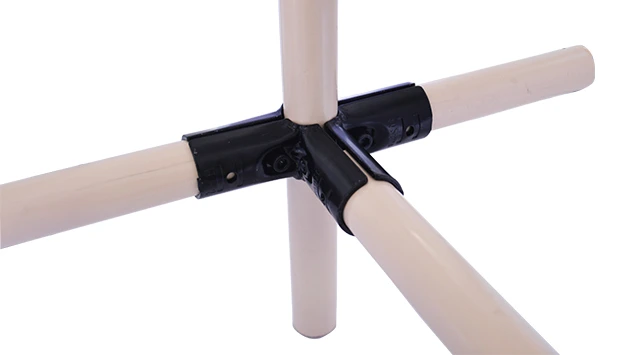
Four Way Straight Lean Pipe Joint
Every warehouse manager knows the feeling: you walk through the facility, and instead of a smooth, humming operation, you're met with bottlenecks. Pallets stacked haphazardly, workers spending too long hunting for parts, and shelves that never seem to fit the changing needs of production. That was exactly the scenario at PrecisionWorks Manufacturing, a mid-sized electronics assembly plant in Ohio, back in early 2024. Their material storage system was stuck in the past—rigid, disorganized, and costing the team hours of valuable time each week. But today, thanks to a simple yet game-changing upgrade involving Material Rack B (3 row and 3 floor) and a but powerful component called the four way straight lean pipe joint, their warehouse has transformed into a model of efficiency. This is the story of how the right tools turned chaos into clarity, and frustration into pride.

The Problem: A Warehouse Stuck in Neutral

PrecisionWorks specializes in assembling circuit boards for medical devices—a field where precision and speed are non-negotiable. By late 2023, their warehouse was struggling to keep up. The main issue? Their old storage racks. Built from fixed steel shelving, they were installed over a decade ago and hadn't changed since. "We'd outgrown them within the first two years," recalls Maria Gonzalez, the warehouse operations manager. "Every time we added a new product line, we'd have to jury-rig the shelves with zip ties or extra planks. It was unsafe, and it looked it."
The problems weren't just cosmetic. The team was losing 15-20 minutes per pick because parts were scattered across mismatched shelves. Error rates were creeping up—1 in 20 orders had a wrong part or missing component—delaying production downstream. And with new safety regulations requiring clearer walkways, the cluttered aisles were a liability. "I remember a new hire, Jake, tripped over a loose pallet last November," Maria says, wincing. "He was fine, but that was the wake-up call. We needed a system that could grow with us, not hold us back."
Maria and her team started researching solutions. They considered traditional steel racks, but the lead times were too long, and customization was expensive. Then, a colleague mentioned a local lean pipe supplier who specialized in modular systems. "I was skeptical at first," Maria admits. "Lean systems sounded like buzzwords. But when I visited their showroom and saw how flexible the racks were—built from simple pipes and joints that you could assemble like giant Tinkertoys—I was intrigued."

The Solution: Material Rack B and the Four Way Straight Lean Pipe Joint

The lean pipe supplier listened to PrecisionWorks' needs: they needed a rack that could handle small parts (resistors, capacitors) and larger components (circuit board frames), with easy access from both sides of the aisle. The supplier's recommendation? Material Rack B (3 row and 3 floor), a modular shelving unit designed for high-density storage. What made it stand out, though, was the use of four way straight lean pipe joints to connect the aluminum lean pipes.
"At first, I didn't get why the joint mattered so much," Maria says. "But the supplier explained: the four way straight lean pipe joint is like the backbone of the system. It's a small, metal connector that lets you attach four pipes at once—up, down, left, right—creating a grid that's both sturdy and adjustable. Traditional joints only handle two or three directions, which limits how you can build. With four way joints, we could customize each shelf's height, depth, and even add dividers without welding or drilling."
Material Rack B itself was a perfect fit. With three rows and three floors, it maximized vertical space without towering so high that workers needed ladders. The supplier suggested integrating roller track along the front edges of the shelves—another lean principle—to let parts glide forward as the front items were picked, eliminating the need to reach to the back. "That roller track was a game-changer," says Raj Patel, a senior warehouse associate. "Before, I'd have to climb halfway into the shelf to grab a box from the back. Now, it slides right to me. My back doesn't ache anymore at the end of the day."
The assembly process was surprisingly straightforward. The lean pipe supplier delivered pre-cut aluminum lean pipes, four way joints, and roller track components, and Maria's team assembled the first rack in under two hours. "We were nervous we'd need experts, but the joints just click into place—no tools required, except a rubber mallet to tap them tight," Maria laughs. "Even our intern, Lila, who'd never built anything more complex than a bookshelf, put together the second rack by herself."

The Results: From Frustration to Flow

The transformation didn't happen overnight, but within a month, the changes were undeniable. To quantify the impact, Maria's team tracked key metrics for three months before and after the upgrade. The results, compiled in the table below, speak for themselves:
Metric Before (Q4 2023) After (Q2 2024) Improvement
Time per pick (minutes) 12.5 6.8 45.6% faster
Error rate (per 100 orders) 5.2 1.1 78.8% reduction
Storage capacity (parts per sq. ft.) 18 27 50% increase
Staff satisfaction score (1-10) 5.3 8.7 64.2% happier team
"The error rate drop was the biggest shocker," Maria says. "With the four way joints, we could label each shelf clearly and keep like parts together. No more mixing resistors with capacitors because there wasn't space. And the roller track means we always use the oldest parts first—no more expired inventory, which was another hidden cost we didn't realize we had."
The human impact has been just as significant. "I used to dread coming in early to restock," Raj says. "Now, the racks are so easy to adjust that I can reconfigure a shelf in 10 minutes if we get a new shipment. And the aisles are wide and clear—no more tripping hazards. It feels like we're finally working with the warehouse, not against it."
"The four way straight lean pipe joint might not look like much, but it's the reason this worked. It's strong enough to hold heavy boxes, but flexible enough that when we added a new product line last month, we just unscrewed a few joints and added a new shelf. No contractors, no downtime. That's the power of lean—simple tools solving big problems." — Maria Gonzalez, Warehouse Operations Manager, PrecisionWorks Manufacturing

Looking Ahead: A Lean Future

Today, PrecisionWorks is expanding their lean system to other areas of the warehouse. They've added more Material Rack B units and are experimenting with turnover trolleys built from the same lean pipe and accessories. "We're even using the four way joints to build custom workbenches in the assembly area," Maria says. "The supplier told us, 'Your only limit is your imagination,' and they weren't kidding."
For other warehouses struggling with inefficiency, Maria has a simple piece of advice: "Don't underestimate the power of modularity. We wasted years thinking we needed a 'perfect' solution, but the best systems are the ones that can adapt. The four way straight lean pipe joint and Material Rack B weren't the most expensive option—but they were the right one. And right now, our team is prouder than ever to show off the warehouse. That's the real success."
As for the old steel racks? They've been donated to a local vocational school, where students are learning to repurpose them. "Full circle," Maria smiles. "Just like our warehouse—turning something outdated into something useful again."


Get In Touch with us

Hey there! Your message matters! It'll go straight into our CRM system. Expect a one-on-one reply from our CS within 7×24 hours. We value your feedback. Fill in the box and share your thoughts!