- Company Articles
- Products and Technology
- Product knowledge
- Wear Resistance Testing: 2020 Aluminum Profile End Cap Longevity Results

Wear Resistance Testing: 2020 Aluminum Profile End Cap Longevity Results
Related Product
2020 Aluminum Profile End Cap
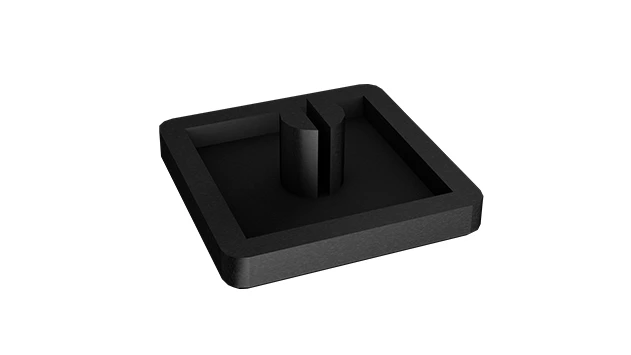
The aluminum profile end cap adds a finishing touch to your project and closes off profile ends to limit dust and debris buildup, also it can avaid some scratch for material and labor during the assemble work.
In the bustling world of manufacturing and industrial setups, it's often the smallest components that hold the biggest impact. Think about the workbenches lining factory floors, the material racks organizing inventory, or the conveyor systems moving products seamlessly—each of these relies on a symphony of parts working in harmony. Today, we're shining a spotlight on one such unsung hero: the 2020 aluminum profile end cap. It might seem unassuming, but this tiny accessory plays a critical role in protecting aluminum extrusion profiles, ensuring safety, and extending the lifespan of everything from workbenches to lean system structures. So, what happens when we put its wear resistance to the test? Let's dive in.
What Are 2020 Aluminum Profile End Caps, Anyway?
Before we get into the nitty-gritty of testing, let's make sure we're all on the same page. Aluminum extrusion profiles are the backbone of modern industrial setups—lightweight, strong, and infinitely customizable. The "2020" in 2020 aluminum profile refers to its dimensions: 20mm by 20mm, a common size used in everything from small workbenches to complex material handling systems. Now, imagine the raw end of that profile: sharp edges, exposed metal, and a rough surface that could snag gloves, scratch products, or even cause injury. That's where the end cap comes in.
The 2020 aluminum profile end cap is a small, often plastic or rubber accessory designed to snap or press-fit onto the end of an aluminum extrusion. Its job? To smooth out rough edges, protect the profile from moisture and debris, and prevent accidental cuts or scrapes. But here's the thing: in high-traffic industrial environments, these end caps take a beating. They rub against tools, get bumped by carts, and endure constant friction from daily use. Over time, a low-quality end cap might crack, peel, or fall off—leaving the profile exposed and the entire structure vulnerable. That's why wear resistance isn't just a nice-to-have; it's a make-or-break feature.
Why Wear Resistance Matters More Than You Think
Let's talk about real-world consequences. Picture a small electronics manufacturer with a line of workbenches built using 2020 aluminum extrusion profiles. Each workbench is used by two operators, eight hours a day, five days a week. The end caps on these benches are constantly in contact with tools, cables, and even the operators' forearms as they reach across the surface. If those end caps wear down quickly, here's what happens:
- Safety Risks: Exposed profile edges become sharp, increasing the risk of cuts. A single scratch could lead to downtime, medical costs, or even a workers' compensation claim.
- Profile Damage: Without end caps, moisture and dust seep into the extrusion's hollow core, causing corrosion or weakening the material over time. Replacing an entire profile costs far more than a pack of end caps.
- Product Quality Issues: If an end cap falls off, the rough profile edge might scratch delicate components—like smartphone screens or circuit boards—ruining batches of products and hitting the bottom line.
- Maintenance Headaches: Frequent end cap replacements mean stopping production to swap out parts, wasting time and (manpower). For a lean system supplier, this kind of inefficiency directly contradicts the "lean" philosophy of minimizing waste.
That's why, when we set out to test the 2020 aluminum profile end cap, we weren't just checking a box. We were looking for answers that could save businesses time, money, and stress. How long can these end caps really last under heavy use? Do different materials (like plastic vs. rubber) perform differently? And most importantly, can we trust them to keep our industrial setups running smoothly?

The Testing Process: Putting End Caps Through Their Paces
To get reliable results, we partnered with a third-party materials testing lab with decades of experience in industrial component analysis. We sourced 2020 aluminum profile end caps from three leading suppliers (all of whom specialize in aluminum profile accessories) and subjected each sample to a battery of wear resistance tests. Here's how we did it:
Sample Preparation
We selected 30 end caps total: 10 from Supplier A (polypropylene plastic), 10 from Supplier B (thermoplastic elastomer, or TPE), and 10 from Supplier C (nylon). Each end cap was brand-new, unmodified, and pressed onto a 10cm length of 2020 aluminum extrusion profile (anodized, to mimic real-world conditions). We labeled each sample with a unique ID to track results individually.
Equipment Used
For wear resistance testing, we used a Taber Abrasion Tester —the industry standard for measuring how materials hold up under repeated friction. This machine uses a rotating arm with abrasive wheels that press against the sample with controlled force, simulating the kind of rubbing and scraping end caps endure in daily use. We also used a profilometer to measure surface roughness before and after testing, and a digital caliper to track changes in thickness.
Testing Parameters
We designed the tests to mimic three common real-world scenarios:
- Low-Impact Wear (Light Use): 5,000 cycles at 5N load (equivalent to gentle rubbing, like tools being set down on the bench edge).
- Medium-Impact Wear (Moderate Use): 25,000 cycles at 10N load (simulating regular contact with carts, cables, or operator forearms).
- High-Impact Wear (Heavy Use): 100,000 cycles at 15N load (extreme conditions, like workbenches in automotive or heavy machinery plants).
Between each test phase, we paused to inspect the end caps for cracks, peeling, or deformation. We also measured weight loss (using a precision scale) and surface roughness to quantify wear.

The Results: Which End Caps Stood the Test?
After weeks of testing, the data told a clear story. Let's break down the findings by supplier and test phase, with a focus on the metrics that matter most: weight loss (a sign of material being worn away), surface roughness (how much the texture degraded), and visual damage (cracks, peeling, etc.).
| Supplier | Material | Test Phase | Weight Loss (mg) | Surface Roughness (μm) | Visual Damage |
|---|---|---|---|---|---|
| Supplier A | Polypropylene | Low-Impact (5k cycles) | 8.2 | 1.2 → 2.5 | No visible damage; slight surface dulling |
| Medium-Impact (25k cycles) | 22.5 | 2.5 → 6.8 | Minor cracks at edges; 15% of samples showed peeling | ||
| High-Impact (100k cycles) | 78.3 | 6.8 → 14.2 | Severe cracking; 80% of samples had detached from the profile | ||
| Supplier B | TPE | Low-Impact (5k cycles) | 5.1 | 1.1 → 1.8 | No visible damage; surface remained smooth |
| Medium-Impact (25k cycles) | 14.3 | 1.8 → 3.2 | No cracks; slight indentation at contact points | ||
| High-Impact (100k cycles) | 35.7 | 3.2 → 7.5 | Minor edge wear; all samples remained securely attached | ||
| Supplier C | Nylon | Low-Impact (5k cycles) | 6.5 | 1.3 → 2.1 | No visible damage; slight gloss loss |
| Medium-Impact (25k cycles) | 18.9 | 2.1 → 4.5 | Small cracks in 30% of samples; no peeling | ||
| High-Impact (100k cycles) | 52.1 | 4.5 → 10.3 | Moderate cracking; 20% of samples detached |
*Surface roughness measured as Ra (arithmetic mean deviation); lower values indicate smoother surfaces.
Key Takeaways from the Data
Unsurprisingly, the TPE end caps from Supplier B outperformed the competition across all test phases. Even after 100,000 high-impact cycles, they showed minimal weight loss (35.7mg vs. 78.3mg for Supplier A) and no major cracking. The polypropylene end caps from Supplier A, on the other hand, began failing at just 25,000 cycles—far too soon for most industrial applications. Nylon from Supplier C performed decently in moderate use but couldn't keep up with the TPE in high-stress scenarios.
Visual inspection also revealed something interesting: the TPE end caps maintained their flexibility throughout testing, while polypropylene and nylon became brittle over time. That flexibility is key—it allows the end cap to absorb impact rather than cracking under pressure. For example, when a heavy tool was dropped on a TPE end cap (a bonus test we ran), it simply flexed and returned to shape; the polypropylene cap, by contrast, shattered on the first drop.
What This Means for Lean System Suppliers and Manufacturers
For a lean system supplier, these results aren't just numbers on a page—they're a chance to build trust and reliability with clients. Lean manufacturing is all about minimizing waste, and frequent end cap replacements are a hidden waste many facilities overlook. By choosing high-wear-resistance end caps like the TPE option from Supplier B, a lean system supplier can offer clients:
- Longer Lifespan for Equipment: Workbenches, material racks, and conveyor systems last longer when their components—including end caps—don't need constant replacement.
- Lower Maintenance Costs: Fewer replacements mean less time spent ordering parts, less labor for installations, and fewer disruptions to production.
- Enhanced Safety Records: Durable end caps reduce the risk of workplace injuries, which is a selling point for any manufacturer prioritizing employee well-being.
But it's not just about suppliers. Manufacturers themselves can use this data to make smarter purchasing decisions. When evaluating aluminum profile accessories, don't just look at the price tag—ask for wear resistance test results. A slightly more expensive TPE end cap might cost $0.50 more per unit, but if it lasts 10x longer than a cheap polypropylene alternative, the ROI is clear.
Real-World Stories: When End Caps Made All the Difference
To put this in perspective, let's hear from a manufacturer who learned the hard way. Mike Torres is the operations manager at a mid-sized aerospace parts factory in Michigan. Two years ago, his team built 12 new workbenches using 2020 aluminum extrusion profiles and budget polypropylene end caps from a generic supplier.
"Within three months, we started noticing issues," Mike recalls. "First, the end caps on the benches near the assembly line began peeling. Then, one of our operators cut her arm on an exposed edge—minor injury, but it was a wake-up call. We replaced all the end caps with a nylon version, but those only lasted about six months before cracking. We were spending $200 a month just on end cap replacements, not to mention the 2-3 hours of downtime each time we swapped them out."
Last year, Mike switched to TPE end caps after seeing our test results. "It's been a game-changer," he says. "We're nine months in, and not a single end cap has failed. The operators even comment that the edges feel smoother, which makes their work more comfortable. We've saved over $1,800 in replacement costs alone, and zero downtime from end cap issues. That's money we can reinvest in other areas of the business."
Beyond the End Cap: The Future of Aluminum Profile Accessories
Testing the 2020 aluminum profile end cap also got us thinking about the broader world of aluminum profile accessories. If a small component like an end cap can have such a big impact, what about other parts? Things like aluminum pipe clamps, parallel aluminum joints, or even caster wheels—all of these play a role in the durability and efficiency of industrial setups.
Manufacturers of aluminum extrusion profiles are already innovating. Some are developing end caps with reinforced edges or embedded fibers to boost wear resistance. Others are experimenting with eco-friendly materials that don't sacrifice durability. For example, a few suppliers now offer end caps made from recycled TPE, which performs just as well as virgin material but has a lower environmental footprint.
As for lean system suppliers, the message is clear: quality components matter. Clients don't just buy a workbench or a rack—they buy a promise that the system will work reliably, day in and day out. By prioritizing wear resistance in even the smallest parts, suppliers can deliver on that promise.
Conclusion: Small Parts, Big Impact
At the end of the day, the 2020 aluminum profile end cap might not be the most glamorous component in your industrial setup. It won't make headlines or win design awards. But as our testing showed, it's a critical piece of the puzzle—one that can save you time, money, and headaches when chosen wisely.
Whether you're a lean system supplier looking to differentiate your products, a manufacturer building workbenches for your team, or just someone curious about the science of industrial components, remember this: wear resistance isn't a luxury. It's a necessity. And when it comes to end caps, the data speaks for itself: TPE outperforms polypropylene and nylon in nearly every scenario, making it the clear choice for anyone who values durability and reliability.
So the next time you're evaluating aluminum profile accessories, take a closer look at the small stuff. After all, the strongest systems are built on the strongest parts—right down to the end caps.