- Company Articles
- Products and Technology
- Product knowledge
- Weather-Resistant Castor Install Base: Ideal for Outdoor Warehousing Applications

Weather-Resistant Castor Install Base: Ideal for Outdoor Warehousing Applications
Related Product
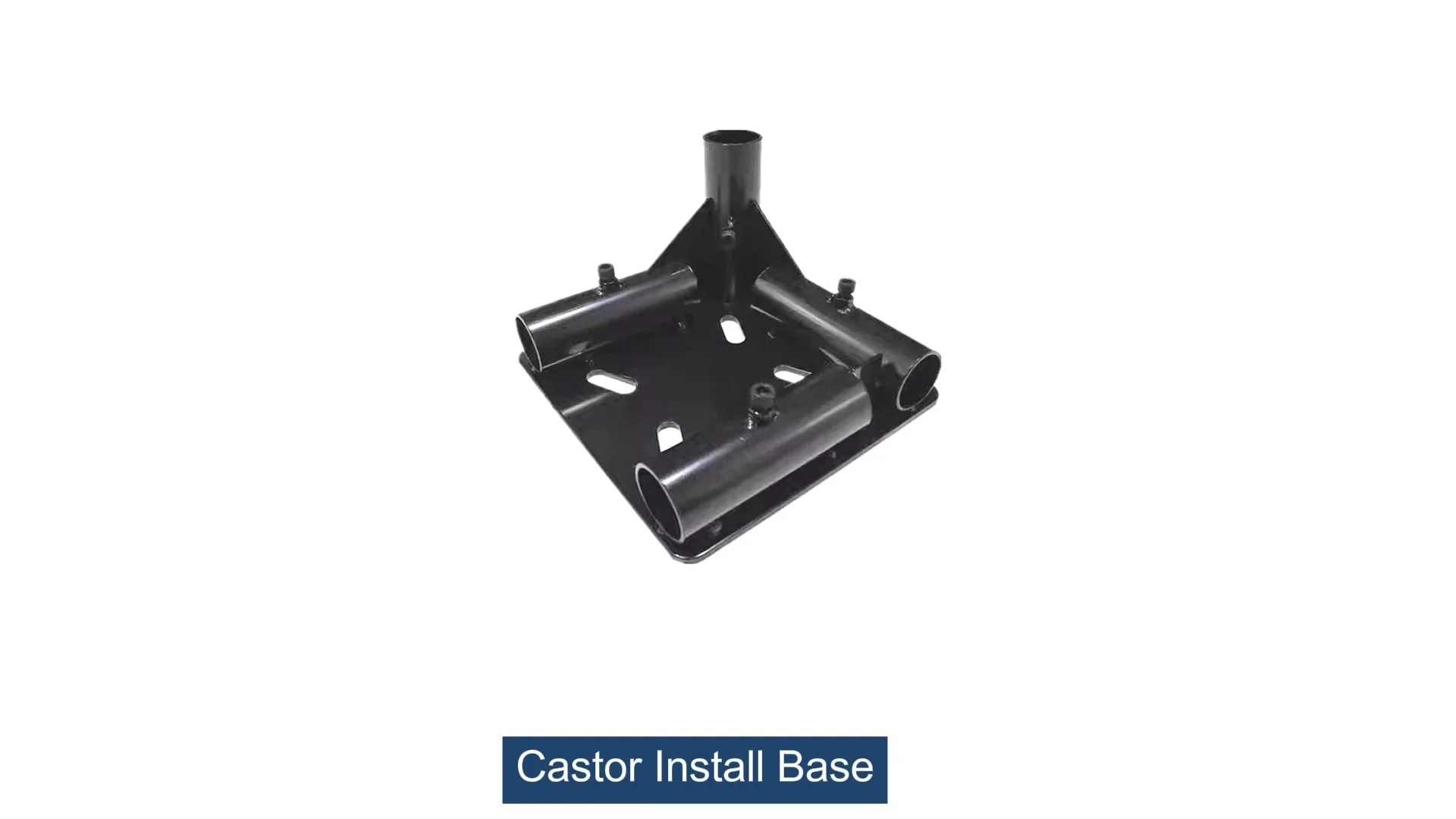
Castor Install Base
Castor install base, used for connection between pipe and castor, it can connect 4 pcs pipe by 1 pcs castor base, to make the structure strong and stable.
Outdoor warehousing is a world of extremes. One day, the sun blazes down, turning metal surfaces into hazards; the next, rain pours, leaving puddles that seep into every crack. Throw in humidity, salt spray (for coastal facilities), and the occasional hailstorm, and you've got a recipe for equipment that's constantly fighting for survival. Trolleys get stuck, workbenches wobble, and material racks start to rust—all because the unsung parts holding them together weren't built to handle the elements. If you've ever watched a once-sturdy turnover trolley grind to a halt because its caster mount corroded through, you know the frustration. But what if there was a simple fix to this cycle of wear and tear? Enter the weather-resistant castor install base: a small component with a huge impact on keeping outdoor warehouses running smoothly.
What Even Is a Castor Install Base, Anyway?
Let's start with the basics. A castor install base is the bridge between your equipment and its casters. It's the metal (or sometimes plastic) plate or bracket that bolts to the bottom of a workbench, trolley, or rack, giving the caster wheels a stable place to attach. Think of it as the foundation of your equipment's mobility—if the base fails, the casters wobble, the load shifts, and suddenly that "easy to move" trolley becomes a safety risk. In indoor warehouses, a basic steel base might do the trick. But outdoors? That's where standard bases meet their match.
Weather-resistant castor install bases are designed specifically for the chaos of outdoor environments. They're not just "stronger" versions of regular bases; they're engineered to fight back against rust, UV damage, and temperature swings. And in outdoor warehousing, where equipment is exposed to the elements 24/7, that difference isn't just nice to have—it's essential.
5 Features That Make Weather-Resistant Bases a Game-Changer
Not all castor install bases are created equal. Here's what sets weather-resistant models apart from their indoor-only cousins:
1. Corrosion-Resistant Materials: The number one enemy of outdoor equipment is rust, and weather-resistant bases tackle this head-on. Many are made from stainless steel (think "stainless steel pipe series" durability) or aluminum with a thick, anti-corrosive coating. Stainless steel, in particular, is a standout—it resists moisture, salt, and even chemical spills, making it perfect for coastal or industrial outdoor spaces. Unlike plain steel, which starts rusting at the first drop of rain, these materials keep their structural integrity for years.
2. UV-Stabilized Coatings: Sunlight might seem harmless, but UV rays break down materials over time, causing cracks, fading, and brittleness. Weather-resistant bases often include UV-stabilized paints or powder coatings that reflect sunlight and prevent degradation. This means even after months baking in the summer sun, the base won't warp or lose its grip on the casters.
3. Heavy-Duty Load Capacity: Outdoor tasks often mean heavier loads—think pallets of supplies, stacks of tools, or bulky equipment. Weather-resistant bases are built to handle this, with reinforced corners and thicker materials that can support hundreds (even thousands) of pounds without bending. A standard base might bow under pressure; a weather-resistant one stays rigid, keeping your equipment stable.
4. Compatibility with Caster Accessories: What good is a tough base if you can't swap out caster wheels or add brakes? These bases are designed with versatility in mind, featuring pre-drilled holes and standardized sizing that work with common caster accessories. Need to upgrade to larger caster wheels for rough terrain? No problem. Want to add a locking brake for safety? The base has you covered.
5. Adjustable Design (Because Outdoor Floors Are Never Perfect): Outdoor warehouse floors are rarely smooth. Cracks, potholes, and uneven pavement are par for the course. Many weather-resistant bases come with built-in adjustable leveling feet—small, threaded pads that let you tweak the base's height to keep equipment steady, even on wonky surfaces. No more wobbly workbenches or trolleys that veer off course!

Why Skimping on This Part Costs You More in the Long Run
It's easy to think, "Why spend extra on a 'fancy' base? A regular one works fine." But outdoor warehousing is all about long-term costs. Let's break it down:
Downtime Adds Up: A corroded base can cause a caster to seize or detach mid-shift. Suddenly, your team is stuck manually hauling goods, deadlines get missed, and frustration levels spike. Replacing a base might take an hour, but the lost productivity? That's far pricier.
Safety Risks Are Real: Wobbly equipment isn't just annoying—it's dangerous. A workbench with a failing base could tip over, spilling tools or injuring someone. A trolley that veers because of uneven casters might crash into inventory. OSHA fines and workers' comp claims? Those make the cost of a weather-resistant base look tiny by comparison.
You'll replace It Anyway: A standard castor install base might last 6 months to a year outdoors before rust or UV damage takes hold. A weather-resistant one? 5 years or more. Do the math: replacing a $20 base every year vs. a $50 base every 5 years. Which is cheaper? Spoiler: It's the $50 one.

Where Does It Actually Get Used? Real-World Applications
Weather-resistant castor install bases aren't just for "big" equipment—they're everywhere you need mobility and durability outdoors. Let's look at a few common scenarios:
Outdoor Workbenches: Many warehouses use portable workbenches for tasks like labeling, sorting, or light assembly in open yards. Without a weather-resistant base, rain can seep into the bench's frame, causing the caster mounts to rust. Over time, the bench becomes unstable, making it unsafe to use. A stainless steel or aluminum base keeps the bench level and secure, even after months of exposure.
Turnover Trolleys and Racks: These are the workhorses of outdoor warehouses—hauling everything from pallets of fertilizer to stacks of building materials. When a trolley's castor base corrodes, the wheels start to wobble, making it hard to push (or worse, causing the load to shift). A weather-resistant base ensures the trolley glides smoothly, whether it's rolling through a puddle or baking in the sun.
Material Racks: Even stationary material racks sometimes need to be repositioned—say, to make space for a delivery or rearrange inventory. A rack with a flimsy base might bend or crack when you try to move it. But with a heavy-duty, weather-resistant base, you can shift the rack without worrying about it falling apart mid-move.
Mobile Tool Carts: Mechanics or maintenance teams working outdoors rely on tool carts to keep equipment organized. A cart with a rusted base might drop tools or tip over, putting both the tools and the worker at risk. A weather-resistant base keeps the cart stable, even when bouncing over rough pavement.

Weather-Resistant vs. Standard: The Numbers Don't Lie
| Feature | Standard Castor Install Base | Weather-Resistant Castor Install Base |
|---|---|---|
| Primary Material | Mild steel or plastic (prone to rust/UV damage) | Stainless steel, aluminum, or coated steel (corrosion-resistant) |
| Corrosion Resistance | Low—rusts in moisture; degrades in salt/humidity | High—resists rain, salt spray, and humidity |
| UV Stability | Poor—fades/cracks after 3–6 months of sun exposure | Excellent—UV-stabilized coatings prevent degradation |
| Typical Outdoor Lifespan | 6–12 months | 5+ years |
| Maintenance Needs | Frequent—requires sanding, repainting, and part replacements | Minimal—occasional cleaning and lubrication |
Caring for Your Weather-Resistant Base (Yes, It Still Needs Love!)
Even the toughest weather-resistant base needs a little maintenance to stay in top shape. Here's how to keep it performing for years:
1. Keep It Clean: Dirt, leaves, and debris can trap moisture against the base, leading to (you guessed it) rust. Wipe it down with a damp cloth every few weeks, and hose it off if it gets really dirty. For coastal areas, a quick rinse with fresh water after exposure to salt spray helps prevent buildup.
2. Lubricate the Joints: The bolts and connection points on the base can seize up if they get wet and dirty. A light spray of silicone lubricant (avoid oil-based lubes, which attract dirt) every month keeps them easy to adjust or replace.
3. Check for Wear: Inspect the base for cracks, bent metal, or loose bolts every few months. If you notice a crack in the coating, touch it up with a rust-resistant paint to prevent further damage. And if a bolt is stripped? replace it immediately—don't wait for the whole base to fail.
4. Pair It with Quality Casters: A great base can't make up for shoddy casters. Invest in weather-resistant caster wheels and caster accessories (like brakes or wheel guards) to ensure the entire system works together. Remember: the base is only as strong as the parts it's holding.
Final Thought: It's the Little Parts That Keep the Big Operations Running
Outdoor warehousing is full of big challenges—from logistics to labor to weather. But often, the solution starts with the smallest parts. A weather-resistant castor install base might not get the same attention as a new conveyor system or a fleet of forklifts, but it's the difference between a warehouse that's constantly fixing equipment and one that's focused on getting work done. It's the quiet hero that keeps your workbenches steady, your trolleys rolling, and your team safe—no matter what the sky throws at you.
So the next time you're shopping for outdoor warehouse equipment, don't just look at the "big" specs. Ask about the base. Ask about the materials. Ask, "Is this built to last out here?" Your future self (and your budget) will thank you.