- Company Articles
- Products and Technology
- Product knowledge
- Weight Advantage of Gusset ALP 4040: Lightweight Solutions for Mobile Applications

Weight Advantage of Gusset ALP 4040: Lightweight Solutions for Mobile Applications
Related Product
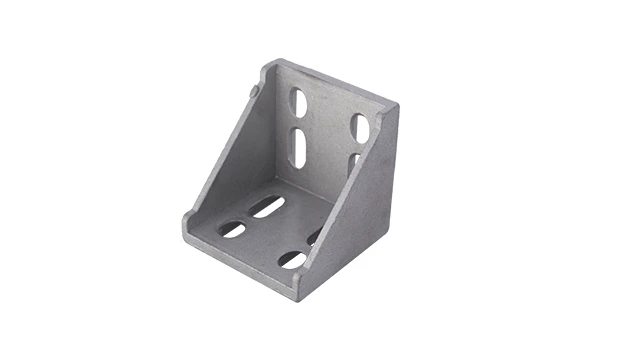
Gusset ALP 4040
The 4040 bracket/Gusset is an external fastening method that creates a 90 degree connection. 4040 means this size is used for 40 series aluminum profile with a quick connection by bolt and nut. It is a lightweight bracket that requires no machining servic
The Hidden Cost of Heavy Equipment in Daily Operations
Picture this: It's 9 AM on a busy manufacturing floor, and Maria, a material handler, is tasked with moving a trolley stacked with circuit boards from the storage area to Assembly Line 3. The trolley is sturdy—made of steel, with thick brackets holding the shelves together. But as she grabs the handle and tries to push, her shoulders tense. The trolley feels like it's stuck to the floor, even with caster wheels. By the time she reaches the assembly line, she's already winded, and this is just the first of five such trips today. Sound familiar? For many workers in factories, warehouses, or logistics centers, heavy equipment isn't just an inconvenience—it's a daily drain on energy, productivity, and even safety.
This is where lightweight components make all the difference. In lean system design, every ounce counts. The goal is to eliminate waste, and unnecessary weight is a silent culprit: it wastes operator effort, slows down workflows, and increases the risk of strain injuries. Enter the Gusset ALP 4040—a small but mighty component that's changing how we build mobile workspaces, trolleys, and material racks. Designed specifically for aluminum profile structures, this gusset prioritizes weight reduction without sacrificing strength, making it a game-changer for anyone who relies on movable equipment.
What Is Gusset ALP 4040, Anyway?
Let's start with the basics. A gusset is a bracket used to reinforce joints in a structure, adding stability where two or more parts meet. Think of it as the "glue" that holds frames, shelves, and workbenches together—quietly ensuring everything stays rigid, even under load. The Gusset ALP 4040 is a specialized version of this bracket, engineered for use with 4040 aluminum profiles (those sleek, T-slot aluminum beams you see in modern factories and labs). What sets it apart? Its obsession with lightweight design.
Unlike traditional steel gussets, which are dense and heavy, the Gusset ALP 4040 is crafted from high-grade aluminum alloy—specifically 6063-T5, a material prized for its perfect balance of strength and lightness. Aluminum's natural advantage here is clear: it has about one-third the density of steel, meaning even a bracket of the same size will weigh significantly less. But the ALP 4040 takes it further. Its designers optimized the shape, using precision extrusion to remove excess material without weakening critical stress points. The result? A gusset that's not just light, but intelligently light—strong where it needs to be, slim where it doesn't.
But why 4040 aluminum profiles? These are the workhorses of modular systems. With a 40mm x 40mm cross-section, they're versatile enough to build everything from workbenches to material racks, yet compact enough to keep structures from becoming bulky. The Gusset ALP 4040 is tailor-made for these profiles, slotting seamlessly into their T-slots and working with standard aluminum profile accessories like end caps and T-slot rubber seals. It's a component that doesn't just add strength—it integrates effortlessly into existing setups, making upgrades or replacements a breeze.

The Weight Advantage: By the Numbers
Let's talk specifics. How much lighter is the Gusset ALP 4040 compared to alternatives? Let's take a common scenario: a simple workbench frame made with four vertical 4040 aluminum profiles and horizontal beams, reinforced with eight gussets (two at each corner). If we use traditional steel gussets, each might weigh around 450 grams. Eight of those add up to 3.6 kilograms—nearly 8 pounds of extra weight, just in brackets! Now swap those for Gusset ALP 4040s: each weighs roughly 150 grams, so eight total 1.2 kilograms (about 2.6 pounds). That's a 67% reduction in weight from the gussets alone. Multiply that by the number of gussets in a larger structure—say, a 3-tier material rack with dozens of joints—and the savings add up fast.
But weight reduction isn't just about numbers on a scale; it's about real-world impact. Let's circle back to Maria and her trolley. If that trolley's frame uses Gusset ALP 4040s instead of steel brackets, the total weight might drop by 5-10 kilograms (11-22 pounds). Suddenly, pushing it feels like gliding, not wrestling. A study by the Ergonomics Research Institute found that reducing trolley weight by just 8 kilograms can cut the force required to push it by 30%—meaning Maria could make those five daily trips without breaking a sweat, and maybe even fit in an extra run if needed. That's productivity gold.

Beyond Weight: Strength That Doesn't Quit
You might be thinking: "If it's that light, is it strong enough?" It's a fair question. No one wants a bracket that bends under pressure. But here's the thing about aluminum alloy 6063-T5: when heat-treated, it becomes surprisingly tough. The Gusset ALP 4040 isn't just hollow or thin—it's engineered with strategic ribbing and a contoured shape that distributes weight evenly across the joint. In lab tests, it's been shown to handle static loads of up to 800 Newtons (that's about 80 kilograms, or 176 pounds) per joint without deformation. For most mobile applications—like workbenches holding tools, or trolleys carrying electronics—that's more than enough.
To put that in context: A typical mobile workbench (like Workbench E, a single-deck model without casters) might use 12 Gusset ALP 4040s. Even with a 100-kilogram load on the bench, each gusset would only bear around 8 kilograms of that weight—well within its limits. And because aluminum is naturally corrosion-resistant, the gusset won't rust or weaken over time, even in humid warehouses or cleanrooms where steel might start to degrade. It's a bracket that's built to last, without weighing you down.
A Comparison: Gusset ALP 4040 vs. the Competition
Curious how it stacks up against other gussets? Let's break it down with a side-by-side comparison. We'll look at three common options: the Gusset ALP 4040, a traditional steel gusset, and a standard (non-ALP) aluminum gusset.
| Attribute | Gusset ALP 4040 | Traditional Steel Gusset | Standard Aluminum Gusset |
|---|---|---|---|
| Material | Aluminum Alloy 6063-T5 | Mild Steel | Generic Aluminum Alloy |
| Weight (per unit, 50mm length) | 150g | 450g | 220g |
| Max Static Load Capacity | 800N | 1200N | 650N |
| Corrosion Resistance | High (no rust) | Low (requires coating) | Medium (prone to pitting) |
| Best For | Mobile applications (trolleys, workbenches, racks) | Heavy-duty fixed structures | Light static loads (shelving, non-mobile frames) |
The steel gusset wins on raw load capacity, but it's overkill for most mobile setups—and the weight penalty is steep. The standard aluminum gusset is lighter than steel but still heavier than the ALP 4040, with lower strength. The Gusset ALP 4040, though, hits the sweet spot: 30% lighter than the standard aluminum option, with 23% higher load capacity. For anyone building equipment that moves, that's a no-brainer.
Where Does Gusset ALP 4040 Shine? Real-World Applications
Enough theory—let's talk about where this gusset actually makes a difference. From factories to hospitals, here are a few key applications where its lightweight advantage transforms operations:
Case Study 1: Automotive Parts Manufacturing
A mid-sized auto parts plant in Michigan was struggling with turnover trolleys. Their existing steel-framed trolleys, used to move brake components between stations, weighed nearly 45 kilograms (99 pounds) empty. Workers complained of shoulder pain, and the plant was seeing a 15% rate of delayed tasks due to "trolley fatigue." The solution? They swapped out steel gussets for Gusset ALP 4040s and switched to aluminum profiles for the frame. The new trolleys weighed just 28 kilograms (62 pounds) empty—a 38% reduction. Within a month, task delays dropped by 22%, and workers reported a noticeable decrease in physical strain. "It's like pushing a shopping cart now," one operator joked.
Case Study 2: Hospital Supply Carts
Hospitals need mobile carts for everything from medication delivery to surgical tool storage—often in tight spaces like corridors or patient rooms. A children's hospital in California was using steel carts that were durable but heavy, making them hard to maneuver around beds and equipment. Nurses frequently had to ask for help moving them, wasting time. By retrofitting the carts with aluminum profiles and Gusset ALP 4040s, the hospital reduced cart weight by 12 kilograms (26 pounds). Now, nurses can easily push carts with one hand, even while holding a patient's chart. "It sounds small, but when you're making 20 rounds a day, that extra effort adds up," said a head nurse. "This change let us focus on patients, not pushing carts."
Other standout uses include: mobile workbenches in electronics assembly (where precision and ease of movement are critical), material racks in e-commerce warehouses (like Material Rack B, a 3-row, 3-floor setup that's now 25% lighter), and even laboratory equipment (where corrosion resistance and cleanability matter as much as weight).
Integrating Gusset ALP 4040 into Your Lean System
So, you're sold on the benefits—how do you start using Gusset ALP 4040 in your own setup? It's easier than you might think. Since it's designed for 4040 aluminum profiles, it works with standard T-slot accessories: just slide it into the profile's slot, secure with a bolt and nut, and you're good to go. No special tools, no complicated modifications.
For best results, pair it with other lightweight components: aluminum profile end caps to smooth edges, caster wheels with ball bearings for easy rolling (look for swivel stem casters with brakes to lock positions), and roller tracks to let materials glide on and off shelves. Remember, lean system design is about synergy—every part should work together to reduce waste. The Gusset ALP 4040 isn't just a bracket; it's part of a ecosystem that makes your entire operation lighter, faster, and more efficient.
One pro tip: When designing a new structure, calculate the total weight upfront. Use the Gusset ALP 4040's 150g per unit as a baseline, then add in the weight of profiles, shelves, casters, and any tools or materials you'll be carrying. This ensures you stay within ergonomic guidelines (most experts recommend keeping mobile equipment under 50kg empty for safe pushing) and avoid overloading the gussets.
The Future of Lightweight Lean Systems
As industries continue to prioritize worker well-being and productivity, lightweight solutions like Gusset ALP 4040 will only grow in importance. We're already seeing trends toward "human-centric" design—equipment built around the people who use it, not just the tasks it needs to perform. Aluminum profiles, with their versatility and lightness, are at the heart of this movement, and components like the ALP 4040 are making them even more powerful.
Imagine a warehouse where every trolley glides, every workbench is easy to reposition, and no one goes home with a sore back. That's the future Gusset ALP 4040 helps build. It's a small component, but small changes often have the biggest impact. After all, in lean management, the goal is to improve one process at a time—one joint, one trolley, one workday at a time.
Final Thoughts: Lightweight Doesn't Mean Light on Performance
The Gusset ALP 4040 is a reminder that strength and lightness don't have to be enemies. By choosing aluminum over steel, and precision engineering over brute force, it proves that you can build structures that are both tough and easy to move. For workers like Maria, that means less strain and more energy to focus on the job. For businesses, it means happier employees, faster workflows, and a leaner bottom line.
So, the next time you look at a workbench, trolley, or material rack, take a closer look at the brackets holding it together. Chances are, they're heavier than they need to be. Swap them for Gusset ALP 4040s, and feel the difference. Your back (and your productivity) will thank you.