- Company Articles
- Products and Technology
- Product knowledge
- Weight Capacity Battle: Aluminum Workbench C vs Heavy-Duty Steel Workbenches

Weight Capacity Battle: Aluminum Workbench C vs Heavy-Duty Steel Workbenches
Related Product
Aluminum Workbench C
aluminum-tube-workbench-is-more-flexible-and-durable,-compared-with-traditional-pe/abs-coated-steel-tube.-it-is-easy-to-assemble,-anti-corrosion,-rust-protection,-and-recycle-use-after-disassemble.
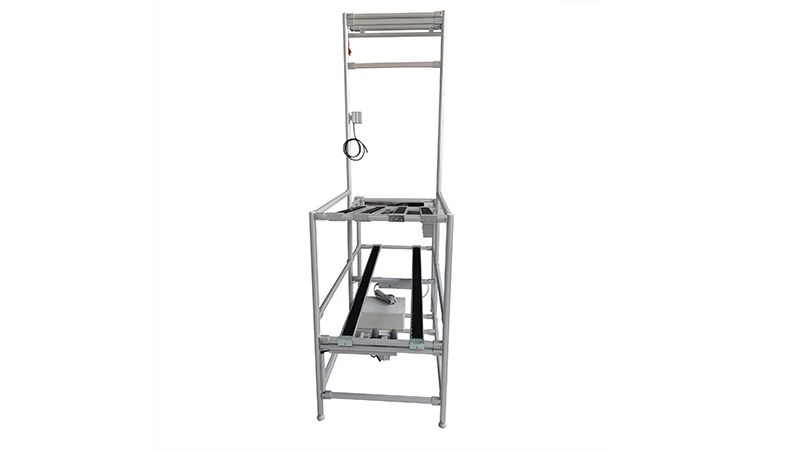
Which workbench truly delivers when the pressure's on? A deep dive into strength, versatility, and real-world performance
The Unsung Hero of Every Workspace: Why Your Workbench's Weight Capacity Matters
Walk into any workshop, factory floor, or lab, and you'll notice one piece of equipment that ties everything together: the workbench. It's where tools are organized, parts are assembled, and projects come to life. But not all workbenches are created equal—and one of the most critical factors separating the great from the mediocre is weight capacity.
Think about it: A flimsy workbench that sags under the weight of a drill press or bends when you stack heavy components isn't just frustrating—it's dangerous. It slows down workflows, risks damaging materials, and can even lead to accidents. On the flip side, a workbench with the right weight capacity becomes an invisible partner, supporting your team's efforts without skipping a beat.
Today, we're putting two heavyweights head-to-head: the Aluminum Workbench C —a modern, lean system favorite—and traditional heavy-duty steel workbenches. We'll break down their weight capacity, materials, and real-world performance to help you decide which one deserves a spot in your workspace.
First Things First: What *Is* Weight Capacity, Anyway?
Before we jump into the comparison, let's clarify what "weight capacity" really means. It's not just a number thrown around in product specs—it's a promise of safety and reliability. There are two key types to consider:
Static Weight Capacity: This is the maximum weight the workbench can support when the load is stationary. Think of a fully loaded tool chest sitting on top, or a stack of metal sheets left overnight.
Dynamic Weight Capacity: This refers to weight in motion—like placing a heavy box on the bench, sliding parts across the surface, or using a vice to clamp and manipulate materials. Dynamic loads are harder on a workbench because they create sudden stress and vibration.
A good workbench needs to excel at both. But here's the catch: higher capacity doesn't always mean better. A bench built for 5,000 lbs might be overkill for a small electronics shop, while a lightweight model could fail in a automotive repair bay. That's why matching the workbench to your specific needs is key—and why we're pitting aluminum against steel to see which one offers the best balance.

Meet the Contenders: Aluminum Workbench C vs. Heavy-Duty Steel Workbenches
Let's start by getting to know our two competitors.
Contender 1: Aluminum Workbench C
Aluminum Workbench C is part of the new generation of workspace solutions, designed with lean system principles in mind. It's built using aluminum extrusion profiles —hollow, lightweight beams shaped through a precision extrusion process that aligns the metal's grains for strength without excess bulk. These profiles are connected with modular joints and accessories, making the bench easy to assemble, reconfigure, and expand.
Typically, Aluminum Workbench C features a single deck (without casters, though casters can be added as an accessory) and is often paired with aluminum honeycomb panels or ESD-safe surfaces for labs and electronics manufacturing. Its claim to fame? A perfect blend of strength, portability, and customization.
Contender 2: Heavy-Duty Steel Workbenches
Steel workbenches are the old guard—tough, reliable, and built to last. They're usually constructed from thick-gauge steel (think 14-gauge or heavier) with welded or bolted frames, and topped with solid steel or hardwood surfaces. Some models add extra bracing, reinforced corners, or under-shelf supports to boost capacity.
These benches are the go-to for garages, machine shops, and industrial settings where heavy tools and equipment are the norm. They're not known for being lightweight or easy to move, but when it comes to raw strength, they've long been the gold standard.

The Showdown: Key Features Compared
To truly understand how these workbenches stack up, let's break down their most important features side by side. The table below compares everything from material composition to real-world usability—with a special focus on weight capacity.
| Feature | Aluminum Workbench C | Heavy-Duty Steel Workbench |
|---|---|---|
| Material Composition | Aluminum extrusion profiles (6061-T6 or similar alloy) with modular joints; aluminum or ESD-safe worktop | 14- to 11-gauge steel frame; solid steel, hardwood, or composite worktop; welded or bolted joints |
| Typical Static Weight Capacity | 500–1,500 lbs (varies by size; larger models reach 2,000 lbs) | 1,500–5,000+ lbs (depends on frame thickness and bracing) |
| Typical Dynamic Weight Capacity | 300–800 lbs (due to lighter frame, dynamic loads are more stressful) | 1,000–3,000 lbs (steel's rigidity handles motion better) |
| Workbench Weight (Empty) | 40–80 lbs (light enough for 2 people to move) | 150–400+ lbs (often requires a forklift or dolly to reposition) |
| Corrosion Resistance | Excellent—aluminum naturally resists rust; some models have anodized finishes for extra protection | Good if powder-coated or painted; prone to rust if finish is scratched (especially in humid environments) |
| Customization Flexibility | High—modular aluminum extrusion profiles and accessories let you add shelves, tool rails, and bins easily | Low to moderate—customization often requires welding or drilling; limited to pre-drilled holes |
| ESD Compatibility | Yes—easily paired with ESD-safe worktops and accessories for ESD workstation setups | Possible but less common; requires specialized ESD coatings or laminates |
| Maintenance Needs | Minimal—wipe clean with soap and water; joints may need occasional tightening | Moderate—check for rust, repaint scratches, lubricate moving parts (e.g., vises) |
| Cost Range | $300–$800 (mid-range, with accessories adding $50–$200) | $500–$1,500+ (higher upfront cost, especially for ultra-heavy models) |
At first glance, steel seems to dominate in raw capacity—but aluminum holds its own in flexibility and real-world usability. Let's dig deeper into what these numbers mean for your workspace.

Weight Capacity in Action: Real-World Scenarios
Numbers on a spec sheet only tell part of the story. Let's look at how these workbenches perform in common scenarios.
Scenario 1: Electronics Manufacturing (Lean System Environment)
A small electronics manufacturer runs a lean system assembly line, reconfiguring workstations every quarter to adapt to new product designs. Their typical load? A mix of circuit boards, small tools, and ESD-safe bins—about 300 lbs total, with workers constantly sliding parts across the bench (dynamic load).
Aluminum Workbench C shines here. Its 500+ lbs static capacity is more than enough, and its lightweight frame makes it easy to move when the line is reconfigured. The aluminum extrusion profiles also accept ESD accessories, like grounding straps and anti-static mats, turning it into a fully functional ESD workstation . A steel bench would work, but its weight (200+ lbs) would make reconfiguration a two-person job with a dolly—slowing down the lean process.
Scenario 2: Automotive Repair Shop
An auto shop needs a bench for engine parts, a vice, and a 500-lb tool chest. The static load here is around 1,200 lbs, and mechanics often use the vice to clamp and hammer on metal components (high dynamic stress).
Here, a heavy-duty steel workbench is the better fit. Its 2,000+ lbs capacity ensures it can handle the tool chest and vice work without flexing. Steel's rigidity also reduces vibration, making precision work easier. Aluminum Workbench C's max static capacity (around 1,500 lbs for larger models) might technically work, but the constant hammering and dynamic stress could lead to joint fatigue over time.
Scenario 3: Warehouse Shipping Station
A warehouse uses workbenches for packing boxes, weighing shipments, and staging orders. Loads vary from 50 lbs (small boxes) to 800 lbs (bulk shipments placed temporarily). The bench needs to be corrosion-resistant (due to warehouse humidity) and easy to clean.
This is a toss-up—but Aluminum Workbench C edges ahead. Its 1,500 lbs static capacity handles the bulk shipments, and aluminum's corrosion resistance means it won't rust from warehouse moisture. If the warehouse decides to add shelves or dividers later, the modular aluminum extrusion profiles make upgrades a breeze. A steel bench would need regular painting to prevent rust, and adding shelves would require drilling into the frame.
The Hidden Costs: Beyond Weight Capacity
When choosing between aluminum and steel, weight capacity is critical—but it's not the only factor. Let's talk about the "hidden costs" that can make or break your decision.
Installation and Setup
Aluminum Workbench C is a DIY dream. Most models click together with modular joints, requiring only a hex key for assembly. Two people can have it up and running in under an hour. Steel workbenches, on the other hand, often come in heavy, pre-welded sections. Moving them into place may require a forklift, and bolting them to the floor (to prevent tipping with heavy loads) adds extra time and labor.
Long-Term Flexibility
Businesses change—and so do workspace needs. A startup that begins with small-scale production might need to expand to larger projects in a year. Aluminum Workbench C's modular design lets you add shelves, extend the length, or even repurpose it as a material rack later. Steel benches are fixed; modifying them usually means cutting, welding, or buying a whole new bench.
Maintenance and Lifespan
Aluminum is nearly maintenance-free. Wipe it down, tighten a joint occasionally, and it'll last for decades. Steel needs regular checks for rust, especially in humid or outdoor environments. Powder-coated finishes chip over time, exposing the metal to corrosion. While steel benches can last just as long as aluminum ones, they require more upkeep to get there.
Cost Over Time
Steel workbenches often have a higher upfront cost ($500–$1,500 vs. $300–$800 for aluminum). But aluminum's modularity can save money long-term. Instead of buying a new bench when your needs change, you can add accessories or reconfigure the existing one. For example, upgrading from a single-deck Aluminum Workbench C to a double-deck model costs $100–$200 in accessories, vs. $500+ for a new steel bench.
The Verdict: Which Workbench Wins?
There's no one-size-fits-all answer—but we can draw some clear conclusions:
Choose Aluminum Workbench C if: You need moderate weight capacity (up to 1,500 lbs), value flexibility and portability, work in a lean or ESD-sensitive environment, or anticipate reconfiguring your workspace. It's ideal for electronics, small manufacturing, labs, and warehouses.
Choose Heavy-Duty Steel if: You need to support 1,500+ lbs regularly, work with heavy machinery or tools, or require maximum rigidity for precision tasks (like machining or auto repair). Steel is the way to go for high-stress, static-heavy environments.
The bottom line? Aluminum Workbench C proves that lightweight doesn't mean weak. Its aluminum extrusion profiles and modular design make it a star in dynamic, lean workspaces, while steel remains the king of brute strength. The best workbench for you is the one that matches your load, your workflow, and your future plans.
So, what's your workspace like? Do you need the flexibility of aluminum or the raw power of steel? Let the battle of weight capacity guide you—but don't forget to factor in the hidden benefits that make a workbench truly work for you.