- Company Articles
- Products and Technology
- Product knowledge
- Weight of 3030 Aluminum Profile End Caps: Impact on Frame Load Capacity

Weight of 3030 Aluminum Profile End Caps: Impact on Frame Load Capacity
Related Product
3030 Aluminum Profile End Cap
The aluminum profile end cap adds a finishing touch to your project and closes off profile ends to limit dust and debris buildup, also it can avaid some scratch for material and labor during the assemble work.
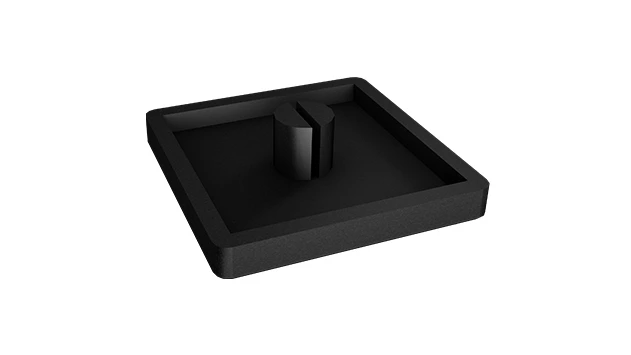
Exploring the small but critical role of end caps in industrial framing systems
Understanding Aluminum Profiles and Their Role in Modern Framing
Walk into any manufacturing plant, warehouse, or even a modern office, and you'll likely encounter structures built with aluminum profiles. These versatile, lightweight frames form the backbone of workbenches, material racks, conveyor systems, and even modular furniture. What makes aluminum profiles so popular? It's their unique blend of strength, flexibility, and cost-effectiveness. Unlike rigid steel structures, aluminum profiles—especially extruded ones—offer modularity: they can be easily cut, connected, and reconfigured to suit changing needs, making them a cornerstone of lean system design.
At the heart of this adaptability is the aluminum extrusion profile. Extrusion is a manufacturing process where aluminum alloy is forced through a die, shaping it into long, uniform cross-sections. This process allows for intricate designs, from simple rectangular tubes to complex profiles with T-slots, grooves, and ribs. These features, in turn, enable the use of aluminum profile accessories like connectors, brackets, and end caps, which transform raw profiles into functional structures.
Among the most widely used profiles is the 3030 series. Named for its 30mm x 30mm cross-section, this profile strikes a balance between size and strength, making it ideal for medium-duty applications. From assembly line workbenches to lightweight material racks, 3030 profiles are everywhere. But like any building block, their performance depends not just on the profile itself, but on the smaller components that hold the system together. And that's where end caps come into play.
The Unsung Hero: End Caps in Aluminum Profile Systems
If aluminum profiles are the bones of a framing system, end caps are the fingertips—small, often overlooked, but essential for functionality and safety. At first glance, an end cap might seem like a simple piece: a plug that fits into the open end of a profile. But its role goes far beyond aesthetics. End caps seal the profile's interior, preventing dust, debris, and moisture from accumulating inside—a critical detail in environments where cleanliness is key, like electronics manufacturing or food processing.
They also enhance safety. Exposed profile ends can have sharp edges from cutting or extrusion, which pose a risk of cuts to workers handling the frames. End caps smooth these edges, turning a potential hazard into a safe, finished surface. Additionally, in some applications, end caps provide a stable base when profiles are used vertically, distributing weight evenly and preventing the profile from sinking into soft surfaces.
For the 3030 aluminum profile, end caps are designed to fit snugly into its 30mm opening. They come in various materials, from durable plastics like polypropylene to lightweight aluminum, and even rubber for applications needing vibration dampening. Each material choice affects not just the end cap's function but also its weight—a factor that, as we'll explore, has a surprising impact on the frame's overall load capacity.

What Determines the Weight of 3030 Aluminum Profile End Caps?
To understand how end cap weight influences load capacity, we first need to unpack what makes one end cap heavier than another. Three key factors dictate the weight of a 3030 aluminum profile end cap: material, design complexity, and manufacturing tolerances.
Material Choice: The most significant factor is the material. Plastic end caps, the most common type, are lightweight—typically weighing between 5g to 15g per unit. They're made from injection-molded plastics like ABS or nylon, which offer a good balance of cost and durability. Aluminum end caps, on the other hand, are denser. A solid aluminum end cap for a 3030 profile might weigh 20g to 35g, while hollow or ribbed designs (to reduce weight) could land between 15g to 25g. Rubber end caps, used for shock absorption, fall somewhere in the middle, around 10g to 20g, depending on thickness.
Design Complexity: Even within the same material, design affects weight. A basic flat end cap with no extra features will be lighter than one with internal ribs (for added strength), snap-fit mechanisms (to secure it to the profile), or integrated gaskets (for better sealing). For example, a plastic end cap with a ribbed interior to prevent warping might weigh 2g to 3g more than a smooth, basic version.
Manufacturing Tolerances: Small variations in thickness or density can add up. Injection molding, for instance, might produce end caps with slight weight differences due to material flow during production. While these differences are minimal—often less than 1g—they can become significant when multiplied across a frame with dozens of end caps.
| End Cap Type | Material | Typical Weight (per unit) | Common Use Case |
|---|---|---|---|
| Basic Plastic End Cap | ABS Plastic | 5g – 8g | General-purpose framing, low-cost applications |
| Ribbed Plastic End Cap | Nylon | 8g – 12g | Workbenches, light-duty material racks |
| Hollow Aluminum End Cap | Aluminum Alloy | 15g – 20g | Medium-duty structures, outdoor use (corrosion resistance) |
| Solid Aluminum End Cap | Aluminum Alloy | 25g – 35g | Heavy-duty frames, high-stability workbenches |
| Rubber End Cap | EPDM Rubber | 10g – 18g | Vibration-prone environments, safety-critical edges |
At first glance, these weights seem negligible. After all, even the heaviest end cap is just 35g—about the weight of a few paperclips. But when you consider that a typical workbench might use 12 end caps (4 profiles per leg, 3 legs), that's 420g of end cap weight alone. In a larger structure, like a 20-foot material rack with 50 profiles, end caps could add over 1.7kg. While this might not seem like much, in engineering terms, every gram matters—especially when the frame is designed to carry heavy loads.

Load Capacity Basics: How Frames Bear Weight
Before diving into how end cap weight affects load capacity, let's clarify what "load capacity" actually means. In structural engineering, load capacity refers to the maximum weight a structure can safely support without deforming, failing, or becoming unstable. For aluminum profile frames, this depends on several factors: the strength of the profile itself, the quality of the connections (joints, brackets), the distribution of the load, and yes—the weight of the components that make up the frame, including end caps.
Frames bear two types of loads: static and dynamic. Static loads are stationary, like the weight of tools on a workbench or boxes on a shelf. Dynamic loads are moving or changing, such as a trolley rolling across a conveyor or a worker leaning on a material rack. Both require careful consideration, but static loads are where end cap weight plays a more direct role, as they add to the frame's "dead weight"—the weight of the structure itself, independent of the load it's carrying.
To visualize this, think of a workbench built with 3030 aluminum profiles. The bench's dead weight includes the profiles, connectors, plywood top, and end caps. When you place a 50kg toolbox on the bench, the total load the frame must support is the dead weight plus the 50kg dynamic load. If the end caps are heavier, the dead weight increases, leaving less "capacity" for the toolbox before the frame reaches its maximum load limit.
But it's not just about total weight. Load distribution matters too. A frame's strength depends on how weight is spread across its components. For example, a load (like a heavy machine placed in the center of a workbench) puts more stress on the middle profiles than a distributed load (like boxes spread evenly across a shelf). End caps, though small, contribute to this distribution by affecting the profile's balance and how it transfers stress to the joints.
The Critical Link: End Cap Weight and Frame Stability
Now, let's connect the dots: how does the weight of 3030 aluminum profile end caps impact a frame's ability to carry weight? It boils down to two key mechanisms: dead weight accumulation and stress concentration.
Dead Weight Accumulation: As mentioned earlier, end caps add to the frame's dead weight. In lightweight applications, this might be trivial. But in scenarios where the frame is already operating near its load limit, even small additions can push it over the edge. For example, a lean system designed to support 200kg might have a dead weight of 50kg (profiles, connectors, etc.). If the end caps add an extra 1kg (30 caps at 35g each), the available capacity for dynamic loads drops to 149kg instead of 150kg. While a 1kg difference might seem minor, in precision environments—like aerospace manufacturing, where load limits are strictly enforced—it can be the difference between compliance and failure.
Stress Concentration at the Ends: Profiles are strongest along their length, but their ends are more vulnerable to stress. When a profile is loaded, stress tends to concentrate at the connections (joints) and the free ends. End caps, by adding weight to the ends, can exacerbate this concentration. Imagine a vertical profile supporting a horizontal beam: the end cap at the bottom of the vertical profile adds downward force, increasing the stress on the base joint. Over time, this extra stress can lead to fatigue in the joint, loosening connections, or even bending the profile.
Case Study: Workbench Failure Due to Overlooked End Cap Weight
A small electronics manufacturer recently upgraded their assembly line with new workbenches built using 3030 aluminum profiles. The benches were designed to support 100kg of equipment per station. After a month of use, several benches began to wobble, with joints showing signs of stress. An inspection revealed that the team had opted for solid aluminum end caps (35g each) instead of the recommended ribbed plastic ones (10g each). With 16 end caps per bench, the dead weight increased by 400g (16 caps × 25g difference). While 400g seems small, the benches were also supporting dynamic loads near their limit. The extra dead weight, combined with the stress concentration at the ends, caused the joints to loosen prematurely. Switching to the lighter plastic end caps resolved the issue, restoring stability.
It's important to note that heavier end caps aren't always a problem. In fact, in some cases, they can improve stability. For example, in tall, narrow frames (like standalone material racks), adding weight to the bottom end caps can lower the center of gravity, reducing the risk of tipping. This is a deliberate design choice, where end cap weight is used to counteract top-heaviness. The key is balance: matching end cap weight to the frame's intended use and load requirements.
Choosing the Right End Caps: Balancing Weight, Function, and Load Needs
So, how do you select the right end caps for your 3030 aluminum profile frame? It starts with asking three questions: What is the frame's maximum load capacity? What environmental conditions will it face? And what secondary functions do the end caps need to perform?
1. Calculate Your Load Margin: Start by determining the frame's total dead weight (including profiles, connectors, and other accessories) and subtract it from the maximum load capacity. The remaining "margin" is what's available for dynamic loads. If this margin is tight, opt for lighter end caps (like basic plastic ones). If there's plenty of margin, heavier end caps (like aluminum) might be acceptable, especially if they offer other benefits.
2. Consider the Environment: In harsh environments—high moisture, chemicals, or extreme temperatures—plastic end caps might degrade, so aluminum or stainless steel options are better, even if they're heavier. For cleanrooms or food processing, anti-static or antimicrobial end caps (often slightly heavier due to additives) are necessary, despite the weight trade-off.
3. Prioritize Secondary Functions: If you need end caps to seal against dust, choose designs with gaskets (which add weight but improve performance). If safety is critical (e.g., in areas with frequent foot traffic), heavier rubber end caps might be worth the extra grams for their shock-absorbing properties.
Remember, the goal isn't to always choose the lightest end cap—it's to choose the one that best balances weight, function, and load needs. A good rule of thumb: if end cap weight accounts for more than 5% of the frame's dead weight, it's worth re-evaluating your choice.
Beyond Weight: Other Factors Influencing End Cap Performance
While weight is critical, it's not the only factor to consider when selecting end caps. Fit, durability, and compatibility with other aluminum profile accessories also play vital roles. A lightweight end cap that doesn't fit snugly, for example, can rattle loose, creating noise and reducing stability—issues that negate any benefits from lower weight.
Fit and Retention: End caps must stay in place, even under vibration or minor impacts. Snap-fit designs rely on friction to stay secure, while screw-on caps offer a tighter hold but add weight (due to the screws). Some end caps feature barbs or ribs that dig into the profile's interior, improving retention without adding significant weight.
Durability: A cheap, lightweight plastic end cap might crack under repeated handling, requiring frequent replacement. In the long run, this can be costlier than investing in a slightly heavier but more durable option. For example, nylon end caps (10g) are more impact-resistant than basic ABS ones (8g), making them better for high-traffic areas.
Compatibility: End caps must work with other accessories. If your frame uses T-slot brackets that extend into the profile, the end cap must have a cutout to accommodate them. Incompatible end caps can block access to T-slots, rendering the profile's modularity useless—even if they're lightweight.
Conclusion: The Small Part That Makes a Big Difference
In the world of aluminum profile framing, end caps are easy to overlook. They're small, inexpensive, and often an afterthought in the design process. But as we've explored, their weight plays a critical role in determining a frame's load capacity, stability, and long-term performance. From dead weight accumulation to stress concentration at the ends, the grams added by each end cap can have far-reaching consequences—especially in precision environments like lean system setups or heavy-duty workbenches.
The key takeaway? When designing with 3030 aluminum profiles, don't just focus on the big components. Pay attention to the small ones, too. Consider the material, design, and weight of your end caps, and how they fit into the larger picture of load capacity and functionality. By balancing these factors, you'll create frames that are not only strong and stable but also optimized for efficiency—proving that sometimes, the smallest parts make the biggest difference.