- Company Articles
- Products and Technology
- Technology Sharing
- Weldability of 1.5mm Stainless Steel Pipe in Flexible Production Line Construction

Weldability of 1.5mm Stainless Steel Pipe in Flexible Production Line Construction
Related Product
1.5mm Stainless Steel Pipe
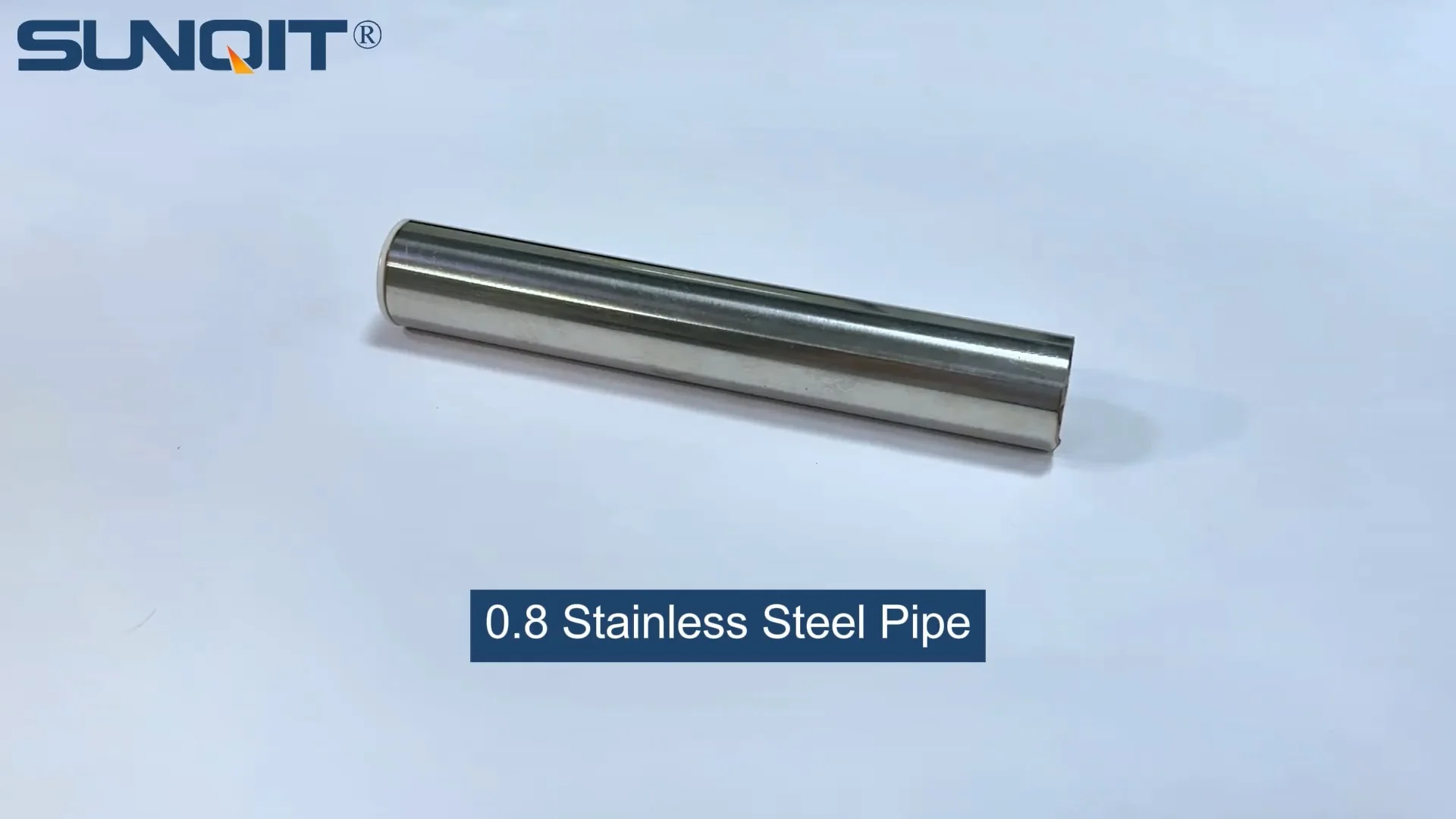
Stainless steel pipe, lean pipe, diameter is 28mm, material is SS201 or SS304, SS201 is normally used in the market. It knows a KARAKURI, KAIZEN material for industrial plant to improve efficiency, save labor cost, standard management.
In the fast-paced world of modern manufacturing, flexibility isn't just a buzzword—it's the backbone of staying competitive. Production lines that can adapt to changing product demands, scale operations up or down, and minimize downtime are the ones that thrive. At the heart of these dynamic systems lies a critical question: what materials can keep up? Enter the 1.5mm stainless steel pipe—a seemingly unassuming component that's quietly revolutionizing how we build flexible production lines. Its light weight, corrosion resistance, and strength make it a top choice, but none of these benefits matter if it can't be welded reliably. Weldability, in this context, isn't just a technical specification; it's the bridge between design flexibility and real-world durability. Let's dive into why the weldability of 1.5mm stainless steel pipe matters, the challenges it presents, and how it shapes the future of lean system construction.
Understanding Flexible Production Lines and the Role of Materials
Flexible production lines are all about balance—balancing strength with adaptability, durability with reconfigurability. Unlike rigid, one-size-fits-all setups, these lines need to evolve: a workbench might need to be extended next month, a conveyor might need to be rerouted, or a flow rack might need to accommodate a new part size. This constant evolution demands materials that can keep pace, and that's where the stainless steel pipe series comes into play. Stainless steel has long been a staple in manufacturing for its resistance to rust and wear, but when we talk about 1.5mm thickness, we're entering a sweet spot. It's thick enough to support the weight of tools, parts, and machinery, yet thin enough to be lightweight and easy to modify. But here's the catch: to build those workbenches, conveyors, and flow racks that define a lean system, you need to join these pipes securely. Welding isn't just about sticking two pieces together; it's about creating joints that can withstand daily use, vibrations, and the occasional reconfiguration without failing.
Imagine walking through a typical manufacturing floor. The workbench where assemblers put together components, the conveyor that moves parts from one station to the next, the flow rack that keeps materials organized and accessible—all of these rely on strong, reliable connections. If the welds holding a workbench frame together are weak, the bench might wobble, risking product quality or even worker safety. If a conveyor's welded joints crack under the stress of constant movement, production grinds to a halt. In a lean system, where waste reduction is key, downtime and repairs are the ultimate wastes. That's why weldability isn't just a material property here; it's a cornerstone of lean principles. A 1.5mm stainless steel pipe that welds cleanly, consistently, and with minimal distortion ensures that the production line can be built, modified, and rebuilt without sacrificing structural integrity.
Weldability Fundamentals: What Makes Stainless Steel Tick?
Before we tackle the specifics of 1.5mm thickness, let's revisit why stainless steel is inherently weldable. At its core, stainless steel owes its weldability to its alloy composition. Chromium, the element that gives it that rust-resistant edge, forms a protective oxide layer, but when heated during welding, this layer can become unstable. Nickel, another common alloying element, helps stabilize the microstructure, reducing the risk of brittle fractures in the heat-affected zone (HAZ)—the area around the weld that's heated but not melted. For thicker stainless steel pipes, say 3mm or more, managing this HAZ is relatively straightforward; there's enough material to absorb and distribute heat. But at 1.5mm, things get trickier. The thin wall leaves little room for error: too much heat, and you burn through the pipe; too little, and the weld doesn't fuse properly. It's a delicate dance between heat input, welding speed, and technique.
Weldability also hinges on how well the welded joint retains the original properties of the base material. For 1.5mm stainless steel pipes in production lines, this means the weld should be as corrosion-resistant as the pipe itself, just as strong, and ideally, not distort the pipe's shape. Distortion is a particular concern here. When metal is heated and cooled, it expands and contracts, and in thin materials, this can lead to warping—picture a pipe that bends or twists after welding, making it impossible to fit into a workbench frame or align with a conveyor track. For manufacturers, this isn't just an aesthetic issue; warped pipes mean misaligned components, which lead to jams, inefficiencies, and even safety hazards. So, when we talk about the weldability of 1.5mm stainless steel pipe, we're really talking about control—control over heat, control over distortion, and control over the final joint's performance.

The Unique Challenges of Welding 1.5mm Stainless Steel Pipes
If welding thicker stainless steel is like baking a cake with a wide temperature range, welding 1.5mm is like making macarons—precision is everything. One of the biggest hurdles is heat input management. Stainless steel is a poor conductor of heat compared to carbon steel, which means heat tends to stay concentrated in the weld area. In a 1.5mm pipe, this concentration can quickly lead to burn-through, where the heat melts through the thin wall, creating holes or weak spots. Even if you avoid burn-through, excessive heat can alter the microstructure of the HAZ, making it prone to cracking or reducing corrosion resistance. For example, if you're welding a joint for a conveyor roller track, a cracked HAZ could lead to the pipe failing under the weight of moving parts over time.
Another challenge is fit-up—the alignment of the two pipes before welding. In thicker pipes, small gaps or misalignments can be compensated for with more filler material or higher heat. But in 1.5mm pipes, even a 0.2mm gap can cause problems. Too much filler, and you risk creating a bulky joint that's hard to grind smooth (important for parts that need to slide or connect with other components, like flow rack rails). Too little, and the joint lacks fusion. This is especially critical in lean system setups, where components like workbenches or turnover trolleys often need precise dimensions to fit into existing layouts. A misaligned weld on a workbench leg might not seem like a big deal until you try to attach a shelf and find it's tilted 2 degrees off level.
Then there's the issue of distortion. Thin materials are more prone to warping as they cool, and stainless steel's high thermal expansion rate amplifies this. Imagine welding a simple square frame for a flow rack: as you weld each corner, the heat causes the metal to expand, and as it cools, it contracts unevenly, pulling the frame out of square. For a flow rack that needs to hold boxes or parts evenly, a warped frame means unstable storage and increased risk of items falling. Distortion isn't just a post-weld headache, either; it can make assembly a nightmare. If two welded pipes are warped, they might not fit into their connectors or brackets, forcing workers to spend extra time bending or grinding them into place—exactly the kind of waste lean systems aim to eliminate.

Welding Techniques for 1.5mm Stainless Steel: Finding the Right Approach
Thankfully, modern welding techniques have risen to the challenge of 1.5mm stainless steel pipes, offering solutions that balance precision and productivity. Let's break down the most common methods and when to use them.
| Welding Technique | Heat Input Control | Best For | Challenges | Typical Applications in Production Lines |
|---|---|---|---|---|
| Tungsten Inert Gas (TIG) Welding | Excellent—precise control over heat via foot pedal | Thin materials, critical joints requiring high precision | Slow process; requires skilled operators | Workbench frames, conveyor support brackets, flow rack corners |
| Metal Inert Gas (MIG) Welding with Pulse | Good—pulse mode reduces heat input compared to standard MIG | Medium-to-high volume production, longer seams | Requires fine wire (0.8-1.0mm) to avoid burn-through | Turnover trolley rails, long conveyor sections |
| Laser Welding | Exceptional—minimal heat affected zone (HAZ) | Micro-joints, high-precision components | High equipment cost; limited to thin materials | Small brackets, sensor mounts on workbenches |
| Resistance Spot Welding | Moderate—localized heat, quick cycles | Sheet-to-pipe joints, non-critical structural connections | Limited joint strength; not ideal for load-bearing areas | Light-duty flow rack dividers, non-weight-bearing panels |
TIG welding, often called the "gold standard" for thin stainless steel, is a favorite in lean system construction for its precision. A skilled TIG welder can adjust the heat input moment by moment using a foot pedal, ensuring the arc melts the base metal just enough to fuse with the filler without burning through. This level of control is why TIG is often used for critical joints, like the corners of a workbench where stability is non-negotiable. The downside? It's slow. A single TIG weld on a 1.5mm pipe joint might take 2-3 minutes, which adds up in high-volume production. But for lean systems that prioritize quality over sheer speed, the trade-off is worth it—fewer reworks mean less waste in the long run.
MIG welding with pulse technology is emerging as a middle ground for manufacturers balancing speed and precision. Pulse MIG alternates between high and low current, delivering short bursts of heat that melt the wire and base metal without overheating the thin pipe. This makes it faster than TIG (some joints can be welded in 30-60 seconds) while still reducing the risk of burn-through. It's particularly useful for longer seams, like the rails of a conveyor system, where consistency across the entire length is key. The catch? You need to use fine-diameter filler wire (usually 0.8mm or 1.0mm) to match the pipe thickness, and operators need training to adjust pulse parameters for different joint designs.
Laser welding, though less common in small to medium manufacturing setups, is a game-changer for micro-precision. The laser beam focuses intense heat on a tiny area, melting the metal with minimal HAZ—great news for 1.5mm pipes, as it virtually eliminates distortion. Imagine welding a small bracket to a conveyor track: with laser welding, the bracket stays perfectly aligned, and the track doesn't warp. The downside is cost; laser welders are a significant investment, making them impractical for many lean system suppliers. But for high-tech industries where precision is critical (like electronics manufacturing), the payoff in reduced rework and improved product quality can be worth it.
Applications in Lean Systems: From Workbenches to Conveyors
So, how does the weldability of 1.5mm stainless steel pipe translate to real-world lean system components? Let's take a closer look at three key applications: workbenches, conveyors, and flow racks—staples of any flexible production line.
Workbenches are the workhorses of production lines, and their frames take a beating. From holding heavy tools to supporting assembly tasks, they need to be sturdy yet adaptable. A typical lean workbench might have a frame made of 1.5mm stainless steel pipes welded at the corners, with adjustable shelves and tool hooks. The welds here need to handle both static loads (like a 50kg toolbox) and dynamic loads (like an assembler leaning on the bench). TIG welding is often the go-to here because it creates clean, strong fillet welds at the corners. A well-welded workbench frame won't wobble, even after years of use, and because the 1.5mm pipe is lightweight, the bench can be moved or modified (e.g., adding a side extension) without needing heavy equipment.
Conveyors, on the other hand, rely on welded joints to maintain alignment and smooth movement. Whether it's a roller conveyor moving boxes or a belt conveyor transporting small parts, the underlying frame—often made of 1.5mm stainless steel pipes—needs to be straight and rigid. A warped frame or weak weld can cause rollers to misalign, leading to jams or uneven wear on the belt. Pulse MIG welding is popular here for its speed and consistency; welding the long, straight sections of the conveyor frame with pulse MIG ensures each joint is strong and the frame stays true. For example, a 5-meter conveyor might have 10 welded joints along its length—if even one joint is weak or misaligned, the entire system suffers. The weldability of 1.5mm pipe ensures these joints hold up to the constant vibration of moving parts.
Flow racks, used for storing and organizing materials, are all about accessibility and space efficiency. They typically have sloped shelves with roller tracks, allowing parts to slide forward as they're used (a classic example of "first in, first out" inventory management). The side frames of a flow rack are often made of welded 1.5mm stainless steel pipes, with cross-braces welded to add stability. The key here is minimizing distortion: if the side frames warp during welding, the roller tracks won't align, and parts might get stuck. MIG pulse welding, with its lower heat input, helps keep distortion in check, ensuring the shelves stay level and the rollers spin freely. Additionally, the corrosion resistance of stainless steel means the flow rack can hold parts in humid environments (like food processing or pharmaceutical manufacturing) without rusting—a critical advantage over painted carbon steel.
Case Study: A Lean System Supplier's Journey to 1.5mm Pipes
To put this in perspective, let's look at a real-world example. A mid-sized lean system supplier specializing in workbenches and conveyors used to build their frames with 2.0mm carbon steel pipes. While strong, the carbon steel was heavy (making reconfiguration tough) and prone to rust in damp factories. They wanted to switch to stainless steel for corrosion resistance but were hesitant to go thinner than 2.0mm, fearing weldability issues. After testing 1.5mm stainless steel pipes with TIG welding, they were surprised by the results.
The first prototype was a workbench frame welded with TIG fillet welds at the corners. Testing showed it could support the same weight as the 2.0mm carbon steel frame but weighed 30% less. The lighter weight made it easier for workers to reposition the bench using casters—a big win for flexibility. The team also noticed fewer reworks: the stainless steel pipes welded more cleanly than carbon steel, with less spatter and fewer defects. In the first six months of switching, the supplier reduced material costs by 15% (since 1.5mm pipe uses less steel) and cut assembly time by 20% (thanks to lighter frames and cleaner welds). Most importantly, their customers reported fewer issues with rust and easier reconfiguration—key selling points for lean system buyers.
Best Practices for Welding 1.5mm Stainless Steel Pipes
Welding 1.5mm stainless steel pipe isn't just about choosing the right technique—it's about following best practices to ensure consistent, reliable results. Here are five tips that can make all the difference:
1. Prep the Material Thoroughly: Stainless steel's oxide layer can interfere with welding, so cleaning the pipe ends is non-negotiable. Use a stainless steel wire brush (never a carbon steel brush, which can contaminate the metal) to remove rust, oil, or dirt. For critical joints, wipe the area with acetone to remove any remaining oils. A clean surface ensures better fusion and reduces the risk of porosity in the weld.
2. Use the Right Filler Metal: Match the filler to the pipe's alloy. Most 1.5mm stainless steel pipes are 304 or 316 grade; use 308L or 316L filler wire, respectively. The "L" indicates low carbon, which helps prevent carbide precipitation (a common cause of corrosion in the HAZ). For TIG welding, 1.0mm or 1.2mm filler rods work well; for MIG, 0.8mm or 1.0mm wire is ideal.
3. Control Heat Input: For TIG welding, start with a low amperage (60-80 amps for 1.5mm pipe) and adjust based on bead appearance. A good rule of thumb: the weld bead should be slightly wider than the pipe thickness. For MIG pulse, set the peak current to 120-140 amps and the background current to 40-60 amps to minimize heat. Move quickly but steadily—dwell too long, and you'll burn through.
4. Clamp and Support Joints: Use fixtures or clamps to hold pipes in place during welding. This reduces distortion by preventing movement as the metal expands and contracts. For example, when welding a frame, clamp each corner to a flat steel table to keep it square. After welding, let the joint cool slowly—avoid quenching with water, as rapid cooling can increase stress in the HAZ.
5. Inspect Welds Rigorously: Visual inspection is a must—look for cracks, porosity, or incomplete fusion. For load-bearing joints (like workbench legs), consider dye penetrant testing to check for hidden cracks. In lean systems, a single failed weld can disrupt the entire line, so investing time in inspection upfront saves time and money later.
Conclusion: Weldability as a Catalyst for Lean Innovation
The weldability of 1.5mm stainless steel pipe might not be the most glamorous topic in manufacturing, but it's a quiet enabler of the flexible, efficient production lines we need today. It's the reason a lean system can evolve from a small workbench setup to a full-scale conveyor network, or why a flow rack can be reconfigured in an afternoon instead of a week. By balancing strength, weight, and weldability, 1.5mm stainless steel pipes are helping manufacturers build systems that aren't just lean—they're resilient.
As we look to the future, the demand for flexibility will only grow. New welding technologies (like advanced pulse MIG or hybrid laser-TIG systems) will make 1.5mm stainless steel even easier to work with, opening doors to more complex designs and faster production. For lean system suppliers and manufacturers alike, the message is clear: don't overlook the basics. A material's weldability isn't just a box to check—it's the foundation on which flexible, innovative production lines are built. And in a world where change is the only constant, that foundation has never been more important.