- Company Articles
- Products and Technology
- Product knowledge
- What Accessories Pair Best with Aluminum Workbench D? Tool Racks, Shelves, and More

What Accessories Pair Best with Aluminum Workbench D? Tool Racks, Shelves, and More
Related Product
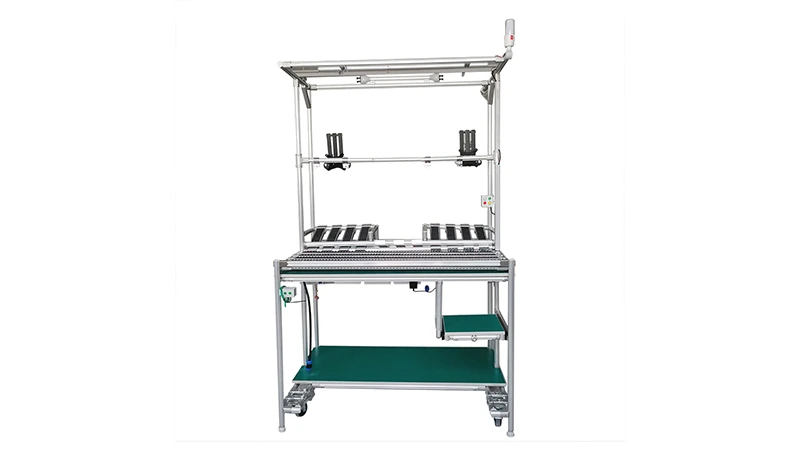
Aluminum Workbench D
Aluminum tube workbench is more flexible and durable, compared with traditional PE/ABS coated steel tube. It is easy to assemble, anti corrosion, rust protection, and recycle use after disassemble.
Introduction: Why Aluminum Workbench D Deserves the Right Accessories
If you've ever stepped into a well-organized workshop or manufacturing floor, you've probably noticed that the best workspaces aren't just about the tools—they're about how everything comes together. And at the heart of many of these setups? A sturdy, versatile workbench. Enter Aluminum Workbench D. Lightweight yet surprisingly tough, with a sleek aluminum frame that resists rust and stands up to daily wear, it's become a favorite for small businesses, garages, and production lines alike. But here's the thing: even the best workbench is just a flat surface without the right accessories. That's where the magic happens. The right add-ons can turn your Aluminum Workbench D from a basic table into a productivity powerhouse—one that stores tools, moves where you need it, and keeps materials flowing smoothly. In this article, we're diving into the accessories that pair best with Workbench D, from tool racks that keep your wrenches within arm's reach to roller tracks that let parts glide effortlessly across your workspace. Whether you're assembling electronics, packing orders, or tinkering with machinery, these accessories will help you work smarter, not harder.
Tool Racks: Tame the Clutter, Keep Tools Close
Let's start with the basics: tools. If you've ever wasted 10 minutes hunting for a missing screwdriver or tripped over a pile of pliers, you know how much time disorganization costs. Tool racks are the first line of defense against this chaos, and they're a must-have for Aluminum Workbench D. But not all tool racks are created equal—especially when you're working with an aluminum frame. That's where aluminum profile accessories shine. These handy connectors and brackets are designed to snap or bolt directly onto the workbench's aluminum rails, so you can mount tool racks without drilling holes or damaging the frame. Imagine a wall-mounted rack above your workbench, with slots for screwdrivers, hooks for hammers, and a magnetic strip for metal tools—all held securely by those aluminum profile accessories. Or maybe a under-shelf rack that tucks neatly beneath the workbench top, keeping frequently used tools like tape measures and utility knives within easy reach but out of the way. For smaller tools, a pegboard panel mounted to the side of Workbench D works wonders. With aluminum profile accessories, you can adjust the height or angle of the pegboard to fit your needs, ensuring that even the tiniest Allen wrench has a designated spot. The best part? These racks aren't permanent. If you rearrange your workspace or switch up your tools, you can simply unclip the accessories and reposition the rack—no fuss, no mess. It's flexibility that grows with your workflow.

Shelves: Double Your Storage, Keep Supplies Handy
Tools are one thing, but what about the materials you're working with? Screws, nuts, circuit boards, packaging materials—they all need a home too. That's where shelves come in. Adding shelves to your Aluminum Workbench D is like giving it a second (or third) floor, instantly doubling or tripling your storage space without taking up extra floor area. Again, aluminum profile accessories make this a breeze. You can find simple, lightweight shelves that mount to the back or sides of the workbench, using brackets that slide into the aluminum rails and lock into place. These shelves are perfect for storing bins of small parts, boxes of inventory, or even reference manuals you need to check mid-project. But why stop at basic shelves? If you're dealing with larger items or heavier loads, consider a tiered shelf system. These stackable units use the same aluminum profile accessories to attach to Workbench D, creating multiple levels for different types of supplies. For example, the top shelf could hold rarely used items (like backup tool sets), the middle shelf for everyday materials (screwdriver bits, wire cutters), and the bottom shelf for bulkier items (like power tools or storage bins). And because Aluminum Workbench D is made of aluminum, even with shelves loaded down, the frame won't warp or bend. Pro tip: Opt for adjustable shelves. With aluminum profile accessories, you can move the shelves up or down as your needs change—say, if you start storing taller bins or need more space for a large project. It's customization that adapts to you, not the other way around.

Caster Wheels: Make Your Workbench Mobile
Here's a scenario: You're working on a project at your Aluminum Workbench D, and halfway through, you realize you need to move it closer to the assembly line. Or maybe you're rearranging your workshop for a big order and need the workbench out of the way temporarily. Without mobility, you're stuck dragging a heavy table (or worse, disassembling it) to get the job done. That's where caster wheels come in. Adding caster wheels to Workbench D turns it into a mobile workstation, so you can roll it wherever you need it—no heavy lifting required. But not just any caster wheel will do. Look for ones designed to pair with aluminum frames, like the swivel caster wheels with brakes that lock into place. These wheels are typically made of rubber or polyurethane, which won't scratch your floor (important if you're working on concrete or hardwood) and can handle the weight of the workbench plus tools and materials. Installing them is a cinch, too—many caster wheels come with mounting plates that attach to the bottom of Workbench D using, you guessed it, aluminum profile accessories. Just bolt the plate to the workbench legs, snap on the wheel, and you're ready to roll. The brakes are a game-changer, by the way. When you need the workbench to stay put (like when you're using a power drill or saw), flip the brake lever, and it locks the wheel in place—no slipping or sliding. For workshops with limited space, this mobility is a lifesaver. You can tuck the workbench in a corner when it's not in use, then roll it out when you need extra counter space. Or, if you're working on a team project, you can wheel it over to a colleague's station to collaborate. It's like having a workbench that goes where the work is.
Roller Tracks: Let Materials Flow, Reduce Manual Labor
Now, let's talk about material flow. If your workflow involves moving parts, boxes, or products across your workbench—say, assembling components and passing them to the next station—you know how tiring it can be to lift and carry items repeatedly. Roller tracks solve this problem by turning your workbench into a mini conveyor belt. These tracks, made of metal or plastic rollers, let materials glide smoothly across the surface with minimal effort. For Aluminum Workbench D, roller tracks are a natural fit. They mount directly to the workbench top using—you guessed it—aluminum profile accessories, so you can customize the length and angle to match your needs. For example, a gentle downward slope on the roller track will let gravity do the work, moving parts from one end of the bench to the other without you lifting a finger. Or, if you need to move items upward (like onto a higher shelf), you can angle the track slightly and use a push to get things rolling. Roller tracks come in different sizes, too. A narrow track might be perfect for small parts like screws or washers, while a wider track can handle larger boxes or assemblies. Some even have side guides to keep items from sliding off, which is essential if you're working with delicate components (looking at you, electronics manufacturers). Here's a real-world example: Imagine you're packing orders in a small warehouse. Your Aluminum Workbench D has a roller track running along one edge, connected to a bin of packaging materials at one end and a shipping label printer at the other. As you pack an order, you place the box on the roller track, give it a gentle push, and it slides over to the printer—no bending, no carrying. It's a small change, but over a full day of packing, it adds up to less fatigue and more orders shipped.
Material Rack B (3 Row and 3 Floor): Organize Bulk Supplies, Free Up Space
For many workshops, storage isn't just about tools—it's about bulk materials. Think boxes of raw materials, extra inventory, or finished products waiting to be shipped. If you're stacking these on the floor or piling them on your workbench, you're wasting valuable space and creating tripping hazards. That's where Material Rack B (3 Row and 3 Floor) comes in. This sturdy rack is designed to work alongside Aluminum Workbench D, giving you three rows and three levels of storage for all your bulk supplies. Made of durable steel with a powder-coated finish, it's built to hold heavy loads without wobbling—perfect for stacks of cardboard boxes, plastic bins, or even metal sheets. What makes Material Rack B a great pair for Workbench D? It's all about proximity. Place the rack next to your workbench, and suddenly, those bulk supplies are just an arm's length away. Need more screws? Grab a bin from the middle shelf. Finished a batch of products? Stack them on the top floor to keep the workbench clear. And because it's a standalone rack, it doesn't take up space on the workbench itself—leaving you free to use the entire surface for projects. The three-row, three-floor design is also surprisingly versatile. You can use the bottom floor for the heaviest items (since it's closer to the ground and more stable), the middle for frequently used supplies, and the top for lighter or less often needed items. Or, if you're working with different types of materials, assign each row to a category—electronics parts in one row, packaging materials in another. The possibilities are endless. And if you ever need to move the rack, many models come with optional caster wheels (yes, the same ones we talked about earlier!), so you can reposition it as your workflow changes. It's storage that grows with your business.
Comparing the Best Accessories: Which One Do You Need?
With so many accessories to choose from, it can be tough to decide which ones are right for your Aluminum Workbench D. To help, we've put together a quick comparison of the key accessories we've covered, so you can match them to your workflow:
| Accessory | Key Features | Best For | Compatibility with Workbench D |
|---|---|---|---|
| Tool Racks (with Aluminum Profile Accessories) | Adjustable, tool-specific slots/hooks, easy to install | Workshops with many hand tools; reducing clutter | Excellent—mounts directly to aluminum rails |
| Caster Wheels | Swivel design, locking brakes, floor-friendly materials | Mobile workspaces; small shops with limited space | Great—attaches via mounting plates to workbench legs |
| Roller Tracks | Smooth-rolling rollers, side guides, customizable angles | Assembly lines; moving parts/products across the bench | Perfect—mounts to workbench top with aluminum profile accessories |
| Material Rack B (3 Row and 3 Floor) | 3 rows x 3 floors, heavy-duty steel, stackable design | Bulk storage; organizing raw materials/finished products | Great as a standalone—positions next to the workbench |
Conclusion: Build the Workbench That Works for You
At the end of the day, the best accessories for your Aluminum Workbench D are the ones that solve your unique problems. If you're drowning in tool clutter, start with a tool rack and aluminum profile accessories. If you're constantly moving your workbench, caster wheels are a no-brainer. If materials keep piling up, Material Rack B will be your new best friend. And if you're tired of lifting heavy items, roller tracks will change the way you work. The beauty of Aluminum Workbench D is its versatility—and with the right accessories, that versatility only grows. These add-ons aren't just "nice-to-haves"; they're investments in your productivity, your workspace, and your sanity. So take a look at your workflow, identify the pain points, and pick the accessories that turn those frustrations into efficiencies. Your future self (and your back) will thank you. After all, a workbench isn't just a piece of furniture—it's the heart of your operation. Give it the accessories it deserves, and watch how much more you can accomplish.