- Company Articles
- Products and Technology
- Product knowledge
- What Are 3060 Aluminum Angle Yards? A Comprehensive Introduction

What Are 3060 Aluminum Angle Yards? A Comprehensive Introduction
Related Product
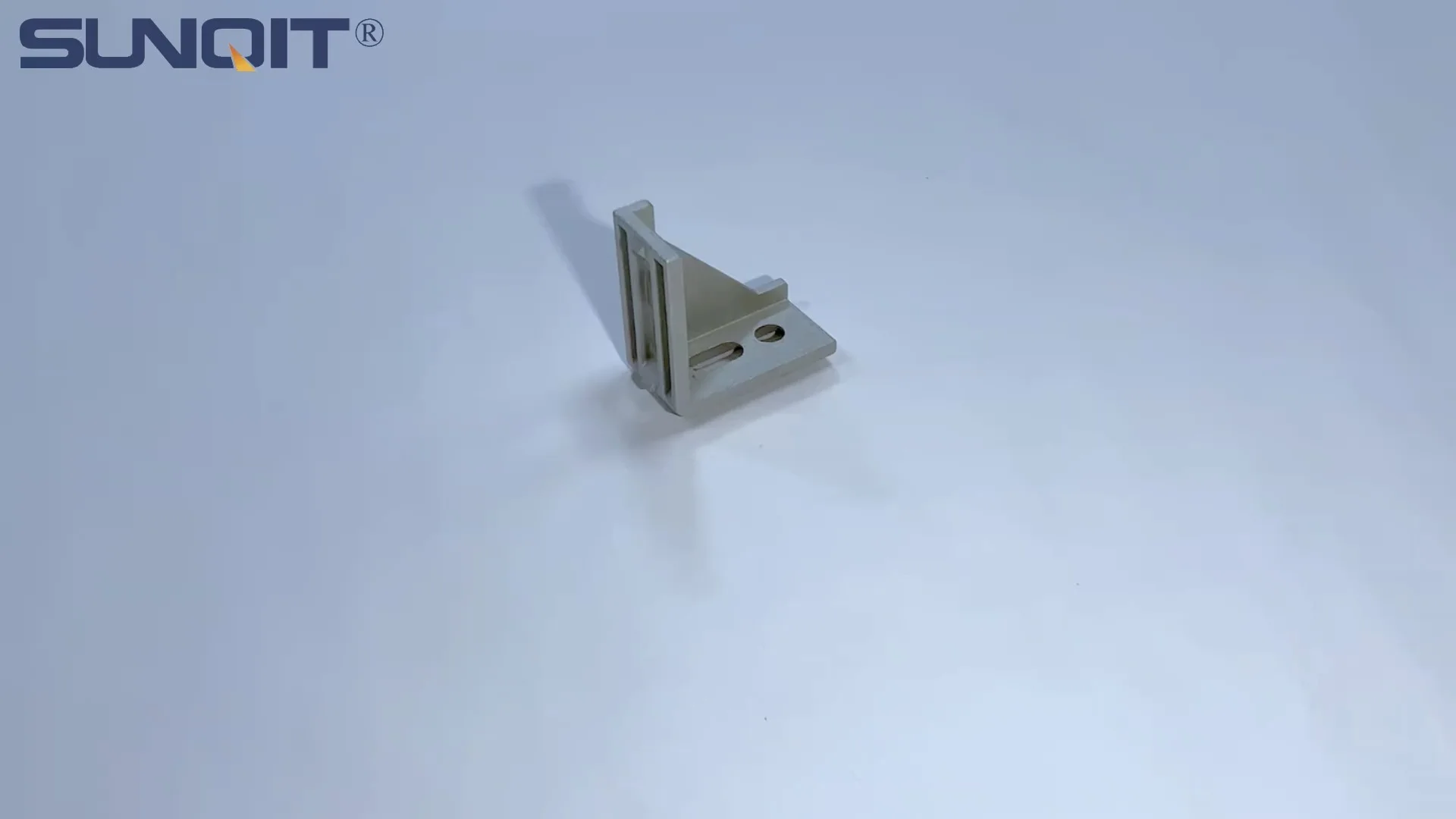
3060 Aluminum Angle Yards
It used for 90° flat connection for 20 series aluminum profile.
In the realm of industrial design and modular construction, the difference between a flimsy structure and one that stands the test of time often lies in the details—specifically, the small but mighty components that hold everything together. Among these unsung heroes are 3060 aluminum angle yards, a critical part of the aluminum profile ecosystem. If you've ever marveled at the sleek, adaptable workbenches in a modern factory, the organized material racks in a warehouse, or the efficient conveyor systems in a distribution center, you've likely seen the results of these unassuming connectors at work.
But what exactly are 3060 aluminum angle yards? How do they fit into the broader world of aluminum profiles and industrial accessories? And why should manufacturers, facility managers, or even DIY enthusiasts care about them? This guide aims to answer all these questions and more, breaking down their design, uses, benefits, and how they integrate with other components like 3060 aluminum profile end caps and 3060 EU standard aluminum profiles. Whether you're a seasoned engineer or new to modular construction, by the end of this article, you'll understand why these angle yards are indispensable for building strong, flexible, and reliable structures.
Understanding the Basics: What Are 3060 Aluminum Angle Yards?
Let's start with the fundamentals. 3060 aluminum angle yards are specialized connectors designed to join 3060 aluminum profiles at specific angles—most commonly 90°, but also 45°, 135°, or custom angles depending on the design. Think of them as the "joints" that transform individual lengths of aluminum into a cohesive framework. The name itself gives clues to their purpose: "3060" refers to the compatible aluminum profile (30mm in width, 60mm in height), "aluminum" denotes the material, and "angle yards" highlights their role in securing profiles at angles.
Unlike generic steel brackets or plastic connectors, these angle yards are engineered for precision. They're typically made from high-grade aluminum alloys (often 6063-T5, known for its strength and corrosion resistance) and machined to fit the T-slots of 3060 profiles seamlessly. This precision ensures a tight, wobble-free connection that can withstand repeated use, heavy loads, and the wear and tear of industrial environments.
Real-World Context: Imagine a lean system supplier tasked with building a modular workbench for an electronics assembly line. The workbench needs to support tools, components, and even light machinery, all while being easy to reconfigure if production needs change. Here, 3060 aluminum angle yards would connect the vertical legs to the horizontal work surface, ensuring stability during use and flexibility for future adjustments. Pair them with 3060 aluminum profile end caps to smooth rough edges, and you have a finished, professional-grade structure.
The 3060 Aluminum Profile: A Foundation for Angle Yards
To fully grasp the role of 3060 aluminum angle yards, it's essential to first understand the profiles they're designed to connect. 3060 aluminum profiles are extrusion-molded aluminum bars with a cross-sectional dimension of 30mm (width) by 60mm (height). They feature T-slots—longitudinal grooves running along their length—that allow accessories like angle yards, brackets, and panels to be attached without welding or drilling.
Two common standards govern these profiles: the 3060 EU standard aluminum profile and national standards (e.g., Chinese national standards). The EU standard is widely adopted in Europe and many global markets, characterized by precise tolerances, uniform slot sizes, and compatibility with a broad range of accessories. National standards may vary slightly in slot dimensions or profile thickness, so it's critical to ensure angle yards match the profile standard in use. Mismatched components can lead to loose connections, reduced load capacity, or even structural failure.
3060 profiles are popular for their versatility. They strike a balance between strength and weight, making them ideal for medium-duty applications: think workbenches, material racks, machine guards, and light-duty conveyor frames. Their T-slot design also makes them highly customizable—adding shelves, tool holders, or even electrical components is as simple as sliding in a compatible accessory and tightening a bolt.

Specifications and Types of 3060 Aluminum Angle Yards
Not all 3060 aluminum angle yards are created equal. They come in various designs to suit different angles, load requirements, and installation scenarios. Below is a breakdown of key specifications and common types, along with a table to compare critical features:
Key Specifications to Consider
- Material: Most are made from aluminum alloy 6063-T5, prized for its combination of strength (tensile strength ~215 MPa), light weight, and resistance to corrosion. Some heavy-duty models may use 6082-T6 for higher load capacity.
- Angle: The most common is 90° (for perpendicular connections), but 45°, 135°, and adjustable-angle variants are also available for sloped or angled structures.
- Thickness: Typically ranges from 2mm to 5mm. Thicker angle yards (4-5mm) are better for heavy loads, while thinner ones (2-3mm) work for lighter applications like shelving.
- Hole Size: Matches the bolts used in T-slots (often M5 or M6). Pre-drilled holes ensure alignment with profile slots.
- Surface Treatment: Anodizing (clear, black, or silver) is standard, providing a protective layer against scratches and corrosion. Powder coating may be available for custom colors or enhanced durability.
Common Types of 3060 Aluminum Angle Yards
*Load capacity is approximate and depends on profile thickness, bolt torque, and installation quality. Always consult manufacturer specs for critical applications.
One important note: When using angle yards, they're often paired with other aluminum profile accessories to complete the assembly. For example, after securing profiles with angle yards, adding 3060 aluminum profile end caps to the exposed ends of the profiles not only improves safety (by eliminating sharp edges) but also gives the structure a polished, professional look. These end caps are typically made of plastic or aluminum and snap or bolt into place, making them quick to install and replace.

Applications: Where 3060 Aluminum Angle Yards Shine
3060 aluminum angle yards are versatile enough to be used in nearly any industry that relies on modular structures. Here are some of their most common applications, along with how they contribute to each use case:
1. Lean Manufacturing Systems
Lean system suppliers frequently turn to 3060 aluminum profiles and angle yards to build custom workstations, flow racks, and production cells. In lean environments, efficiency and flexibility are key—and angle yards enable both. For example, a material rack B (3 row and 3 floor) design, common in warehouses, uses 90° angle yards to connect vertical posts and horizontal beams, creating sturdy shelves that can be adjusted as inventory needs change. The angle yards ensure the rack stays stable even when loaded with heavy boxes or components, while the modular design allows for quick reconfiguration if workflows shift.
2. Workbenches and Assembly Stations
From electronics manufacturing to automotive repair, workbenches need to be both durable and adaptable. 3060 aluminum angle yards connect the bench's frame, supporting the work surface (often an aluminum honeycomb panel or plywood) and any add-ons like tool rails or LED lights. For instance, a workbench E (single deck-without caster) might use reinforced 90° angle yards at each corner to handle the weight of tools and equipment, while adjustable-angle yards could be used for sloped surfaces to allow debris or small parts to slide into a collection bin.
3. Material Handling and Conveyors
In conveyor systems, angle yards secure the frame that supports roller tracks or belt conveyors. For example, a 40 steel roller track (yellow wheel) setup, used to move boxes along an assembly line, relies on angle yards to attach the track to vertical supports. The angle yards must withstand constant vibration from moving parts, making their strength and precision critical to preventing breakdowns.
4. Retail and Display Fixtures
Beyond industrial settings, 3060 angle yards are used in retail for shelving, product displays, and pop-up stands. Their sleek, anodized finish pairs well with modern aesthetics, and their modularity allows retailers to update displays quickly for seasonal promotions. For example, a clothing store might use 45° angle yards to create angled shelving, making products more visible to customers, while 3060 aluminum profile end caps give the display a clean, finished look.
5. Laboratory and Cleanroom Environments
In labs and cleanrooms, where hygiene and corrosion resistance are priorities, aluminum angle yards (with anodized finishes) are preferred over steel. They're easy to clean, resistant to chemicals, and won't rust, making them ideal for workstations or equipment frames. For instance, an ESD workstation (used to prevent static damage to electronics) might use 3060 angle yards to build a frame that supports ESD-safe work surfaces and grounding components.

Advantages Over Traditional Connectors
Why choose 3060 aluminum angle yards over other connectors like steel brackets, welding, or plastic clips? The answer lies in their unique combination of strength, flexibility, and cost-effectiveness. Here's how they stack up:
1. Lightweight Yet Strong
Aluminum is about one-third the weight of steel, making structures built with angle yards easier to transport, install, and reconfigure. Despite being lightweight, aluminum alloys like 6063-T5 offer impressive strength—more than enough for most industrial applications. This balance is especially valuable in settings where portability is key, such as temporary workstations or mobile carts.
2. Corrosion Resistance
Unlike steel, aluminum naturally forms a protective oxide layer, and anodizing enhances this resistance further. This makes 3060 angle yards suitable for humid environments (like food processing plants) or outdoor use (like loading docks). Steel brackets, by contrast, require painting or galvanizing to prevent rust, adding maintenance costs over time.
3. Tool-Free Reconfiguration
Welding creates permanent joints, which is great for stability but terrible for flexibility. Plastic clips are easy to adjust but lack strength. 3060 angle yards offer the best of both worlds: they bolt into T-slots, so they can be loosened, moved, or replaced with basic tools (like an Allen wrench) in minutes. This is a game-changer for industries where production lines or workflows change frequently.
4. Aesthetic Appeal
Let's not overlook looks. Anodized aluminum angle yards have a clean, modern finish that plastic or painted steel can't match. This makes them ideal for visible structures, like retail displays or office furniture, where appearance matters as much as function. Pair them with 3060 aluminum profile end caps, and you have a structure that looks as good as it performs.
5. Cost-Effective in the Long Run
While aluminum angle yards may cost more upfront than plastic clips, they last longer and require less maintenance. Their reusability also reduces waste: when a structure is no longer needed, the angle yards can be removed and used in a new project. Over time, this durability and flexibility translate to lower total costs compared to disposable or short-lived connectors.
How to Choose the Right 3060 Aluminum Angle Yards
Selecting the right angle yards for your project isn't just about picking the first option you find. To ensure safety, durability, and compatibility, consider these key factors:
1. Know Your Load Requirements
Start by calculating the maximum load the structure will bear. A light-duty shelf holding small parts will need thinner angle yards (2-3mm), while a workbench supporting machinery will require thicker, reinforced models (4-5mm). Check the manufacturer's load ratings and err on the side of caution—overloading angle yards can lead to bending or failure.
2. Match the Profile Standard
As mentioned earlier, 3060 profiles come in EU and national standards, which may have slightly different T-slot dimensions. Using angle yards designed for a different standard can result in loose connections. For example, a 3060 EU standard aluminum profile has specific slot widths and depths, so ensure your angle yards are labeled as "EU-compatible" if that's the profile you're using.
3. Consider the Angle and Joint Type
Will your structure have perpendicular (90°), sloped (45°), or variable angles? Choose angle yards that match the required angle to avoid weakening the joint. For example, using a 90° angle yard for a 45° connection will create stress points and reduce stability. Adjustable-angle yards are a good choice if you anticipate future changes to the structure's design.
4. Check Surface Treatment
For most indoor applications, standard anodized angle yards work well. But if the structure will be exposed to moisture, chemicals, or outdoor elements, opt for a thicker anodized layer or powder coating. In cleanrooms or food-safe environments, ensure the surface treatment is non-toxic and easy to sanitize.
5. Source from Reputable Suppliers
Not all angle yards are manufactured to the same quality standards. Cheap, poorly machined angle yards may have misaligned holes, inconsistent thickness, or weak material, leading to failed connections. Look for a lean system supplier or aluminum profile accessories specialist with a track record of quality. Reputable suppliers will provide test reports, load ratings, and compatibility guarantees, giving you peace of mind.
Installation Tips for Optimal Performance
Even the best angle yards won't perform well if installed incorrectly. Follow these tips to ensure a secure, long-lasting connection:
1. Prepare the Profiles
Before installing angle yards, clean the T-slots of any debris (like dust or metal shavings) using a brush or compressed air. This ensures bolts seat properly and prevents scratching the profile's surface. If using new profiles, remove any protective film to avoid trapping moisture between the film and angle yard.
2. Use the Right Bolts and Torque
Always use bolts designed for T-slot profiles (typically socket head cap screws in M5 or M6). Match the bolt length to the angle yard thickness and profile slot depth—too short, and the connection will be loose; too long, and the bolt may protrude through the other side of the profile. Torque the bolts to the manufacturer's specifications (usually 3-5 Nm for M5 bolts) to avoid stripping threads or damaging the profile.
3. Align Profiles Carefully
Misaligned profiles put unnecessary stress on angle yards, leading to premature wear. Use a level or square to ensure profiles are straight and perpendicular before tightening angle yards. For larger structures, assemble the frame on a flat surface first to check alignment, then move it to its final location.
4. Reinforce High-Stress Joints
Joints that bear heavy loads (like the corners of a workbench) can benefit from additional reinforcement. This might mean using two angle yards per joint (one on each side of the profile) or adding gussets (small triangular plates) for extra support. A lean system supplier can recommend reinforcement strategies based on your specific load requirements.
5. Finish with End Caps
After installing angle yards and securing the frame, don't forget to add 3060 aluminum profile end caps to any exposed profile ends. Not only do they improve safety by covering sharp edges, but they also prevent dust and debris from collecting in the T-slots, making maintenance easier down the line. End caps are inexpensive and take just seconds to install, so there's no reason to skip this step.
Pro Tip: For applications with vibration (like near conveyor belts), apply a small amount of thread locker (e.g., Loctite) to the bolt threads before tightening. This prevents bolts from loosening over time without making future disassembly impossible.
Future Trends: What's Next for 3060 Aluminum Angle Yards?
As industries continue to embrace modularity, sustainability, and smart manufacturing, 3060 aluminum angle yards are evolving to meet new demands. Here are a few trends shaping their future:
1. Integration with Smart Technology
Emerging designs may include built-in sensors or RFID tags in angle yards to monitor load, vibration, or temperature in real time. For example, a smart angle yard could alert maintenance teams if a joint is loosening or overheating, preventing failures before they occur. This aligns with the rise of Industry 4.0, where data-driven insights optimize industrial processes.
2. Eco-Friendly Materials and Processes
Manufacturers are increasingly using recycled aluminum to produce angle yards, reducing their carbon footprint. Anodizing processes are also becoming more sustainable, with water-based electrolytes and energy-efficient techniques. For companies prioritizing green initiatives, choosing recycled aluminum angle yards from a lean system supplier with eco-certifications will become a key differentiator.
3. Modular and Interchangeable Designs
Future angle yards may feature universal designs that work with multiple profile sizes (e.g., 3060, 4040, and 2020) or standards (EU and national), reducing the need for specialized inventory. This flexibility will be especially valuable for global manufacturers with operations in multiple regions.
4. Enhanced Aesthetics
As aluminum profiles move beyond industrial settings and into commercial spaces (like offices or retail), angle yards are getting a design upgrade. Expect to see more custom colors, curved designs, or even branded angle yards (with company logos) to match corporate aesthetics. 3060 aluminum profile end caps will also evolve, with options for wood-grain finishes or illuminated designs to enhance visual appeal.
Conclusion: The Unsung Hero of Modular Construction
3060 aluminum angle yards may not be the most glamorous components in industrial design, but they're undoubtedly among the most essential. These small, precision-engineered connectors turn ordinary aluminum profiles into extraordinary structures—workbenches that withstand heavy use, racks that adapt to changing needs, and systems that drive efficiency in lean manufacturing.
From their compatibility with 3060 EU standard aluminum profiles to their role in supporting everything from material racks to retail displays, angle yards are the backbone of modular construction. When paired with other aluminum profile accessories like 3060 aluminum profile end caps, they create structures that are not only strong and flexible but also safe and visually appealing.
Whether you're a lean system supplier building custom solutions or a facility manager upgrading your workspace, investing in high-quality 3060 aluminum angle yards is an investment in reliability, flexibility, and long-term value. By understanding their design, applications, and installation best practices, you can ensure your next project is built to last—one angle yard at a time.