- Company Articles
- Products and Technology
- Product knowledge
- What Are Aluminum Pipe Adjustable Leveling Feet? A Beginner's Definition

What Are Aluminum Pipe Adjustable Leveling Feet? A Beginner's Definition
Related Product
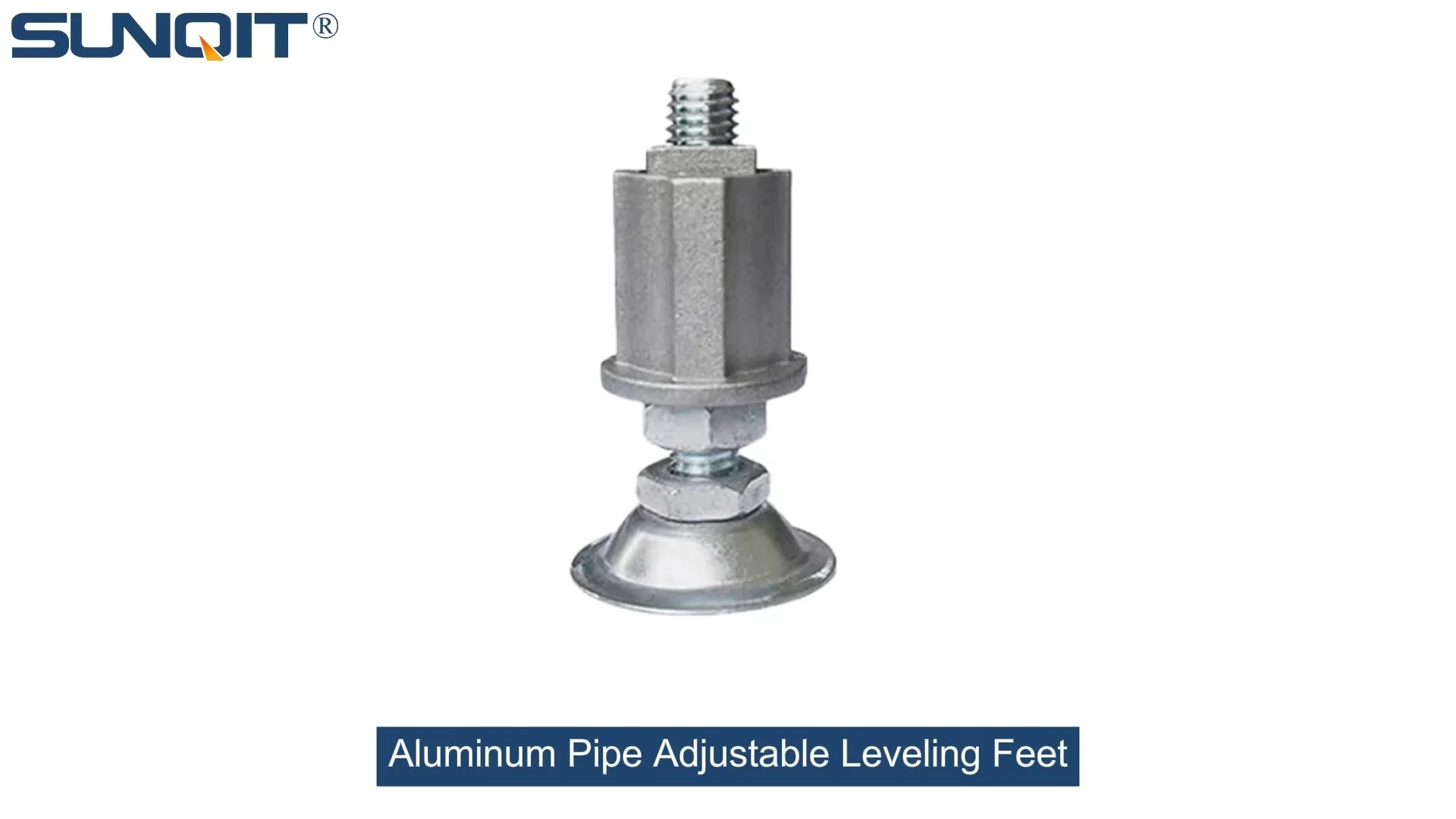
Aluminum Pipe Adjustable Leveling Feet
Aluminum Pipe Adjustable Leveling Feet are designed to keep machines level when placed on uneven or sloped ground. Otherwise known as adjustable equipment feet, they are available to order in a wide variety of size and load capacity combinations.
Walk into any modern factory, workshop, or assembly line, and you'll notice a hidden but critical detail: the structures that power daily operations—workbenches, material racks, trolleys—stand steady, even on uneven floors. A wobbly workbench might seem like a minor annoyance, but in precision-focused environments, it can throw off measurements, slow down production, or even compromise safety. That's where aluminum pipe adjustable leveling feet come in. These unassuming components are the quiet problem-solvers keeping everything balanced, stable, and ready to perform. If you're new to lean manufacturing, industrial setup, or just curious about the building blocks of efficient workspaces, this guide will break down what aluminum pipe adjustable leveling feet are, why they matter, and how they fit into the broader world of aluminum lean pipe systems.
What Are Aluminum Pipe Adjustable Leveling Feet, Exactly?
Let's start with the basics. Aluminum pipe adjustable leveling feet are specialized components designed to attach to the bottom of structures built with aluminum pipe (or aluminum profiles) to adjust height, compensate for uneven surfaces, and stabilize the entire setup. Think of them as the "feet" of your industrial furniture—except these feet can "grow" or "shrink" to keep the structure level, no matter what the floor throws at them.
Unlike fixed feet, which are rigid and can't adapt, adjustable leveling feet have a threaded mechanism that lets you twist or turn a part of the foot to raise or lower its height. This adjustability is key in settings where floors might be sloped, cracked, or simply not perfectly flat (which, let's be honest, is most industrial floors). They're commonly used with workbenches, material racks, turnover trolleys, and even conveyor supports—any structure where stability and precision matter.
But why aluminum? Aluminum is lightweight, corrosion-resistant, and easy to work with, making it ideal for lean systems where flexibility and durability are priorities. These feet are specifically engineered to pair with aluminum pipe systems, ensuring a snug fit and seamless integration with other aluminum pipe accessories like joints, brackets, and panels.
Breaking Down the Key Components
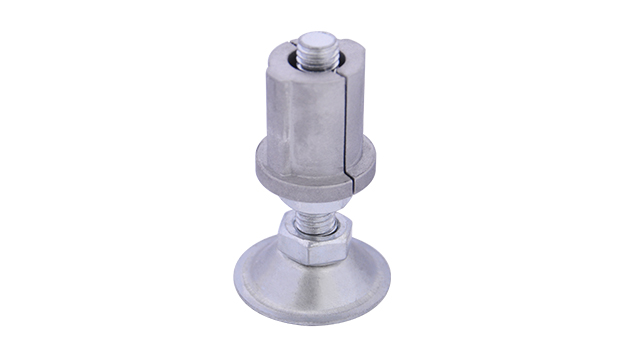
To understand how these feet work, let's look at their main parts. While designs can vary slightly between manufacturers, most aluminum pipe adjustable leveling feet share these core components:
1. The Base Plate
The base plate is the part that actually touches the floor. It's usually a flat, circular or square piece made from rubber, plastic, or metal (often aluminum or steel). Rubber or plastic bases are popular because they grip the floor better, reducing slipping, and they won't scratch delicate surfaces like polished concrete or tile. Metal bases, on the other hand, are better for heavy loads or rough environments where durability is non-negotiable.
2. The Threaded Rod
Attached to the base plate is a threaded rod—think of it as a long, thin bolt. This rod is what allows the height adjustment. It screws into a threaded hole in the upper part of the foot (the part that connects to the aluminum pipe), so twisting the rod (or the base plate) moves the foot up or down. The length of the rod determines the maximum adjustment range—some feet can extend by just a few millimeters, while others can adjust by several centimeters for severely uneven floors.
3. The Pipe Connector
At the top of the leveling foot is the pipe connector, which attaches the foot to the aluminum pipe or profile of your structure. This is often a cylindrical or square sleeve that slides over the end of the aluminum pipe and secures with a setscrew, bolt, or clamp. The connector is designed to fit standard aluminum pipe sizes (like 28mm or 30mm diameters), ensuring compatibility with most lean pipe systems.
4. The Locking Mechanism (Sometimes)
Some models include a locking nut or ring that tightens against the pipe connector once you've set the desired height. This prevents the foot from accidentally twisting or loosening over time—especially useful in high-vibration environments like near heavy machinery. Without a lock, constant movement could cause the foot to "walk" out of adjustment, leading to instability.
Materials: Why Aluminum (and More) Matters
Aluminum takes center stage here, but these feet often combine multiple materials to balance strength, weight, and cost. Let's break down the most common materials and their roles:
Aluminum (The Main Player)
The body of the leveling foot (the part that connects to the aluminum pipe) is almost always made from aluminum. Why? Aluminum is lightweight, so it doesn't add unnecessary bulk to structures—important if you're building mobile trolleys or need to move workbenches occasionally. It's also naturally corrosion-resistant, thanks to a thin oxide layer that forms on its surface, making it suitable for damp environments (like food processing plants or outdoor workshops) where steel might rust. Plus, aluminum is easy to machine, so manufacturers can create precise threads and connectors that fit perfectly with standard aluminum profile systems.
Steel (For Strength Where It Counts)
While the body is aluminum, the threaded rod (the part that adjusts height) is often steel. Steel is stronger and more rigid than aluminum, so it can handle heavier loads without bending or stripping threads. For example, a steel rod might support 500kg per foot, while an aluminum rod of the same size might only handle 300kg. This steel-aluminum combo gives you the best of both worlds: lightweight aluminum for the body, strong steel for the load-bearing parts.
Rubber or Plastic (For Grip and Protection)
The base plate (the part that touches the floor) is usually rubber or plastic. Rubber provides excellent traction, preventing the structure from sliding—critical in busy workshops where trolleys or racks might be bumped. It also dampens vibrations, which is helpful for sensitive equipment like microscopes or electronic testing stations. Plastic bases, often made from durable nylon, are a budget-friendly alternative and work well on smooth floors. Some even have a textured surface to enhance grip.
Stainless Steel (For Hygiene and Harsh Environments)
In specialized cases—like pharmaceutical labs or cleanrooms—you might find stainless steel components. Stainless steel resists corrosion from chemicals and is easy to sanitize, making it ideal for environments where hygiene is non-negotiable. These are less common (and pricier) than standard aluminum-steel combinations but essential for strict regulatory settings.

Types of Aluminum Pipe Adjustable Leveling Feet: Which One Do You Need?
Not all leveling feet are created equal. Depending on your structure, load, and environment, you'll need a specific type. Here are the most common varieties you'll encounter:
1. Fixed-Height vs. Adjustable-Height (Spoiler: You Want Adjustable)
This might seem obvious, but it's worth clarifying: "adjustable" is the key feature here. Fixed-height feet are rigid and can't be modified—they're only useful if you're certain the floor is perfectly flat (and stays that way). Adjustable feet, with their threaded rods, are the default choice for most industrial setups because they adapt to real-world floors. Within adjustable feet, you'll see options for adjustment range: short-stroke (up to 10mm adjustment) for slightly uneven floors, and long-stroke (up to 50mm or more) for severely sloped or damaged surfaces.
2. Swivel vs. Fixed Base
Swivel-base leveling feet have a base plate that can rotate 360 degrees relative to the threaded rod. This is helpful if the floor is uneven in multiple directions— the base can "tilt" slightly to make full contact with the floor, distributing weight more evenly. Fixed-base feet, by contrast, have a rigid connection between the rod and base plate, so they only work well on floors that are uneven in one direction (like a gentle slope). Swivel bases are more versatile but slightly pricier; fixed bases are simpler and better for heavy loads where stability is prioritized over flexibility.
3. Load Capacity: Light, Medium, or Heavy-Duty
Leveling feet are rated by how much weight they can support—usually listed as "static load capacity" (weight when the structure is stationary) and "dynamic load capacity" (weight when moving, like a trolley being pushed). Light-duty feet might handle 100-200kg per foot, suitable for small workbenches or tool racks. Medium-duty (200-500kg) works for larger workbenches or material racks. Heavy-duty (500kg+) is for industrial machinery, conveyor supports, or racks holding heavy inventory. Always check the load rating—overloading a foot can strip threads, bend the rod, or crack the aluminum body, leading to collapse.
4. Thread Size and Pitch: Getting the Right Fit
The threaded rod's size (diameter) and pitch (distance between threads) matter for compatibility. Common thread sizes for aluminum pipe systems are M10, M12, or M16 (metric) or 3/8", 1/2" (imperial). The pitch (e.g., M12x1.75) determines how much the foot adjusts with each full rotation—finer threads (smaller pitch) allow for more precise adjustments, while coarser threads (larger pitch) let you adjust height faster. Make sure the thread size matches the hole in your aluminum pipe or profile—if it's too small, it won't grip; too large, and you'll strip the threads.

How Do They Work? A Step-by-Step Breakdown
Let's walk through how these feet actually do their job. Say you've built a workbench using aluminum lean pipe and profiles, and when you place it on the floor, it rocks back and forth—one corner is higher than the others. Here's how the leveling feet fix that:
- Attach the Feet: First, you screw the leveling feet into the bottom ends of your aluminum pipe legs. Most aluminum pipes have pre-drilled holes or threaded inserts designed to accept these feet, so they should twist in easily by hand (though you might need a wrench for a tight fit).
- Identify the Wobble: Place the workbench on the floor and gently push on each corner. Notice which leg(s) lift off the ground or which corner feels "soft" when pressed—those are the ones that need adjustment.
- Adjust the Height: Grab the base plate (or the locking nut, if there is one) and twist it clockwise or counterclockwise. Clockwise usually lowers the foot (shortening the rod), while counterclockwise raises it (lengthening the rod). For swivel-base feet, the base plate might rotate independently, so you can twist the rod without moving the base.
- Check Level: After adjusting, press down on the workbench again. If it still wobbles, tweak the feet a little more. For precision, you can place a spirit level on the workbench surface—when the bubble is centered, you're good to go.
- Lock It In (If Needed): If your feet have a locking nut, tighten it against the aluminum pipe once the height is set. This prevents the foot from loosening over time due to vibrations or movement.
It's that simple! The threaded rod acts like a tiny jack, letting you micro-adjust each foot until the entire structure is stable. Even better, if the floor shifts (say, due to temperature changes or heavy machinery nearby), you can re-adjust the feet without taking the whole structure apart.
Where Are They Used? Real-World Applications
Aluminum pipe adjustable leveling feet might seem niche, but they're everywhere in industrial, commercial, and even some residential settings. Here are a few common scenarios where you'll find them hard at work:
Lean Manufacturing Workbenches
Lean manufacturing relies on efficient, adaptable workspaces, and aluminum lean pipe workbenches are a staple. These workbenches are built with aluminum pipes and profiles, and adjustable leveling feet ensure they stay steady, even when workers lean on them, place heavy tools, or move materials across the surface. In electronics assembly, for example, a level workbench is critical for soldering tiny components—even a 1mm wobble could ruin a circuit board. Leveling feet make that precision possible.
Material Racks and Shelving
Material racks (like the "material rack B (3 row and 3 floor)" you might see in supplier catalogs) hold everything from raw materials to finished products. If a rack is unlevel, items can slide off, or the weight might stress the rack's joints, leading to bending or collapse. Adjustable feet distribute weight evenly across all legs, preventing overloading and keeping inventory secure. They're especially useful in warehouses with concrete floors that have settled or cracked over time.
Turnover Trolleys
Turnover trolleys (used to transport materials between workstations) often use aluminum pipe frames for lightness. When the trolley is stationary (e.g., during loading/unloading), leveling feet keep it from rolling or tipping. Some trolleys even have a "lock" feature where you lower the feet to lift the casters off the ground, converting a mobile trolley into a stable platform—handy for temporary workspaces.
Food and Pharmaceutical Processing
In environments where hygiene is critical, aluminum's corrosion resistance shines. Leveling feet made with aluminum bodies and stainless steel components are easy to clean (no crevices for bacteria to hide), and their adjustability ensures work surfaces are level—important for tasks like filling bottles or packaging food, where uneven surfaces could lead to spills or inconsistent portioning.
Retail and Display Stands
Even retail stores use aluminum pipe systems for display racks, and adjustable leveling feet keep these racks steady on uneven mall floors or tile. A wobbly display stand might make products look unprofessional—or worse, cause items to fall off. Leveling feet ensure the stand looks polished and secure, even in high-traffic areas.
Why Choose Aluminum Pipe Adjustable Leveling Feet? Benefits Over the Alternatives
You might be wondering: Why not just use wooden shims, fixed plastic feet, or steel leveling feet instead? While those options work in some cases, aluminum pipe adjustable leveling feet offer unique advantages, especially for lean systems:
| Feature | Aluminum Pipe Adjustable Leveling Feet | Steel Leveling Feet | Plastic Fixed Feet | Wooden Shims |
|---|---|---|---|---|
| Weight | Lightweight (aluminum body) | Heavy (adds bulk) | Light, but less durable | Light, but inconsistent |
| Corrosion Resistance | High (aluminum + steel rod with coating) | Low (prone to rust unless coated) | High, but can crack in cold | Low (absorbs moisture, rots) |
| Adjustability | High (precise, repeatable adjustments) | Medium (adjustable but heavier) | None (fixed height) | Low (one-time use, hard to adjust) |
| Compatibility with Aluminum Systems | Perfect (designed for aluminum pipes/profiles) | Okay, but may require adapters | Limited (often poor fit with aluminum) | None (temporary fix only) |
| Cost | Moderate (balance of quality and price) | High (steel is pricier than aluminum) | Low (but needs replacement often) | Very low (but labor-intensive) |
Seamless Integration with Aluminum Lean Pipe Systems
This is perhaps the biggest advantage. Aluminum pipe adjustable leveling feet are engineered to work with aluminum pipes, profiles, and accessories. They fit the standard sizes, thread patterns, and connection methods used in lean systems, so you won't need custom adapters or workarounds. For example, if you're building a workbench with 28mm aluminum lean pipe, the feet will have a 28mm connector that slides right on—no drilling or modifying required. This compatibility saves time and reduces frustration during setup.
Long-Term Durability
Unlike plastic feet, which can crack under heavy loads, or wooden shims, which rot or compress over time, aluminum feet are built to last. The aluminum body resists dents and corrosion, the steel rod handles weight without bending, and the rubber/plastic base maintains grip even after years of use. They're a one-time purchase that pays off in reduced maintenance and replacements.
Flexibility for Changing Needs
Lean manufacturing is all about adaptability—reconfiguring workspaces as production needs change. If you move a workbench to a new location with a different floor, you don't need new feet; just adjust the existing ones. If you add heavier equipment to a rack, you can swap out light-duty feet for heavy-duty ones without rebuilding the entire structure. This flexibility makes aluminum pipe adjustable leveling feet a smart investment for growing businesses.
How to Choose the Right Aluminum Pipe Adjustable Leveling Feet: A Beginner's Checklist
With so many options out there, how do you pick the right feet for your project? Here's a simple checklist to guide you:
1. Know Your Load
Start with the weight. Calculate the total weight of your structure (including any tools, materials, or equipment it will hold), then divide by the number of legs. That gives you the minimum load capacity each foot needs to support. For example, a 1000kg workbench with 4 legs needs feet rated for at least 250kg each (and it's smart to add a 20-30% buffer for safety).
2. Measure Your Aluminum Pipe Size
Aluminum pipes come in standard diameters (like 28mm, 30mm, or 40mm). The leveling foot's connector must match your pipe size—too loose, and it will wobble; too tight, and you might damage the pipe. Check the pipe's outer diameter (OD) and look for feet labeled to fit that size (e.g., "for 28mm aluminum pipe").
3. Consider the Floor and Environment
Is the floor smooth (concrete) or rough (asphalt)? Rubber bases work best on smooth floors for grip; plastic might be better on rough surfaces to avoid tearing. Will the feet be exposed to moisture (e.g., a garage) or chemicals (e.g., a lab)? Look for corrosion-resistant options, like aluminum bodies with stainless steel rods. For food or medical settings, choose feet with easy-to-clean surfaces and no crevices where bacteria can hide.
4. Check the Adjustment Range
How uneven is your floor? Measure the difference between the highest and lowest points where the structure will stand. Choose feet with an adjustment range that covers that difference. For slightly uneven floors, 10-15mm of adjustment might be enough; for very uneven floors, look for 30mm or more.
5. Decide on Swivel or Fixed Base
Swivel bases are better for floors with multiple uneven areas (like a floor that slopes in two directions). Fixed bases are simpler and cheaper, ideal for mostly flat floors or heavy loads where stability is critical.
6. Don't Forget the Locking Mechanism
If your structure will be in a high-vibration area (near machinery, for example), opt for feet with a locking nut. This small feature prevents the feet from loosening over time, saving you from constant re-adjustments.
Installation and Maintenance: Keeping Your Feet (and Structure) Happy
Installing aluminum pipe adjustable leveling feet is straightforward, but a few tips will ensure they work their best. And with minimal maintenance, they'll keep your structure stable for years.
Installation Tips
- Clean the Threads: Before attaching the feet, wipe any dirt or debris from the aluminum pipe's threads. Grit can damage the threads or prevent a tight fit.
- Hand-Tighten First: Screw the feet in by hand until they're snug. Using a wrench immediately can cross-thread the connection, ruining both the foot and the pipe.
- Align the Bases: For swivel-base feet, make sure the base plate is facing down (not twisted) before placing the structure on the floor. A misaligned base might not grip properly.
Maintenance Basics
- Clean Regularly: Wipe the feet with a damp cloth to remove dust, oil, or debris. In dirty environments (like garages), a soft brush can help dislodge grime from the threads.
- Lubricate Threads: Every 6-12 months, apply a small amount of anti-seize lubricant to the threaded rod (avoid oil-based lubes, which attract dirt). This makes adjustments smoother and prevents threads from seizing up.
- Check the Base: Inspect the rubber/plastic base for cracks or wear. If the grip starts to fade (e.g., the structure slides more easily), replace the base pad (many manufacturers sell replacement pads separately).
- Tighten Locking Nuts: Periodically check locking nuts and retighten if they've loosened due to vibrations.
Final Thoughts: Small Parts, Big Impact
Aluminum pipe adjustable leveling feet might not be the most glamorous part of your industrial setup, but they're a classic example of how the right small part can make a huge difference. They turn wobbly, frustrating structures into stable, reliable workspaces that support precision, efficiency, and safety. Whether you're building a simple workbench for your garage or setting up a full lean manufacturing line, these feet are the quiet partners ensuring everything stays on track.
So the next time you walk into a smoothly running workshop, take a second look at the feet of those aluminum structures. Chances are, they're equipped with aluminum pipe adjustable leveling feet—proof that even the smallest components can be the foundation of great work.