- Company Articles
- Products and Technology
- Product knowledge
- What Are Anti-Slip Adjustable Leveling Feet? A Complete Introduction

What Are Anti-Slip Adjustable Leveling Feet? A Complete Introduction
Related Product
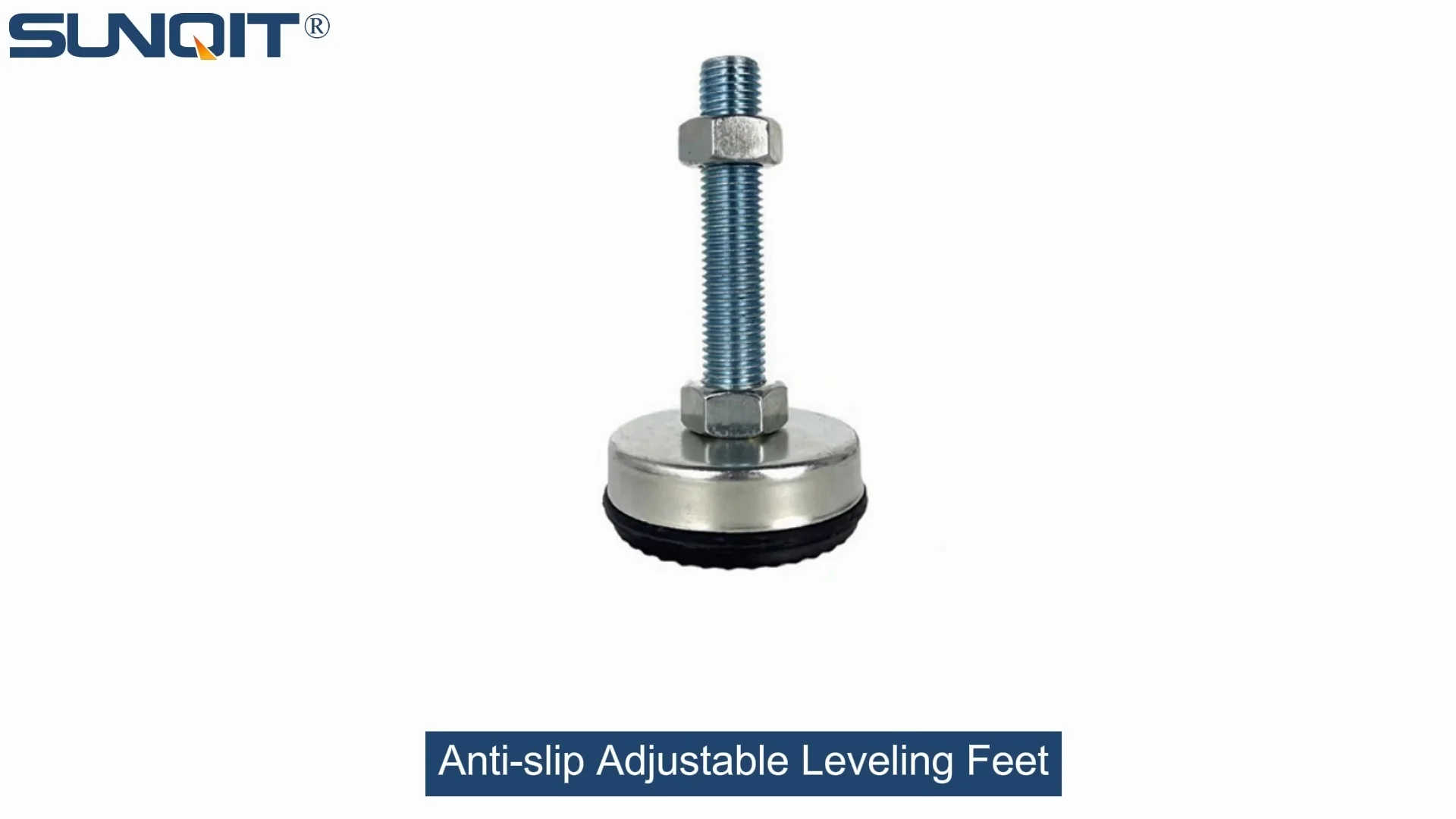
Anti-slip Adjustable Leveling Feet
Anti-slip Adjustable Leveling Feet are designed to keep machines level when placed on uneven or sloped ground, the rubber base will prevent product slip during work.
Introduction: The Unsung Heroes of Stability
Picture this: You're in a busy workshop, assembling components on a workbench. Every time you lean in to tighten a bolt, the table wobbles. A tool rolls off the edge, clattering to the floor. Or maybe you're managing a production line, and a conveyor belt keeps jamming because the frame isn't level, causing products to get stuck. Frustrating, right? These everyday headaches—wobbly equipment, uneven surfaces, and the risk of slips or falls—are more than just annoyances. They disrupt workflow, compromise safety, and even damage valuable tools or products. But what if there was a simple, affordable solution that could eliminate all of this? Enter anti-slip adjustable leveling feet: the quiet problem-solvers that keep your workspace steady, secure, and efficient.
At first glance, they might seem like little devices—just a metal stem with a rubber pad, maybe a nut for adjustment. But don't let their simplicity fool you. Anti-slip adjustable leveling feet are engineering marvels designed to tackle one of the most common challenges in industrial, commercial, and even home settings: uneven surfaces. Whether you're setting up a workbench in a garage, installing a material rack in a warehouse, or leveling a conveyor system on a factory floor, these small but mighty components play a critical role in ensuring stability, safety, and precision. In this guide, we'll dive deep into everything you need to know about anti-slip adjustable leveling feet—what they are, how they work, the different types available (including specialized options like aluminum pipe adjustable leveling feet and m10*56 rubber leveling feet), their key benefits, and how to choose the right ones for your needs. By the end, you'll wonder how you ever worked without them.
What Are Anti-Slip Adjustable Leveling Feet?
Let's start with the basics: What exactly is an anti-slip adjustable leveling foot? At its core, it's a device attached to the bottom of equipment, furniture, or structures to adjust height, compensate for uneven floors, and prevent slipping. Think of it as a "leveling leg" that you can tweak to make sure whatever it's supporting stands perfectly straight—no wobbles, no tilts, no unexpected movement.
Most anti-slip adjustable leveling feet share a few key components: a base (the part that touches the floor), a stem (the threaded rod that connects the base to the equipment), an adjustment mechanism (usually a nut or a rotating base that lets you raise or lower the foot), and an anti-slip pad (a material like rubber or plastic on the bottom of the base to grip the floor). Some models also include a locking nut to keep the foot in place once adjusted, preventing it from loosening over time due to vibration or use.
The "adjustable" part is what makes them so versatile. By rotating the stem or the base, you can extend or retract the foot, effectively raising or lowering that corner of the equipment. This allows you to fine-tune the height to match uneven floors—whether it's a small bump in a concrete slab or a sloped garage floor. The "anti-slip" feature, typically a rubber or textured pad, ensures that even after leveling, the equipment stays put. No more sliding workbenches, no more shifting material racks, and no more accidents caused by unexpected movement.

How Do Anti-Slip Adjustable Leveling Feet Work?
To understand how these feet work, let's break down the process step by step. Imagine you've just set up a new workbench in your workshop. You place it on the floor, and immediately notice it rocks back and forth—it's uneven. Here's how anti-slip adjustable leveling feet would fix that:
1. Attachment: First, the feet are attached to the bottom corners of the workbench. This is usually done by screwing the threaded stem into a pre-drilled hole or a mounting plate on the equipment. Some feet are designed to be welded on, but most are threaded for easy installation and removal.
2. Initial Placement: With the feet loosely attached, the workbench is set on the floor. At this point, it might still wobble because the feet aren't adjusted yet.
3. Adjustment: Using a wrench or by hand (if the base is knurled for grip), you rotate the stem of the foot. Turning it clockwise extends the stem, lowering the foot and raising that corner of the workbench. Turning it counterclockwise retracts the stem, raising the foot and lowering the corner. You repeat this for each foot until the workbench no longer rocks—you can test this by placing a level on top to ensure it's perfectly horizontal.
4. Locking (If Needed): Once level, some feet have a locking nut that you tighten against the equipment to hold the stem in place. This prevents the foot from rotating or loosening over time, even if the workbench is moved or vibrated (like when using power tools).
5. Anti-Slip Action: The rubber or textured pad on the base of the foot then does its job. It creates friction between the foot and the floor, so even if someone bumps the workbench or it's placed on a slightly slippery surface (like a concrete floor with oil residue), the bench stays stable. The anti-slip pad also protects the floor from scratches—unlike metal feet, which can leave marks or wear down floor coatings.
The beauty of this design is its simplicity. You don't need specialized tools or technical expertise to adjust them—just a few minutes and a level. And because they're adjustable, they can adapt to almost any surface, making them ideal for spaces where floors aren't perfectly flat (which, let's be honest, is most spaces).

Types of Anti-Slip Adjustable Leveling Feet
Not all anti-slip adjustable leveling feet are created equal. They come in a variety of styles, sizes, and materials to suit different applications, load capacities, and environments. Let's explore some of the most common types, including a few specialized options like aluminum pipe adjustable leveling feet and m10*56 rubber leveling feet.
1. Standard Anti-Slip Adjustable Leveling Feet
These are the most basic and widely used type. They typically have a metal stem (often steel or stainless steel), a plastic or metal base, and a rubber anti-slip pad. The stem is threaded, allowing for height adjustment, and the base is usually circular or square. Standard feet are versatile and work well for light to medium-duty applications, like small workbenches, shelving units, or office furniture. They're affordable, easy to install, and come in a range of thread sizes (like M8, M10, or M12) to fit different equipment.
2. Heavy-Duty Anti-Slip Adjustable Leveling Feet
For larger, heavier equipment—think industrial workbenches, conveyor systems, or material racks—standard feet might not cut it. Heavy-duty leveling feet are built to handle higher loads (often up to several thousand pounds) and are made with thicker, stronger materials. The stems are usually made of high-grade steel, and the bases are larger to distribute weight more evenly. Some heavy-duty models also have reinforced anti-slip pads, like thick rubber or even metal with a textured surface, to grip floors even under extreme pressure. If you're working with equipment that weighs hundreds or thousands of pounds, heavy-duty feet are a must to prevent bending, breaking, or slippage.
3. Aluminum Pipe Adjustable Leveling Feet
Now, let's talk about a specialized type: aluminum pipe adjustable leveling feet. As the name suggests, these are designed specifically for use with aluminum pipe structures—like aluminum lean pipes, aluminum profiles, or aluminum workbenches. Aluminum is lightweight yet strong, making it a popular choice for modular systems (think production lines, assembly stations, or mobile trolleys). But aluminum pipes require leveling feet that are compatible with their material and design.
Aluminum pipe adjustable leveling feet are typically made with aluminum stems or bases to match the lightweight nature of aluminum structures. They often have a threaded stem that fits into the end of an aluminum pipe, allowing for easy attachment without welding or drilling. The anti-slip pad is usually rubber or plastic, chosen to complement the aluminum's corrosion resistance (important for environments like cleanrooms or food processing facilities, where aluminum is often used for its hygiene properties). These feet are ideal for applications where weight is a concern—like mobile trolleys, where heavy steel feet would make the trolley harder to move—but stability and slip resistance are still critical.
4. M10*56 Rubber Leveling Feet
Another specialized type is the m10*56 rubber leveling foot. The "M10*56" refers to the thread size: M10 (metric thread, 10mm in diameter) and 56mm (the length of the threaded stem). This is a common size for medium-duty applications, like workbenches, small conveyor frames, or material racks. The "rubber" part refers to the anti-slip pad, which is made of durable rubber (often nitrile or neoprene) for excellent grip and floor protection.
M10*56 rubber leveling feet are popular because they strike a balance between size, strength, and versatility. The M10 thread is large enough to handle moderate loads (up to a few hundred pounds per foot) but not so large that they're bulky. The 56mm stem length provides enough adjustment range to compensate for most minor floor unevenness (typically up to 20-30mm of height adjustment). And the rubber pad ensures they work well on a variety of floor types, including concrete, tile, and wood. If you're setting up a standard workbench or a small assembly line, chances are you'll encounter M10*56 rubber leveling feet as a go-to option.
5. Swivel Anti-Slip Adjustable Leveling Feet
Some leveling feet have a swivel base, meaning the pad can rotate or tilt slightly to conform to uneven floors. This is useful for surfaces that are not just uneven but also sloped or irregular (like outdoor concrete pads or old factory floors with deep cracks). The swivel design allows the pad to make full contact with the floor, even if the stem is at an angle, ensuring maximum stability and anti-slip grip. Swivel feet are often used in outdoor applications, construction equipment, or mobile units that might be moved across different surfaces.

Materials Used in Anti-Slip Adjustable Leveling Feet
The materials used to make anti-slip adjustable leveling feet play a big role in their performance, durability, and suitability for different environments. Let's break down the most common materials and what they're best for:
Stem Materials
Steel: Steel is the most common material for stems, thanks to its strength and affordability. Carbon steel is used for light to medium-duty feet, while stainless steel (304 or 316 grade) is preferred for corrosive environments (like food processing, chemical plants, or outdoor use) because it resists rust and oxidation. Steel stems are strong enough for heavy loads but can be heavy themselves, making them less ideal for lightweight structures.
Aluminum: Aluminum stems are lightweight and corrosion-resistant, making them perfect for aluminum pipe structures (like the aluminum pipe adjustable leveling feet we discussed earlier) or applications where weight is a concern (e.g., mobile trolleys). Aluminum is not as strong as steel, so it's best for light to medium loads. It's also a good choice for cleanrooms or medical facilities, where aluminum's smooth surface is easy to sanitize.
Plastic: Plastic stems (usually nylon or polypropylene) are lightweight, inexpensive, and corrosion-resistant. They're often used for light-duty applications, like office furniture, shelving, or small home workshops. However, plastic is less strong than metal, so it's not suitable for heavy loads or high temperatures.
Base Materials
Steel: Steel bases are strong and durable, often used with steel stems for heavy-duty feet. They may be coated with zinc (galvanized) or powder-coated for corrosion resistance. Steel bases can have a smooth or textured surface, but they usually have an anti-slip pad (rubber or plastic) attached to the bottom to prevent slipping.
Aluminum: Aluminum bases are lightweight and corrosion-resistant, paired with aluminum stems for aluminum pipe systems. They're often anodized (a process that adds a protective oxide layer) to improve durability and appearance.
Plastic: Plastic bases are lightweight, inexpensive, and come in a variety of colors. They're often used with plastic stems for light-duty feet and may have integrated anti-slip textures (like ridges or bumps) instead of a separate pad.
Anti-Slip Pad Materials
Rubber: Rubber is the most common anti-slip pad material because it provides excellent grip on almost any surface. Nitrile rubber is oil-resistant (great for workshops or garages with oil spills), while neoprene rubber is heat and chemical-resistant (ideal for industrial settings). Rubber pads also absorb vibration, which can reduce noise and prevent equipment from "walking" (slowly moving across the floor due to vibration).
Plastic: Hard plastics like polyurethane or PVC are sometimes used for anti-slip pads. They're more wear-resistant than rubber but may not grip as well on smooth floors. Plastic pads are often used in dry environments where cost is a concern.
Textured Metal: In heavy-duty applications where rubber might wear out quickly (like on concrete floors with gravel or debris), some feet use textured metal pads (e.g., serrated steel). These dig into the floor slightly for grip but can scratch softer floors, so they're best for industrial settings with tough flooring.
Key Applications: Where Anti-Slip Adjustable Leveling Feet Shine
Anti-slip adjustable leveling feet are used in almost every industry imaginable, from manufacturing and warehousing to healthcare and home workshops. Let's take a look at some of their most common applications and why they're essential in each:
1. Workbenches and Assembly Stations
Whether it's a simple garage workbench or a high-tech assembly station in a factory, stability is key. A wobbly workbench makes precision tasks (like soldering, measuring, or assembling small parts) nearly impossible. Anti-slip adjustable leveling feet ensure the bench stays level, even if the floor is uneven, and the anti-slip pad prevents it from sliding when tools are used or parts are moved. Aluminum pipe adjustable leveling feet are particularly popular here, as many modern workbenches use aluminum profiles for their lightweight, modular design.
2. Conveyor Systems and Production Lines
Conveyor belts, roller tracks, and production line equipment rely on precise alignment to move products smoothly. If a conveyor frame is tilted, products can jam, fall off, or get damaged. Anti-slip adjustable leveling feet keep the frame level, ensuring consistent product flow. Heavy-duty models are used here to support the weight of the conveyor and the products moving along it, while anti-slip pads prevent the frame from shifting during operation.
3. Material Racks and Shelving
Material racks, shelving units, and pallet racks store heavy items like boxes, tools, or raw materials. If a rack is uneven, it can lean to one side, risking collapse (especially when fully loaded). Leveling feet distribute the weight evenly across the rack's legs, reducing stress on the structure and preventing tipping. M10*56 rubber leveling feet are often used for medium-duty shelving, as their thread size and rubber pads provide a good balance of strength and grip.
4. Mobile Trolleys and Carts
Mobile trolleys (like turnover trolleys or tool carts) need to be both portable and stable. When in use, you don't want the trolley to roll or tip over, but when moving it, you need the wheels to work freely. Many trolleys have leveling feet that can be adjusted to "lock" the trolley in place—lower the feet to lift the wheels off the ground, and the trolley stays put; raise the feet to let the wheels touch the floor, and you can move it. Aluminum pipe adjustable leveling feet are great for lightweight trolleys, as they keep the overall weight down without sacrificing stability.
5. Medical and Laboratory Equipment
In hospitals, labs, or clinics, equipment like exam tables, lab benches, or diagnostic machines must be perfectly level for accuracy and safety. A tilted lab bench could cause chemicals to spill, while an uneven exam table is uncomfortable for patients. Anti-slip adjustable leveling feet with stainless steel components are often used here for their corrosion resistance (important for sanitization) and precision adjustment. The anti-slip pads also prevent equipment from moving during use, even when cleaned with harsh disinfectants.
6. Food Processing and Commercial Kitchens
Food processing facilities and commercial kitchens have strict hygiene and safety standards. Floors are often wet or oily, and equipment like mixers, ovens, or preparation tables must be stable to prevent accidents. Anti-slip adjustable leveling feet with stainless steel stems and rubber pads are ideal here—stainless steel resists corrosion from water and cleaning chemicals, while rubber pads grip slippery floors. They also elevate equipment off the floor, making it easier to clean underneath (a must for food safety regulations).
Benefits of Using Anti-Slip Adjustable Leveling Feet
By now, you probably have a good sense of why anti-slip adjustable leveling feet are useful, but let's spell out their key benefits clearly. These little devices offer far more than just "leveling"—they improve safety, efficiency, and even the lifespan of your equipment.
1. Enhanced Stability and Safety
The most obvious benefit is stability. Level equipment is safer equipment. No more wobbling workbenches that cause tools to fall, no more leaning racks that risk collapse, and no more sliding trolleys that injure workers. The anti-slip pad adds an extra layer of safety by preventing movement, even on slippery floors. This reduces the risk of accidents, injuries, and damage to tools or products—a critical advantage in any workspace.
2. Improved Workflow and Efficiency
Wobbly or uneven equipment slows down work. If you're constantly readjusting a tilted conveyor belt or picking up tools that fall off a wobbly bench, you're wasting time. Anti-slip adjustable leveling feet eliminate these interruptions, letting you focus on the task at hand. In production settings, this can translate to faster assembly times, fewer delays, and higher output.
3. Floor Protection
Metal feet can scratch, dent, or wear down floors, especially in high-traffic areas. Anti-slip pads (rubber, plastic, or felt) act as a buffer between the equipment and the floor, preventing damage. This is particularly important for finished floors (like in offices or retail spaces) or expensive flooring (like epoxy-coated warehouse floors). Over time, this can save you money on floor repairs or replacements.
4. Adaptability to Uneven Floors
Perfectly flat floors are rare, even in new buildings. Concrete slabs can settle, floors can have cracks or bumps, and older spaces often have uneven surfaces. Anti-slip adjustable leveling feet adapt to these imperfections, allowing you to use equipment in spaces that would otherwise be unsuitable. This flexibility is a game-changer for workshops, garages, or warehouses with less-than-ideal flooring.
5. Easy Installation and Adjustment
You don't need to be an engineer to install or adjust these feet. Most models screw into place, and adjustment just requires turning the stem or base by hand or with a simple wrench. This makes them easy to retrofit onto existing equipment—no need to replace perfectly good workbenches or racks just because they're wobbly. And if you move the equipment to a new location, you can readjust the feet to the new floor in minutes.
6. Corrosion Resistance and Durability
Many anti-slip adjustable leveling feet are made with corrosion-resistant materials like stainless steel, aluminum, or zinc-plated steel. This means they hold up well in harsh environments—wet, oily, or chemical-exposed areas—without rusting or deteriorating. Rubber pads are also durable, withstanding wear and tear from regular use. A good set of leveling feet can last for years, even in heavy-duty applications.
7. Reduced Vibration and Noise
Vibration from power tools, conveyor belts, or machinery can loosen equipment, damage parts, or just be plain annoying. Rubber anti-slip pads absorb some of this vibration, reducing noise and preventing equipment from "walking" (slowly moving across the floor due to repeated vibration). This is especially useful in workshops or factories where noise levels are already high.
How to Choose the Right Anti-Slip Adjustable Leveling Feet
With so many types and options available, how do you pick the right anti-slip adjustable leveling feet for your needs? Here's a step-by-step guide to help you make the best choice.
Step 1: Determine the Load Capacity
First, calculate the weight of the equipment the feet will support. This includes the weight of the equipment itself plus any items it will hold (e.g., tools on a workbench, products on a rack). Then, divide that total weight by the number of feet (most equipment has 4 feet, but some have more). This gives you the load per foot. Make sure the leveling feet you choose have a load capacity higher than this number—always err on the side of caution (e.g., if you need 200 lbs per foot, choose feet rated for 250 lbs or more).
Step 2: Consider the Environment
Where will the feet be used? If it's a dry workshop, standard steel feet with rubber pads might work. If it's a wet or corrosive environment (like a food processing plant or outdoor area), choose stainless steel or aluminum to resist rust. For oily floors, look for oil-resistant rubber pads (nitrile rubber is a good choice). In cleanrooms or medical settings, aluminum or stainless steel with smooth surfaces is best for easy sanitization.
Step 3: Check the Floor Type
The floor surface matters too. For hard floors (concrete, tile), rubber or plastic pads provide the best grip. For soft floors (wood, carpet), larger bases distribute weight better to prevent sinking. If the floor is easily scratched (like hardwood or epoxy), avoid metal bases without anti-slip pads—opt for rubber or felt pads instead.
Step 4: Match the Thread Size and Attachment Method
The stem of the leveling foot must fit the mounting holes or threads on your equipment. Check the existing holes (if retrofitting) or the equipment specifications to find the thread size (e.g., M10, 1/2"-13). If you're using aluminum pipes, aluminum pipe adjustable leveling feet with threads that fit aluminum pipe ends are the way to go. For equipment without pre-drilled holes, look for feet with mounting plates that can be bolted or welded on.
Step 5: Decide on Adjustment Range
How uneven is the floor? Measure the maximum height difference between the highest and lowest points where the equipment will stand. Choose feet with an adjustment range (the distance the stem can extend) that covers this difference. For example, if the floor varies by 15mm, pick feet with at least 20mm of adjustment to be safe.
Step 6: Look for Additional Features
Do you need locking nuts to prevent loosening? Swivel bases for irregular floors? A specific color to match your equipment? Consider these extras based on your needs. For example, in high-vibration environments (like near heavy machinery), locking nuts are a must to keep feet from adjusting on their own.
| Factor | What to Consider | Example |
|---|---|---|
| Load Capacity | Total weight ÷ number of feet | 500 lbs equipment + 300 lbs load = 800 lbs total. 4 feet = 200 lbs/foot. Choose feet rated for ≥200 lbs. |
| Environment | Wet, dry, corrosive, oily? | Oily workshop: Steel stem with nitrile rubber pad. |
| Floor Type | Hard, soft, scratch-prone? | Hard concrete with oil: Rubber pad for grip. |
| Thread Size | Existing holes or equipment specs | Equipment has M10 holes: Choose M10 stem (e.g., m10*56 rubber leveling feet). |
| Adjustment Range | Maximum floor unevenness | Floor varies by 10mm: Choose feet with ≥15mm adjustment. |
Installation and Adjustment Tips
Installing and adjusting anti-slip adjustable leveling feet is straightforward, but a few tips can ensure you get the best results. Follow these steps for a stable, slip-free setup.
Installation Steps
1. Prepare the Equipment: If retrofitting feet to existing equipment, clean the mounting area to remove dirt, rust, or debris. If the equipment has old feet or pads, remove them first.
2. Check Thread Compatibility: Test-fit the leveling foot stem into the mounting hole to ensure it threads in easily. If it's too tight, tap the hole with a tap tool to clean the threads (don't force it—stripped threads are a hassle to fix).
3. Attach the Feet: Screw the feet into the mounting holes by hand until they're snug. For aluminum pipe adjustable leveling feet, this might involve inserting the stem into the end of the aluminum pipe and tightening a set screw (if included) to hold it in place.
4. Position the Equipment: Place the equipment in its final location. If it's heavy, use a dolly or ask for help to avoid injury.
Adjustment Steps
1. Check for Wobble: Push gently on different corners of the equipment to see where it wobbles. The corner that lifts when pushed is the one that needs to be raised.
2. Use a Level: Place a spirit level on top of the equipment (along both the length and width) to get an accurate reading. Adjust the feet until the bubble is centered in both directions.
3. Adjust One Foot at a Time: Focus on one wobbly corner first. Rotate the stem clockwise to lower the foot (raising the corner) or counterclockwise to raise the foot (lowering the corner). Check the level after each adjustment.
4. Lock the Feet (If Needed): Once level, tighten any locking nuts against the equipment to hold the stem in place. Use a wrench to snug them up—don't over-tighten, as this can damage the threads.
5. Test Stability: Push on the equipment again to ensure it doesn't wobble. Walk around it and check from all angles. If it still moves, readjust the feet slightly.
Pro Tips
- Start with All Feet Retracted: When installing new feet, screw them in until the stems are almost fully retracted (shortest length). Then adjust from there—this gives you the most room to extend them if needed.
- Mark the Stem: If you need to remove and reinstall the feet later (e.g., to move the equipment), mark the stem with a pencil or tape so you can reset them to the same position quickly.
- Clean the Pads Regularly: Dirt, dust, or oil on the anti-slip pads reduces grip. Wipe them with a damp cloth occasionally to keep them clean.
- Don't Over-Adjust: Extending the stem too far (beyond its rated length) can weaken it, reducing load capacity. Stick to the manufacturer's recommended adjustment range.
Maintenance and Troubleshooting
Anti-slip adjustable leveling feet are low-maintenance, but a little care can extend their lifespan and keep them working effectively. Here's how to maintain them and fix common issues.
Maintenance Tips
1. Clean Regularly: Wipe the stems, bases, and anti-slip pads with a damp cloth to remove dirt, grease, or debris. For stainless steel or aluminum components, use a mild detergent if needed—avoid abrasive cleaners that can scratch the surface.
2. Lubricate Threads: If the stem becomes hard to adjust, apply a small amount of lubricant (like silicone spray or machine oil) to the threads. Wipe off excess to prevent attracting dirt.
3. Inspect Pads: Check the anti-slip pads for wear. If they're cracked, flattened, or losing grip, replace them (many pads are replaceable; check with the manufacturer for replacement parts).
4. Tighten Locking Nuts: Over time, locking nuts can loosen due to vibration. Periodically check and retighten them to keep the feet from adjusting on their own.
Common Issues and Solutions
Issue 1: The foot won't adjust (stuck threads).
Solution:
Clean the threads with a wire brush to remove rust or debris. Apply lubricant and let it sit for a few minutes, then try adjusting again. If it's still stuck, use a wrench to gently turn the stem—avoid forcing it, as you could strip the threads.
Issue 2: The equipment still slips, even with anti-slip pads.
Solution:
Check if the pads are clean and in good condition (replace if worn). If the floor is extremely slippery (e.g., very oily), try oil-resistant pads (nitrile rubber) or add a layer of anti-slip tape to the floor under the feet.
Issue 3: The foot sinks into the floor.
Solution:
This happens if the load per foot exceeds the floor's weight capacity. Use feet with larger bases to distribute weight more evenly, or place a metal plate under the foot to spread the load.
Issue a4: The stem is bent or damaged.
Solution:
Bent stems can't be adjusted properly and may fail under load. replace the foot immediately—don't try to straighten it, as this weakens the metal.
Conclusion: Small Feet, Big Impact
Anti-slip adjustable leveling feet might not be the most glamorous tools in your workshop or factory, but they're undoubtedly some of the most important. These unassuming devices solve a universal problem—uneven floors—with simplicity, versatility, and reliability. Whether you're using standard steel feet for a garage workbench, aluminum pipe adjustable leveling feet for a lightweight assembly line, or m10*56 rubber leveling feet for a medium-duty material rack, they ensure your equipment is stable, safe, and efficient.
By now, you should have a solid understanding of what anti-slip adjustable leveling feet are, how they work, the different types available, and how to choose, install, and maintain them. The next time you encounter a wobbly table, a tilted rack, or a slippery piece of equipment, you'll know exactly what to do: reach for a set of anti-slip adjustable leveling feet. Your back (from not picking up fallen tools), your equipment (from not being damaged), and your peace of mind (from knowing everything is stable) will thank you.
So go ahead—level up your workspace. Your future self (and your wobbly workbench) will be glad you did.