- Company Articles
- Products and Technology
- Product knowledge
- What Are M10*56 Rubber Leveling Feet? Definition & Key Specifications

What Are M10*56 Rubber Leveling Feet? Definition & Key Specifications
Related Product
M10*56 Rubber Leveling Feet
Adjustable leveling feet are designed to keep machines level when placed on uneven or sloped ground. Otherwise known as adjustable equipment feet, they are available to order in a wide variety of size and load capacity combinations.
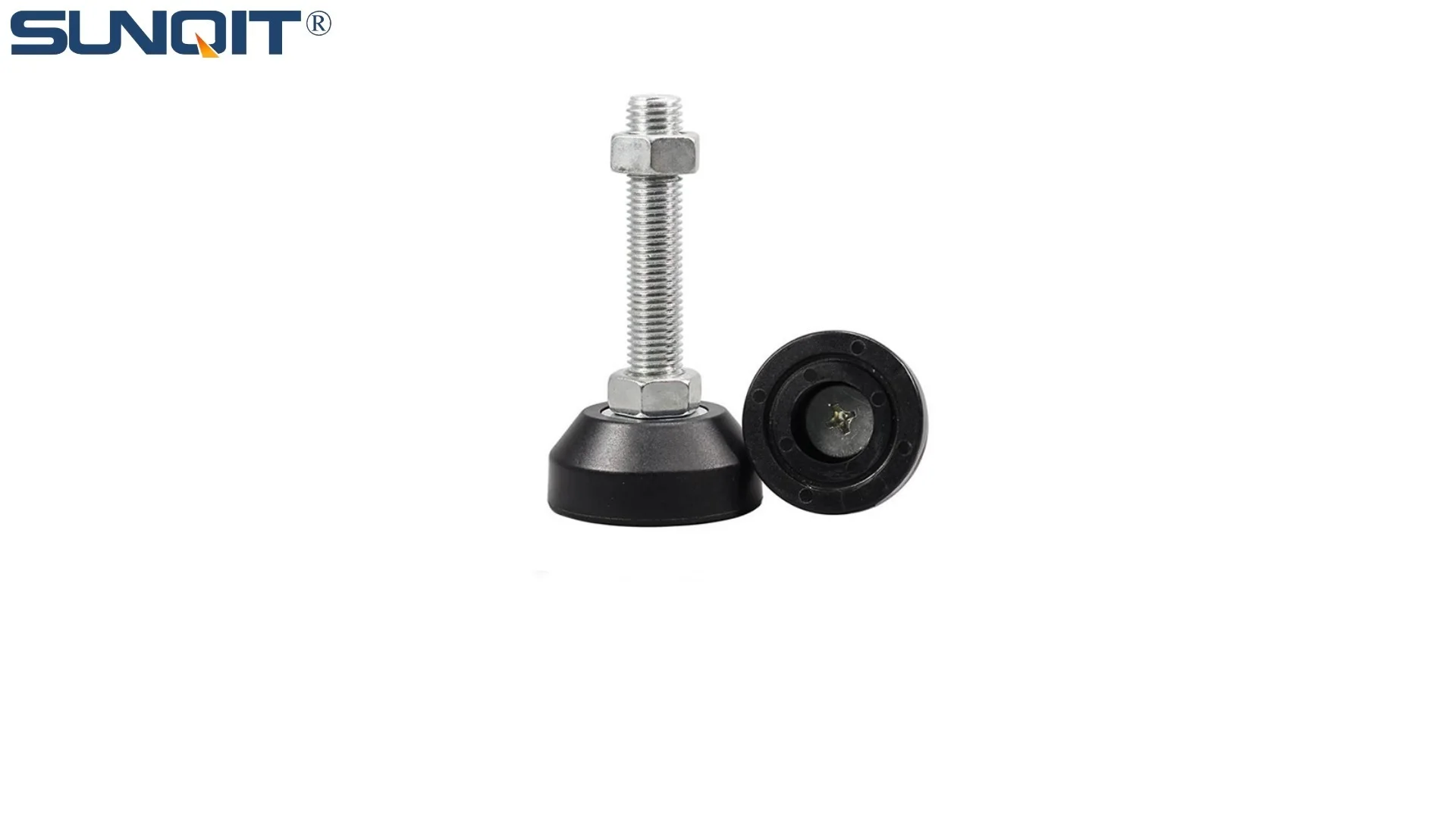
Walk into any busy workshop, manufacturing plant, or even a small garage, and you'll quickly notice one thing: stability matters. Whether it's a workbench where precision assembly happens, a material rack holding heavy components, or a testing station where measurements can't be off by a millimeter, wobbling equipment is more than just an annoyance—it's a productivity killer. Parts slide off, tools vibrate out of place, and over time, that constant shaking can even damage the equipment itself. But what if there was a simple, affordable solution to turn that wobbly chaos into rock-solid stability? Enter M10*56 rubber leveling feet—the unsung heroes of workshop organization and equipment reliability.
In this article, we're going to dive deep into what M10*56 rubber leveling feet are, how they work, and why they've become a staple in industries ranging from automotive manufacturing to electronics assembly. We'll break down their key specifications, explore their real-world applications (including how they pair with everything from lean pipe workbenches to aluminum profile structures), and even share tips on choosing the right ones for your needs. By the end, you'll understand why these small but mighty components are a game-changer for anyone who values stability, precision, and durability in their workspace.
Defining M10*56 Rubber Leveling Feet: More Than Just "Feet"
Let's start with the basics: What exactly are M10*56 rubber leveling feet? At first glance, they might look like simple threaded bolts with a rubber bottom, but there's more engineering here than meets the eye. These are adjustable support components designed to stabilize equipment by compensating for uneven floors, warped surfaces, or minor manufacturing inconsistencies in the equipment itself.
The name gives away some key details: "M10" refers to the thread size (a metric thread with a 10mm diameter), and "56" indicates the length of the threaded stem (56mm). The "rubber" part is the base, which serves two critical roles: gripping the floor to prevent slipping and damping vibrations that could rattle tools or components. Unlike fixed feet, which are rigid and can't adapt to uneven surfaces, these feet are adjustable—twist them clockwise to raise the equipment, counterclockwise to lower it, and suddenly that wobbly workbench becomes steady as a rock.
Think of them as the "leveling legs" for your equipment. Just as a table with adjustable legs can adapt to a sloped kitchen floor, M10*56 rubber leveling feet let your workbench, material rack, or assembly station adapt to the imperfect realities of workshop floors. And because they're made with durable materials (we'll get into that later), they don't just fix the problem today—they keep your equipment stable for years to come.
How Do M10*56 Rubber Leveling Feet Actually Work? A Closer Look
To understand why M10*56 rubber leveling feet are so effective, let's break down their design and functionality. At their core, they're made of three main parts: the threaded stem, the metal body, and the rubber base. Here's how each piece works together to create stability:
1. The Threaded Stem: Precision Adjustment
The stem is the "adjustable" part of the foot. With an M10 metric thread, it screws into a corresponding threaded hole on the bottom of your equipment—think of it like a very sturdy bolt. The 56mm length gives you enough adjustability to compensate for small unevenness (typically up to 15-20mm, depending on the model). For example, if one corner of your lean pipe workbench sits 10mm lower than the others because the floor dips, you simply twist the leveling foot clockwise to extend the stem, raising that corner until the bench is perfectly level.
2. The Metal Body: Strength and Durability
The stem is usually made of steel (often zinc-plated to resist rust) or stainless steel for extra corrosion resistance. This metal body is what bears the weight of the equipment—so whether you're placing a 500kg material rack or a 50kg workbench on top, the metal stem won't bend or warp under pressure. Some models even have a hexagonal nut built into the body, making it easier to twist the foot into place with a wrench when you need extra torque.
3. The Rubber Base: Grip and Vibration Dampening
The rubber base is where the magic happens. Unlike metal or plastic bases, rubber has natural friction, so it grips the floor tightly—no more sliding workbenches when you lean into a task. But it's not just about grip: rubber also acts as a shock absorber. If you're using power tools on the workbench, the rubber base dampens the vibrations, preventing them from spreading to the floor (or from the floor into the equipment). This is especially important in precision work, like electronics assembly, where even tiny vibrations can throw off measurements.
Put it all together, and you've got a component that's simple to install, easy to adjust, and built to last. It's no wonder these feet are a go-to for engineers, workshop managers, and DIY enthusiasts alike.

Key Specifications: What Makes M10*56 Rubber Leveling Feet Unique?
Not all leveling feet are created equal. To choose the right ones for your equipment, you need to understand their specs. Below is a breakdown of the most important features of M10*56 rubber leveling feet, along with a handy table to compare key details:
| Specification | Details | Why It Matters |
|---|---|---|
| Thread Size | M10 (10mm diameter) | Must match the threaded holes on your equipment. M10 is a common size for medium-duty applications like workbenches and material racks. |
| Stem Length | 56mm | Determines adjustability range (typically 10-20mm of extension). 56mm is ideal for most workshop floors, which rarely have unevenness beyond 15mm. |
| Base Diameter | 40-60mm (varies by model) | Larger bases distribute weight better, reducing pressure on the floor (important for hardwood or tile floors). |
| Material (Stem) | Zinc-plated steel, stainless steel, or aluminum | Zinc-plated steel is affordable and rust-resistant for dry environments; stainless steel is better for moist or corrosive areas (e.g., food processing). |
| Material (Base) | Nitrile rubber, EPDM, or silicone | Nitrile rubber is oil-resistant (great for garages/auto shops); EPDM handles high temperatures (ideal for industrial ovens or welding stations). |
| Load Capacity | 200-800kg per foot (varies by model) | Multiply by the number of feet on your equipment to get total capacity. A 4-legged workbench with 500kg/foot feet can hold up to 2000kg! |
| Adjustment Range | 10-20mm | How much you can raise/lower each foot to level the equipment. More range = better for very uneven floors. |
One thing to note: while M10*56 is a standard size, there are variations. For example, some feet have a swivel base (allowing them to adapt to sloped floors), while others have a fixed base for maximum stability. Some even come with a locking nut, so once you've leveled the equipment, you can tighten the nut to prevent the foot from unscrewing over time. These extra features make them versatile enough to handle almost any workspace challenge.

Applications: Where Do M10*56 Rubber Leveling Feet Shine?
M10*56 rubber leveling feet aren't just for workbenches—though they're fantastic for those. Their versatility makes them a staple in a wide range of settings. Let's explore some of the most common applications:
1. Lean Pipe Workbenches and Assembly Stations
Lean pipe workbenches (built with metal pipes and joints for flexibility) are popular in manufacturing because they're easy to customize. But all that flexibility can lead to instability if the base isn't solid. M10*56 leveling feet are the perfect companion here: they attach directly to the bench legs, let you level the surface even if the floor is uneven, and the rubber base keeps the bench from sliding during assembly tasks. In electronics factories, where even a tiny wobble can ruin a circuit board, these feet are practically mandatory.
2. Aluminum Profile Structures
Aluminum profile systems (think T-slot aluminum frames) are used for everything from machine guards to material racks. These profiles are lightweight but strong, and they often need to be level to function properly (e.g., a conveyor built with aluminum profiles won't move parts smoothly if it's tilted). M10*56 leveling feet screw into the bottom of the profiles, letting you adjust each corner until the entire structure is perfectly horizontal. They're also corrosion-resistant, so they hold up well in environments where aluminum profiles are commonly used (like clean rooms or outdoor workshops).
3. Material Racks and Storage Systems
Material racks holding heavy boxes or components need to be stable to prevent tipping. M10*56 leveling feet distribute the weight evenly across the floor, reducing the risk of damage to both the rack and the floor itself. They're especially useful in warehouses with concrete floors that have small cracks or dips—simply adjust the feet to compensate, and your rack stays upright and secure.
4. Testing and Inspection Stations
In quality control labs or testing facilities, precision is everything. A balance scale, microscope, or coordinate measuring machine (CMM) can't give accurate results if it's vibrating or sitting unevenly. M10*56 rubber leveling feet stabilize these sensitive instruments, dampening vibrations from nearby equipment and ensuring the surface stays level—so every measurement is spot-on.
5. Trolleys and Mobile Workstations
Even mobile equipment (like tool trolleys or rolling workbenches) can benefit from leveling feet. Many trolleys come with caster accessories for mobility, but when you need to park the trolley and work, you don't want it rolling around. Some M10*56 feet are designed to work alongside casters: lower the feet to lift the casters off the ground, locking the trolley in place with a stable base. It's the best of both worlds—mobility when you need it, stability when you don't.

Benefits: Why Choose M10*56 Rubber Leveling Feet Over Other Options?
So, why should you invest in M10*56 rubber leveling feet instead of, say, wooden shims, fixed metal feet, or cheaper plastic alternatives? Let's break down the advantages:
1. Unbeatable Stability
Unlike wooden shims (which can slip or compress over time) or plastic feet (which wear down), M10*56 rubber leveling feet provide consistent stability. The adjustable stem lets you fine-tune the height, and the rubber base grips the floor—no more "almost level" workbenches that start wobbling again after a week.
2. Floor Protection
Metal feet can scratch hardwood or tile floors, and plastic feet can leave marks. Rubber bases are gentle on all floor types, so you won't have to worry about damaging expensive workshop flooring or getting charged for scratches in a rented space.
3. Vibration Dampening
If you use power tools, mixers, or other vibrating equipment, rubber leveling feet act like mini shock absorbers. They reduce the amount of vibration that transfers to the floor (and from the floor back into the equipment), extending the life of your tools and improving precision.
4. Corrosion Resistance
Most M10*56 leveling feet have zinc-plated or stainless steel stems, which resist rust and corrosion. This makes them suitable for damp environments (like garages, food processing plants, or outdoor workshops) where other feet would degrade quickly.
5. Cost-Effective Durability
These feet are affordable (usually $5-$15 per foot, depending on the model) and built to last. A set of four can stabilize a workbench for 5+ years, making them a tiny investment compared to the cost of replacing damaged equipment or fixing errors caused by instability.
Choosing the Right M10*56 Rubber Leveling Feet: What to Consider
Not all M10*56 rubber leveling feet are the same, so it's important to pick the right ones for your needs. Here are the key factors to keep in mind:
1. Load Capacity
First, calculate the total weight of your equipment (including any tools or materials you'll place on it). If your workbench weighs 100kg and you'll add 200kg of tools, you need feet that can handle at least 300kg total (so 75kg per foot for a 4-legged bench). Most M10*56 feet have load capacities between 200-800kg per foot, so check the specs before buying.
2. Environment
Will the feet be exposed to moisture, oil, or chemicals? If you're using them in a garage or auto shop, look for oil-resistant nitrile rubber bases. For outdoor use or damp areas, stainless steel stems are a must to prevent rust. In clean rooms or labs, choose feet with smooth surfaces that are easy to sanitize.
3. Floor Type
Smooth floors (like tile or polished concrete) need rubber bases with extra grip to prevent sliding. Rough floors (like unfinished concrete) might benefit from larger base diameters to distribute weight and avoid sinking into small cracks.
4. Adjustment Needs
How uneven is your floor? If you need more than 20mm of adjustment, look for feet with longer stems (though M10*56 is standard for most cases). Some models also have a larger adjustment range if you unscrew the stem further, but be careful—extending the stem too much can reduce stability.
5. Compatibility with Existing Equipment
Check that your equipment has M10 threaded holes (most workbenches and aluminum profile structures do, but it never hurts to measure). If your equipment has unthreaded holes, you might need to use a nut and bolt to secure the feet—but most manufacturers design their equipment to work with standard M10 feet.
Installation and Maintenance: Keeping Your Feet (and Equipment) Happy
Installing M10*56 rubber leveling feet is a breeze—you don't need to be a mechanic or have special tools. Here's a step-by-step guide:
Installation Steps:
1. Prepare the equipment: Flip your workbench, rack, or other equipment upside down (or prop it up on blocks) so you can access the bottom. If there are existing feet or plugs in the threaded holes, remove them.
2. Screw in the feet: Hand-tighten each leveling foot into the threaded holes. If they're hard to turn, use a wrench on the hexagonal nut (if your model has one) to get them started—just don't over-tighten yet.
3. Level the equipment: Place the equipment back on the floor. Use a spirit level on the surface to check for unevenness. Twist the feet clockwise to raise a low corner, counterclockwise to lower a high one, until the bubble in the level is centered.
4. Lock them in place: If your feet have locking nuts, tighten the nut against the equipment base to prevent the foot from unscrewing over time. If not, just ensure the foot is tight enough that it doesn't move when you push on the equipment.
Maintenance Tips:
To keep your leveling feet working like new:
• Inspect regularly: Check for loose feet, cracks in the rubber base, or rust on the stem. Tighten any loose feet and replace ones with damaged bases (a cracked base loses grip and vibration-dampening ability).
• Clean the bases: Wipe off dirt, oil, or debris from the rubber base—gunk can reduce friction and cause slipping.
• Lubricate threads: If the feet start to stick when adjusting, apply a small amount of machine oil to the threads (avoid over-lubricating, as it can attract dirt).
Final Thoughts: Why M10*56 Rubber Leveling Feet Are a Must-Have
At the end of the day, M10*56 rubber leveling feet are one of those small investments that deliver huge returns. They turn wobbly workbenches into precision stations, make aluminum profile structures more reliable, and protect your equipment (and floors) from unnecessary damage. Whether you're running a large manufacturing plant or a home workshop, stability is the foundation of productivity—and these feet are the foundation of stability.
So, the next time you notice your workbench shaking or your material rack leaning, don't reach for a stack of shims or ignore the problem. Invest in a set of M10*56 rubber leveling feet. Your tools, your parts, and your sanity will thank you.