- Company Articles
- Products and Technology
- Product knowledge
- What Are the Load Limits of Turning Angle Code 4040? Safety Guidelines

What Are the Load Limits of Turning Angle Code 4040? Safety Guidelines
Related Product
Turning Angle Code 4040
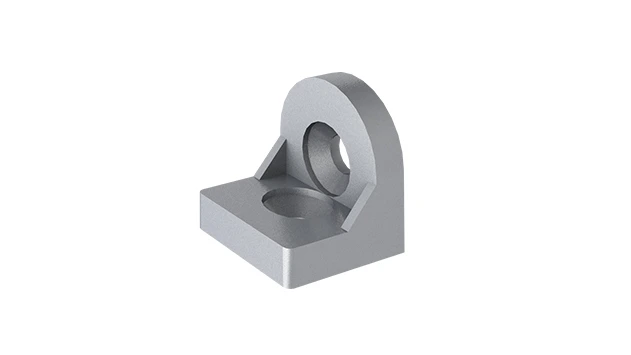
The turning angle aluminum profile connector provides a 90 degree hidden corner connection. 4040 it is means this size is used for 40 series aluminum profile.The corner code comes with set screws that allow for quick, easy connections.
If you've ever walked through a busy factory or a well-organized workshop, you've probably seen those sleek, modular workbenches, material racks, or production lines that seem to fit together like a perfectly designed puzzle. Chances are, those structures rely on small but mighty components that hold everything in place—components like the turning angle code 4040. These unassuming connectors are the unsung heroes of modular aluminum setups, but here's the thing: their load limits aren't just numbers on a spec sheet. They're the difference between a stable workspace and a potential safety hazard. Let's dive into what turning angle code 4040 is, how much weight it can really handle, and the safety rules you need to follow to keep your operations running smoothly.
First Things First: What Even Is a Turning Angle Code 4040?
Before we get into load limits, let's make sure we're all on the same page. A turning angle code 4040 is a type of connector used primarily with aluminum profiles—specifically, the 4040 EU standard aluminum profile. Think of it as a heavy-duty "corner bracket" that joins two or more aluminum profile pieces at angles (most commonly 90 degrees, but some designs allow for adjustments). It's part of the broader family of aluminum profile accessories, those small but critical parts that turn basic aluminum tubes into functional structures like workbenches, shelving, or lean system setups.
These angle codes are usually made from die-cast aluminum or sometimes steel, depending on the application. They're designed to slide into the T-slots of 4040 profiles (the grooves running along the length of the profile) and are secured with screws, creating a tight, rigid connection. Unlike welding, which is permanent, turning angle codes let you disassemble and reconfigure your setup—perfect for lean systems where flexibility is key. But that flexibility doesn't mean they can handle infinite weight. So, how much can they really take?
Key Factors That Affect Load Limits
Load limits for turning angle code 4040 aren't one-size-fits-all. Several factors play into how much weight a single angle code can support before it bends, cracks, or fails. Let's break them down:
Material Matters: Most standard turning angle codes are made from aluminum alloys like 6061 or 6063, which are lightweight and corrosion-resistant. But if you need more strength, some manufacturers offer steel-plated or reinforced versions. Steel angle codes can handle more weight, but they add extra heft—something to consider if your setup needs to stay mobile.
Design and Thickness: Take a close look at the angle code's design. Is it a basic, thin-walled piece, or does it have reinforcing ribs? Thicker walls and internal bracing distribute weight better, increasing load capacity. Some angle codes also have larger contact areas with the aluminum profile, which reduces stress on the connection.
Installation Quality: Even the strongest angle code will fail if installed poorly. Over-tightening screws can strip the T-slot threads; under-tightening leaves the connection loose. Alignment matters too—if the profiles aren't perfectly square, the angle code will bear uneven stress, lowering its effective load limit.
Static vs. Dynamic Loads: Static load is the weight of something stationary, like a stack of boxes on a shelf. Dynamic load is when the weight moves—think parts sliding down a flow rack or a workbench being bumped during assembly. Dynamic loads are harder on angle codes because they add sudden stress, so their limits are usually lower than static ones.
Environmental Conditions: Humidity, temperature extremes, or exposure to chemicals can weaken materials over time. For example, aluminum angle codes in a damp warehouse might corrode if not properly coated, reducing their strength. Stainless steel angle codes are better for harsh environments but come with a higher price tag.

Typical Load Limits: Let's Get Specific
Now, the question you're here for: What's the actual load limit of a turning angle code 4040? To give you a clearer picture, let's look at common scenarios. The table below outlines typical load limits for standard and reinforced turning angle codes used with 4040 EU standard aluminum profiles. Keep in mind these are general guidelines—always check your manufacturer's specs for exact numbers.
| Angle Code Type | Material | Static Load Limit (kg) | Dynamic Load Limit (kg) | Safety Factor |
|---|---|---|---|---|
| Standard 4040 Turning Angle Code | Aluminum Alloy (6063-T5) | 150–200 kg | 80–120 kg | 2:1 (Never exceed 50% of static limit dynamically) |
| Reinforced 4040 Turning Angle Code | Aluminum Alloy (6061-T6) | 250–300 kg | 150–200 kg | 2.5:1 |
| Steel-Plated 4040 Turning Angle Code | Aluminum with Steel insert | 300–400 kg | 200–250 kg | 3:1 |
| Heavy-Duty Industrial Grade | High-Strength Steel | 500–600 kg | 300–350 kg | 3.5:1 |
A quick note on safety factors: The "safety factor" is the ratio of the angle code's breaking strength to its recommended load limit. For example, a 2:1 safety factor means the angle code can technically hold twice the recommended load before breaking—but you should never push it that far! Sticking to the recommended limit ensures there's a buffer for unexpected stress, like a sudden jolt or minor overloading.

Safety Guidelines: How to Keep Your Setup Secure
Knowing load limits is one thing; applying that knowledge safely is another. Here are practical guidelines to ensure your turning angle code 4040 connections stay strong and reliable:
1. Choose the Right Angle Code for the Job
Don't cut corners with a basic angle code if you're building a heavy-duty structure. If your workbench will hold tools, parts bins, and a 50 kg assembly fixture, go for a reinforced or steel-plated version. When in doubt, calculate the total weight your setup will bear and add 20% as a buffer—then pick an angle code that exceeds that number.
2. Follow Proper Installation Steps
- Clean the Profiles: Wipe down the T-slots with a dry cloth to remove dust or debris. Even a small particle can create a gap, leading to uneven stress.
- Use the Right Screws: Match the screw size to the angle code and profile. M5 or M6 screws are standard for 4040 profiles. Avoid using self-tapping screws—they're weaker than machine screws.
- Torque to Specification: Most manufacturers recommend 3–5 Nm of torque for aluminum profiles. Use a torque wrench to avoid over-tightening.
- Add Extra Angle Codes for Long Spans: If you're spanning more than 1 meter between supports, add an extra angle code in the middle. This reduces the load on each connection.
3. Inspect Regularly
Make angle code inspections part of your routine maintenance. Every week, check for:
- Loose screws (tighten them to the correct torque)
- Cracks or deformation in the angle code (replace immediately if found)
- Corrosion or rust (clean and treat with anti-corrosive spray if needed)
- Worn T-slots (if the profile's threads are stripped, replace the profile section)
For high-traffic areas like production lines, inspect monthly. After any major incident—a heavy object falling, a collision—check all nearby angle codes, even if they look fine.
4. Avoid Overloading in Real-World Use
It's easy to underestimate how much weight accumulates on a workbench. A technician might add a toolbox, a monitor, and a pile of parts without realizing they're pushing the limit. Post load limit labels on your structures—"Max Static Load: 200 kg"—as a reminder. For dynamic setups like roller tracks, test with the actual parts that will move through them, not just empty racks.
Real-World Applications: Where Turning Angle Code 4040 Shines (and Risks)
To see these guidelines in action, let's look at two common uses: lean systems and workbenches.
Lean Systems: Efficiency Meets Safety
Lean systems thrive on minimizing waste and maximizing flexibility, and modular aluminum setups are their backbone. Material racks, flow racks, and picking stations often use 4040 profiles and turning angle codes. For example, a material rack B (3 row and 3 floor) might use 12 turning angle codes to connect the vertical and horizontal profiles. If each shelf holds 150 kg of parts, the angle codes at the bottom shelf bear the most weight—so they should be reinforced, with a safety factor of 3:1 to account for workers loading/unloading parts dynamically.
Workbenches: The Heart of the Workshop
A typical aluminum workbench E (single deck-without caster) relies on four turning angle codes at the corners to support the tabletop. If the workbench is 1.5m long and holds a 75 kg tool cabinet plus a 100 kg assembly project, the total static load is 175 kg. Divided across four angle codes, that's ~44 kg per code—well within the standard angle code's limit. But if the workbench is used for hammering or heavy machinery, dynamic loads come into play, so upgrading to reinforced angle codes adds peace of mind.
Common Mistakes to Avoid
Even with the best intentions, people make mistakes that compromise angle code performance. Here are the top ones to watch for:
Mixing Profile Sizes: Using a 4040 angle code with a 3030 profile leaves gaps, reducing contact area and load capacity.
Ignoring Dynamic Loads: Assuming static load limits apply to moving parts. A flow rack with parts sliding down roller tracks needs angle codes rated for dynamic stress.
Over-Tightening Screws: "If a little is good, more must be better" doesn't apply here. Stripped T-slots mean the connection will fail under load.
Using Damaged Angle Codes: A small crack might seem harmless, but it will spread under stress. Always replace angle codes with visible damage.
Final Thoughts: Safety Starts with Understanding
Turning angle code 4040 might seem like a small part of your operation, but it's a critical one. Its load limits aren't just technical details—they're the foundation of a safe, efficient workspace. By choosing the right angle code, installing it properly, and inspecting regularly, you ensure your lean system, workbench, or material rack does what it's supposed to: support your team, not stress them out.
Remember, when in doubt, consult your aluminum profile supplier or the angle code manufacturer. They can help you calculate exact load requirements for your specific setup. After all, the goal isn't just to meet the load limit—it's to exceed it, so everyone goes home knowing their workspace is built to last.