- Company Articles
- Products and Technology
- Product knowledge
- What Does a Lean Pipe Fixed Clamp Do? Essential Roles Explained

What Does a Lean Pipe Fixed Clamp Do? Essential Roles Explained
Related Product
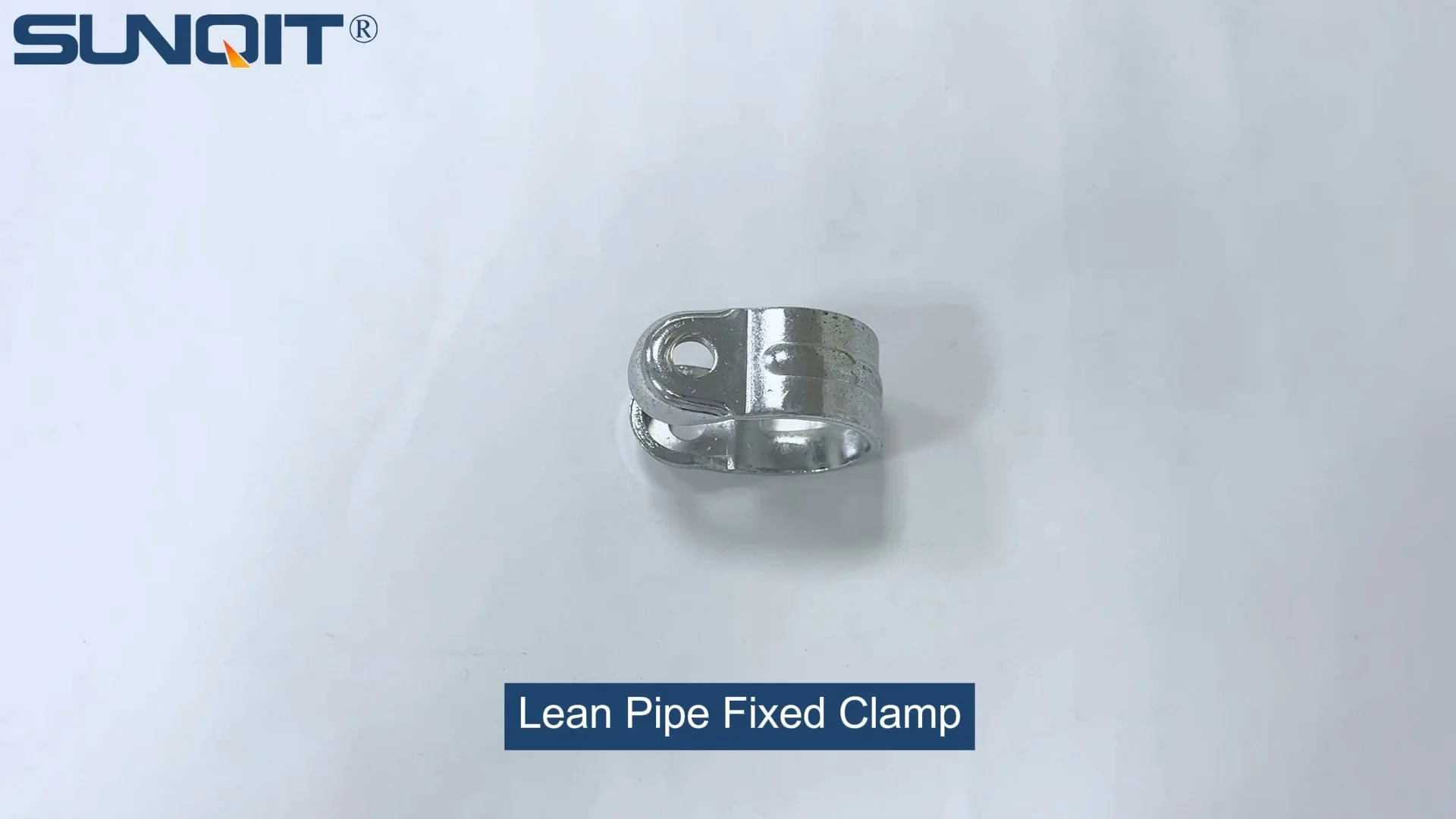
Lean Pipe Fixed Clamp
Lean pipe fixed clamp is used for pipe connector fixing the correct position during workbench flow rack hand trolley assemble work.
Walk into any modern manufacturing facility, and you'll notice a quiet revolution happening on the shop floor. Gone are the days of rigid, one-size-fits-all production lines bolted into concrete. Instead, you'll see flexible workstations, modular material racks, and smooth-flowing roller tracks—all built with sleek pipes, joints, and clamps that seem to adapt to whatever the day's tasks demand. At the heart of this adaptability lies a small but mighty component: the lean pipe fixed clamp. It's not the flashiest tool in the toolkit, but ask any production manager, and they'll tell you it's the unsung hero keeping their lean system running like clockwork. Let's dive into what this unassuming clamp actually does, and why it matters so much in the world of lean manufacturing.
First, Let's Talk About Lean Systems: Why Flexibility Matters
Before we get into the nitty-gritty of the lean pipe fixed clamp, let's step back and understand the bigger picture: lean systems. Lean manufacturing isn't just a buzzword—it's a philosophy built around eliminating waste, streamlining processes, and making sure every tool and step adds value. In a lean system, the goal is to create a workspace that can pivot quickly. Maybe your team needs to reconfigure a workbench to assemble a new product line next week. Or perhaps you need to adjust a roller track to speed up material flow during peak production. Rigid, permanent setups can't keep up with that. That's where lean pipe systems come in.
Lean pipe systems (often called "flexible pipe systems") are modular setups made from pipes, joints, and accessories that let you build, modify, and rebuild workstations, racks, and tracks with minimal hassle. Think of them as the industrial equivalent of building blocks—you snap pieces together, and if you need a different shape tomorrow, you take them apart and start fresh. But here's the thing: none of that flexibility works without reliable connections. And that's where the lean pipe fixed clamp enters the story.
So, What Is a Lean Pipe Fixed Clamp, Anyway?
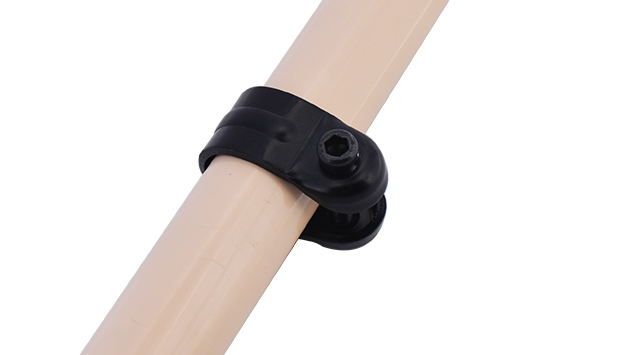
At its core, a lean pipe fixed clamp is a small, sturdy device designed to hold two or more lean pipes (or pipes and joints) together in a fixed position. Unlike rotating or swiveling joints, which let pipes move or pivot, a "fixed" clamp does exactly what the name suggests: it locks the connection in place, creating a rigid, stable bond. These clamps are usually made from metal (like zinc-plated steel or aluminum) or high-strength plastic, and they come in various shapes—some are U-shaped, others have bolts or levers to tighten the grip. Simple, right? But don't let its simplicity fool you. The fixed clamp is the glue that turns a pile of pipes and joints into a functional, reliable structure.
Let's put it this way: Imagine trying to build a bookshelf with loose screws. Even if the wood is strong, the shelf will wobble, sag, or even collapse under weight. A lean pipe system without fixed clamps is the same—unstable, unreliable, and risky. The clamp ensures that when you build a workbench, a material rack, or a roller track, every connection stays tight, even when tools are dropped, materials are loaded, or the system is jostled during daily use.
Essential Role #1: It Creates Unshakable Stability for Lean Structures
Stability might not sound exciting, but in manufacturing, it's everything. A wobbly workbench isn't just annoying—it's dangerous. If a technician is assembling delicate electronics on a surface that shifts, they might make a mistake, damage parts, or even hurt themselves. Similarly, a material rack that sways could send boxes crashing to the floor, wasting products and risking injury. The lean pipe fixed clamp's first and most critical job is to prevent that.
Here's how it works: When you slide a fixed clamp over two intersecting pipes (say, a vertical pipe and a horizontal pipe on a workbench frame), you tighten the clamp until it grips the pipes tightly. The clamp's design distributes pressure evenly around the pipes, creating friction that resists movement. High-quality clamps (like those made from aluminum or stainless steel) can handle significant weight—some can hold up to 500 pounds or more per connection. That means even if you stack heavy components on a shelf built with these clamps, the structure won't bow or bend.
Real-World Example: A car parts manufacturer in Michigan was struggling with wobbly assembly workstations. Their old setup used basic zip ties to hold pipes together, which loosened over time. After switching to aluminum lean pipe fixed clamps, they reported a 40% drop in workstation-related errors—no more parts sliding off tables, no more technicians wasting time readjusting wobbly surfaces. The clamps kept the pipes locked in place, even when workers leaned on the benches or dropped tools. Stability, in action.

Essential Role #2: It Locks in Precision—No More "Good Enough" Connections
In manufacturing, precision is non-negotiable. If a workbench is even slightly tilted, or a roller track isn't perfectly level, it can throw off an entire production line. Maybe parts don't slide smoothly down the track, or tools roll off the bench. A lean pipe fixed clamp doesn't just hold pipes together—it holds them together exactly where you want them . Most fixed clamps have built-in guides or notches that help align pipes at specific angles (like 90 degrees or 45 degrees), ensuring that every connection is consistent. And once tightened, they don't budge—no more "close enough" setups that drift out of alignment after a week of use.
Let's say you're building a material rack B (a common 3-row, 3-floor rack used to store parts). Each shelf needs to be level with the one above it, and the vertical pipes need to be perfectly straight to support the weight. Using a fixed clamp with angle markers, you can align each horizontal pipe at 90 degrees to the vertical ones, tighten the clamp, and trust that it won't shift. Compare that to welding: if you weld the pipes, you're stuck with that angle forever, and if you mess up the alignment, you have to cut and reweld. With a fixed clamp, you can adjust, check, and re-tighten until it's perfect—no special skills required.

Essential Role #3: It Works with Almost Every Lean Pipe and Accessory (Compatibility Is Key)
Lean pipe systems aren't one-size-fits-all. Some facilities use aluminum lean pipes for lightweight setups, others prefer stainless steel pipe series for durability in wet or corrosive environments. There are plastic-coated pipes, basic aluminum tubes, even mini aluminum roller tracks for small parts. A good lean pipe fixed clamp needs to play well with all of them—and the best ones do.
Most fixed clamps are designed to fit standard pipe diameters (like 28mm or 30mm, the most common sizes for lean pipes). They also work with various joint types—whether you're connecting a pipe to a T-joint, an L-joint, or even a flat aluminum profile. For example, if you're building a workbench E (a single-deck workbench without casters), you might use a fixed clamp to attach the tabletop frame to the vertical support pipes. Later, if you want to add a side shelf using aluminum guide rail A, the same clamp can secure the rail to the bench frame. This compatibility means you don't need a closet full of specialized clamps—one or two types can handle most jobs.
| Lean Pipe Type | Common Use Case | How Fixed Clamps Help |
|---|---|---|
| Aluminum Lean Pipe | Lightweight workbenches, mobile trolleys | Non-marring grip prevents scratching; corrosion-resistant for cleanrooms |
| Stainless Steel Pipe | Food processing, medical device manufacturing (hygienic environments) | High-strength steel clamp resists rust; tight seal prevents bacterial buildup |
| PE-Coated Lean Pipe | ESD workstations (prevents static damage to electronics) | Soft plastic lining on clamp protects the PE coating; secure grip maintains ESD continuity |
Essential Role #4: It Saves Time (and Money) on Installation and Repairs
In manufacturing, downtime is the enemy. Every minute your team spends building or fixing a workstation is a minute they're not making products. Traditional setups (like welded steel frames) require skilled labor, heavy tools, and hours of work. Lean pipe systems cut that time drastically—and fixed clamps are a big reason why. Installing a fixed clamp takes seconds: slide it over the pipes, tighten the bolt or lever, and you're done. No welding, no drilling, no waiting for glue to dry. Even someone with zero technical training can do it.
But the time savings don't stop at installation. Let's say a clamp gets damaged (maybe a heavy box falls on it and bends the metal). With a fixed clamp, you don't need to replace the entire pipe or joint—just unscrew the old clamp and pop a new one on. Compare that to a welded connection, where you'd have to grind off the old weld, re-weld a new joint, and repaint. The fixed clamp turns a half-day repair into a 5-minute fix. Over time, those minutes add up to big cost savings—less labor, less downtime, and less waste from scrapped parts.
Essential Role #5: It Keeps Workers Safe (Because Even Small Risks Add Up)
Safety is non-negotiable in any workplace, and unstable structures are a major hazard. A shelf that collapses, a workbench that tips, or a roller track that comes loose can cause serious injuries. The lean pipe fixed clamp might seem small, but it's a critical safety component. By ensuring tight, reliable connections, it reduces the risk of structural failure. Many fixed clamps also have safety features built in—like rounded edges to prevent cuts, or non-slip grips that won't loosen even if oil or water gets on the pipes.
Take ESD workstations, for example. These are specialized workbenches used to assemble sensitive electronics (like circuit boards), where static electricity can fry components. ESD workstations need to be grounded, and every part of the setup (pipes, joints, clamps) must maintain that grounding path. A cheap or loose clamp could break that path, putting products at risk. High-quality ESD-compatible fixed clamps are made from conductive materials, ensuring that static electricity flows safely to the ground—protecting both workers and products.
Not All Clamps Are Created Equal: What to Look for in a Quality Lean Pipe Fixed Clamp
Now that you know why fixed clamps matter, let's talk about how to choose the right one. Not all clamps are built to the same standard, and a flimsy clamp can undo all the benefits of your lean system. Here are a few key features to watch for:
Material Matters
Zinc-plated steel clamps are strong and affordable, making them great for general use. Aluminum clamps are lighter and corrosion-resistant, ideal for cleanrooms or food-grade environments. Avoid plastic clamps for heavy-duty setups—they can warp under weight or UV exposure.
Grip Strength
Look for clamps with serrated or textured inner surfaces—these bite into the pipe, preventing slippage. A clamp with a bolted design (instead of a plastic lever) will also provide a tighter, more consistent grip over time.
Compatibility
Check the clamp's diameter rating to make sure it fits your lean pipes. Most clamps are labeled for 28mm, 30mm, or 40mm pipes—match that to your system.
Certifications
If you're using the clamp in a specialized environment (like ESD workstations or medical facilities), look for certifications (e.g., ESD-safe ratings, food-grade materials) to ensure compliance with industry standards.
Wrapping Up: The Clamp That Makes Lean Systems Lean
At the end of the day, the lean pipe fixed clamp is more than just a piece of hardware. It's the connection that turns flexibility into functionality, and potential into productivity. Without it, a lean system is just a pile of pipes and dreams—unstable, imprecise, and prone to failure. But with a reliable fixed clamp, your team can build workstations that adapt to change, material racks that stay level, and roller tracks that keep parts moving smoothly. It's the kind of tool that doesn't get a lot of attention, but once you've worked with a well-built lean system, you'll never take it for granted.
So the next time you walk through a manufacturing facility and see those sleek, modular workstations humming along, take a closer look. Chances are, there's a lean pipe fixed clamp holding it all together—quietly, steadily, and brilliantly doing its job. Because in lean manufacturing, the smallest parts often make the biggest difference.