- Company Articles
- Products and Technology
- Product knowledge
- What Industries Use Parallel Lean Pipe Joint One Side Rotatory Chrome Most?

What Industries Use Parallel Lean Pipe Joint One Side Rotatory Chrome Most?
Related Product
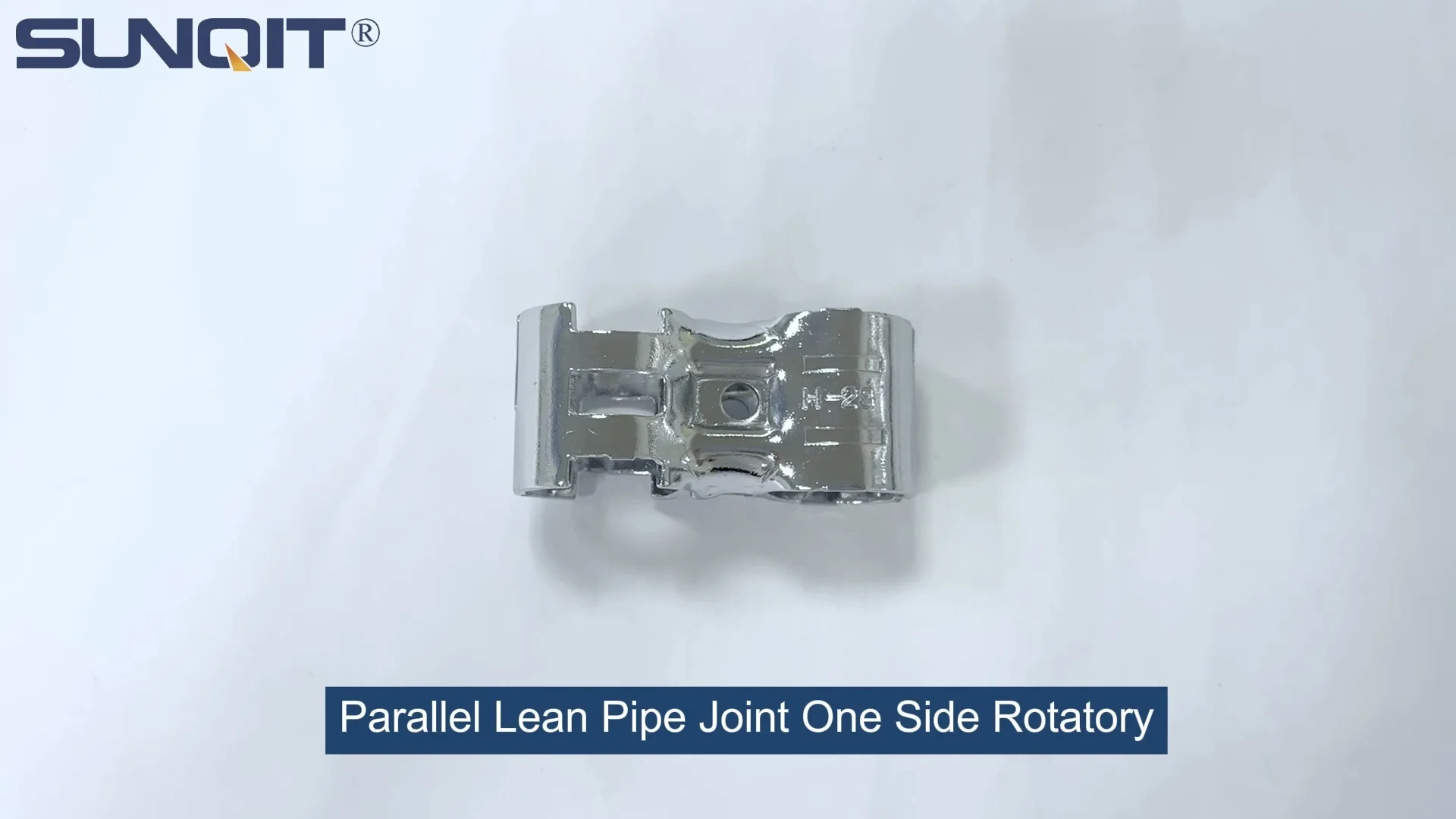
Parallel Lean Pipe Joint One Side Rotatory Chrome
Parallel rotatory lean pipe joint, for 2 pcs 28mm pipe conenction in parallel direction with one side rotatory function.
In the fast-paced world of modern manufacturing and logistics, efficiency isn't just a buzzword—it's the backbone of survival. Every second saved on the factory floor, every dollar cut from unnecessary costs, and every ounce of flexibility built into production lines can mean the difference between leading the market and falling behind. At the heart of this efficiency revolution lies the concept of lean manufacturing—a philosophy that emphasizes minimizing waste while maximizing value. And while lean systems often grab headlines for their overarching strategies, it's the small, unassuming components that truly make them tick. One such component, quietly transforming workplaces across industries, is the parallel lean pipe joint one side rotatory chrome .
You might not notice it at first glance, but this unassuming joint is the unsung hero of modular workbenches, flow racks, and assembly lines. Its chrome-plated finish gleams subtly under factory lights, its rotatory mechanism allows for smooth adjustments, and its parallel design ensures stability even in high-stress environments. But which industries rely on it most? Which sectors have discovered that this simple joint isn't just a part of their equipment—it's a cornerstone of their ability to adapt, grow, and stay competitive? Let's dive in.
First, What Makes This Joint So Special?
Before we explore the industries, let's take a moment to understand why the parallel lean pipe joint one side rotatory chrome stands out. Unlike fixed joints that lock structures into rigid shapes, this joint offers a unique blend of stability and flexibility. The "one side rotatory" feature means one end can pivot while the other stays fixed, allowing workers to adjust angles, heights, or configurations without disassembling the entire structure. The chrome coating isn't just for show—it resists corrosion, withstands frequent handling, and keeps the joint smooth to the touch, reducing wear and tear on both the joint itself and the lean pipes it connects.
Compatible with standard lean pipes, aluminum profiles, and even some stainless steel components, this joint integrates seamlessly into existing lean systems . Whether you're building a lightweight lean pipe workbench for electronics assembly or a heavy-duty flow rack for automotive parts, it provides the adaptability modern facilities need. Now, let's see where this versatility shines brightest.
1. Automotive Manufacturing: Where Speed and Adaptability Collide
Walk into any automotive plant, and you'll witness a symphony of moving parts—literally. From engine assembly lines to final inspection stations, every corner hums with activity, and every workstation must keep pace with ever-changing production demands. Here, the parallel lean pipe joint one side rotatory chrome isn't just useful; it's essential.
Automotive manufacturers rarely stick to a single product line. One month, they might be ramping up production for a compact sedan; the next, shifting gears to assemble SUVs or electric vehicles. Each model requires different tools, different part layouts, and different workbench configurations. Fixed workstations would grind this process to a halt, but with rotatory chrome joints, workers can reconfigure lean pipe workbenches in minutes. Need to angle a tool holder 30 degrees for better access during engine mounting? A quick twist of the joint, and it's done. Want to adjust the height of a parts bin to reduce worker bending? The rotatory mechanism allows for precise, tool-free adjustments, cutting setup time from hours to minutes.
Flow racks, too, benefit immensely. Automotive plants move thousands of parts daily—from small screws to large body panels—and flow racks are the arteries that keep these parts flowing to the assembly line. The parallel design of the joint ensures that even when loaded with heavy components, the rack remains stable. Meanwhile, the rotatory feature lets supervisors tweak the angle of roller tracks to control the speed of part movement, preventing jams and ensuring parts arrive exactly when needed. In an industry where downtime costs thousands of dollars per minute, this kind of flexibility isn't just convenient—it's critical.

2. Electronics and Semiconductor Production: Precision in Every Pivot
If automotive manufacturing is about speed and scale, electronics production is about precision and delicacy. Semiconductor wafers, circuit boards, and microchips are fragile, sensitive to static, and require meticulous handling. Here, the parallel lean pipe joint one side rotatory chrome proves its worth in ways that go beyond mere adjustability—it contributes to product quality and worker safety.
Electronics assembly lines often use aluminum profiles for their lightweight, non-conductive properties, and the chrome-plated joint pairs perfectly with these materials. Unlike bare metal joints that might scratch delicate components or generate static, the smooth chrome finish minimizes friction and reduces static buildup—a small detail that can prevent costly defects in sensitive electronics. The rotatory function, meanwhile, allows workers to position tools, magnifying glasses, or ESD-safe bins at exact angles, reducing eye strain and ensuring each solder joint or component placement is precise.
Consider a smartphone assembly line. Workers spend hours attaching tiny cameras, speakers, and batteries to circuit boards. A workbench that's even slightly misaligned can lead to wobbly tools, shaky hands, and ultimately, defective products. With rotatory chrome joints, supervisors can fine-tune the height and angle of each workstation to match the ergonomics of individual workers, reducing fatigue and improving accuracy. And when production shifts to a new phone model with different component sizes? The same workbench can be reconfigured in minutes, eliminating the need to invest in entirely new setups.

3. Aerospace and Defense: Building for the Skies (and Beyond)
Aerospace and defense manufacturing is a world of extremes—parts are either incredibly large (think airplane wings) or incredibly small (like avionics components), and every piece must meet zero-tolerance quality standards. Here, lean systems are taken to another level, and the parallel lean pipe joint one side rotatory chrome is a key player in maintaining both precision and scalability.
Large aerospace components, such as turbine blades or fuselage sections, require sturdy workbenches that can support heavy weights without flexing. The parallel design of the joint distributes weight evenly across the structure, ensuring stability even when handling parts that weigh hundreds of pounds. But aerospace manufacturing also demands adaptability. A single facility might produce parts for commercial airliners, military drones, and satellite components—each with unique assembly requirements. The rotatory feature of the joint allows workers to adjust workbench heights or tilt sections to accommodate different part shapes, all while maintaining the rigidity needed for precision work.
For smaller components, like guidance systems or sensor arrays, the chrome finish of the joint becomes a hygiene asset. Aerospace clean rooms require strict cleanliness to prevent contaminants from damaging sensitive equipment, and the non-porous, corrosion-resistant chrome surface is easy to wipe down and sanitize. Unlike painted joints that chip or rust over time, chrome maintains its integrity, ensuring the joint remains a reliable part of the lean system for years—even in the demanding environments of defense manufacturing.
4. Logistics and Material Handling: Keeping the Supply Chain Moving
Beyond manufacturing, the logistics industry thrives on the efficient movement of goods. Warehouses, distribution centers, and fulfillment hubs handle millions of packages daily, and any bottleneck in material flow can disrupt the entire supply chain. Here, flow racks and conveyor systems are the workhorses, and the parallel lean pipe joint one side rotatory chrome is the secret to keeping them agile.
Flow racks are designed to let gravity move products from the back to the front, making order picking faster and easier. But not all products are the same—some are small and light (like cosmetics), others are large and heavy (like appliances). The angle of the flow rack's roller tracks must be adjusted to match the product's weight and size to prevent items from sliding too fast (risking damage) or too slow (causing delays). The rotatory joint makes this adjustment a breeze: a quick twist changes the track angle, ensuring optimal flow for every product type. During peak seasons, when warehouses add temporary flow racks to handle increased inventory, the joint's modularity allows for quick assembly and disassembly, turning empty floor space into productive storage in hours.
Conveyor systems, too, benefit from the joint's flexibility. In distribution centers, conveyor paths often need to be rerouted to accommodate new sorting algorithms or seasonal demand spikes. Fixed conveyor brackets would require expensive, time-consuming rework, but with rotatory chrome joints, sections of the conveyor can be pivoted, extended, or reangled with minimal effort. This adaptability ensures that logistics operations can scale up or down without missing a beat—critical in an industry where customer expectations for fast delivery are higher than ever.
5. Medical Device Manufacturing: Where Cleanliness and Customization Meet
Medical device manufacturing is a unique blend of precision, hygiene, and regulatory compliance. From surgical tools to diagnostic equipment, every product must meet strict standards for cleanliness and reliability. In this industry, the parallel lean pipe joint one side rotatory chrome isn't just a tool for efficiency—it's a partner in patient safety.
Cleanliness is non-negotiable in medical manufacturing. The chrome plating on the joint is resistant to chemicals, making it easy to sterilize with disinfectants without corroding or degrading. This is especially important in environments where workbenches are used to assemble sterile devices, as any contamination could have life-threatening consequences. The smooth surface of the chrome also prevents bacteria buildup, ensuring workstations remain compliant with FDA and ISO regulations.
Customization is another key factor. Medical device manufacturers often produce small batches of specialized equipment—for example, a run of 50 custom surgical tools for a specific hospital, followed by 100 diagnostic probes for a research lab. Each batch requires different tooling, different part storage, and different assembly steps. With rotatory chrome joints, lean pipe workbenches can be reconfigured to match each batch's unique needs. Need to add a shelf for sterilized tools? The joint allows for quick attachment. Want to angle a microscope for better visibility during intricate assembly? A twist of the joint, and it's positioned perfectly. This level of customization ensures that even small-batch production remains cost-effective, without sacrificing quality.
| Industry | Key Applications | Why Rotatory Chrome Joints Matter | Core Benefit Delivered |
|---|---|---|---|
| Automotive Manufacturing | Assembly workbenches, flow racks, tool holders | Quick reconfiguration for model changes; stable support for heavy parts | Reduced downtime during production line switches |
| Electronics Production | Precision workbenches, ESD-safe part bins, tool stations | Static resistance, ergonomic adjustability, compatibility with aluminum profiles | Improved product accuracy and worker comfort |
| Aerospace & Defense | Heavy-duty workbenches, clean room setups, component racks | Weight distribution, corrosion resistance, easy sanitization | Compliance with strict quality and hygiene standards |
| Logistics & Material Handling | Flow racks, conveyor systems, order picking stations | Adjustable roller track angles, modular scalability | Faster material flow and adaptability to demand spikes |
| Medical Device Manufacturing | Sterile workbenches, diagnostic equipment assembly stations | Chemical resistance, easy sterilization, tool-free customization | Regulatory compliance and small-batch production efficiency |
Real-World Impact: How a Mid-Sized Electronics Firm Cut Costs by 35%
To put this in perspective, consider a mid-sized electronics manufacturer based in Ohio that specialized in circuit board assembly. Before adopting lean systems with parallel lean pipe joint one side rotatory chrome, the company relied on fixed steel workbenches. When switching between customer orders (each requiring different component layouts), workers spent 4–6 hours disassembling and rebuilding workstations. This downtime led to missed deadlines and overtime costs averaging $12,000 per month.
After upgrading to lean pipe workbenches with rotatory chrome joints, the story changed. Workers could now reconfigure a workstation in under 30 minutes by adjusting the joints—no tools required. Setup time dropped by 90%, overtime costs plummeted, and the company could take on more small-batch orders without sacrificing speed. Within six months, the investment in rotatory joints paid for itself, and the firm reported a 35% reduction in overall production costs. "It's not just about the joint itself," said the plant manager. "It's about the freedom to adapt. We no longer say 'no' to custom orders because of setup time. Now, we say 'yes'—and that's transformed our bottom line."
The Common Thread: Adaptability in a Changing World
Across these industries—automotive, electronics, aerospace, logistics, and medical manufacturing—a common theme emerges: adaptability. In a world where customer demands shift overnight, where technology evolves at breakneck speed, and where competition never sleeps, the ability to pivot quickly is everything. The parallel lean pipe joint one side rotatory chrome may be small, but it embodies this adaptability. It turns rigid workplaces into flexible ecosystems, where change isn't a disruption but an opportunity.
So the next time you walk through a factory, a warehouse, or a medical lab, take a closer look at the workbenches and flow racks. Chances are, you'll spot the gleam of chrome joints, quietly supporting the machines, the workers, and the industries that keep our world moving. And remember—sometimes, the smallest components are the ones that make the biggest difference.