- Company Articles
- Products and Technology
- Product knowledge
- What Is 1.5mm Stainless Steel Pipe? Key Features for Industrial Applications

What Is 1.5mm Stainless Steel Pipe? Key Features for Industrial Applications
Related Product
1.5mm Stainless Steel Pipe
Stainless steel pipe, lean pipe, diameter is 28mm, material is SS201 or SS304, SS201 is normally used in the market. It knows a KARAKURI, KAIZEN material for industrial plant to improve efficiency, save labor cost, standard management.
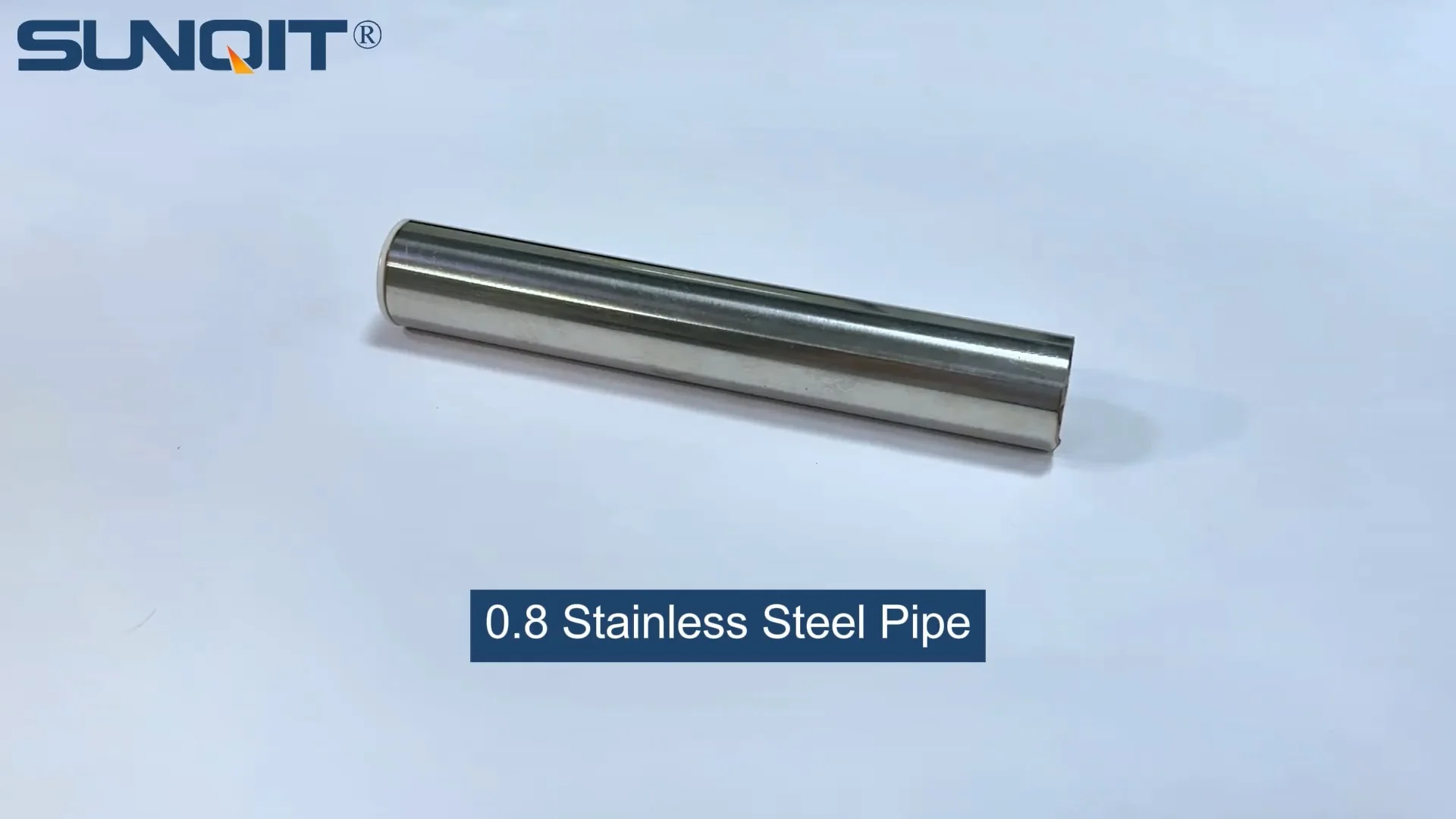
In the bustling world of manufacturing and industrial operations, every component—no matter how small—plays a role in keeping the wheels turning. From massive assembly lines to compact workstations, the infrastructure that supports daily tasks often goes unnoticed until something breaks down. Today, we're shining a spotlight on one such unsung hero: the 1.5mm stainless steel pipe. Though it might seem like a simple piece of metal, this pipe is a cornerstone of lean systems, material handling, and modular workspaces. Let's dive into what makes it unique, why it's trusted across industries, and how it integrates seamlessly with everything from lean pipe joints to heavy-duty workbenches.
Understanding the Basics: What Exactly Is 1.5mm Stainless Steel Pipe?
At its core, 1.5mm stainless steel pipe is a cylindrical tube crafted from stainless steel alloy, with a wall thickness of precisely 1.5 millimeters. But don't let its simplicity fool you—this thickness is no arbitrary number. It's a deliberate balance between strength, weight, and versatility, making it ideal for a wide range of structural and functional applications. Most commonly, these pipes are made from austenitic stainless steel grades like 304 or 316, known for their exceptional corrosion resistance and durability. Grade 304, often called "food-grade stainless steel," contains chromium and nickel, forming a protective oxide layer that shields against rust and chemical damage. Grade 316, with the addition of molybdenum, takes corrosion resistance a step further, making it suitable for harsher environments like marine or chemical processing facilities.
The manufacturing process of 1.5mm stainless steel pipe is a testament to precision. It starts with melting raw materials—iron ore, chromium, nickel, and other alloys—in a furnace, then casting the molten metal into billets or slabs. These are heated and rolled into seamless or welded pipes. Seamless pipes, made by piercing a solid billet, offer uniform strength and are preferred for high-pressure applications, while welded pipes, formed by rolling stainless steel strips and welding the edges, are cost-effective and widely used in structural projects. After forming, the pipes undergo annealing (a heat-treatment process) to soften the metal, remove internal stresses, and enhance ductility, ensuring they can be cut, bent, or assembled without cracking. Finally, they're cut to standard lengths, inspected for quality, and prepared for shipment.
Key Features That Make 1.5mm Stainless Steel Pipe Indispensable
1. Strength Without the Bulk
One of the most compelling features of 1.5mm stainless steel pipe is its impressive strength-to-weight ratio. At just 1.5mm thick, it's lightweight enough to be easily handled during assembly but robust enough to support heavy loads. For context, a 1-meter length of 25mm diameter 1.5mm stainless steel pipe can typically bear static loads of up to 150-200 kg—more than enough to hold tools, raw materials, or even small machinery on a factory workbench. This balance is critical in lean manufacturing, where minimizing unnecessary weight reduces energy use and makes systems easier to reconfigure. Unlike thicker pipes (like 2.0mm stainless steel), which add bulk and cost, 1.5mm pipes strike the sweet spot for most modular applications, from material racks to conveyor supports.
2. Corrosion Resistance for Longevity
Stainless steel's claim to fame is its resistance to corrosion, and the 1.5mm variant is no exception. The chromium in the alloy reacts with oxygen to form a thin, invisible layer of chromium oxide on the pipe's surface. This layer is self-healing: if scratched, it quickly reforms, preventing rust from taking hold. This feature is a game-changer in industrial settings where pipes might be exposed to moisture, oils, chemicals, or even food residues. For example, in a food processing plant, 1.5mm stainless steel pipes used in material racks or workbenches can be hosed down daily without fear of rust, ensuring compliance with hygiene standards. In automotive factories, where oil and coolant spills are common, the pipe's resistance to chemical corrosion ensures the structural integrity of assembly line frames over years of use.
3. Precision Engineering for Seamless Assembly
Industrial systems thrive on consistency, and 1.5mm stainless steel pipes deliver just that. Manufacturers produce these pipes with tight dimensional tolerances—often within ±0.1mm for diameter and wall thickness. This precision ensures that when paired with lean pipe joints (another key component in modular systems), the fit is snug and reliable. Lean pipe joints, designed to connect pipes at various angles (30°, 45°, 90°, etc.), rely on the pipe's uniform thickness to grip securely. A pipe with inconsistent walls might slip in the joint or fail under load, but 1.5mm stainless steel pipes eliminate that risk. This predictability speeds up assembly, reduces errors, and allows workers to build custom structures—like a turnover trolley or a multi-level material rack—with confidence.
4. Versatility in Design and Application
1.5mm stainless steel pipe isn't a one-trick pony. Its combination of strength, precision, and workability makes it adaptable to nearly any industrial need. Want to build a sturdy workbench? Cut the pipes to length, connect them with 90° lean pipe joints, and add a plywood or aluminum honeycomb panel top. Need a mobile trolley for moving parts across the factory floor? Attach caster wheels to a pipe frame, and you've got a durable, maneuverable solution. Even more complex structures—like roller tracks for conveyor systems or multi-tiered material racks—benefit from its versatility. Unlike rigid materials like solid steel bars, 1.5mm pipes can be bent (with specialized tools) to create curved sections, opening up design possibilities for ergonomic workstations or custom-shaped racks. This flexibility is why it's a staple in lean manufacturing, where adaptability to changing production needs is key.
5. Cost-Effectiveness Over the Long Haul
While 1.5mm stainless steel pipe might have a higher upfront cost than materials like galvanized steel or plastic, its long-term value is undeniable. Stainless steel doesn't require painting or coating to prevent rust, reducing maintenance costs. Its durability means it rarely needs replacement—unlike plastic pipes, which can crack or degrade under UV light, or galvanized steel, which eventually rusts through. In high-wear environments, like automotive assembly lines, a stainless steel pipe frame might last 10+ years, while a galvanized alternative might need replacing every 3-5 years. When you factor in reduced downtime for repairs and replacements, the initial investment in 1.5mm stainless steel pipe pays off. It's a "buy once, buy right" solution that aligns with the lean principle of eliminating waste—including the waste of frequent replacements.

Industrial Applications: Where 1.5mm Stainless Steel Pipe Shines
To truly appreciate 1.5mm stainless steel pipe, let's look at how it's used in real-world industrial settings. From small workshops to large-scale factories, its applications are as diverse as the industries it serves.
Manufacturing Workstations and Assembly Lines
Workstations are the heartbeat of any manufacturing facility, and 1.5mm stainless steel pipe is their backbone. Take, for example, a workbench E (single deck-without caster)—a common setup in electronics or light assembly plants. The frame of this workbench is often built with 1.5mm stainless steel pipes connected by lean pipe joints, creating a stable surface for workers to assemble products. The pipe's strength ensures the bench doesn't wobble under the weight of tools, parts bins, or the worker themselves, while its corrosion resistance means it stays clean and functional even in environments where spills are common. Some workstations even integrate additional features, like overhead shelves (made from pipe frames) for storing tools or under-bench racks for holding materials, all built with the same 1.5mm pipes. This modularity allows factories to customize workstations to specific tasks—adding a roller track for sliding parts onto the bench, for instance, or attaching a tool holder made from bent pipe sections.
Material Handling and Storage: Material Rack B (3 Row and 3 Floor)
Efficient material handling is critical for keeping production flowing, and 1.5mm stainless steel pipe is a star here, too. Consider material rack B (3 row and 3 floor)—a multi-tiered storage solution used to organize small parts, components, or finished goods. Each shelf of this rack is supported by a frame of 1.5mm pipes, which can withstand the weight of stacked boxes or bins. The pipe's corrosion resistance is especially valuable here: in warehouses with high humidity or temperature fluctuations, a stainless steel rack won't rust, ensuring parts stored on it stay clean and uncorroded. Even better, the modular design of pipe-and-joint construction means the rack can be expanded or reconfigured as storage needs change. Need an extra shelf? Add a few pipes and joints. Relocating the rack? Disassemble it, move the parts, and rebuild—no need for heavy machinery or specialized tools.
Automotive and Aerospace Production
The automotive and aerospace industries demand precision and durability, and 1.5mm stainless steel pipe delivers on both. In automotive plants, it's used to build jigs and fixtures that hold car parts in place during welding, painting, or assembly. These jigs must maintain their shape under heat and stress, and the pipe's strength and dimensional stability make it ideal for the job. It's also used in conveyor systems that transport parts between production stages—roller tracks, for example, often have supports made from 1.5mm stainless steel pipes. In aerospace, where even small defects can have catastrophic consequences, the pipe's tight tolerances and reliability make it a trusted choice for tooling and component storage racks.
Food and Beverage Processing
In food and beverage processing, hygiene is non-negotiable—and 1.5mm stainless steel pipe is the gold standard for meeting strict cleanliness requirements. Stainless steel is non-porous, meaning bacteria and food particles can't hide in cracks or pores, making it easy to sanitize with high-pressure washers or chemical cleaners. Material racks used to store ingredients, mixing tanks, or packaging materials are often built with 1.5mm stainless steel pipes. Even conveyor systems that transport food products (like bottles or packaged snacks) use pipe frames, as they won't contaminate the food and can withstand frequent washdowns. In dairy plants, for example, a stainless steel pipe rack holding milk cartons stays rust-free and clean, ensuring compliance with food safety regulations like FDA standards.
Pharmaceutical and Cleanroom Environments
Pharmaceutical manufacturing requires environments with minimal contamination, and 1.5mm stainless steel pipe fits the bill perfectly. Cleanrooms, where drugs and medical devices are produced, demand materials that don't off-gas or shed particles. Stainless steel meets this requirement, as it's inert and easy to sterilize. Pipe frames are used to build workstations, storage racks, and even shelving for lab equipment. The pipe's smooth surface prevents dust buildup, and its corrosion resistance ensures it remains sterile even when exposed to harsh cleaning agents like hydrogen peroxide or alcohol. In biotech labs, where precision and cleanliness are critical, 1.5mm stainless steel pipe is often the first choice for building custom equipment frames or sample storage systems.

Integration with Industrial Components: Building Better Systems
1.5mm stainless steel pipe rarely works alone. Its true power lies in how well it integrates with other industrial components, creating cohesive, efficient systems. Let's explore a few key pairings.
Lean Pipe Joints: The Connectors That Bring It All Together
Lean pipe joints are the unsung heroes of modular industrial systems, and they're designed to work seamlessly with 1.5mm stainless steel pipe. These joints—available in fixed angles (like 45°, 90°, 180°) or swivel designs—clamp onto the pipe, creating strong, adjustable connections. For example, a 90° fixed lean pipe joint chrome can connect two pipes at a right angle to form the corner of a workbench frame. A parallel lean pipe joint allows two pipes to run side-by-side, adding stability to a shelf or rack. What makes this pairing so effective is the pipe's consistent thickness: the joint's clamping mechanism relies on uniform wall thickness to grip tightly, preventing slippage. This modularity means workers can assemble, disassemble, and reconfigure systems quickly—no welding or drilling required. It's a key reason why 1.5mm stainless steel pipe is central to lean manufacturing, where flexibility and rapid changeovers are essential.
Caster Wheels: Adding Mobility to Pipe Frames
Attach caster wheels to a 1.5mm stainless steel pipe frame, and you've got a mobile solution for material transport. Caster wheels come in various sizes and load capacities, but even heavy-duty options (like 5-inch caster wheels with brake) pair well with 1.5mm pipes, thanks to the pipe's strength. A common example is a turnover trolley—a cart used to move parts from storage to the assembly line. The trolley's frame, built with 1.5mm stainless steel pipes, supports the weight of the load, while the caster wheels allow workers to push it smoothly across the factory floor. The pipe's rigidity ensures the trolley doesn't flex under load, preventing spills or damage to parts. Even in tight spaces, swivel caster wheels (which rotate 360°) make maneuvering easy, turning a simple pipe frame into a versatile tool for reducing material handling time.
Roller Tracks: Powering Conveyor Systems
Conveyor systems rely on roller tracks to move products along the production line, and 1.5mm stainless steel pipe often plays a role in their construction. While the rollers themselves might be made of plastic or steel, the support structure for the roller track is frequently built with 1.5mm pipes. For example, a plastic roller track guide rail yellow (used to keep products aligned on the conveyor) might be mounted to a pipe frame, which provides stability and elevation. The pipe's strength ensures the track doesn't sag under the weight of moving products, while its corrosion resistance prevents rust from jamming the rollers. Even complex roller track configurations—like 85 staggered roller track, which allows for smooth product flow around corners—benefit from the pipe's versatility in supporting the track's structure.
Comparing 1.5mm Stainless Steel Pipe to Other Materials
To understand why 1.5mm stainless steel pipe is a top choice, let's compare it to other common industrial materials.
| Material | Wall Thickness | Load Capacity (kg/m) | Corrosion Resistance | Best For | Cost (Relative) |
|---|---|---|---|---|---|
| 1.5mm Stainless Steel Pipe | 1.5mm | 150-200 | Excellent (resists rust, chemicals) | Workbenches, material racks, cleanrooms | Medium-High |
| 1.5mm Aluminum Lean Pipe | 1.5mm | 100-150 | Good (oxidizes but doesn't rust) | Light-duty workstations, temporary structures | High |
| 1.5mm PE-Coated Lean Pipe | 1.5mm (steel core + PE coating) | 120-180 | Good (coating prevents rust; core can corrode if coating is damaged) | General manufacturing, non-corrosive environments | Medium |
| 2.0mm Stainless Steel Pipe | 2.0mm | 200-250 | Excellent | Heavy-duty racks, high-load applications | High |
As the table shows, 1.5mm stainless steel pipe offers a balance of load capacity, corrosion resistance, and cost that's hard to beat. Aluminum lean pipe is lighter but has lower load capacity and higher cost, making it better for light-duty tasks. PE-coated lean pipe is cheaper upfront but risks corrosion if the coating chips, making it less reliable in harsh environments. Thicker stainless steel pipes (2.0mm) have higher load capacity but are heavier and more expensive, overkill for most modular applications. For most factories, 1.5mm stainless steel pipe hits the perfect balance.
Maintenance Tips to Keep Your 1.5mm Stainless Steel Pipe in Top Shape
While 1.5mm stainless steel pipe is low-maintenance, a little care goes a long way in extending its lifespan. Here are some simple tips:
- Clean regularly: Wipe down pipes with a soft cloth and mild detergent (like dish soap) to remove dirt, grease, or food residues. Avoid abrasive cleaners or steel wool, which can scratch the surface and damage the corrosion-resistant layer.
- Inspect joints: Check lean pipe joints periodically to ensure they're tight. Over time, vibrations from machinery or frequent movement can loosen clamps—tighten them with a wrench if needed.
- Address scratches promptly: Minor scratches can be buffed out with a non-abrasive pad. For deeper scratches, apply a stainless steel polish to help the chromium oxide layer reform.
- Lubricate moving parts: If your pipe frame includes caster wheels or roller tracks, lubricate the bearings with a light machine oil to keep them rolling smoothly.
- Avoid harsh chemicals: While stainless steel is corrosion-resistant, prolonged exposure to strong acids or bases (like hydrochloric acid) can damage it. Rinse thoroughly if exposed to such chemicals.
Choosing the Right Supplier for 1.5mm Stainless Steel Pipe
Not all 1.5mm stainless steel pipes are created equal, so choosing a reliable supplier is key. Look for a supplier that offers:
- Quality certifications: Ensure the pipe meets industry standards, like ASTM or ISO, for material composition and dimensional accuracy.
- Customization options: The ability to cut pipes to specific lengths or supply matching lean pipe joints and accessories saves time and ensures compatibility.
- Consistent stock: A supplier with a large inventory reduces lead times, so you can get the pipes you need when you need them.
- Technical support: Look for a supplier that can help you select the right pipe thickness, grade, and accessories for your application—especially if you're designing a custom system.
Many suppliers also offer a full stainless steel pipe series, including various thicknesses (like 1.0mm, 1.2mm, 2.0mm) and grades, making it easy to source all your pipe needs from one place.
Conclusion: The Unsung Hero of Industrial Efficiency
In the grand scheme of industrial machinery and processes, 1.5mm stainless steel pipe might seem small. But as we've explored, it's a foundational component that enables efficiency, durability, and flexibility in manufacturing and beyond. From workbenches to material racks, from conveyor systems to cleanroom structures, its strength, corrosion resistance, and versatility make it indispensable. It's a testament to the idea that great systems are built on great components—and sometimes, the most impactful components are the ones we overlook. So the next time you walk through a factory, take a moment to notice the pipe frames supporting the workstations, the racks holding the parts, or the trolleys moving materials around. Chances are, they're made with 1.5mm stainless steel pipe—quietly doing its job, day in and day out, to keep production running smoothly.