- Company Articles
- Products and Technology
- Product knowledge
- What is 40 Aluminum Roller Track Grey? Key Specifications & Industrial Uses

What is 40 Aluminum Roller Track Grey? Key Specifications & Industrial Uses
Related Product
40 Aluminum Roller Track Grey
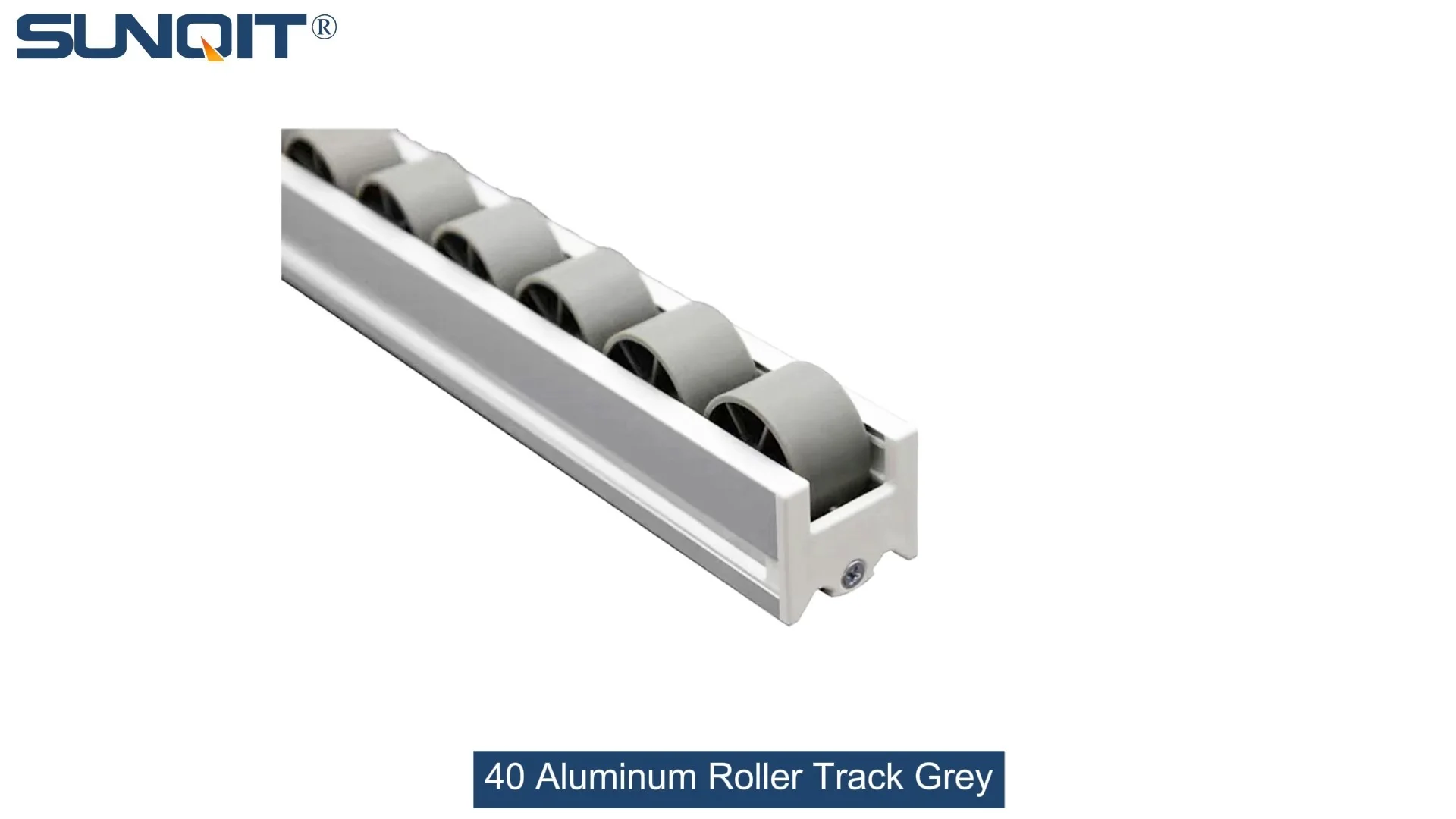
Durable and smooth-running modular roller rails. The system is fully assembled. The roller rail profile contains plastic rollers mounted on steel axles. Aluminum frame with plastic wheel make it anti corrosion,and material convey more smooth.
The Unsung Hero of Smooth Material Flow
In the bustling world of manufacturing, warehouses, and assembly lines, there's a quiet workhorse that keeps operations running like clockwork: the material handling system. Every time a component glides from a storage rack to a workbench, or a finished product moves from an assembly station to packaging, there's a good chance a roller track is making that movement possible. Among these, the 40 Aluminum Roller Track Grey stands out—not for flashy features, but for its reliability, versatility, and ability to adapt to the unique needs of modern workplaces. Let's dive into what makes this track a staple for lean systems, flow racks, and workbenches across industries.
What Exactly is 40 Aluminum Roller Track Grey?
At its core, the 40 Aluminum Roller Track Grey is a specialized conveyor component designed to facilitate the smooth, controlled movement of materials. The "40" refers to its standard width (typically 40mm, though exact measurements can vary by manufacturer), while "Aluminum" highlights its lightweight yet durable construction. The "Grey" denotes its neutral, industrial color, which blends seamlessly into factory and warehouse environments without clashing with existing equipment or color-coded workflows.
Unlike generic roller tracks, this model is engineered with precision. It consists of an aluminum extrusion profile—think of it as a sturdy, channel-like base—fitted with rotating rollers that reduce friction, allowing items to slide or roll with minimal effort. What truly sets it apart is its focus on adaptability: it's not just a static track, but a modular system that can be customized with accessories like roller track placon mounts, connectors, and side guides to fit specific layouts and material types.
Whether you're moving small electronic parts, heavy automotive components, or boxes of finished goods, this track is built to handle the job with consistency. It's the kind of tool that operators and facility managers come to rely on because it "just works"—no frustrating jams, no uneven movement, and no constant need for adjustments.

Key Specifications: The Details That Matter
To understand why the 40 Aluminum Roller Track Grey is a top choice for industrial applications, let's break down its most critical specifications. These details aren't just technicalities; they directly impact how well the track performs in real-world scenarios, from a chaotic assembly line to a high-volume distribution center.
Material: Aluminum Extrusion Profile
The track's base is crafted from aluminum extrusion profile—a process where aluminum is forced through a die to create a consistent, high-strength shape. This method ensures uniformity across every piece, so you won't find weak spots or irregularities that could cause jams. Aluminum was chosen for three key reasons: weight , corrosion resistance , and malleability . It's significantly lighter than steel, making installation and reconfiguration easier (no need for heavy machinery to move sections). It resists rust and wear, even in humid or dusty environments, and it's soft enough to be drilled or cut on-site for custom lengths without compromising structural integrity.
Roller Design and Material
The rollers themselves are a study in balance. Most models use high-quality plastic or rubberized wheels (the "Grey" often extends to the rollers, too, for a cohesive look) that are gentle on delicate items but tough enough for repetitive use. The spacing between rollers is carefully calibrated—usually 30-50mm apart—to ensure stability, even for irregularly shaped objects. For example, a small circuit board won't tip or get stuck because the rollers are close enough to support it, while a larger box will roll smoothly without wobbling.
Some variants, like the 40 steel roller track with black ESD wheels, are designed for electrostatic discharge (ESD) protection, making them safe for electronics manufacturing. However, the standard Grey model typically uses non-conductive plastic rollers, ideal for general-purpose applications where ESD isn't a concern.
Load Capacity: Built for Real-World Weight
One of the first questions facility managers ask is, "How much weight can it handle?" The 40 Aluminum Roller Track Grey typically supports 15-30 kg per linear meter (exact capacity depends on roller spacing and material thickness), which covers most industrial needs. For context, that's enough to move a 20kg car part, a stack of 10kg boxes, or a 25kg tool tray without sagging or slowing down. If you need to handle heavier loads, manufacturers often offer reinforced versions with thicker aluminum profiles or steel-reinforced rollers.
Compatibility with Accessories
What makes this track truly modular is its compatibility with a range of accessories, starting with roller track placon mounts . These small but critical components act as the "glue" that connects the track to other structures, like aluminum profiles (common in workbenches and flow racks) or existing conveyor systems. Placon mounts come in various styles: some are designed to attach directly to flat surfaces, others to the T-slots of aluminum profiles, and some even include height adjusters for leveling uneven floors.
Other key accessories include:
- Side Guides: Plastic or aluminum rails (often yellow or grey) that prevent items from sliding off the track, especially during turns or inclines.
- Connectors: Join multiple track sections seamlessly, ensuring a smooth transition between lengths.
- End Stops: Prevent materials from rolling off the end of the track, adding a safety layer for both workers and products.
This compatibility means the track isn't a one-and-done purchase. As your needs change—say, you expand your assembly line or switch to larger product sizes—you can simply add or swap accessories instead of replacing the entire system.
Dimensions and Customization
Standard lengths for the 40 Aluminum Roller Track Grey range from 1m to 3m, but most suppliers offer custom cutting to fit your exact space. The track's height (from base to roller top) is typically 25-30mm, low enough to integrate with workbenches and flow racks without creating awkward gaps, but high enough to accommodate rollers of various sizes. For example, 1-inch swivel roller balls or 0.5-inch mini rollers can be fitted depending on the material being moved—smaller rollers for lightweight items, larger ones for stability with heavier loads.

How Does It Compare? A Quick Look at the Competition
To appreciate the 40 Aluminum Roller Track Grey's strengths, it helps to compare it to other common roller track materials: steel and plastic. The table below highlights key differences, so you can see why aluminum often comes out on top for many applications.
| Feature | 40 Aluminum Roller Track Grey | Steel Roller Track | Plastic Roller Track |
|---|---|---|---|
| Material | Aluminum extrusion profile | Mild steel or stainless steel | Polypropylene or PVC |
| Weight (per meter) | 1.2-1.8 kg | 3.5-5 kg | 0.8-1.2 kg |
| Load Capacity (per meter) | 15-30 kg | 30-50 kg | 5-15 kg |
| Corrosion Resistance | High (resists rust, ideal for humid/dusty environments) | Medium (prone to rust unless coated; stainless steel is better but costlier) | High (resists chemicals, but can degrade in extreme temperatures) |
| Customization Ease | High (easily cut, drilled, and paired with aluminum profile accessories) | Low (requires specialized tools for cutting/drilling; heavy to reconfigure) | Medium (easy to cut, but less durable for heavy accessories) |
| Noise Level | Low (aluminum dampens sound; plastic rollers reduce friction noise) | High (metal-on-metal contact creates more noise) | Low (similar to aluminum, but less stable with heavy items) |
As the table shows, aluminum strikes a balance between steel's strength and plastic's lightweight flexibility. It's not the absolute strongest (steel wins there) or the lightest (plastic takes that title), but for most day-to-day industrial needs—where load capacity, corrosion resistance, and adaptability are equally important—it's the sweet spot.

Industrial Uses: Where It Shines Brightest
The 40 Aluminum Roller Track Grey isn't a one-trick pony. Its versatility means it finds a home in a wide range of industries and applications. Let's explore some of the most common ways it's used, and why it's become indispensable in each.
Lean Manufacturing Systems
Lean manufacturing is all about eliminating waste—whether that's time, effort, or unnecessary movement. The 40 Aluminum Roller Track Grey fits perfectly into this philosophy by creating flow : the uninterrupted movement of materials from one process to the next. For example, in an electronics plant, a lean system might use this track to connect a component storage rack to an assembly workbench. Instead of an operator walking back and forth to fetch parts, the parts glide directly to them, reducing fatigue and cutting down on idle time.
Lean system suppliers often recommend this track because it's easy to reconfigure. If a workflow changes—say, a new product line is introduced—the track can be quickly disassembled, extended, or rerouted using roller track placon mounts and connectors. This flexibility aligns with lean's focus on continuous improvement: your material handling system shouldn't be a barrier to change.
Flow Racks and Material Storage
Flow racks (also called gravity flow racks) are a staple in warehouses and distribution centers, where space is tight and accessibility is key. These racks use inclined roller tracks to allow materials to "flow" forward as items are removed from the front, ensuring first-in, first-out (FIFO) inventory management. The 40 Aluminum Roller Track Grey is ideal here because its lightweight design makes it easy to install in multi-level racks (no need for extra structural support), and its corrosion resistance ensures it holds up in environments where dust or humidity might otherwise damage steel tracks.
Imagine a parts warehouse for a car manufacturer: rows of flow racks filled with engine components, each fitted with 40mm aluminum tracks. When a mechanic needs a part, they simply pull the front box, and the next one rolls forward automatically. No more digging through stacks, no more disorganized shelves—just smooth, efficient access. That's the power of this track in action.
Workbenches and Assembly Stations
Workbenches are the heart of any assembly operation, and the right accessories can turn a basic table into a productivity hub. The 40 Aluminum Roller Track Grey is often mounted along the edge of workbenches (like the "Workbench E (single deck-without caster)" model) to create a dedicated "infeed" or "outfeed" zone. For example, in a furniture factory, an operator assembling chairs might have a track along the left side for incoming parts (legs, screws, cushions) and another along the right for finished chairs to roll onto a conveyor. This setup keeps the work surface clear and ensures materials are always within arm's reach.
ESD workbench users (common in electronics manufacturing, where static electricity can damage components) also appreciate this track. While the standard model isn't ESD-safe, variants with black ESD wheels are available, making them compatible with anti-static work environments. It's a small tweak that makes a big difference for sensitive operations.
Conveyor Systems and Turnover Trolleys
Beyond standalone racks and workbenches, the 40 Aluminum Roller Track Grey is often integrated into larger conveyor systems. For instance, it might serve as a "transfer" section between a belt conveyor and a sorting station, or as a flexible extension for loading/unloading turnover trolleys. Trolleys fitted with matching tracks can dock seamlessly with stationary track sections, allowing materials to be moved from the trolley to the main conveyor (or vice versa) without lifting.
Logistics companies love this for its efficiency. Picture a distribution center during peak season: boxes arrive on a main conveyor, then branch off onto smaller 40mm aluminum tracks that feed into sorting stations. Workers can quickly redirect boxes by adjusting side guides, ensuring each package heads to the correct truck or storage area. It's a quiet, low-maintenance way to handle high volumes without sacrificing accuracy.
Automotive and Heavy Machinery
Even in industries where heavy components are the norm, the 40 Aluminum Roller Track Grey holds its own. While steel tracks might be needed for the heaviest loads (think engine blocks), aluminum tracks are often used for sub-assemblies or lighter parts. For example, in an automotive plant, a track might carry door panels from the painting station to the final assembly line. The aluminum's corrosion resistance is a boon here, as paint fumes and cleaning chemicals won't eat away at the track over time.
Advantages: Why Operators and Managers Love It
At the end of the day, the 40 Aluminum Roller Track Grey's popularity boils down to the tangible benefits it brings to daily operations. These aren't just "nice-to-haves"—they're the reasons workers ask for it by name and managers budget for it year after year.
Operator Perspective: "I used to dread moving parts from the rack to my bench—it felt like a workout by lunchtime. Now, with the aluminum track, I just give the bin a gentle push, and it glides right over. No more straining my back, no more wasted time. It's the little things that make the job easier, you know?" – A manufacturing operator with 10+ years of experience.
Reduced Physical Strain
Manual material handling is a leading cause of workplace injuries, from strained backs to repetitive motion disorders. By allowing materials to roll with minimal effort, this track reduces the need for lifting, pushing, or pulling heavy loads. It's a small change that has a big impact on worker well-being and retention—happy, healthy operators are more productive and less likely to miss shifts due to injury.
Consistency and Reliability
There's nothing more frustrating than a track that jams or slows down unpredictably. The 40 Aluminum Roller Track Grey's precision engineering minimizes these issues. Its uniform aluminum profile and smoothly rotating rollers ensure materials move at a steady pace, whether you're pushing a light plastic bin or a heavier metal tray. This consistency reduces errors, too—no more items toppling over because of a sudden bump or gap in the track.
Cost-Effective in the Long Run
While aluminum tracks may cost slightly more upfront than plastic, they more than pay for themselves over time. Their durability means less frequent replacements, and their corrosion resistance eliminates the need for expensive coatings or treatments (unlike steel, which may require painting or galvanizing). Plus, their lightweight design cuts down on installation and shipping costs—no need to hire a crew with heavy equipment to set them up.
Easy to Clean and Maintain
Industrial environments are messy—dust, grease, and debris are part of the job. The 40 Aluminum Roller Track Grey's smooth surface and open design make it easy to clean. A quick wipe with a cloth or a blast from a compressed air hose removes buildup, and the rollers can be lubricated occasionally (though many are self-lubricating) to keep them spinning freely. Compare that to plastic tracks, which can warp or crack if cleaned with harsh chemicals, or steel tracks that trap rust in hard-to-reach crevices.
Installation and Maintenance Tips: Getting the Most Out of Your Track
To ensure your 40 Aluminum Roller Track Grey performs at its best for years to come, follow these simple installation and maintenance guidelines. These steps don't require specialized skills—just a little attention to detail.
Installation: Start with a Level Surface
Even the best track will underperform if it's installed on an uneven surface. Use a spirit level to check the area where the track will go, and adjust using shims or adjustable feet if needed. When attaching the track to a workbench or flow rack, use roller track placon mounts designed for your specific setup—placon mounts for aluminum profiles are ideal for integrating with existing aluminum structures, while flat placon mounts work better for wooden or steel surfaces.
Leave a small gap (1-2mm) between track sections when connecting them to allow for thermal expansion (aluminum expands slightly in heat). And don't overtighten the connectors—snug is enough; over-tightening can warp the track or strip threads.
Maintenance: Keep It Clean and Lubricated
Set a regular cleaning schedule (weekly for high-dust environments, monthly for cleaner ones). Wipe down the track with a dry or slightly damp cloth to remove dust and debris, and inspect the rollers for signs of wear (cracks, flat spots, or stiffness). If a roller feels stuck, a drop of light machine oil (avoid heavy greases, which attract dust) should free it up. For ESD-safe models, use anti-static cleaning solutions to maintain their electrostatic properties.
Finally, check the placon mounts and connectors periodically to ensure they're still secure. Vibration from constant use can loosen screws over time, so a quick tightening session every few months prevents the track from shifting.
Conclusion: More Than a Track—A Partner in Productivity
The 40 Aluminum Roller Track Grey may not have the glamour of a high-tech robot or the flash of a new software system, but it's the kind of tool that quietly transforms workplaces. It's the difference between a frustrating, stop-and-start workflow and a smooth, efficient operation where everyone can focus on what matters: creating quality products and serving customers.
Whether you're a lean system supplier designing a new workflow, a warehouse manager looking to optimize storage, or an operator tired of wrestling with clunky material handling tools, this track delivers. Its blend of strength, flexibility, and reliability makes it more than just a component—it's a partner in productivity.
So the next time you see a bin gliding effortlessly across a factory floor or a shelf of parts always within reach, take a closer look. Chances are, there's a 40 Aluminum Roller Track Grey working hard behind the scenes, making it all possible.