- Company Articles
- Products and Technology
- Product knowledge
- What Is 40 Roller Track Placon Mount Flat? A Beginner's Guide to Lean Manufacturing Components

What Is 40 Roller Track Placon Mount Flat? A Beginner's Guide to Lean Manufacturing Components
Related Product
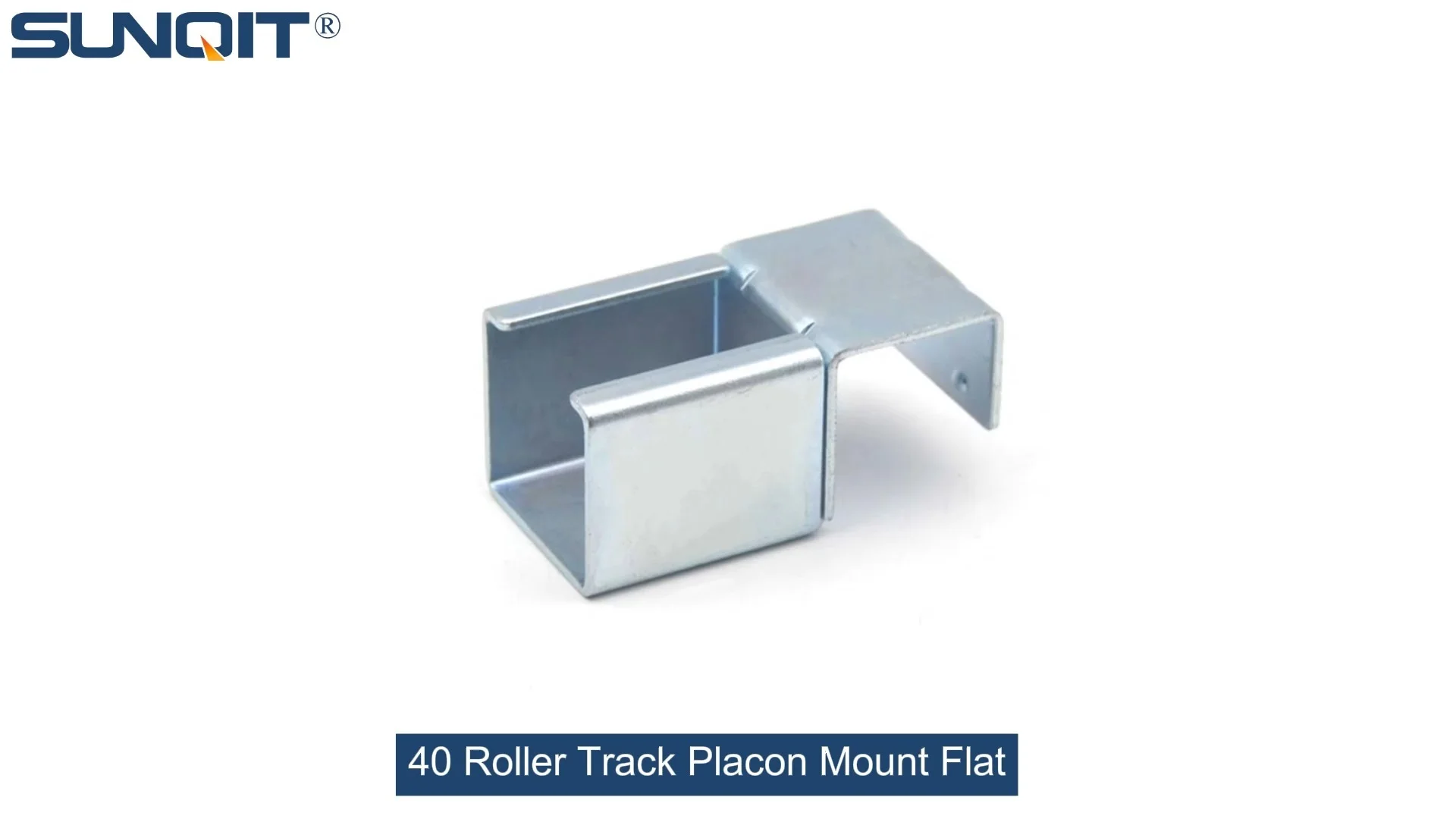
40 Roller Track Placon Mount Flat
Roller track placon mount work as a connector for roller track and pipe or aluminum profile in rack syetem, it is a necessary parts in rack system which widely used in industrial plant and logistic,warehouse storage.
In the world of manufacturing, where every second and every cent counts, the difference between a good production line and a great one often lies in the details. Lean manufacturing isn't just a buzzword—it's a way of thinking that turns chaos into order, waste into efficiency, and stagnation into continuous improvement. And today, we're diving into one of those "small but mighty" details that keeps lean systems running smoothly: the 40 Roller Track Placon Mount Flat. If you've ever walked through a factory floor and wondered how materials glide so effortlessly from one station to the next, or how workers can reconfigure a production line in hours instead of days, this unassuming component might just be the unsung hero behind the scenes.
Let's start with the basics: lean manufacturing thrives on two core principles—eliminating waste and maximizing flow. Materials need to move when they're needed, where they're needed, without getting stuck, damaged, or delayed. That's where roller tracks come in, and the 40 Roller Track Placon Mount Flat is the critical link that holds these tracks together, ensuring they stay stable, adaptable, and ready for whatever your production line throws at them. Whether you're building a workstation for assembling smartphones, a conveyor system for medical devices, or a storage rack for warehouse logistics, understanding this component will help you build lean systems that don't just work—they evolve with your business.
Breaking Down the Name: What Even Is a "40 Roller Track Placon Mount Flat"?
First things first: that name might sound like a mouthful, but let's break it down piece by piece. It's actually a description of exactly what this component does and how it works, which is pretty handy once you get the hang of it.
"40" refers to the size standard it's designed for—specifically, 40-series aluminum profiles. If you're familiar with lean manufacturing setups, you've probably seen those silver, T-slot aluminum rails that form the backbone of workbenches, racks, and production lines. The 40-series is one of the most common sizes, widely used because it strikes a perfect balance between strength and versatility. So when we say "40," we're talking about a component that plays well with the industry's go-to building blocks.
"Roller Track" is straightforward—it's the part that holds the roller track (or "flow rail"), those grooved rails with small wheels that let materials slide smoothly. Think of roller tracks as the "highways" for your parts and products; without them, moving items would require more effort, more time, and more (manpower).
"Placon Mount" is a bit more specific. "Placon" here refers to the mounting system that connects the roller track to the aluminum profile. It's like a specialized bracket that locks into the T-slot of the aluminum profile, creating a secure connection without the need for welding or drilling. This is where the "lean" in lean manufacturing really starts to shine—no permanent modifications mean you can adjust, remove, or reposition components later.
"Flat" describes the mounting surface. Unlike "drop high" mounts (which sit lower, creating a stepped effect), the "flat" design means the top of the mount is level with the aluminum profile. This creates a smooth, continuous surface for the roller track, which is crucial for keeping materials moving evenly and preventing jams—especially important for small or delicate parts like electronics components.
Put it all together, and you've got a component that's designed to: fit 40-series aluminum profiles, hold roller tracks securely, mount without permanent changes, and keep everything level. Simple? Yes. Essential? Absolutely. Because in lean manufacturing, the best solutions are often the ones that do their job so well, you barely notice they're there—until you try to work without them.
Quick Tip: If you're new to aluminum profiles, the "40" in 40-series refers to the width of the profile (usually 40mm). This standardization is why lean systems are so flexible—components from different manufacturers (like aluminum pipe accessories or lean pipe joints) can often work together, as long as they follow the same size standards.
The Core of Its Design: What Makes This Component So Critical for Lean Systems?
Now that we know what it is, let's talk about why it matters. The 40 Roller Track Placon Mount Flat isn't just a "bracket"—it's a masterclass in lean engineering. Here's why it's become a staple in factories, warehouses, and production facilities around the world:
1. Modularity: Build, Break, Rebuild—No Tools Required (Okay, Maybe a Screwdriver)
Imagine building a bookshelf where you could add a shelf, move a shelf, or take the whole thing apart and rebuild it into a desk—all without sawing, gluing, or calling a carpenter. That's the magic of modular design, and the 40 Roller Track Placon Mount Flat is a modular rockstar. It locks into the T-slot of 40-series aluminum profiles using simple bolts or clips, which means you can install it in minutes, adjust it in seconds, and reconfigure it whenever your needs change.
In traditional manufacturing setups, changing a conveyor system might mean hiring a contractor to weld new brackets or drill new holes—days of downtime, hundreds of dollars in labor, and a system that's now permanently "stuck" in its new configuration. With this placon mount? Loosen a few screws, slide it to the new position, tighten them back up, and you're done. It's like using Legos for adults, but instead of building castles, you're building production lines that adapt to new products, higher demand, or shifting workflows.
2. Durability: Built to Handle the Grind (Literally)
Manufacturing floors are tough places. There are heavy loads (think metal parts, plastic bins, or even fully assembled appliances), constant movement (rollers spinning, workers bustling, forklifts passing by), and sometimes harsh conditions (dust, moisture, or even static electricity in electronics plants). A flimsy bracket here could mean a collapsed track, damaged materials, or worse—downtime. That's why the 40 Roller Track Placon Mount Flat is typically made from high-grade aluminum or steel, materials chosen for their strength-to-weight ratio and resistance to wear and tear.
Aluminum, in particular, is a favorite for lean systems. It's lightweight enough to make installation easy (no need for a crane to move a single bracket), but strong enough to support hundreds of pounds of materials. It also resists corrosion, which is a big plus in environments like food processing or pharmaceutical manufacturing where cleanliness is critical. And because it's non-magnetic and non-sparking, it's safe to use in sensitive areas—like around electronic components where static discharge (ESD) could ruin a batch of circuit boards.
3. Precision: No Wobbles, No Jams, Just Smooth Sailing
Ever tried to roll a marble down a bumpy sidewalk? It bounces, slows down, and might even stop. Now imagine that marble is a $500 smartphone part, and the sidewalk is your production line. Even a tiny wobble in the roller track can cause materials to get stuck, scratch, or fall off—leading to waste, delays, and frustrated workers. The "flat" design of this placon mount ensures that the roller track sits perfectly level on the aluminum profile, eliminating gaps or tilts that could disrupt flow.
Precision here also means consistency. If you're building a production line with 50 brackets, you need each one to fit exactly like the last. Thanks to standardized manufacturing processes, 40 Roller Track Placon Mount Flat components are made to tight tolerances—so the first one you install works the same as the 50th. This consistency is key for scaling lean systems; whether you're building one workstation or 50, you know the performance will be reliable across the board.
| Feature | Why It Matters for Lean Manufacturing | Real-World Impact |
|---|---|---|
| Modular Design | Enables quick reconfiguration without permanent changes | Reduce changeover time by 70% when switching product models |
| Aluminum/Steel Construction | Balances strength, weight, and corrosion resistance | Extend component lifespan to 5+ years (vs. 1-2 years for plastic mounts) |
| Flat, Precision Fit | Eliminates track wobble and material jams | Reduce material damage by 90% in high-speed assembly lines |
| T-Slot Compatibility | Works with standard 40-series aluminum profiles | Mix and match components from different suppliers without compatibility issues |

How Does It Actually Work? Let's Get Practical
Enough theory—let's talk about how this component fits into a real lean system. Picture this: you're setting up a flow rack for a 3C assembly line (think laptops, tablets, or smartwatches). A flow rack is like a shelf with roller tracks instead of flat surfaces, so bins of parts slide forward as the front bin is emptied—no more reaching to the back or bending over to grab materials. To build this, you'll need aluminum profiles for the frame, roller tracks for the sliding surface, and… you guessed it, 40 Roller Track Placon Mount Flats to hold the tracks to the frame.
Here's the step-by-step (simplified, of course):
Step 1: Build the Frame – You start by cutting 40-series aluminum profiles to size and connecting them with aluminum pipe joints to form the shelf structure. The T-slots on the profiles are facing inward, ready to accept brackets.
Step 2: Mount the Placon Brackets – You slide the 40 Roller Track Placon Mount Flats into the T-slots at the desired height and spacing. Using bolts or T-nuts (small fasteners that lock into T-slots), you secure the brackets tightly to the frame. Because they're "flat," they sit flush against the profile, creating a stable base.
Step 3: Attach the Roller Track – The roller track itself has slots or holes that align with the placon mount. You bolt the track to the mount, and just like that, you've got a sliding surface that can support bins of parts. If you need to adjust the angle of the track (to make materials slide faster or slower), you can loosen the bolts on the placon mount, tilt the track, and retighten—no drilling new holes required.
Step 4: Test and Adapt – Once everything is installed, you load a bin onto the track. If it slides too fast, you can add a brake (another small component that attaches to the placon mount). If it's too slow, you adjust the angle slightly. And if next month you need to add another shelf? Just install more brackets and tracks in the T-slots above or below.
Real-World Example: A Day in the Life of a 40 Roller Track Placon Mount Flat
Let's zoom in on a medical device factory that produces insulin pumps. These devices are small, precise, and require hundreds of tiny parts—from circuit boards to plastic casings. The factory uses a lean system where each workstation is a "cell" focused on one part of the assembly process, and materials are delivered to each cell via flow racks.
At 9 AM, the morning shift starts, and the flow rack near the casing assembly cell is fully loaded with bins of plastic pump casings. As workers take casings from the front bin, the bins behind slide forward smoothly, guided by roller tracks mounted on 40 Roller Track Placon Mount Flats. By 11 AM, the team gets a rush order for a new pump model with a slightly larger casing. The old bins won't fit—so the supervisor grabs a wrench, loosens the bolts on the placon mounts, slides the tracks wider apart, and tightens them back up. Ten minutes later, the new, larger bins are loaded, and production resumes without skipping a beat.
At 2 PM, a maintenance worker notices one of the roller tracks is slightly wobbly (probably from a forklift bumping the rack overnight). She checks the placon mount, tightens the T-nut in the aluminum profile's T-slot, and the track is stable again. No downtime, no replacement parts—just a quick fix, thanks to the bracket's simple design.
By the end of the day, the factory has produced 20% more units than the previous week, and the supervisor is already planning to reconfigure the line next month to add a new cell for testing. Because the placon mounts are modular, that reconfiguration will take hours, not days—and the same brackets can be reused, saving on material costs. That's lean manufacturing in action, and it all starts with components like the 40 Roller Track Placon Mount Flat.

Where Does It Fit? Industries and Applications
The 40 Roller Track Placon Mount Flat isn't limited to one type of factory or one kind of product. Its versatility is part of what makes it so valuable. Let's explore some of the key industries where this component shines, and how it solves unique challenges in each.
3C Electronics: Speed and Precision for Fast-Changing Products
The 3C industry (computers, communications, consumer electronics) moves at lightning speed. New phone models launch every few months, and production lines need to switch from assembling a 6-inch screen to a 6.7-inch screen with minimal downtime. Here, the 40 Roller Track Placon Mount Flat's modularity is a game-changer. Workstations and flow racks can be reconfigured in hours, and because the brackets are compatible with standard aluminum profiles, manufacturers can mix and match components to create custom setups for each product.
ESD protection is another big concern in electronics manufacturing—static electricity can fry sensitive components like microchips. Many placon mounts are made from conductive aluminum or come with ESD-safe coatings, ensuring that static charges are grounded before they reach the products. When paired with an ESD workstation, these brackets help create a static-free zone that protects expensive parts and reduces waste.
Medical Devices: Cleanliness and Compliance
In medical device manufacturing, cleanliness and compliance with regulations (like FDA standards) are non-negotiable. The 40 Roller Track Placon Mount Flat's aluminum construction is easy to clean and resistant to bacteria growth, making it ideal for environments where sanitization is critical. Unlike plastic brackets, which can develop cracks or harbor dirt, aluminum is smooth and non-porous—wipe it down with disinfectant, and it's ready for the next batch of surgical tools or diagnostic equipment.
Additionally, medical production lines often require traceability—knowing exactly when and where each component was used. Because the placon mounts are durable and long-lasting, they can be part of a system that's audited and certified for years, ensuring compliance with strict industry regulations.
Warehouse and Logistics: Heavy Loads and High Volume
Warehouses and distribution centers deal with heavy loads—pallets of goods, large storage bins, and constant movement from forklifts and pallet jacks. Here, the 40 Roller Track Placon Mount Flat's strength comes into play. Steel versions of the bracket can support hundreds of pounds, making them perfect for conveyor systems that move bulk materials. And because they're mounted to sturdy aluminum profiles, the entire structure can withstand the vibrations and impacts of a busy warehouse without loosening or failing.
Cross-docking (moving goods directly from inbound to outbound trucks without storage) is another area where these brackets shine. Conveyor systems with roller tracks mounted on placon mounts can be quickly reconfigured to handle different package sizes, ensuring that even during peak seasons (think Black Friday or holiday shipping), materials keep flowing without bottlenecks.
Automotive and Heavy Machinery: Ruggedness for the Long Haul
Automotive factories are tough environments—heavy parts, high temperatures, and constant mechanical stress. The 40 Roller Track Placon Mount Flat's steel construction (or heavy-duty aluminum) holds up to these conditions, supporting tracks that carry engine components, door panels, or even entire car frames. In assembly lines where precision is critical (like aligning a car's chassis), the bracket's stability ensures that roller tracks don't shift, preventing misalignments that could lead to quality issues.
Plus, automotive manufacturers often run 24/7 operations, so downtime is incredibly costly. The durability of these brackets means fewer breakdowns and maintenance checks, keeping production lines running around the clock.

Choosing the Right 40 Roller Track Placon Mount Flat: What to Look For
Not all placon mounts are created equal. When you're shopping for 40 Roller Track Placon Mount Flats, there are a few key factors to consider to ensure you're getting a component that will actually help your lean system thrive—not create new problems.
Material: Aluminum vs. Steel—Which Is Right for You?
Aluminum is lightweight, corrosion-resistant, and non-sparking, making it ideal for electronics, medical, and food processing industries. It's also easier to handle during installation, which can save time and labor costs. Steel, on the other hand, is stronger and better for heavy loads (think automotive or warehouse applications). If you're not sure, ask yourself: What's the maximum weight the track will need to support? and What's the environment like? (wet, dusty, corrosive?)
Compatibility: Not All "40-Series" Profiles Are Exactly the Same
While 40-series aluminum profiles are standardized, there can be small variations in T-slot size or depth between manufacturers. Look for placon mounts that specify compatibility with "40-series standard profiles" or that come with adjustable T-nuts. This ensures you won't end up with brackets that almost fit but not quite—which can lead to wobble or instability.
Load Capacity: Don't Guess—Check the Specs
Every bracket has a maximum load rating (usually listed in pounds or kilograms). This isn't a suggestion—it's a safety limit. If you're using the bracket to support a roller track with heavy bins, make sure the total weight (bins + materials) doesn't exceed the rating. Overloading can bend the bracket, damage the aluminum profile, or even cause the track to collapse.
Finish: Smooth Edges and ESD Options
Rough edges on a bracket can scratch workers' hands or damage delicate materials. Look for mounts with deburred edges (smooth, no sharp corners) and a clean finish. If you're in an ESD-sensitive industry, opt for brackets with conductive coatings or made from ESD-safe aluminum to prevent static buildup.
Beyond the Bracket: How It Fits Into the Bigger Lean Picture
The 40 Roller Track Placon Mount Flat doesn't work alone—it's part of a larger ecosystem of lean components that together create efficient, adaptable systems. Let's look at how it teams up with other key parts to make magic happen.
With Flow Racks: Keeping Materials Moving Forward
Flow racks are the bread and butter of lean material handling, and roller tracks are their secret sauce. When paired with flow rack systems, 40 Roller Track Placon Mount Flats ensure that tracks are positioned at the perfect angle for gravity-fed flow—materials slide forward as needed, reducing the need for workers to walk to storage areas or reach for items. This cuts down on "motion waste" (one of the seven types of waste in lean) and keeps workers focused on value-adding tasks, not fetching parts.
With Lean Pipe Workbenches: Building Custom Workstations
A lean pipe workbench (or aluminum profile workbench) is more than just a table—it's a command center for assembly, testing, or packaging. By mounting roller tracks to the bench using 40 Roller Track Placon Mount Flats, you can create integrated material delivery right at the worker's fingertips. For example, a smartphone assembly workstation might have a roller track along the back edge, feeding components directly to the assembler, who can slide bins forward as needed. When the product design changes, the tracks can be repositioned on the bench using the same placon mounts—no need to buy a new workstation.
With Conveyors: Extending the Flow Beyond the Workstation
For larger production lines, conveyor systems move products between workstations. Roller conveyors (which use—you guessed it—roller tracks) are ideal for this, and 40 Roller Track Placon Mount Flats help mount the tracks to the conveyor frame. Whether it's a small belt conveyor for delicate parts or a heavy-duty chain conveyor for pallets, the brackets ensure the tracks stay aligned, even at high speeds. This is especially important for "paced" production lines, where products need to arrive at each station at exactly the right time.
With Custom Lean Solutions: Turning Ideas Into Reality
Every factory has unique challenges, which is why custom lean solutions are so valuable. The 40 Roller Track Placon Mount Flat's modularity makes it a favorite among system designers. Need a curved conveyor? Mount the brackets at angles on a curved aluminum frame. Need a height-adjustable flow rack? Use telescoping profiles with placon mounts that can be locked at different heights. The possibilities are almost endless—and because the brackets are reusable, you can experiment with designs without worrying about wasting materials.
Pro Insight: One of the biggest mistakes new lean adopters make is buying components piecemeal without considering how they'll work together. A 40 Roller Track Placon Mount Flat might seem cheap on its own, but if it doesn't fit your existing aluminum profiles or roller tracks, it could end up costing you more in returns, replacements, or lost productivity. When building a lean system, think of it as a puzzle—every piece (brackets, profiles, tracks, workbenches) needs to fit together seamlessly. That's why working with a supplier who offers complete lean solutions (not just individual parts) can save you time and headaches in the long run.
Why Invest in Quality? The Hidden Cost of "Cheap" Brackets
It's tempting to cut costs by buying the cheapest placon mounts you can find. After all, they're just brackets, right? Wrong. A low-quality bracket might save you a few dollars upfront, but it can cost you exponentially more in the long run. Here's why:
Downtime: A bent or broken bracket means stopping production to replace it. In a factory making $10,000 per hour, even 30 minutes of downtime costs $5,000—way more than the $10 you saved on a cheap bracket.
Material Waste: Wobbly tracks cause materials to jam or fall off, leading to damaged parts. In electronics manufacturing, a single damaged circuit board can cost $50 or more—and if it happens regularly, those costs add up fast.
Safety Risks: A failed bracket could lead to falling materials or collapsed equipment, putting workers at risk of injury. This isn't just a moral issue—it can result in fines, lawsuits, or damaged company reputation.
Replacement Costs: Cheap brackets wear out faster. A quality aluminum bracket might last 5+ years; a flimsy steel or plastic one might need replacing every 6-12 months. Over time, the "cheap" option ends up costing more in replacements.
Investing in high-quality 40 Roller Track Placon Mount Flats is an investment in your lean system's reliability and longevity. It's the kind of decision that doesn't make headlines, but it keeps your production line running, your workers happy, and your bottom line healthy.
Final Thoughts: The Small Component That Drives Big Results
At the end of the day, lean manufacturing is about more than just tools and components—it's about creating a culture of continuous improvement. But culture alone can't move materials, reconfigure workstations, or eliminate waste. You need the right tools, and the 40 Roller Track Placon Mount Flat is one of those tools that makes the lean mindset actionable.
It's a reminder that in manufacturing, greatness lies in the details. A well-designed bracket might not seem exciting, but it's the difference between a production line that struggles to keep up and one that adapts, grows, and thrives. It's the difference between workers who dread changeovers and those who embrace them as opportunities to get better. And it's the difference between a company that sees lean as a one-time project and one that lives it every day.
So the next time you walk through a factory floor, take a closer look at those roller tracks. Notice how they're mounted to the aluminum frames, how smoothly materials glide, and how quickly workers can adjust the setup. Chances are, you'll spot a 40 Roller Track Placon Mount Flat doing its job quietly, reliably, and without fanfare. And now, you'll know just how much work that small bracket is really doing to keep the world of manufacturing moving forward—one lean step at a time.