- Company Articles
- Products and Technology
- Product knowledge
- What is a Castor Fixed Plate? Definition & Core Functions in Lean Manufacturing

What is a Castor Fixed Plate? Definition & Core Functions in Lean Manufacturing
Related Product
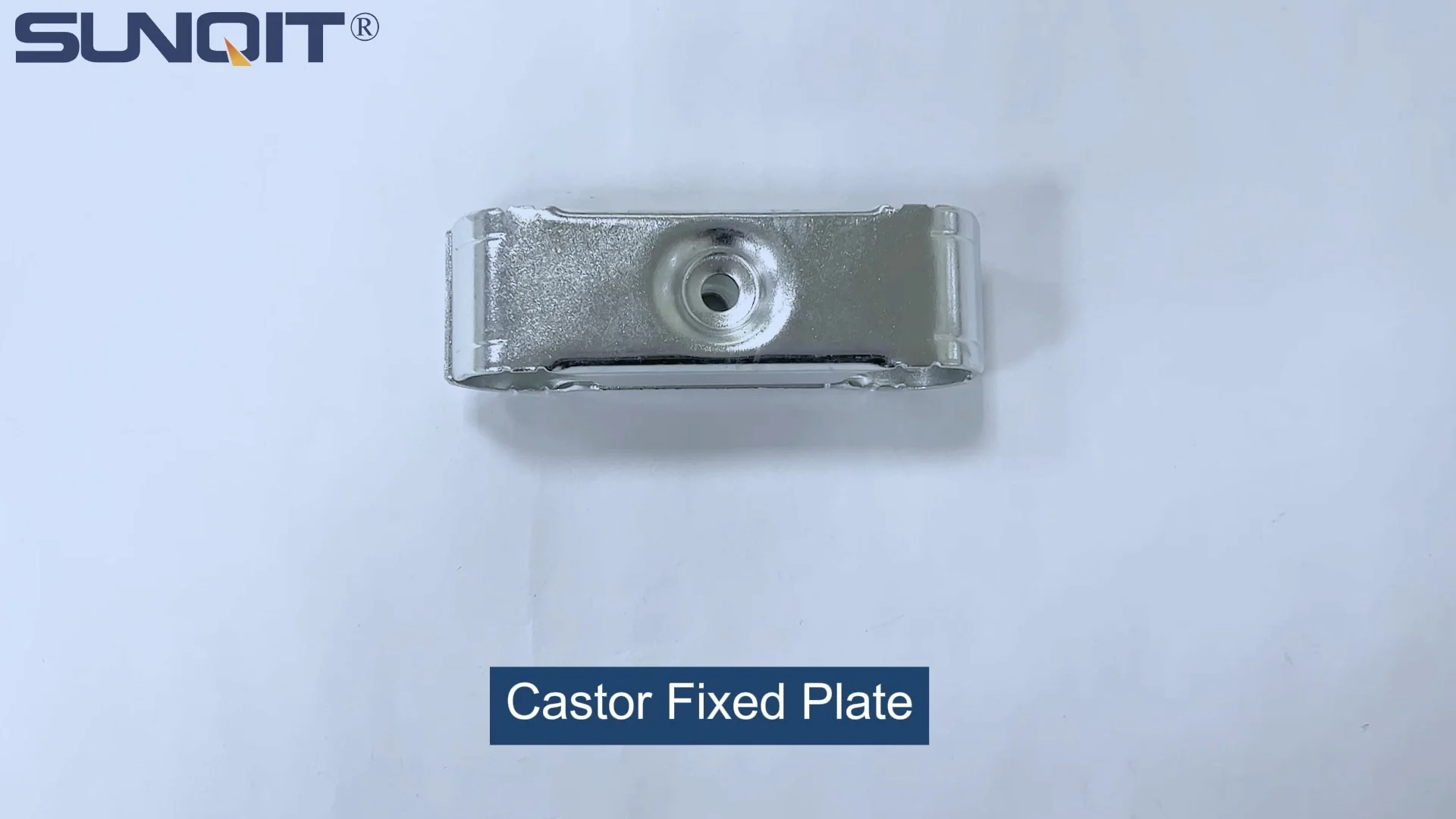
Castor Fixed Plate
Castor fixed plate, used for castor installation, one castor need two pcs castor plate to fix under the workbench, flow rack, and hand trolley.
In the bustling world of manufacturing, where every second counts and efficiency reigns supreme, there are countless unsung heroes working behind the scenes. These aren't the flashy machines or high-tech robots that grab headlines—they're the small, unassuming components that hold everything together, quite literally. Today, we're shining a spotlight on one such hero: the castor fixed plate. You might not have noticed it before, but this humble piece plays a critical role in keeping production lines moving, workspaces adaptable, and lean manufacturing principles alive. Let's dive in and explore what a castor fixed plate is, why it matters, and how it quietly powers some of the most efficient workflows in modern factories.
Defining the Castor Fixed Plate: The "Glue" Between Casters and Equipment
At its core, a castor fixed plate is a flat, sturdy component designed to create a secure connection between a caster wheel and the equipment it's attached to—think workbenches, turnover trolleys, material racks, or even conveyor systems. Picture this: You're in a factory, and you see a worker effortlessly pushing a loaded turnover trolley across the floor. The trolley glides smoothly, turns easily, and stops precisely where needed. What keeps those caster wheels firmly attached to the trolley's frame, even when it's loaded with heavy parts? That's the castor fixed plate doing its job.
Think of it as a bridge. On one side, it bolts or clamps onto the bottom of the equipment (like the legs of a workbench or the frame of a trolley). On the other side, it provides a stable base for the caster wheel to mount onto. Without this plate, the caster might wobble, loosen, or even detach—turning a simple material transport task into a frustrating, time-consuming, and potentially dangerous chore. In short, the castor fixed plate is the unsung anchor that ensures mobility doesn't come at the cost of stability.
Real-World Example:
Imagine a busy automotive assembly line. A workbench holding tools and parts needs to be moved closer to the production station as the day's tasks shift. Without a reliable castor fixed plate, the casters might slip or bend under the weight of the tools, forcing workers to stop and readjust. With a sturdy fixed plate, the workbench moves smoothly, the casters stay put, and the line keeps humming. That's the difference a small component can make.
Materials and Design: Built to Handle the Grind
Castor fixed plates aren't one-size-fits-all. They're engineered to meet the demands of different environments, loads, and equipment types. Let's break down the key factors that make a castor fixed plate effective: materials and design.
Materials: Strength Meets Durability
The most common materials used for castor fixed plates are steel, aluminum, and sometimes heavy-duty plastic. Each has its own strengths, making it suitable for specific scenarios:
- Steel: The workhorse of the bunch. Steel fixed plates are prized for their high load capacity and resistance to wear and tear. They're ideal for heavy-duty applications, like industrial workbenches or turnover trolleys carrying metal parts. If you're moving 500+ pounds regularly, steel is likely your go-to.
- Aluminum: Lightweight yet surprisingly strong, aluminum fixed plates are perfect for situations where mobility and corrosion resistance matter. Think cleanrooms, food processing facilities, or environments where equipment needs to be moved frequently (aluminum's lighter weight reduces strain on workers). They're also a favorite in lean systems where flexibility—reconfiguring workspaces quickly—is key.
- Plastic: Best for lighter loads and environments where noise reduction or non-marking surfaces are priorities. For example, in electronics assembly, where delicate components might be jostled by metal-on-metal contact, a plastic fixed plate can dampen vibrations and keep casters from scratching the floor.
Design: More Than Just a Flat Piece of Metal
A castor fixed plate's design is all about precision. Here are the key features that set a quality plate apart:
- Load Capacity: Plates are rated for specific weight limits, from light-duty (under 100 lbs) to heavy-duty (over 1,000 lbs). The design includes reinforced edges or thicker material in high-stress areas to prevent bending under load.
- Mounting Holes: Pre-drilled holes ensure a snug fit with both the equipment and the caster. The spacing and size of these holes are standardized to match common caster and equipment designs, reducing the need for custom modifications (a big win for lean manufacturing, where time is money).
- Compatibility: Some plates are designed for specific caster types—swivel casters, rigid casters, or brake-equipped casters. For example, a fixed plate for a swivel caster might have a larger center hole to accommodate the caster's rotating mechanism, while one for a rigid caster focuses on stability over rotation.
- Corrosion Resistance: In damp or chemical-heavy environments (like warehouses with frequent cleaning or outdoor loading docks), plates may be coated with zinc, powder, or other treatments to prevent rust and extend lifespan.

Core Functions: Why Castor Fixed Plates Are Non-Negotiable
Now that we know what a castor fixed plate is and how it's built, let's dig into its core functions—the reasons it's an indispensable part of lean manufacturing and material handling.
1. Stability: No Wobbles, No Waste
In lean manufacturing, "waste" comes in many forms: time wasted adjusting equipment, defects caused by unstable workspaces, or injuries from accidents. A loose caster can lead to all three. The castor fixed plate eliminates this risk by distributing the equipment's weight evenly across the caster. This prevents wobbling, which not only speeds up tasks (workers don't have to fight to keep equipment steady) but also reduces wear on both the casters and the floor.
For example, a material rack loaded with boxes might sway if the casters aren't secured properly. With a fixed plate, the weight is spread out, the rack stays balanced, and the boxes don't shift—saving workers from having to re-stack items and avoiding potential damage to parts.
2. Secure Attachment: Reliability When It Counts
Ever tried to push a cart where one wheel keeps coming loose? It's frustrating, slow, and dangerous. The castor fixed plate ensures the caster stays bolted (or clamped) tightly to the equipment, even during frequent use. This reliability is critical in high-paced environments where downtime is costly. A single loose caster can bring a small part of the line to a halt; a fixed plate prevents that by acting as a failsafe.
3. Versatility: Adapt to Changing Needs
Lean manufacturing thrives on flexibility. Factories today need to switch between product runs, reconfigure workstations, and adapt to new processes quickly. Castor fixed plates make this possible by allowing casters to be easily swapped or adjusted. For instance, if a workbench originally used rigid casters (for straight-line movement) but now needs to navigate tight corners, the fixed plate can accommodate swivel casters with minimal tools or downtime. This adaptability keeps production lines agile, even as demands change.
4. Load Distribution: Protect Equipment and Floors
Heavy equipment or loaded trolleys can put stress on both the equipment itself and the factory floor. A castor fixed plate spreads the weight of the load across a larger surface area, reducing pressure points. This not only extends the life of the equipment (less strain on frames and legs) but also protects floors from cracks or indentations—saving on costly repairs down the line.

Castor Fixed Plates in Lean Manufacturing: Aligning with the Principles of "Less Waste, More Flow"
Lean manufacturing is all about eliminating waste (muda) and creating smooth, efficient workflows. So how does a simple castor fixed plate fit into this philosophy? Let's connect the dots.
Waste Reduction: Time, Effort, and Frustration
One of the biggest wastes in manufacturing is "motion waste"—unnecessary movement of workers or equipment. A workbench that's stuck in one spot because its casters are faulty forces workers to walk extra steps to retrieve tools. A turnover trolley that wobbles requires constant readjustment, eating into time that could be spent on value-adding tasks. Castor fixed plates eliminate this waste by ensuring equipment moves when needed, stays put when not, and requires minimal maintenance. The result? Workers spend less time fighting with equipment and more time building products.
Workflow Optimization: "Flow" Like Water
Lean systems aim for "flow"—the continuous movement of materials and tasks from start to finish, with no bottlenecks. Castor fixed plates enable this by making equipment mobile yet stable. For example, in a lean assembly line, material racks (like the "material rack b (3 row and 3 floor)" from our keyword list) often need to be positioned close to workers to reduce reach time. With casters secured by fixed plates, these racks can be wheeled into place quickly, ensuring parts are always within arm's reach. This keeps the line flowing smoothly, just like lean principles demand.
Flexibility: The Key to "Just-in-Time" Production
Modern manufacturing isn't about mass-producing the same product forever. It's about small batch runs, custom orders, and quick pivots—"just-in-time" production. To do this, factories need workspaces that can be reconfigured in minutes, not days. Castor fixed plates make this possible. A workbench can be moved to a new station, a turnover trolley can be repurposed for a different part, and a material rack can be shifted to support a new product line—all without tools or heavy lifting. This flexibility is the backbone of a lean system that adapts to change, not fights it.
Case Study:
A small electronics manufacturer switched to using aluminum lean pipe workbenches with castor fixed plates. Previously, workbenches were bolted to the floor, and reconfiguring the line for a new product took 4 hours. With the mobile workbenches (thanks to secure casters and fixed plates), reconfiguration now takes 30 minutes. That's 3.5 hours saved per changeover—time that translates to faster delivery, happier customers, and lower costs.

Integrating with the Ecosystem: Castor Fixed Plates and Other Lean Components
A castor fixed plate rarely works alone. It's part of a larger ecosystem of lean components, from workbenches and trolleys to casters and accessories. Let's explore how it integrates with some key players:
Workbenches: Mobile Workstations That Adapt
Workbenches are the heart of any production line. A "workbench e (single deck-without caster)" might be stationary, but many lean workbenches come with casters for mobility. The castor fixed plate is what turns a static workbench into a dynamic tool. For example, an ESD workstation (designed to prevent static damage to electronics) needs to be moved to different testing areas. With casters secured by fixed plates, the workstation moves safely, protecting sensitive components while keeping workers efficient.
Turnover Trolleys and Racks: Hauling Heavy Loads with Confidence
Turnover trolleys and racks (like "turnover trolley and rack" from our keywords) are workhorses for material transport. They carry everything from raw materials to finished products across the factory floor. A trolley loaded with 300 pounds of parts needs casters that won't buckle—and that's where the fixed plate comes in. It ensures the casters stay anchored, even over uneven floors or during quick turns, preventing spills, damage, or worker strain.
Casters and Accessories: A Perfect Match
Castor fixed plates are designed to work seamlessly with "caster and accessories" like caster wheels, brakes, and swivel locks. For example, a heavy-duty caster with a brake mechanism requires a fixed plate that can accommodate the brake's mounting points. A swivel caster needs a plate that allows 360-degree rotation without loosening. This compatibility ensures that the entire caster system—plate, wheel, and accessories—works as a unified whole, not a collection of mismatched parts.
Choosing the Right Castor Fixed Plate: A Quick Guide for Manufacturers
With so many options, how do you pick the right castor fixed plate for your needs? Here's a simple checklist to guide you:
- Know Your Load: What's the maximum weight the equipment will carry? Steel plates are better for heavy loads; aluminum or plastic for lighter ones.
- Consider the Environment: Is the area wet (aluminum resists rust), noisy (plastic dampens sound), or prone to corrosion (zinc-coated steel)?
- Match the Caster Type: Swivel casters need plates that allow rotation; rigid casters need plates that prioritize stability.
- Check Compatibility: Ensure the plate's mounting holes align with both the equipment and the caster. Mismatched holes lead to wobbly connections.
- Think Long-Term: A cheaper plastic plate might save money now, but if it cracks under heavy use in 6 months, you'll spend more on replacements. Invest in quality for durability.
Comparison Table: Castor Fixed Plates for Common Applications
| Equipment Type | Recommended Material | Load Capacity | Key Feature | Example Use Case |
|---|---|---|---|---|
| Industrial Workbench | Steel | 500-1,000 lbs | Reinforced edges for stability | Automotive assembly line tools |
| ESD Workstation | Aluminum | 200-300 lbs | Non-conductive, corrosion-resistant | Electronics manufacturing (static-sensitive parts) |
| Turnover Trolley | Steel (heavy) / Aluminum (light) | 300-800 lbs | Wide base for load distribution | Warehouse material transport |
| Material Rack (e.g., Material Rack B) | Steel | 800-1,500 lbs | High load capacity, durable coating | Storing heavy parts in a factory |
Conclusion: Small Component, Big Impact
The castor fixed plate might not be the star of the manufacturing floor, but it's the quiet enabler of efficiency, flexibility, and safety. From securing casters on workbenches to keeping turnover trolleys rolling smoothly, it aligns perfectly with lean manufacturing's goal of "less waste, more flow." By choosing the right material, design, and compatibility, manufacturers can ensure their equipment moves when needed, stays stable when not, and contributes to a workflow that's as efficient as it is adaptable.
So the next time you see a worker pushing a trolley or repositioning a workbench, take a moment to appreciate the small, sturdy plate holding it all together. In the world of lean manufacturing, sometimes the biggest improvements come from the smallest components.