- Company Articles
- Products and Technology
- Product knowledge
- What is a Castor Install Base? Definition, Functions & Applications in Lean Manufacturing

What is a Castor Install Base? Definition, Functions & Applications in Lean Manufacturing
Related Product
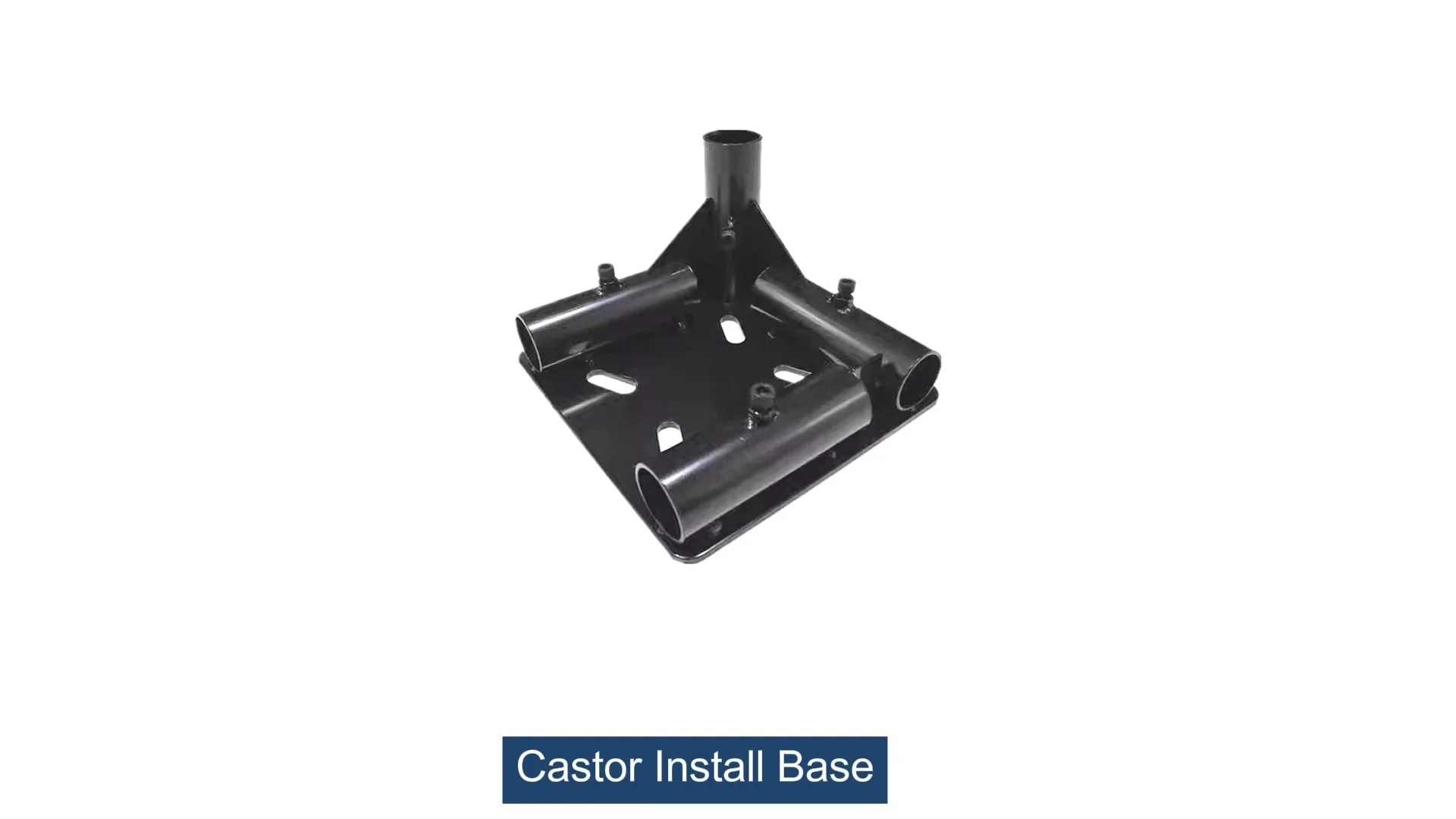
Castor Install Base
Castor install base, used for connection between pipe and castor, it can connect 4 pcs pipe by 1 pcs castor base, to make the structure strong and stable.
If you've ever stepped foot in a bustling manufacturing facility, warehouse, or assembly line, you've witnessed a symphony of movement: workers transporting materials, machines shifting positions, and tools gliding across floors to where they're needed most. Behind this seamless dance of productivity lies a host of unsung components—small, often overlooked parts that keep the entire operation running smoothly. One such component is the castor install base. It might not grab headlines, but without it, the mobility that defines modern lean manufacturing would grind to a halt. In this article, we'll pull back the curtain on this humble yet critical tool: what it is, how it works, and why it's indispensable in building efficient, flexible lean systems.
Defining the Castor Install Base: More Than Just a "Base"
Let's start with the basics. A castor install base, at its core, is a mounting component designed to securely attach casters (those small wheels you see on carts, workbenches, and trolleys) to the bottom of equipment. Think of it as the bridge between the caster and the device it's moving. Without a sturdy, well-designed base, even the highest-quality caster would wobble, slip, or fail under load—turning a mobile workstation into a safety hazard or a productivity bottleneck.
But calling it a "base" almost undersells its complexity. Modern castor install bases are engineered with precision, tailored to specific environments, load capacities, and equipment types. They come in a range of materials—aluminum, steel, plastic, and even stainless steel for corrosion-prone areas—and are shaped to distribute weight evenly, resist wear, and align perfectly with both the caster and the equipment's frame. Some are flat and compact, ideal for lightweight workbenches; others are reinforced with gussets or thickened edges to handle heavy-duty turnover trolleys or material racks. In short, it's not just a piece of metal or plastic—it's a critical link in the chain of mobility.
Key Components: What Makes a Castor Install Base Tick?
To understand why the castor install base matters, let's break down its main components. While designs vary by manufacturer and application, most bases share a few essential features:
- Mounting Plate: This is the flat, often rectangular or square surface that attaches directly to the bottom of the equipment (e.g., a workbench leg or trolley frame). It typically has pre-drilled holes to align with screws, bolts, or welding points, ensuring a tight, secure fit.
- Caster Housing: On the opposite side of the mounting plate, you'll find the housing—a recessed area or bracket where the caster's stem or top plate is inserted and locked in place. This housing is engineered to match the caster's specifications (e.g., stem diameter, top plate size) to prevent slippage.
- Reinforcement Features: Depending on the load capacity, some bases include ribs, flanges, or thickened edges to distribute weight evenly. For example, a base designed for a heavy-duty material rack (like the "material rack b (3 row and 3 floor)" from our keyword list) might have a double-layered mounting plate or gusseted corners to handle hundreds of pounds of inventory.
- Material Coatings: To resist rust, corrosion, or wear, many bases are coated with zinc, powder, or ESD (electrostatic discharge) materials. This is especially important in environments like electronics manufacturing, where ESD workbenches require components that won't generate static electricity.
Together, these components transform a simple "wheel holder" into a precision tool. The goal? To create a connection that's not just strong, but also stable, durable, and adaptable to the demands of lean manufacturing.

Functions of the Castor Install Base: Why It's Non-Negotiable
Now that we know what a castor install base is, let's dive into what it does . Its functions might seem straightforward—"hold the caster," right?—but in reality, it plays four critical roles in lean manufacturing environments:
1. Ensuring Stability Under Load
Imagine pushing a fully loaded turnover trolley across a factory floor. If the castor install base is flimsy or poorly attached, the trolley might sway, causing items to shift or fall. Worse, uneven weight distribution could lead to the base bending or breaking, leaving the trolley stranded. A well-designed base distributes the load evenly across the caster and the equipment frame, preventing wobbling even when loaded to capacity. For example, a base used with a "workbench e (single deck-without caster)" (which, when fitted with casters via the base, becomes mobile) must support not just the workbench itself, but also tools, materials, and sometimes even the weight of a worker leaning on it. Stability here isn't just about productivity—it's about safety.
2. Enabling Quick, Easy Mobility
Lean manufacturing thrives on flexibility. Lines reconfigure, workstations shift, and materials move to where value is being added—all to eliminate waste and reduce downtime. A castor install base makes this mobility possible by creating a secure, low-friction connection between the equipment and the floor. Without it, attaching casters would require drilling directly into equipment frames (risking damage) or using makeshift solutions (like zip ties or adhesive) that fail quickly. The base this process: pre-drilled holes align with standard caster sizes, and universal designs mean one base can work with multiple caster types (e.g., swivel, fixed, or brake-equipped casters from "caster and accessories" lines). This standardization cuts down on installation time and ensures consistency across the facility.
3. Protecting Equipment and Floors
It's not just about the caster and the base—floors matter too. A poorly mounted caster can scratch, dent, or damage factory floors, leading to costly repairs. The castor install base helps here by ensuring the caster is aligned vertically and horizontally, reducing drag and uneven pressure. For instance, bases with precision-machined housing prevent the caster from tilting, which would otherwise cause the wheel to "dig" into the floor. Additionally, by absorbing shocks (e.g., when a trolley hits a bump), the base protects the equipment itself from damage—extending the lifespan of workbenches, trolleys, and racks.
4. Supporting Lean Principles: From 5S to Just-In-Time (JIT)
At its heart, lean manufacturing is about eliminating waste—whether that's wasted time, wasted space, or wasted effort. The castor install base supports this mission in subtle but impactful ways. Take 5S, for example: the "Sort" and "Set in Order" stages require tools and materials to be stored in designated, accessible locations. A mobile workstation (fitted with casters via a base) can be moved to the assembly line during production and stored away when not needed, freeing up floor space. Similarly, in JIT manufacturing, materials must arrive exactly when they're needed. A turnover trolley with a reliable castor install base ensures materials glide from the warehouse to the line without delays, reducing inventory waste. In short, the base isn't just a mechanical part—it's a enabler of lean thinking.

Applications in Lean Manufacturing: Where You'll Find Castor Install Bases
Now that we understand the "why," let's explore the "where." Castor install bases are everywhere in lean manufacturing, popping up in nearly every piece of mobile equipment. Here are a few key applications:
1. Mobile Workbenches: The Backbone of Flexible Workstations
Walk into any lean-focused facility, and you'll likely see workbenches that aren't bolted to the floor. These mobile workstations—like the "workbench e (single deck-without caster)" mentioned earlier—rely on castor install bases to transform them from static tables into agile tools. For example, in electronics assembly, an ESD workbench might need to move between soldering stations, testing areas, and packing zones. The base ensures the workbench stays stable while in use but glides smoothly when repositioned. Even better, bases designed for ESD environments are made with conductive materials, preventing static buildup that could damage sensitive components.
2. Turnover Trolleys and Racks: Moving Materials Without Waste
In lean systems, "just-in-time" material delivery is key—no excess inventory cluttering the floor, just what's needed, when it's needed. Turnover trolleys and racks (like "turnover trolley and rack" from our keyword list) are the workhorses of this process, ferrying parts from warehouses to assembly lines. A castor install base here is non-negotiable. Consider a "material rack b (3 row and 3 floor)" loaded with heavy components: without a strong base, the rack could tip, or the casters could fail, leading to delays or injuries. Bases for these racks are often reinforced with steel or aluminum, with load capacities ranging from 300kg to over 1000kg, depending on the application.
3. Flow Racks and Conveyor Systems: Keeping Production Flowing
Flow racks—those gravity-fed shelves where materials slide forward as items are removed—are a staple of lean inventory management. While many flow racks are stationary, some are designed to be mobile (e.g., for short-distance repositioning or temporary storage). In these cases, castor install bases ensure the rack stays stable even as materials shift, preventing jams or spills. Similarly, smaller conveyor systems (like roller tracks) sometimes use mobile bases to adapt to changing production needs. For example, a "roller track placon mount for rail connection" might be part of a temporary conveyor line mounted on a mobile frame, with castor install bases allowing workers to adjust the line's position in minutes.
4. Specialized Equipment: From Cleanrooms to Heavy-Duty Manufacturing
Castor install bases aren't one-size-fits-all. In specialized environments, they're tailored to unique challenges. For instance, in food processing or pharmaceutical facilities, stainless steel bases resist corrosion from frequent cleaning. In cleanrooms, non-marking, low-particulate bases prevent contamination. Even in heavy industries like automotive manufacturing, where equipment can weigh tons, oversized bases with reinforced housing ensure casters can handle the load without buckling.

Choosing the Right Castor Install Base: Key Factors to Consider
Not all castor install bases are created equal. Choosing the right one depends on your specific needs—and getting it wrong can lead to instability, downtime, or even safety risks. Here are the critical factors to keep in mind:
1. Load Capacity: Know Your Weight Limits
This is the golden rule. Every base has a maximum load capacity, and exceeding it is a recipe for failure. To calculate your needs, add the weight of the equipment itself, the maximum materials it will carry, and any additional weight (e.g., workers leaning on a workbench). For example, a small turnover trolley might need a base rated for 200kg, while a heavy material rack could require 500kg or more. Always err on the side of caution—opting for a higher capacity than you think you need adds a margin of safety.
2. Material: Match the Environment
Bases come in aluminum, steel, plastic, and stainless steel, each with pros and cons:
- Aluminum: Lightweight and corrosion-resistant, ideal for clean environments or applications where weight matters (e.g., mobile workbenches). It's also easy to machine, making it customizable.
- Steel: Strong and durable, perfect for heavy loads. However, it's prone to rust unless coated (e.g., zinc-plated or powder-coated).
- Stainless Steel: The go-to for wet, corrosive, or sterile environments (e.g., food processing, labs). It's rust-proof but heavier and more expensive than aluminum.
- Plastic: Lightweight, inexpensive, and non-marking, but only suitable for light loads (e.g., small carts in offices or retail).
3. Caster Compatibility: Size and Type Matter
A base is only as good as its caster fit. Check that the base's housing matches the caster's stem diameter or top plate size. For example, a stem caster with a 10mm diameter won't fit a base designed for a 12mm stem. Also, consider the caster type: swivel casters require bases that allow 360° rotation without binding, while fixed casters need bases that keep the wheel straight. Mixing and matching incompatible parts is a common mistake—always check the manufacturer's specs.
4. Floor Conditions: Smooth vs. Rough Surfaces
If your facility has uneven floors, cracks, or debris, you'll need a base that can absorb shocks. Bases with thicker mounting plates or shock-absorbing features (e.g., rubber gaskets) help prevent the caster from getting stuck or the equipment from vibrating excessively. Conversely, on smooth concrete or tile floors, a lightweight aluminum base might be sufficient.
The Impact of Castor Install Bases on Lean Success: A Real-World Example
To bring this all to life, let's look at a hypothetical (but realistic) example. Imagine a small electronics manufacturer that recently adopted lean principles. Their goal: reduce changeover time between product models from 2 hours to 30 minutes. One of their biggest bottlenecks? Static workbenches. Each time they switched products, workers had to move tools, ESD mats, and testing equipment between stations—a process that ate up precious time.
The solution? Convert static workbenches into mobile ones using castor install bases. They chose aluminum bases (lightweight for easy movement) with ESD coatings (to protect sensitive components) and paired them with swivel casters with brakes (for stability when in use). Overnight, the factory floor transformed: workbenches now glide to where they're needed, tools stay with the station, and changeover time dropped to 25 minutes—beating their goal. The castor install base wasn't the star of the show, but it was the quiet enabler that made the entire transformation possible.
Common Misconceptions About Castor Install Bases
Despite their importance, castor install bases are often misunderstood. Let's debunk a few myths:
- "Any base will work as long as it fits the caster." Wrong. Load capacity, material, and environment matter. Using a plastic base for a heavy steel rack is a disaster waiting to happen.
- "It's just a metal plate—no need to invest in quality." Cheap bases cut corners on material thickness, hole alignment, and reinforcement. They might save money upfront, but they'll fail faster, leading to downtime and replacement costs.
- "Welding is better than using a base." Welding casters directly to equipment might seem stronger, but it's permanent. Lean manufacturing demands flexibility—if you need to replace a caster or reconfigure the equipment, welding makes that nearly impossible. Bases allow for easy swaps and adjustments.
A Comparison Table: Choosing the Right Base for Your Needs
| Base Material | Typical Load Capacity | Best For | Key Advantages | Potential Drawbacks |
|---|---|---|---|---|
| Aluminum | Light (50-300kg) | Mobile workbenches, ESD stations, cleanrooms | Lightweight, corrosion-resistant, customizable | Not ideal for extremely heavy loads |
| Steel (Zinc-Plated) | Medium to Heavy (300-1000kg) | Turnover trolleys, material racks, heavy machinery | High strength, durable, affordable | Prone to rust if coating is damaged |
| Stainless Steel | Medium to Heavy (300-800kg) | Food processing, pharmaceuticals, wet environments | Rust-proof, easy to clean, chemical-resistant | More expensive than steel or aluminum |
| Plastic | Very Light (Up to 50kg) | Office carts, retail displays, light-duty trolleys | Non-marking, inexpensive, lightweight | Low durability; not for industrial use |
Conclusion: The Quiet Hero of Lean Mobility
In the world of lean manufacturing, where every second and every square foot counts, the castor install base is a reminder that great systems are built on great details. It's not flashy, it's not complex, but it's essential. By securely connecting casters to equipment, it enables the mobility, flexibility, and efficiency that define lean success—turning static workplaces into dynamic, adaptable hubs of productivity. So the next time you see a mobile workbench glide by or a turnover trolley deliver materials right on time, take a moment to appreciate the castor install base. It may be small, but its impact on your bottom line is anything but.
Whether you're building a lean system from scratch or upgrading an existing one, don't overlook this humble component. Choose wisely, prioritize quality, and let the castor install base do what it does best: keep your operation moving forward.