- Company Articles
- Products and Technology
- Product knowledge
- What is a Castor Installation Base? Essential Guide for Flexible Manufacturing Systems

What is a Castor Installation Base? Essential Guide for Flexible Manufacturing Systems
Related Product
Castor Installation Base
Pipe fitting castor installation base,Well made, precise and strong. Made of high quality of steel,black painting surface treatment for greater resistance to corrosion. It is used for castor or foot lever connection with lean pipe.
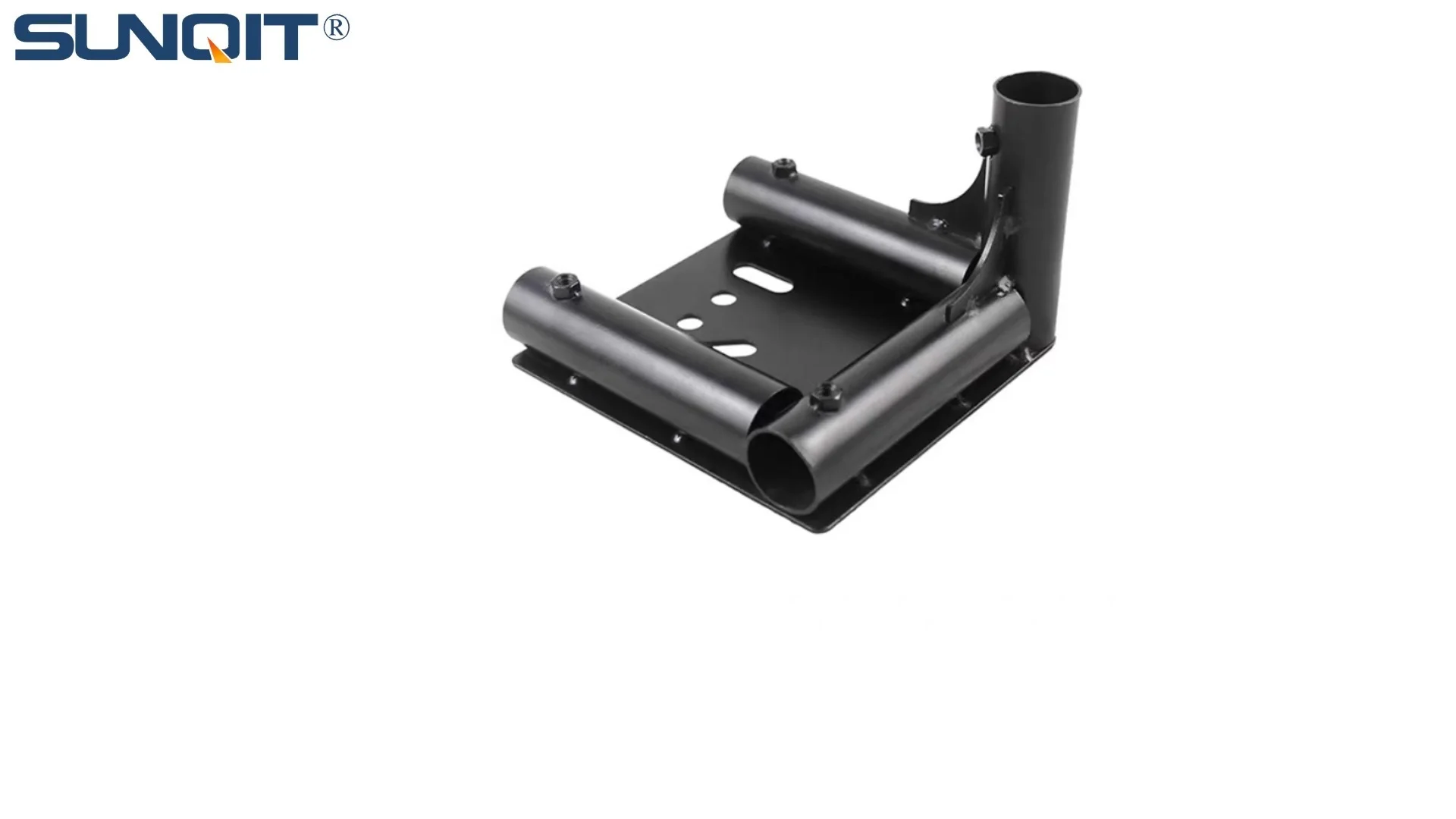
Walk into any modern factory, warehouse, or even a busy workshop, and you'll notice a silent hero of efficiency: the ability to move tools, workstations, and materials with ease. Whether it's a workbench gliding to a new assembly line, a trolley ferrying parts across the floor, or a rack shifting to make space for a new shipment, that smooth mobility doesn't happen by accident. Behind it all is a component that's easy to overlook but impossible to replace: the castor installation base. In this guide, we'll pull back the curtain on this unsung champion of flexible manufacturing, exploring what it is, how it works, and why it's a cornerstone of lean systems everywhere.
What Exactly is a Castor Installation Base?
Let's start with the basics. A castor installation base is the foundational component that connects a castor (that's the wheeled part) to the object it's meant to move—think workbenches, trolleys, racks, or even heavy machinery. It's the bridge between the stationary structure and the rolling caster, ensuring that weight is distributed evenly, movement is stable, and the entire setup can handle the demands of daily use.
But it's more than just a "plate with holes." A well-designed castor installation base is engineered to withstand specific loads, resist wear and tear, and adapt to different environments—whether that's a cleanroom with strict ESD requirements or a warehouse with rough concrete floors. It might be made of metal, plastic, or even composite materials, and its design can vary wildly depending on the job it needs to do. For example, a base used on a lightweight tool trolley will look very different from one supporting a heavy-duty assembly workbench in an automotive plant.
To put it simply: if the castor is the "feet" of a mobile structure, the installation base is the "ankle" that holds everything together and ensures those feet move in the right direction, at the right time, without fail.
Key Components: How Castor Installation Bases Work with Caster and Accessories
A castor installation base rarely works alone. It's part of a larger ecosystem of caster and accessories, each playing a role in mobility and stability. Let's break down the team:
The Castor Itself
The star of the show, the castor, is the wheeled unit that attaches to the base. Casters come in all shapes and sizes—swivel casters that rotate 360 degrees for maneuverability, rigid casters that only move forward and backward for straight-line stability, and even brake-equipped casters that lock the wheel in place when needed. The installation base must be compatible with the caster's mounting style (e.g., plate-mount, stem-mount) to ensure a secure fit.
Mounting Hardware
Bolts, screws, or rivets secure the castor to the base and the base to the structure (like a workbench or trolley). The base's design includes pre-drilled holes or slots to align with both the caster and the structure, ensuring that the connection is tight and won't loosen under vibration or heavy loads.
Reinforcement Features
Many bases include ribs, gussets, or thickened edges to add strength without adding unnecessary weight. These features prevent the base from bending or warping when supporting heavy objects, which is critical for safety and longevity.
Adjustment Mechanisms
Some advanced bases include leveling feet or height-adjustable components, which help stabilize the structure on uneven floors. This is especially useful in settings like workshops where the floor might have small cracks or slopes that could make a mobile workbench wobble.
Together, these components turn a static object into a mobile asset. And while the castor gets most of the attention for "moving" things, the installation base is the unsung coordinator, ensuring that all those parts work in harmony.

Materials Matter: Choosing the Right Base for the Job
Not all castor installation bases are created equal, and much of that comes down to material. The right material depends on the environment, load capacity, and even aesthetic preferences. Let's explore the most common options:
Steel: The Heavyweight Champion
Steel bases are the go-to for heavy-duty applications. Think manufacturing plants where workbenches hold hundreds of pounds of tools, or warehouses moving pallets of goods. Steel is strong, durable, and resistant to impact—perfect for environments where bumps and scrapes are part of the daily grind. However, steel can rust if not treated, so many steel bases come with a powder-coated finish or galvanization to protect against moisture.
Aluminum Profile: Lightweight and Corrosion-Resistant
For settings where weight and rust resistance matter, aluminum profile bases shine. Aluminum is significantly lighter than steel, making it ideal for mobile structures that need to be moved frequently (like a lightweight turnover trolley in a small workshop). It's also naturally corrosion-resistant, so it works well in humid environments or areas with occasional water exposure (think food processing plants or outdoor loading docks). Plus, aluminum can be anodized or painted for a clean, modern look, which is a bonus in settings where appearance matters, like retail stockrooms or office supply closets.
Plastic: Affordable and Versatile
Plastic bases are lightweight, inexpensive, and resistant to chemicals—making them a good fit for light-duty applications. Think of a small tool cart in a home garage or a mobile shelf in a lab where harsh cleaning agents are used. However, they're not ideal for heavy loads; plastic can flex or crack under too much weight, so they're best reserved for tasks where the total load is under 100 pounds.
Composite Materials: The Best of Both Worlds
Some bases blend materials—like a steel core wrapped in plastic—to combine strength and corrosion resistance. These are often used in specialized settings, such as medical facilities, where equipment needs to be both heavy-duty (to support medical tools) and easy to sanitize (hence the plastic coating).

Types of Castor Installation Bases: Finding the Perfect Fit
Just as materials vary, so do the types of castor installation bases. Each design is tailored to specific needs, from load capacity to maneuverability. Let's take a closer look at the most common types:
| Type of Base | Material | Typical Load Capacity | Best For | Pros | Cons |
|---|---|---|---|---|---|
| Flat Plate Base | Steel, Aluminum, Plastic | 50–500 lbs per base | Workbenches, Racks, Trolleys | Simple design, easy to install, versatile | May flex under extreme loads without reinforcement |
| Angled/Offset Base | Steel, Aluminum | 200–1,000 lbs per base | Heavy Machinery, Large Trolleys | Distributes weight evenly, reduces stress on casters | Bulkier, may limit ground clearance |
| Swivel Plate Base | Steel, Aluminum | 100–800 lbs per base | Maneuverable Trolleys, Medical Carts | Allows casters to swivel freely, tight turning radius | More complex design, higher cost |
| Leveling Base | Steel, Aluminum with Plastic Feet | 100–600 lbs per base | Workbenches on Uneven Floors | Adjustable height, stabilizes wobbling structures | Heavier than flat plates, requires periodic adjustment |
| Heavy-Duty Reinforced Base | Thick Steel, Steel-Composite | 1,000–5,000+ lbs per base | Industrial Machinery, Large Racks | Extreme load capacity, highly durable | Very heavy, difficult to install without tools |
Flat Plate Bases: The All-Rounder
The most common type, flat plate bases are simple rectangles or squares of material with holes for mounting. They're affordable, easy to source, and work for just about any light to medium-duty application. You'll find them on everything from office chairs to warehouse trolleys. Their simplicity is their strength—fewer parts mean fewer things to break—but they may need reinforcement (like added ribs) for heavier loads.
Angled/Offset Bases: For Heavy Loads and Stability
Angled bases tilt slightly, positioning the caster's axle closer to the edge of the structure. This design distributes weight more evenly across the caster, reducing stress and making it easier to move heavy objects. They're a favorite in automotive plants, where workbenches loaded with engine parts need to be shifted without straining workers.
Swivel Plate Bases: Maneuverability First
These bases have a rotating plate that allows the caster to swivel independently of the structure. This is what makes a shopping cart or a hospital gurney so easy to turn in tight spaces. Swivel plate bases are a must for environments where mobility and agility are key, like busy warehouses or crowded assembly lines.
Leveling Bases: Stability on Uneven Ground
Imagine a workshop with a floor that's seen better days—cracks, dips, and uneven concrete. A standard base might make a workbench wobble, which is not only annoying but dangerous when using power tools. Leveling bases solve this with adjustable feet that can be screwed up or down to compensate for floor irregularities. They're a small addition that makes a big difference in safety and precision.

Why Castor Installation Bases Are Critical for Lean Systems
If you've heard of "lean manufacturing," you know its core goal is to eliminate waste—whether that's wasted time, wasted space, or wasted effort. Castor installation bases play a surprisingly big role in making lean systems work. Here's how:
Flexible Workflow Design
Lean systems thrive on adaptability. A factory floor might need to reconfigure assembly lines overnight to meet a new order, or a warehouse might need to shift racks to accommodate seasonal inventory. With mobile structures (thanks to castor installation bases), teams can rearrange spaces in hours instead of days. No more permanent fixtures bolted to the floor; instead, workbenches, trolleys, and racks become modular components that move with the needs of the business.
Reduced Material Handling Time
In traditional setups, workers might spend hours carrying parts from one station to another. With mobile trolleys (mounted on castor installation bases), materials can be transported directly to the assembly line, cutting down on walking time and fatigue. This not only speeds up production but also reduces the risk of injuries from heavy lifting.
Space Optimization
Warehouses and factories pay by the square foot, so wasted space is wasted money. Mobile racks and workbenches can be tucked away when not in use, freeing up floor space for other tasks. For example, a turnover trolley loaded with finished goods can be moved to a storage area at the end of a shift, leaving the assembly line clear for cleaning or maintenance.
Improved Ergonomics
Lean systems prioritize worker well-being, and mobility plays a part here too. A workbench on castor installation bases can be adjusted to the height of each worker, reducing strain on backs and shoulders. Trolleys can be positioned at waist level, so employees don't have to bend or reach to load/unload items. Happier, healthier workers are more productive—and that's a win for any lean system.
In short, castor installation bases turn static, rigid workspaces into dynamic, responsive environments—exactly what lean manufacturing is all about.
Real-World Applications: Where Castor Installation Bases Shine
To truly understand the impact of castor installation bases, let's look at some everyday applications where they make a tangible difference:
Workbenches: The Heart of the Workshop
A workbench is where the magic happens—whether it's assembling electronics, repairing machinery, or crafting prototypes. But a fixed workbench limits where that magic can occur. Add a castor installation base, and suddenly that workbench can move to the material storage area, then to the testing station, then back to the shipping zone—all without disrupting workflow. In electronics manufacturing, for example, ESD workbenches (designed to prevent static electricity damage) often use aluminum profile bases with swivel casters, allowing them to glide between soldering stations and inspection areas with ease.
Turnover Trolley and Rack: Moving Materials Efficiently
Turnover trolleys and racks are the workhorses of warehouses and factories, ferrying raw materials,, and finished goods. A turnover trolley with a sturdy steel castor installation base can carry hundreds of pounds of inventory without tipping, while a rack on swivel casters can be repositioned to create temporary storage lanes during peak seasons. In automotive plants, for instance, turnover trolleys loaded with car parts use heavy-duty reinforced bases to ensure that even bulky items like engine blocks are transported safely and smoothly.
Medical Equipment: Precision and Mobility
Hospitals and clinics rely on mobile carts for everything from medication delivery to surgical tools. These carts need to be both stable (to prevent spills) and maneuverable (to navigate tight hospital corridors). Castor installation bases here often include locking mechanisms and non-marking wheels (to protect floors), ensuring that carts stay put during procedures and move quietly when needed.
Retail and Hospitality: Adapting to Customer Needs
Even outside of manufacturing, castor installation bases play a role. Retail stores use mobile display racks to rearrange merchandise for sales events, while restaurants use rolling food carts to serve guests in outdoor patios. These bases are often made of aluminum or plastic for lightweight mobility and easy cleaning—key in settings where appearance and hygiene matter.
How to Choose the Right Castor Installation Base: A Buyer's Guide
With so many options available, selecting the right castor installation base can feel overwhelming. But by focusing on a few key factors, you can narrow down the choices and find the perfect fit for your needs. Here's what to consider:
1. Load Capacity
Start with the basics: how much weight will the base need to support? This includes the weight of the structure itself (e.g., the workbench) plus the maximum load it will carry (e.g., tools, materials). Always choose a base with a load capacity higher than your estimated needs—overloading a base is a safety hazard and will shorten its lifespan. For example, if your workbench and tools weigh 300 lbs, opt for a base rated for at least 400 lbs to be safe.
2. Environment
Where will the base be used? Indoor or outdoor? Clean and dry, or humid and dirty? For outdoor use or wet environments, aluminum or stainless steel bases are better than steel (which can rust). In cleanrooms or labs, plastic or composite bases may be required to avoid dust buildup. If the floor is rough (like a warehouse with concrete seams), look for bases with shock-absorbing features to reduce vibration.
3. Mobility Needs
How often will the structure be moved? And how much maneuverability do you need? For structures that stay in one place most of the time but need occasional repositioning, rigid casters on a flat plate base may be enough. For frequent movement or tight spaces, swivel casters on a swivel plate base are a better bet. If you need to lock the structure in place, ensure the base is compatible with brake-equipped casters.
4. Compatibility
Check that the base is compatible with both the caster and the structure. Casters come with different mounting styles (plate, stem, bolt-hole pattern), so the base must match. Similarly, the base's mounting holes should align with the structure's frame—measure twice, buy once!
5. Budget
While it's tempting to cut costs with a cheaper base, remember that this is a critical safety component. A low-quality base may save money upfront but could lead to costly repairs (or accidents) down the line. Invest in a base that meets your load and environment needs, even if it costs a bit more—your team's safety and productivity are worth it.
Maintenance Tips: Keeping Your Castor Installation Bases in Top Shape
Like any component, castor installation bases need regular care to perform their best. Here are some simple maintenance tips to extend their lifespan:
Inspect Regularly
Check bases for cracks, bends, or loose hardware at least once a month (more often in high-use environments). Tighten any loose bolts or screws, and replace bases that show signs of structural damage—don't try to "fix" a bent base with a hammer; it will only weaken further.
Clean and Lubricate
Dirt and debris can build up in the base's mounting holes or around the caster attachment points, leading to corrosion or stuck parts. Wipe down steel bases with a damp cloth and apply a rust inhibitor if needed. For aluminum bases, a mild soap and water solution is usually enough. If your base has moving parts (like swivel plates), lubricate them with a silicone-based spray to keep movement smooth.
replace Worn Accessories
Casters and mounting hardware wear out faster than the base itself. If a caster wheel becomes damaged or a bolt strips, replace it immediately—don't wait for the base to fail. Many manufacturers sell replacement caster and accessories, so you won't need to buy a whole new base.
Avoid Overloading
Stick to the base's rated load capacity. Even if it "feels" like it can handle more, overloading leads to premature wear and increases the risk of the base bending or breaking. Post load limits near mobile structures as a reminder for your team.
Conclusion: The Small Component with a Big Impact
Castor installation bases may not be the most glamorous components in a manufacturing or warehouse setup, but they're undeniably essential. They turn static structures into dynamic assets, enabling the flexibility that modern businesses need to stay competitive. From workbenches that glide between stations to turnover trolleys that carry the weight of production, these bases are the quiet enablers of efficiency, safety, and lean systems.
When choosing a castor installation base, remember to prioritize load capacity, environment, and compatibility. Invest in quality, maintain regularly, and your bases will reward you with years of reliable service. After all, in the world of manufacturing and logistics, it's often the smallest parts that make the biggest difference.
So the next time you see a workbench glide across a factory floor or a trolley zip through a warehouse, take a moment to appreciate the castor installation base. It may be out of sight, but it's always hard at work—keeping your operations moving forward.