- Company Articles
- Products and Technology
- Product knowledge
- What Is a Five Way Straight Lean Pipe Joint Chrome? Definition & Key Features

What Is a Five Way Straight Lean Pipe Joint Chrome? Definition & Key Features
Related Product
Five Way Straight Lean Pipe Joint Chrome
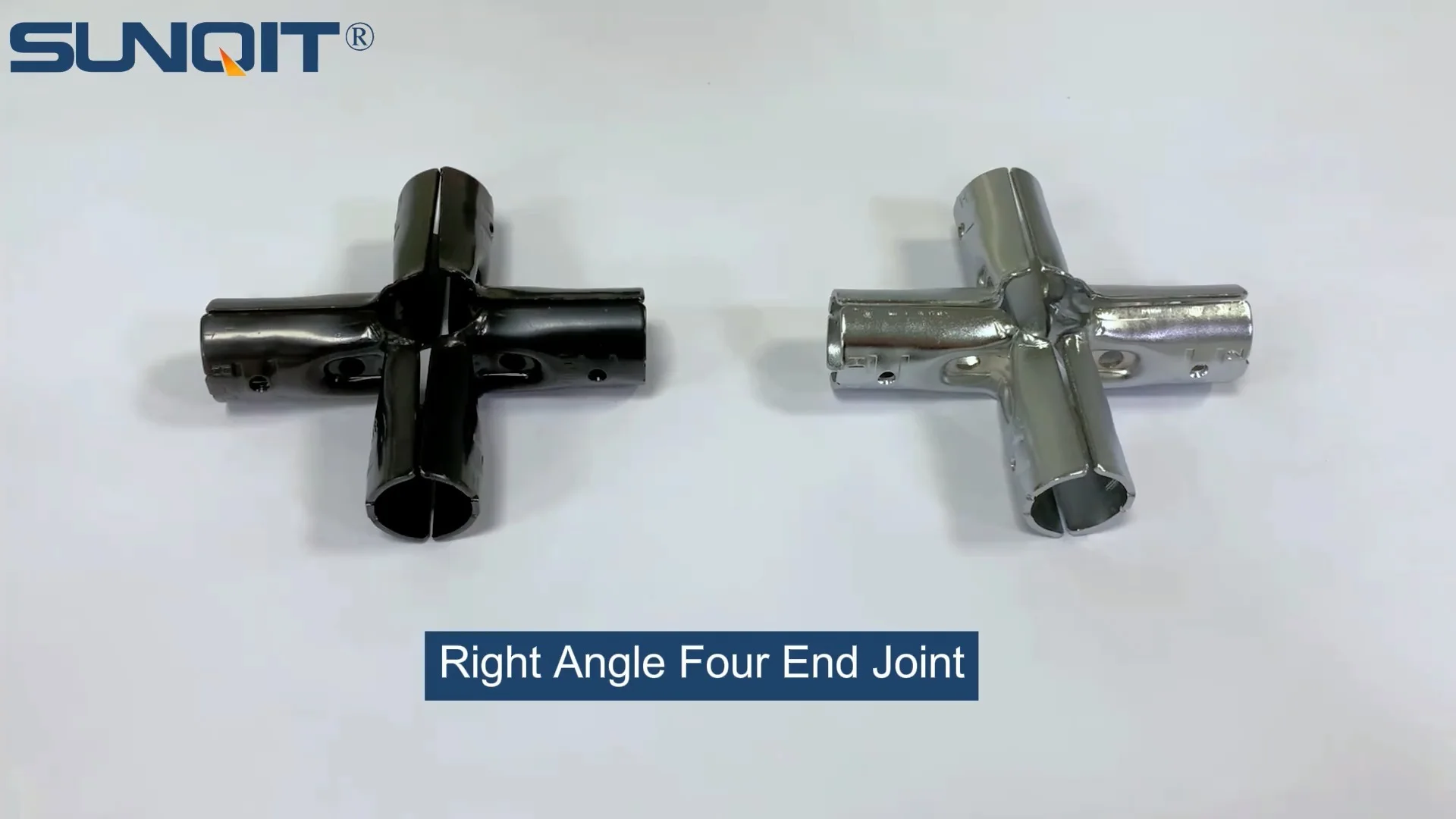
Five way straight lean pipe joint, for 5 pcs 28mm lean pipe connect in straight angle,which used widely in workbench, flow rack, hand trolley frame connection.
The unsung hero of modular efficiency in modern production lines
Introduction: The Backbone of Lean Manufacturing
Walk into any well-run manufacturing facility, warehouse, or assembly plant, and you'll notice something subtle but powerful: the layout feels intentional. Workbenches are positioned for easy reach, material racks glide smoothly, and conveyor lines flow without bottlenecks. Behind this seamless orchestration lies a network of unassuming components—none more critical than the joints that hold everything together. Today, we're shining a spotlight on one such component that quietly elevates productivity: the five way straight lean pipe joint chrome.
Lean manufacturing isn't just a buzzword; it's a philosophy centered on minimizing waste, maximizing value, and adapting quickly to change. At its core are modular systems built from lean pipes and joints—flexible, durable, and endlessly customizable. These systems let teams reconfigure workspaces on the fly, scale operations up or down, and keep production lines humming even as demands shift. And in this ecosystem, the five way straight lean pipe joint chrome stands out as a workhorse, enabling connections that turn simple pipes into robust, multi-functional structures.
Whether you're a production manager looking to optimize your assembly line, a facility engineer tasked with upgrading material handling, or simply curious about the building blocks of efficient workflows, understanding this joint will give you a new appreciation for the "small parts, big impact" reality of manufacturing. Let's dive in.
Definition: What Exactly Is a Five Way Straight Lean Pipe Joint Chrome?
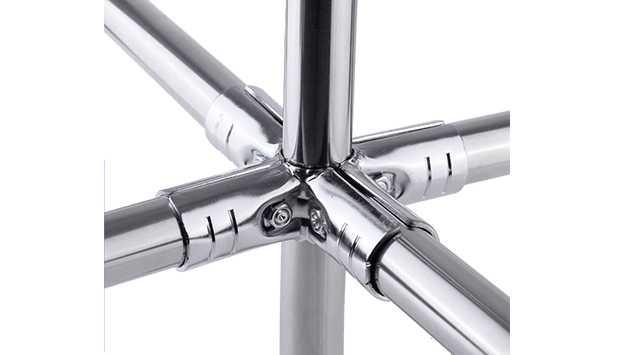
Let's start with the basics. A five way straight lean pipe joint chrome is a specialized connector designed to link lean pipes—hollow tubes commonly used in modular industrial structures—in a straight-line configuration. As the name suggests, it features five connection points, allowing you to attach up to five lean pipes along a single axis. Picture a central hub with five equally spaced openings, each sized to fit standard lean pipes, all aligned in a straight line. This design makes it ideal for creating long, stable runs of pipework, such as the supports for a material rack, the frame of a workbench, or the backbone of a conveyor system.
The "chrome" in its name refers to its finishing: the joint is coated in a layer of chrome, which adds both durability and a sleek, professional look. Unlike raw metal joints that might rust or corrode over time, the chrome plating acts as a barrier, protecting the underlying material (typically steel) from moisture, chemicals, and wear—essential for environments where reliability is non-negotiable.
But what truly sets this joint apart is its role in modularity. In traditional manufacturing setups, changing a workspace might mean welding new frames or drilling holes, a time-consuming and permanent process. With lean pipe joints like this five way straight chrome model, you can assemble, disassemble, and reconfigure structures in minutes, using nothing more than a hex key or wrench. It's like building with industrial-grade Legos—only sturdier and designed for the demands of a factory floor.
Key Features: Why This Joint Stands Out
To understand why the five way straight lean pipe joint chrome is a favorite among production teams, let's break down its most important features. These aren't just technical specs—they're the reasons this joint turns "good" workflows into "great" ones.
1. Straight-Line Five-Way Configuration: Maximizing Connection Efficiency
At first glance, you might wonder: why five connections? Why not three, four, or six? The answer lies in balance. A five-way straight design hits the sweet spot between versatility and structural integrity. By allowing five pipes to extend from a single joint along a straight line, it eliminates the need for multiple overlapping joints, reducing clutter and weak points in the structure. For example, if you're building a material rack with three rows of shelves, this joint lets you connect the vertical supports, horizontal beams, and cross-braces in one central point—no extra hardware required.
This straight-line setup also ensures that weight is distributed evenly across the connected pipes, preventing stress concentrations that could lead to bending or failure over time. Whether you're supporting light components or heavy machinery parts, this even distribution is key to long-term stability.
2. Chrome Plating: Durability Meets Resistance
Factory floors are tough environments. Oils, coolants, humidity, and regular cleaning can take a toll on metal components. That's where the chrome plating comes in. Chrome isn't just for aesthetics (though it does give the joint a clean, professional finish); it's a functional upgrade. The plating forms a hard, non-porous layer that resists corrosion, scratches, and chemical damage. This means the joint will maintain its strength and appearance even after years of heavy use—no rust, no flaking, no need for frequent replacements.
For facilities that prioritize cleanliness (like those in the automotive or electronics industries), chrome's smooth surface is also easier to wipe down, helping maintain compliance with hygiene standards. It's a small detail, but one that adds up to lower maintenance costs and fewer disruptions.
3. Universal Compatibility: Works with Standard Lean Pipes
One of the biggest frustrations in industrial setups is dealing with incompatible parts. A joint from one supplier might not fit a pipe from another, forcing you into costly, proprietary systems. The five way straight lean pipe joint chrome avoids this headache by adhering to standard lean pipe dimensions. Most models are designed to fit 28mm diameter lean pipes (the industry standard), meaning you can mix and match with pipes, brackets, and accessories from different manufacturers without issue.
This compatibility extends to other lean pipe joints, too. Need to add a three-way joint for a corner or a swivel joint for a flexible section? No problem—this five way joint plays well with others, letting you build truly custom structures without being locked into a single brand.
4. Tool-Free (or Minimal-Tool) Installation: Speed and Flexibility
Remember the days of welding metal frames or drilling holes to assemble a workbench? Those days are long gone, thanks to joints like this one. The five way straight lean pipe joint chrome uses a simple clamping mechanism: insert the pipe into the joint, tighten the set screw (usually with a hex key), and you're done. No welding, no cutting, no specialized skills required. A single worker can assemble a basic structure in minutes, and reconfiguring it later is just as fast.
This speed is a game-changer for facilities that need to adapt quickly. Maybe a new product line requires a longer conveyor, or a seasonal rush demands extra workbenches—with this joint, you can make those changes on the fly, without halting production for hours (or days) of setup.
5. High Load Capacity: Strength You Can Trust
Looks and flexibility are great, but at the end of the day, a joint needs to hold weight. The five way straight lean pipe joint chrome doesn't disappoint here. Built from high-grade steel (before chrome plating), it's designed to handle significant loads—often up to 50kg per connection point, depending on the pipe thickness and overall structure. That means you can safely stack heavy components, mount tools, or support full bins of materials without worrying about the joint bending or failing.
For context, that's more than enough to support the average weight of automotive parts, electronic assemblies, or even small machinery. When paired with thick-walled lean pipes and proper bracing, structures built with these joints can rival the strength of welded metal frames—with the added bonus of being completely modular.

How It Compares: Five-Way vs. Other Lean Pipe Joints
To really appreciate the five way straight lean pipe joint chrome, it helps to see how it stacks up against other common lean pipe joints. After all, not every project needs five connections—and some might need more flexibility than a straight line allows. Let's break down the differences in a quick comparison:
| Joint Type | Number of Connections | Configuration | Best For | Key Limitation |
|---|---|---|---|---|
| Three-Way Lean Pipe Joint | 3 | 90° angles (e.g., corner of a workbench) | Basic frames, right-angle structures | Limited to 3 connections; not ideal for straight-line runs |
| Four-Way Straight Lean Pipe Joint | 4 | Straight line (two in each direction) | Short conveyor sections, small material racks | Fewer connections than five-way; may require extra joints for longer runs |
| Five-Way Straight Lean Pipe Joint Chrome | 5 | Straight line (five pipes in a single axis) | Long material racks, extended workbenches, multi-level conveyor supports | Fixed straight line; no angular connections |
| Swivel Lean Pipe Joint | 2-3 | Adjustable angles (0-180°) | Curved conveyors, flexible workstations | Lower load capacity than fixed joints; more moving parts |
As you can see, the five way straight chrome joint fills a unique niche: it's the go-to for projects that need multiple straight-line connections without sacrificing strength or simplicity. While swivel joints offer flexibility and three-way joints handle corners, this joint is all about maximizing connection points in a linear setup—making it indispensable for large, straight structures like extended workbenches or multi-row material racks.
Real-World Applications: Where This Joint Shines
Enough theory—let's talk about how the five way straight lean pipe joint chrome actually gets used on the factory floor. These aren't just abstract concepts; they're the building blocks of systems that keep production moving, day in and day out.
Example 1: Lean Pipe Workbenches with Multi-Tier Storage
Imagine a busy electronics assembly line where workers need quick access to components, tools, and finished products. A basic workbench might have a single surface, but with the five way straight lean pipe joint chrome, you can build a multi-tiered workstation: a main work surface, a lower shelf for bins of screws and wires, an upper rack for tools, and side extensions for pallets or extra materials. By using this joint at key points, you connect all these tiers with straight, sturdy pipes, ensuring the bench stays stable even when fully loaded.
And when the product line changes? No problem—loosen the joints, rearrange the pipes, and you've got a brand-new workbench in an hour. No need to buy a whole new setup.
Example 2: Material Racks for High-Volume Storage
Warehouses and distribution centers thrive on organization, especially when dealing with hundreds of SKUs. A material rack built with five way straight lean pipe joints can have three, four, or even five vertical columns connected by horizontal beams—all in a straight line—creating rows and rows of storage space. The five-way joints at the intersections ensure that each beam is securely attached to the columns, preventing sagging even with heavy boxes stacked high.
For example, a "Material Rack B (3 row and 3 floor)" (a common setup in many facilities) uses these joints to connect the vertical supports to the horizontal shelves, ensuring each level can hold up to 30kg of materials. When inventory needs shift, you can add or remove shelves by simply adjusting the joint positions—no cutting or welding required.
Example 3: Conveyor Systems for Smooth Material Flow
Conveyors are the arteries of production lines, moving parts from one station to the next. To keep them running smoothly, the frame that supports the conveyor belt (or roller track) needs to be rock-solid. The five way straight lean pipe joint chrome is perfect for this: it connects the vertical legs, horizontal cross-braces, and side rails of the conveyor frame in straight lines, creating a rigid structure that won't wobble or shift under the weight of moving materials.
Pair it with roller track (another keyword from our list!) and you've got a system that glides materials from assembly to packaging without jams or delays. And if you need to extend the conveyor later? Just add more pipes and joints—no need for a custom frame.
Why Chrome? The Advantages of Chrome-Plated Joints
We've mentioned chrome plating a few times, but it's worth diving deeper into why this finish matters. After all, you can find lean pipe joints in plain steel, plastic, or even aluminum—so what makes chrome special?
Corrosion Resistance: A Must for Harsh Environments
Steel is strong, but it's prone to rust when exposed to moisture or chemicals. In factories where coolants, oils, or cleaning agents are used daily, a plain steel joint would start to corrode within months, weakening the structure and creating safety hazards. Chrome plating acts as a barrier, sealing the steel from these elements. Even if the plating gets a small scratch, the underlying steel is protected by a thin layer of chromium oxide that forms naturally, preventing further rust.
Low Maintenance: Less Time Cleaning, More Time Producing
Chrome's smooth, non-porous surface is incredibly easy to clean. A quick wipe with a damp cloth removes oil, dust, or grime—no scrubbing required. This is a huge plus for facilities that follow strict cleanliness protocols, like those in the medical device or food packaging industries. Unlike painted joints, which can chip and trap dirt, chrome stays clean and bright with minimal effort.
Professional Appearance: Small Details, Big Impressions
First impressions matter, especially in facilities that host clients or auditors. A production line filled with rusty, mismatched joints can give the impression of disorganization—even if the workflow is efficient. Chrome-plated joints, on the other hand, have a sleek, uniform look that signals attention to detail. They make the entire workspace feel more polished and professional, which can boost team morale and impress visitors.
Choosing the Right Supplier: What to Look For
Now that you know why the five way straight lean pipe joint chrome is so valuable, how do you ensure you're getting a quality product? Not all joints are created equal—here are a few tips for choosing the right supplier:
- Material Quality: Look for joints made from high-carbon steel (not cheap alloys) before plating. Thicker steel means higher load capacity and longer life.
- Chrome Plating Thickness: A good chrome plating should be at least 0.001 inches thick. Ask suppliers for plating specs—thinner plating is more prone to chipping.
- Compatibility Testing: Ensure the supplier's joints work with standard 28mm lean pipes. Some low-quality joints have poorly sized holes that loosen over time.
- Load Capacity Ratings: Reputable suppliers will provide clear load capacity data (e.g., "50kg per connection point"). Avoid suppliers that don't specify this—you don't want to guess about strength.
- Customer Support: Lean systems can be complex. Choose a supplier that offers technical help, whether it's helping you design a structure or troubleshooting assembly issues.
Many suppliers also offer "lean pipe and accessories" bundles, which include pipes, joints, casters, and other components—great for ensuring everything works together seamlessly. And if you're buying in bulk (e.g., for a large facility upgrade), look for wholesale options to save on costs—keywords like "lean pipe wholesale" or "lean pipe joint wholesale" can help you find these deals.
Conclusion: Small Joint, Big Impact
At the end of the day, the five way straight lean pipe joint chrome is more than just a piece of hardware. It's a symbol of the lean manufacturing philosophy: simple, efficient, and adaptable. By allowing teams to build, modify, and rebuild structures with ease, it turns static production lines into dynamic ecosystems that can keep up with the demands of modern business.
Whether you're assembling a workbench, a material rack, or a conveyor system, this joint brings three key benefits to the table: strength to handle heavy loads, durability to withstand tough environments, and flexibility to adapt to change. And when paired with other lean components—like aluminum pipes, roller tracks, or ESD workbenches—it becomes part of a complete solution that reduces waste, improves workflow, and empowers workers to do their best.
So the next time you walk through a factory or warehouse and admire how smoothly everything runs, take a closer look at the joints holding it all together. Chances are, you'll spot a five way straight lean pipe joint chrome—quietly doing its job, making efficiency look easy.