- Company Articles
- Products and Technology
- Product knowledge
- What is a Five Way Straight Lean Pipe Joint? Definition & Core Functions

What is a Five Way Straight Lean Pipe Joint? Definition & Core Functions
Related Product
Five Way Straight Lean Pipe Joint
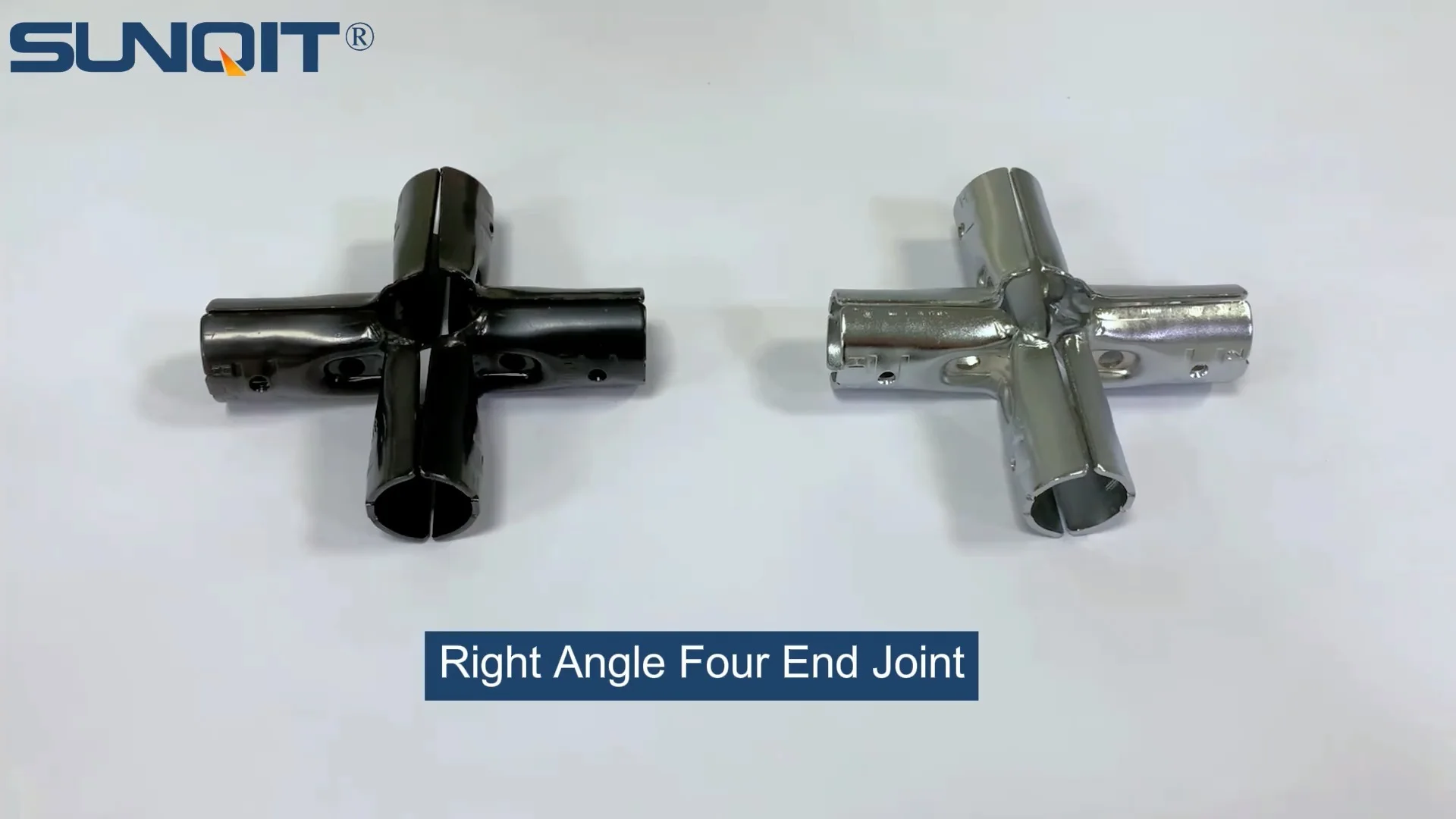
Five way straight lean pipe joint, for 5 pcs 28mm lean pipe connect in straight angle,which used widely in workbench, flow rack, hand trolley frame connection.
Introduction: The Backbone of Lean Manufacturing Systems
In the fast-paced world of modern manufacturing, efficiency isn't just a buzzword—it's the lifeblood of success. Every second saved, every square foot optimized, and every process streamlined translates to better productivity, lower costs, and happier teams. At the heart of this pursuit lies the concept of "lean manufacturing," a philosophy built on eliminating waste, enhancing flexibility, and empowering workers to adapt quickly to changing demands. And if lean manufacturing were a body, its skeleton would be the modular systems that hold everything together—systems built on components like lean pipes, joints, workbenches, and flow racks. Today, we're zooming in on a small but mighty part of this skeleton: the Five Way Straight Lean Pipe Joint. It might not grab headlines, but this unassuming component plays a critical role in making lean systems truly adaptable and efficient. Let's dive in to understand what it is, how it works, and why it matters in factories, warehouses, and assembly lines around the world.
Defining the Five Way Straight Lean Pipe Joint
First things first: What exactly is a Five Way Straight Lean Pipe Joint? Put simply, it's a specialized connector designed to link multiple lean pipes together in a straight, multi-directional configuration. Think of it as a "central hub" that allows up to five lean pipes to meet at a single point, creating stable, customizable structures. Unlike basic two-way or three-way joints, which limit connections to two or three directions, the five-way design opens up a world of possibilities for building complex, yet modular, setups.
But to truly appreciate this joint, we need to start with its foundation: the lean pipe system. A lean pipe system (often called a "kitchen pipe system" in some regions for its early use with basic metal pipes) is a collection of pipes, joints, and accessories that can be assembled into almost any structure—from workbenches and material racks to conveyor lines and assembly stations. The magic of these systems lies in their modularity: they're easy to build, modify, and disassemble without welding, heavy tools, or specialized skills. And at the center of this flexibility are the joints, which act as the "glue" holding the pipes together. Among these joints, the Five Way Straight Lean Pipe Joint stands out for its ability to enable more intricate, space-efficient designs.

Design & Materials: Built for Durability and Versatility
At first glance, a Five Way Straight Lean Pipe Joint might look like a simple metal piece, but its design is the result of careful engineering to balance strength, ease of use, and compatibility. Let's break down its key features:
Shape & Structure: Most five-way straight joints have a central body with five equally spaced ports (or "arms") extending outward in a straight, radial pattern. Picture a star with five points, where each point is a hollow tube designed to fit over the end of a lean pipe. The central body is typically cylindrical or hexagonal, providing a stable base for the ports. Some designs include internal threads or clamping mechanisms to secure the pipes in place, ensuring a tight, wobble-free connection.
Materials: These joints are usually made from durable metals to withstand the rigors of industrial use. Common materials include steel (often coated with zinc or chrome for corrosion resistance) or stainless steel, which is ideal for environments where cleanliness or moisture resistance is critical (like food processing or pharmaceutical facilities). In recent years, aluminum variants have also grown in popularity, thanks to their lighter weight and resistance to rust—making them a great choice for applications where mobility (like turnover trolleys) is a priority.
Surface Treatment: To enhance longevity, many joints undergo surface treatments like powder coating, chrome plating, or anodization. These treatments protect against scratches, chemicals, and daily wear and tear, ensuring the joint remains functional even in busy factory settings.

Core Functions: What Makes It Indispensable?
Now, let's get to the heart of the matter: what does a Five Way Straight Lean Pipe Joint actually do ? Its core functions can be summed up in three key roles: enabling multi-directional connections, ensuring structural stability, and supporting the adaptability of lean pipe systems.
1. Multi-Directional Connection: Beyond Basic Joints
The most obvious function of a five-way joint is to connect up to five lean pipes at once. This might sound like a small upgrade from three-way or four-way joints, but in practice, it's a game-changer. Imagine building a workbench: with a three-way joint, you might connect the legs, a shelf, and a tool rail—but with a five-way joint, you could add a second shelf, a side bin for parts, and a overhead light mount, all from a single central point. This reduces the number of joints needed, simplifies assembly, and creates a cleaner, more integrated structure.
In flow racks, for example, which are used to store and transport materials between workstations, five-way joints allow for the creation of multi-tiered, multi-lane setups. A single joint can connect the vertical support pipes, horizontal roller tracks (for material flow), and side rails (to prevent items from falling off)—all in one place. This not only saves space but also ensures the rack is sturdy enough to hold heavy boxes or components.
2. Structural Stability: Keeping Systems Rigid Under Load
In manufacturing, "wobbly" structures are more than just annoying—they're dangerous. A workbench that shakes during assembly can lead to errors or injuries; a material rack that sways might cause products to topple. The Five Way Straight Lean Pipe Joint is engineered to prevent this by distributing weight evenly across all connected pipes. Its central body acts as a reinforcement point, ensuring that force from one pipe (like the weight of a heavy tool on a workbench) is spread to the others, reducing stress on any single connection.
This stability is enhanced by the tight fit between the joint and the pipes. Most joints use a clamping mechanism (like a setscrew or a bolt that tightens against the pipe) to create a friction-based hold. When properly secured, the joint and pipes act as a single unit, able to support significant loads—often up to 50-100 kg per connection, depending on the material and pipe diameter.
3. Compatibility: Playing Well With Others
A lean pipe system is only as good as its ability to work with other components, and the Five Way Straight Lean Pipe Joint is designed to be a team player. It's compatible with standard lean pipe sizes (most commonly 28mm or 30mm in diameter, though this can vary by manufacturer) and works seamlessly with other joint types (two-way, three-way, swivel joints, etc.). This means you can mix and match joints to create exactly the structure you need, without being locked into a single brand or design.
For example, you might use a five-way joint as the base of a workbench, then add three-way joints to extend a shelf, and swivel joints to attach a fold-down table that can be tucked away when not in use. This compatibility is what makes lean pipe systems so versatile—they grow and change with your needs, and the five-way joint is a key enabler of that flexibility.

Applications: Where You'll Find the Five Way Straight Lean Pipe Joint in Action
Now that we understand how the Five Way Straight Lean Pipe Joint works, let's look at where it shines in real-world settings. From factories to warehouses, this joint is quietly powering some of the most essential structures in lean operations:
Workbenches: The Heart of Assembly Lines
Workbenches are the command centers of manufacturing—where parts are assembled, tools are stored, and workers spend most of their day. A well-designed workbench needs to be sturdy, organized, and tailored to the task at hand. Here, the five-way joint excels. For example, a electronics assembly workbench might use a five-way joint to connect:
- Four vertical legs (one at each corner of the bench top)
- A horizontal shelf halfway up for storing tools
- A side rail for hanging bins of small parts
By using a five-way joint at the corners, the bench gains extra stability, and the added shelf and rail keep tools and parts within arm's reach—eliminating wasted time searching for supplies.
Flow Racks: Keeping Materials Moving
Flow racks (or "gravity racks") are designed to let materials slide from the back to the front via roller tracks, ensuring first-in, first-out (FIFO) inventory management. They're essential in warehouses and production lines where quick access to parts is critical. Five-way joints are often used at the intersections of vertical supports and horizontal roller tracks. For instance, a three-row, three-floor flow rack (like "Material Rack B" in some catalogs) might use five-way joints to connect:
- Vertical support pipes (to hold the rack upright)
- Horizontal pipes that support the roller tracks (one for each row)
- Cross-braces for added stability (especially in taller racks)
This setup ensures the rack can hold multiple levels of products without sagging, and the roller tracks (often made with plastic or steel wheels) glide smoothly, reducing the effort needed to retrieve items.
Turnover Trolleys & Mobile Carts
In facilities where materials need to be moved between stations (like from a warehouse to an assembly line), turnover trolleys are indispensable. These carts need to be lightweight enough to push, yet strong enough to carry heavy loads. Five-way joints help here by creating a rigid frame that can support shelves, bins, or even small conveyors. For example, a trolley used to transport automotive parts might have a five-way joint at each corner, connecting the frame, a bottom shelf, and a handle—all while keeping the cart stable, even when loaded with heavy components.
Benefits: Why Choose the Five Way Straight Lean Pipe Joint?
So, what makes this joint worth including in your lean pipe system? Let's recap its key advantages:
Space Efficiency: By allowing five connections in one joint, it reduces the number of components needed, freeing up space and reducing clutter. This is especially valuable in tight factory floors where every inch counts.
Time Savings: Assembling a structure with five-way joints is faster than using multiple smaller joints. Instead of connecting three pipes with a three-way joint and then adding another joint for two more pipes, you can do it all in one step.
Cost-Effectiveness: While a five-way joint might cost slightly more than a basic two-way joint, it eliminates the need for extra joints and pipes, saving money in the long run. Plus, its durability means it won't need frequent replacement.
Adaptability: As your needs change, you can easily reconfigure the structure by adding or removing pipes from the joint. No welding, no cutting—just loosen the clamps, adjust, and retighten. This is a huge win for lean operations, where flexibility is key to responding to new products, higher demand, or process improvements.
Five Way Straight Lean Pipe Joint vs. Other Joint Types: How It Compares
To truly appreciate the five-way joint, it helps to compare it to other common lean pipe joints. Here's a quick breakdown:
| Joint Type | Connection Directions | Best For | Limitations |
|---|---|---|---|
| Two-Way Straight | 2 (straight line) | Extending pipes in a straight line (e.g., conveyor rails) | Cannot create branches or corners |
| Three-Way | 3 (e.g., T-shape or Y-shape) | Basic shelves, simple workbenches | Limited to three connections; may require extra joints for complex structures |
| Four-Way | 4 (e.g., cross-shape) | Small material racks, square frames | Still limited compared to five-way; may not support as many accessories |
| Five-Way Straight | 5 (radial, straight pattern) | Complex workbenches, multi-tier flow racks, heavy-duty structures | Slightly larger than smaller joints; may be overkill for simple setups |
As the table shows, the five-way joint is the most versatile when it comes to creating complex, multi-functional structures. It's not always the right choice for every job (a simple straight conveyor might only need two-way joints), but when you need to build something that's both sturdy and adaptable, it's hard to beat.
Specifications: Key Details to Consider When Choosing
If you're looking to incorporate Five Way Straight Lean Pipe Joints into your system, here are some key specs to keep in mind (note that these can vary by manufacturer, so always check with your supplier):
| Feature | Typical Details |
|---|---|
| Material | Steel (zinc/chrome plated), stainless steel, or aluminum |
| Compatible Pipe Diameter | 28mm, 30mm, or 32mm (standard lean pipe sizes) |
| Load Capacity | 50-100 kg per connection (varies by material and design) |
| Connection Type | Clamping (setscrew or bolt), press-fit, or threaded |
| Surface Treatment | Zinc plating, chrome plating, powder coating, or anodization (aluminum) |
| Dimensions | Central body diameter: 40-60mm; Port length: 30-50mm |
Conclusion: Small Joint, Big Impact
The Five Way Straight Lean Pipe Joint might not be the most glamorous component in a factory, but it's a workhorse that enables the flexibility, efficiency, and adaptability that lean manufacturing demands. By connecting five pipes in one sturdy, easy-to-use joint, it helps build the workbenches where products are born, the flow racks that keep materials moving, and the trolleys that keep operations running smoothly. It's a testament to the power of smart design—proving that even the smallest components can have a big impact on how we work.
So, the next time you walk through a factory or warehouse, take a closer look at the structures around you. Chances are, there's a Five Way Straight Lean Pipe Joint holding it all together—quietly supporting the lean journey, one connection at a time.