- Company Articles
- Products and Technology
- Product knowledge
- What is a Flat Adjustable Swivel Castor Wheel? Definition & Key Features

What is a Flat Adjustable Swivel Castor Wheel? Definition & Key Features
Related Product
Flat Adjustable Swivel Castor Wheel
Swivel Chair Casters Ball Bearing Wheels Rubber Base with adjustable height function. Resistant to abrasion, impact and corrosion. Heavy payload can hold 80Kgs per pcs,which can make it works at a stable and smooth status.
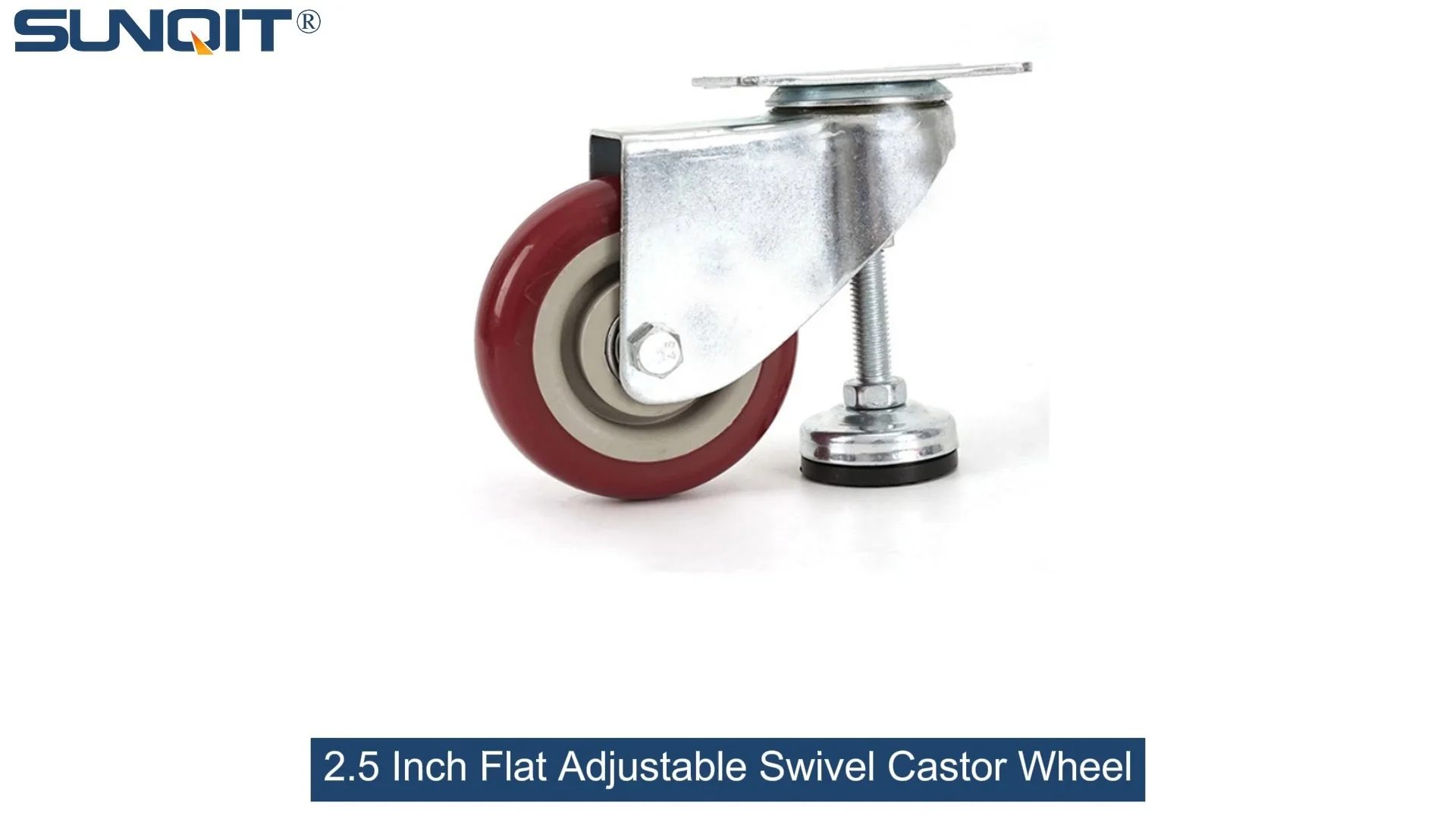
Walk into any busy workshop, manufacturing plant, or even a well-organized garage, and you'll notice something that often flies under the radar but keeps everything moving: casters. These small wheels attached to the bottom of carts, racks, and workbenches are the unsung heroes of productivity, making it possible to shift heavy loads with ease, reorganize spaces in minutes, and keep workflows flowing smoothly. But not all casters are created equal. Among the many types available, one stands out for its versatility and problem-solving ability: the
flat adjustable swivel castor wheel
. In this article, we'll dive deep into what makes this caster unique, explore its key features, and explain why it's become a go-to choice for industries ranging from automotive assembly to electronics manufacturing. Whether you're setting up a new workbench, upgrading material handling equipment, or simply curious about the tools that keep operations running, read on to discover how this unassuming component can transform efficiency.
Defining the Flat Adjustable Swivel Castor Wheel
Let's start with the basics: What exactly is a flat adjustable swivel castor wheel? At its core, it's a type of caster—a wheel mounted on a bracket—designed with three key attributes:
flat mounting
,
adjustability
, and
swivel capability
. Let's break that down.
First, the flat mounting refers to the base of the caster: a flat plate (usually made of steel, aluminum, or reinforced plastic) that attaches directly to the bottom of equipment like workbenches, trolleys, or racks. This flat design ensures stability, distributing weight evenly across the mounting surface to prevent wobbling, even when carrying heavy loads. Unlike stem-mounted casters (which use a rod to attach to equipment), flat-mounted casters are often preferred for applications where a low profile and secure connection are critical—think of a workbench that needs to stay steady while someone leans on it or a material cart that carries fragile components.
Next, adjustability is what sets this caster apart from standard swivel casters. Most models allow you to tweak the height of the wheel relative to the mounting plate, either by turning a threaded stem, adjusting a locking nut, or using a lever. This might sound simple, but it's a game-changer in real-world settings. Imagine a workshop with uneven concrete floors: a workbench with fixed-height casters might rock back and forth, making precise tasks like assembly or measuring frustrating. With an adjustable caster, you can raise or lower individual wheels to level the equipment, ensuring stability no matter the surface. Some models even let you adjust the wheel's tension, making it easier or harder to swivel—useful for balancing maneuverability with control.
Finally, swivel capability means the wheel can rotate 360 degrees around its vertical axis, allowing the equipment to move in any direction without having to turn the entire cart or bench. This is standard in many casters, but when combined with adjustability and a flat mount, it creates a tool that's both flexible and reliable. Whether you need to pivot a workbench to access a tight corner or navigate a loaded trolley through a crowded factory floor, the swivel function ensures smooth, effortless movement.
To put it all together: A flat adjustable swivel castor wheel is a stable, height-tunable, 360-degree rotating wheel system that mounts securely to equipment, designed to adapt to uneven surfaces, improve maneuverability, and enhance the functionality of everything from simple workbenches to heavy-duty industrial racks.
First, the flat mounting refers to the base of the caster: a flat plate (usually made of steel, aluminum, or reinforced plastic) that attaches directly to the bottom of equipment like workbenches, trolleys, or racks. This flat design ensures stability, distributing weight evenly across the mounting surface to prevent wobbling, even when carrying heavy loads. Unlike stem-mounted casters (which use a rod to attach to equipment), flat-mounted casters are often preferred for applications where a low profile and secure connection are critical—think of a workbench that needs to stay steady while someone leans on it or a material cart that carries fragile components.
Next, adjustability is what sets this caster apart from standard swivel casters. Most models allow you to tweak the height of the wheel relative to the mounting plate, either by turning a threaded stem, adjusting a locking nut, or using a lever. This might sound simple, but it's a game-changer in real-world settings. Imagine a workshop with uneven concrete floors: a workbench with fixed-height casters might rock back and forth, making precise tasks like assembly or measuring frustrating. With an adjustable caster, you can raise or lower individual wheels to level the equipment, ensuring stability no matter the surface. Some models even let you adjust the wheel's tension, making it easier or harder to swivel—useful for balancing maneuverability with control.
Finally, swivel capability means the wheel can rotate 360 degrees around its vertical axis, allowing the equipment to move in any direction without having to turn the entire cart or bench. This is standard in many casters, but when combined with adjustability and a flat mount, it creates a tool that's both flexible and reliable. Whether you need to pivot a workbench to access a tight corner or navigate a loaded trolley through a crowded factory floor, the swivel function ensures smooth, effortless movement.
To put it all together: A flat adjustable swivel castor wheel is a stable, height-tunable, 360-degree rotating wheel system that mounts securely to equipment, designed to adapt to uneven surfaces, improve maneuverability, and enhance the functionality of everything from simple workbenches to heavy-duty industrial racks.
Key Features: What Makes It Stand Out?
Now that we understand the basics, let's explore the features that make flat adjustable swivel castor wheels indispensable in so many industries. These aren't just "wheels on a plate"—they're engineered with precision to solve specific problems, from uneven floors to heavy loads to the need for quick reconfiguration. Here are the standout features:
1. Height Adjustability: Conquering Uneven Surfaces
Perhaps the most defining feature is adjustability. Most flat adjustable swivel casters allow height adjustments ranging from 10mm to 50mm (about 0.4 inches to 2 inches), though some heavy-duty models can adjust even more. How does this work? Many use a threaded stem: the wheel assembly is attached to a bolt-like stem that screws into the flat mounting plate. By turning the stem (or a nut on the stem), you raise or lower the wheel, effectively changing the distance between the mounting plate and the floor.
Why does this matter? In real-world environments, perfect floors are rare. A concrete workshop floor might have cracks, dips, or high spots from years of use. A warehouse might have slight slopes for drainage. Without adjustable casters, equipment like a workbench or material rack would rock, making tasks harder and increasing the risk of items sliding off. With height adjustment, you can "fine-tune" each caster to compensate for these imperfections, ensuring the equipment sits level and stable. This isn't just about comfort—it's about safety. A wobbly workbench could lead to errors in assembly, while a unstable cart might tip over, damaging products or injuring workers.
Some advanced models take adjustability further by including leveling feet alongside the wheel. These are small pads that can be extended to "lock" the caster in place, lifting the wheel off the ground entirely. This is useful for equipment that needs to stay stationary for long periods—say, a workbench that's only moved occasionally. Instead of relying on brakes (which can wear out over time), you simply lower the leveling feet, and the equipment stays put, stable as if it were bolted to the floor.
Why does this matter? In real-world environments, perfect floors are rare. A concrete workshop floor might have cracks, dips, or high spots from years of use. A warehouse might have slight slopes for drainage. Without adjustable casters, equipment like a workbench or material rack would rock, making tasks harder and increasing the risk of items sliding off. With height adjustment, you can "fine-tune" each caster to compensate for these imperfections, ensuring the equipment sits level and stable. This isn't just about comfort—it's about safety. A wobbly workbench could lead to errors in assembly, while a unstable cart might tip over, damaging products or injuring workers.
Some advanced models take adjustability further by including leveling feet alongside the wheel. These are small pads that can be extended to "lock" the caster in place, lifting the wheel off the ground entirely. This is useful for equipment that needs to stay stationary for long periods—say, a workbench that's only moved occasionally. Instead of relying on brakes (which can wear out over time), you simply lower the leveling feet, and the equipment stays put, stable as if it were bolted to the floor.
2. Smooth Swivel Mechanism: Maneuverability Without the Struggle
Swivel casters are nothing new, but the swivel mechanism in flat adjustable models is often engineered for superior performance. The best ones use precision ball bearings (either in the swivel head or the wheel axle) to reduce friction, allowing the wheel to rotate 360 degrees with minimal effort. This is a far cry from cheap casters that "stick" or require significant force to turn—imagine trying to push a loaded trolley through a narrow aisle with stiff casters; it's not just tiring, it's a safety hazard.
Many flat adjustable swivel casters also include a swivel lock as part of their caster accessories . This is a small lever or pin that locks the swivel head in place, turning the caster into a rigid one (only moving forward and backward). Why would you want that? Sometimes, you need equipment to move in a straight line—like a conveyor that feeds parts to an assembly line—or stay aligned with a workstation. The swivel lock gives you control, letting you switch between "maneuver mode" and "straight-line mode" in seconds.
Another detail that matters: the distance between the wheel and the swivel axis, known as the "offset." A larger offset can make the caster more stable at high speeds, while a smaller offset improves maneuverability in tight spaces. Flat adjustable models often let you choose the offset based on your needs, making them adaptable to everything from small workbenches to large material racks.
Many flat adjustable swivel casters also include a swivel lock as part of their caster accessories . This is a small lever or pin that locks the swivel head in place, turning the caster into a rigid one (only moving forward and backward). Why would you want that? Sometimes, you need equipment to move in a straight line—like a conveyor that feeds parts to an assembly line—or stay aligned with a workstation. The swivel lock gives you control, letting you switch between "maneuver mode" and "straight-line mode" in seconds.
Another detail that matters: the distance between the wheel and the swivel axis, known as the "offset." A larger offset can make the caster more stable at high speeds, while a smaller offset improves maneuverability in tight spaces. Flat adjustable models often let you choose the offset based on your needs, making them adaptable to everything from small workbenches to large material racks.
3. Load Capacity: Built to Handle the Heavy Lifting
Industrial environments demand casters that can handle serious weight—think of a workbench loaded with tools, a cart stacked with metal parts, or a rack holding boxes of inventory. Flat adjustable swivel casters are built with this in mind, with load capacities ranging from 50kg (110 lbs) for light-duty models up to 1,000kg (2,200 lbs) or more for heavy-duty versions.
How do they achieve this? It starts with materials: The mounting plate is often made of thick steel or aluminum profile (a strong, lightweight material that resists bending), while the wheel itself might be rubber, polyurethane, or cast iron, depending on the load and floor type. For example, polyurethane wheels are popular for medium loads (200-500kg) because they're durable, quiet, and won't mark floors, making them ideal for indoor settings like electronics factories. Cast iron wheels, on the other hand, are better for outdoor use or extremely heavy loads (800kg+), as they can withstand rough surfaces and high temperatures.
It's important to note that load capacity is per caster, not per set. So, if you're building a workbench that will weigh 400kg when fully loaded, you'll need four casters each rated for at least 100kg (and ideally more, to account for uneven weight distribution). Reputable suppliers will always list the load capacity clearly, so you can choose the right model without guesswork.
How do they achieve this? It starts with materials: The mounting plate is often made of thick steel or aluminum profile (a strong, lightweight material that resists bending), while the wheel itself might be rubber, polyurethane, or cast iron, depending on the load and floor type. For example, polyurethane wheels are popular for medium loads (200-500kg) because they're durable, quiet, and won't mark floors, making them ideal for indoor settings like electronics factories. Cast iron wheels, on the other hand, are better for outdoor use or extremely heavy loads (800kg+), as they can withstand rough surfaces and high temperatures.
It's important to note that load capacity is per caster, not per set. So, if you're building a workbench that will weigh 400kg when fully loaded, you'll need four casters each rated for at least 100kg (and ideally more, to account for uneven weight distribution). Reputable suppliers will always list the load capacity clearly, so you can choose the right model without guesswork.
4. Floor-Friendly Design: Protecting Surfaces While Moving
No one wants to replace scratched or dented floors, especially in environments where appearance matters (like a retail backroom) or where debris from damaged floors could contaminate products (like a food processing plant). Flat adjustable swivel casters address this with wheel materials and designs that prioritize floor protection.
For smooth indoor floors (tile, hardwood, or polished concrete), rubber or polyurethane wheels are the go-to choice. These materials have a soft, grippy surface that absorbs shocks (reducing noise, too!) and won't leave marks. Some models even have tread patterns designed to minimize friction, making it easier to move equipment without scuffing. For rougher surfaces (asphalt, gravel, or uneven concrete), pneumatic (air-filled) wheels or semi-steel wheels with a rubber coating provide better traction and durability, while still protecting the floor from scratches.
Another floor-friendly feature is the wheel diameter. Larger wheels (5-8 inches) roll over small obstacles like cracks or debris more easily than smaller ones (2-3 inches), reducing the risk of jolting the load or damaging the floor. Many flat adjustable casters let you choose wheel size, so you can match the caster to your floor type and environment.
For smooth indoor floors (tile, hardwood, or polished concrete), rubber or polyurethane wheels are the go-to choice. These materials have a soft, grippy surface that absorbs shocks (reducing noise, too!) and won't leave marks. Some models even have tread patterns designed to minimize friction, making it easier to move equipment without scuffing. For rougher surfaces (asphalt, gravel, or uneven concrete), pneumatic (air-filled) wheels or semi-steel wheels with a rubber coating provide better traction and durability, while still protecting the floor from scratches.
Another floor-friendly feature is the wheel diameter. Larger wheels (5-8 inches) roll over small obstacles like cracks or debris more easily than smaller ones (2-3 inches), reducing the risk of jolting the load or damaging the floor. Many flat adjustable casters let you choose wheel size, so you can match the caster to your floor type and environment.

How Flat Adjustable Swivel Castor Wheels Compare to Other Caster Types
To truly appreciate the value of flat adjustable swivel casters, it helps to see how they stack up against other common caster types. Let's compare them side by side in the table below:
| Feature | Flat Adjustable Swivel Castor | Standard Swivel Castor (Non-Adjustable) | Rigid Caster (Non-Swivel) | Stem-Mounted Swivel Castor |
|---|---|---|---|---|
| Height Adjustment | Yes (10-50mm typically) | No | No | Sometimes (via stem length) |
| Swivel Range | 360° (with optional lock) | 360° (with optional lock) | 0° (only forward/backward) | 360° (with optional lock) |
| Mounting Type | Flat plate (stable, low profile) | Flat plate or stem | Flat plate or stem | Stem (rod inserted into equipment) |
| Best For | Uneven floors, workbenches, precision equipment | Smooth floors, general material handling | Straight-line movement (e.g., conveyors) | Equipment with pre-drilled stem holes (e.g., small carts) |
| Load Capacity Range | 50kg – 1,000kg+ | 50kg – 800kg | 100kg – 1,500kg+ | 20kg – 300kg |
As the table shows, flat adjustable swivel casters excel in scenarios where adjustability, stability, and maneuverability are all priorities. They're not the cheapest option, but for applications where precision and reliability matter—like a workbench used for detailed assembly or a cart that needs to navigate uneven warehouse floors—they're an investment that pays off in reduced downtime and improved safety.

Real-World Applications: Where These Casters Shine
Now that we've covered the features, let's look at how flat adjustable swivel castor wheels are used in the real world. From small workshops to large factories, these casters solve specific problems and enhance productivity across industries. Here are a few standout applications:
1. Workbenches: Stability Meets Mobility
A
workbench
is the heart of any workshop, and its mobility can make or break efficiency. Imagine a mechanic who needs to move their workbench closer to a car being repaired, or an electronics technician who wants to reposition their bench to better access tools and components. With flat adjustable swivel casters, the workbench becomes both mobile and stable.
For example, a "Workbench E (Single Deck-Without Caster)" (a common model in many industrial catalogs) can be upgraded with flat adjustable casters, instantly transforming it into a movable workstation. The adjustability ensures the bench stays level, even if the shop floor has dips from years of heavy equipment use, while the swivel wheels make it easy to pivot into tight spaces. Add a swivel lock, and the bench stays put during use—no more slipping or wobbling while you're using a drill or soldering iron.
In cleanrooms or labs, where precision is critical, stainless steel flat adjustable casters are often used. These resist corrosion and are easy to sanitize, ensuring the workbench meets strict hygiene standards while still being movable when needed.
For example, a "Workbench E (Single Deck-Without Caster)" (a common model in many industrial catalogs) can be upgraded with flat adjustable casters, instantly transforming it into a movable workstation. The adjustability ensures the bench stays level, even if the shop floor has dips from years of heavy equipment use, while the swivel wheels make it easy to pivot into tight spaces. Add a swivel lock, and the bench stays put during use—no more slipping or wobbling while you're using a drill or soldering iron.
In cleanrooms or labs, where precision is critical, stainless steel flat adjustable casters are often used. These resist corrosion and are easy to sanitize, ensuring the workbench meets strict hygiene standards while still being movable when needed.
2. Material Handling Trolleys and Racks
Moving raw materials, finished products, or tools around a facility is a daily task, and inefficient material handling is a major source of wasted time. Flat adjustable swivel casters make trolleys and racks more versatile, allowing workers to navigate tight aisles, load/unload from different angles, and adjust to uneven loading docks.
Take a "Turnover Trolley and Rack," a common piece of equipment used to store and transport parts in manufacturing. Equipped with flat adjustable casters, this trolley can be rolled up to an assembly line, adjusted to match the line's height (so parts slide directly onto the conveyor), and then locked in place. When the shift ends, it can be easily moved to a storage area, even if the path has small bumps or cracks.
In warehouses, "Material Rack B (3 Row and 3 Floor)" (a multi-tiered rack for storing boxes or bins) benefits from these casters too. Instead of workers having to walk back and forth to retrieve items, the rack can be rolled to the packing station, adjusted to the right height for easy access, and then moved back—saving time and reducing fatigue.
Take a "Turnover Trolley and Rack," a common piece of equipment used to store and transport parts in manufacturing. Equipped with flat adjustable casters, this trolley can be rolled up to an assembly line, adjusted to match the line's height (so parts slide directly onto the conveyor), and then locked in place. When the shift ends, it can be easily moved to a storage area, even if the path has small bumps or cracks.
In warehouses, "Material Rack B (3 Row and 3 Floor)" (a multi-tiered rack for storing boxes or bins) benefits from these casters too. Instead of workers having to walk back and forth to retrieve items, the rack can be rolled to the packing station, adjusted to the right height for easy access, and then moved back—saving time and reducing fatigue.
3. Healthcare and Laboratory Settings
In environments where cleanliness, precision, and safety are non-negotiable—like hospitals, clinics, or research labs—flat adjustable swivel casters are a must. Medical carts carrying supplies, lab equipment like centrifuges, or mobile workstations for nurses all rely on casters that can move smoothly, stay stable, and adjust to different floor heights (e.g., between carpeted and tile areas).
For example, a mobile medication cart in a hospital needs to glide quietly through patient rooms (so as not to disturb sleep), stop precisely next to a bed, and stay level to prevent bottles from tipping over. Flat adjustable casters with soft polyurethane wheels and swivel locks meet all these needs, while their flat mounting plates ensure the cart's base is easy to clean (no crevices for dirt or bacteria to hide).
For example, a mobile medication cart in a hospital needs to glide quietly through patient rooms (so as not to disturb sleep), stop precisely next to a bed, and stay level to prevent bottles from tipping over. Flat adjustable casters with soft polyurethane wheels and swivel locks meet all these needs, while their flat mounting plates ensure the cart's base is easy to clean (no crevices for dirt or bacteria to hide).

Maintaining Your Flat Adjustable Swivel Castor Wheels
Like any piece of equipment, flat adjustable swivel casters perform best when properly maintained. Fortunately, with a little regular care, they'll last for years, keeping your equipment moving smoothly and safely. Here are some maintenance tips:
1. Keep them clean: Dirt, debris, and grease can build up in the swivel mechanism or around the wheel axle, causing the caster to stick or wear out faster. Wipe the wheels and mounting plate with a damp cloth weekly, and use a small brush (like a toothbrush) to clean out crevices in the swivel head. For industrial settings with heavy debris (e.g., metal shavings or sawdust), a quick blast with compressed air can dislodge stubborn particles.
2. Lubricate moving parts: The swivel head and wheel bearings need lubrication to reduce friction. Use a light machine oil or silicone spray every 3-6 months (more often if the casters are used daily in dirty environments). Avoid over-lubricating, though—excess oil can attract dirt, creating a gritty paste that damages the mechanism.
3. Check for wear and tear: Inspect the wheels, mounting plate, and caster accessories (like brakes or locks) regularly for signs of damage. Look for cracked wheels, bent mounting plates, or loose bolts. If a wheel is worn unevenly, it might be a sign that the swivel mechanism is misaligned or the axle is bent—address this promptly to prevent further damage.
4. Tighten loose hardware: The bolts that attach the caster to the equipment can loosen over time, especially if the equipment is moved frequently. Use a wrench to check and tighten these bolts monthly. For flat-mounted casters, ensure the mounting plate is securely fastened—even one loose bolt can cause instability.
5. Adjust as needed: If you notice the equipment wobbling or the wheels aren't touching the floor evenly, re-adjust the height of the casters. This is quick and easy with most models—simply turn the adjustment nut or lever until the equipment is level.
1. Keep them clean: Dirt, debris, and grease can build up in the swivel mechanism or around the wheel axle, causing the caster to stick or wear out faster. Wipe the wheels and mounting plate with a damp cloth weekly, and use a small brush (like a toothbrush) to clean out crevices in the swivel head. For industrial settings with heavy debris (e.g., metal shavings or sawdust), a quick blast with compressed air can dislodge stubborn particles.
2. Lubricate moving parts: The swivel head and wheel bearings need lubrication to reduce friction. Use a light machine oil or silicone spray every 3-6 months (more often if the casters are used daily in dirty environments). Avoid over-lubricating, though—excess oil can attract dirt, creating a gritty paste that damages the mechanism.
3. Check for wear and tear: Inspect the wheels, mounting plate, and caster accessories (like brakes or locks) regularly for signs of damage. Look for cracked wheels, bent mounting plates, or loose bolts. If a wheel is worn unevenly, it might be a sign that the swivel mechanism is misaligned or the axle is bent—address this promptly to prevent further damage.
4. Tighten loose hardware: The bolts that attach the caster to the equipment can loosen over time, especially if the equipment is moved frequently. Use a wrench to check and tighten these bolts monthly. For flat-mounted casters, ensure the mounting plate is securely fastened—even one loose bolt can cause instability.
5. Adjust as needed: If you notice the equipment wobbling or the wheels aren't touching the floor evenly, re-adjust the height of the casters. This is quick and easy with most models—simply turn the adjustment nut or lever until the equipment is level.
Choosing the Right Flat Adjustable Swivel Castor Wheel for Your Needs
With so many options available, how do you choose the right flat adjustable swivel castor wheel for your equipment? Here are the key factors to consider:
1. Load capacity: Start by calculating the total weight of your equipment plus its maximum load. Divide that by the number of casters (most equipment uses 4 casters) to get the minimum load capacity per caster. It's always a good idea to add a 20-30% buffer to account for uneven weight distribution. For example, a workbench that weighs 100kg and holds 200kg of tools has a total weight of 300kg—4 casters would need to each handle at least 75kg, so opt for 100kg-rated casters to be safe.
2. Floor type: Match the wheel material to your floor. For smooth indoor floors, rubber or polyurethane wheels are best. For rough outdoor or industrial floors, choose pneumatic or semi-steel wheels. If you're in a cleanroom or food environment, stainless steel wheels with non-marking rubber are ideal.
3. Adjustment range: Measure the maximum height difference in your workspace (e.g., between the highest and lowest points on your floor). Choose a caster with an adjustment range that covers this difference. For example, if your floor has a 20mm dip, a caster with 30mm of adjustability will give you plenty of room to level the equipment.
4. Swivel and brake options: Do you need a swivel lock? A brake? Think about how the equipment will be used. If it needs to stay in one place during operation, a brake is essential. If it needs to move in straight lines, a swivel lock is useful. Many suppliers offer these as optional caster accessories , so you can customize the caster to your needs.
5. Environment: Consider factors like temperature (extreme heat or cold can affect wheel materials), moisture (stainless steel casters resist rust), and chemicals (some wheels are resistant to oils, solvents, or acids). For example, in a automotive shop with oil spills, polyurethane wheels are better than rubber, as they're more chemical-resistant.
1. Load capacity: Start by calculating the total weight of your equipment plus its maximum load. Divide that by the number of casters (most equipment uses 4 casters) to get the minimum load capacity per caster. It's always a good idea to add a 20-30% buffer to account for uneven weight distribution. For example, a workbench that weighs 100kg and holds 200kg of tools has a total weight of 300kg—4 casters would need to each handle at least 75kg, so opt for 100kg-rated casters to be safe.
2. Floor type: Match the wheel material to your floor. For smooth indoor floors, rubber or polyurethane wheels are best. For rough outdoor or industrial floors, choose pneumatic or semi-steel wheels. If you're in a cleanroom or food environment, stainless steel wheels with non-marking rubber are ideal.
3. Adjustment range: Measure the maximum height difference in your workspace (e.g., between the highest and lowest points on your floor). Choose a caster with an adjustment range that covers this difference. For example, if your floor has a 20mm dip, a caster with 30mm of adjustability will give you plenty of room to level the equipment.
4. Swivel and brake options: Do you need a swivel lock? A brake? Think about how the equipment will be used. If it needs to stay in one place during operation, a brake is essential. If it needs to move in straight lines, a swivel lock is useful. Many suppliers offer these as optional caster accessories , so you can customize the caster to your needs.
5. Environment: Consider factors like temperature (extreme heat or cold can affect wheel materials), moisture (stainless steel casters resist rust), and chemicals (some wheels are resistant to oils, solvents, or acids). For example, in a automotive shop with oil spills, polyurethane wheels are better than rubber, as they're more chemical-resistant.
Conclusion: The Unsung Hero of Productivity
Flat adjustable swivel castor wheels might not be the most glamorous piece of equipment in a workshop or factory, but they're undeniably essential. By combining stability, adjustability, and maneuverability, they solve common problems—uneven floors, heavy loads, tight spaces—that can slow down work and increase frustration. Whether you're upgrading a workbench, building a new trolley, or simply looking to make your material handling more efficient, these casters are a smart investment.
Remember, the right caster isn't just about moving equipment—it's about creating a safer, more productive environment where workers can focus on the task at hand, not on wrestling with uncooperative wheels. So the next time you're setting up a workspace or upgrading your tools, don't overlook the casters. Choose flat adjustable swivel castor wheels, and watch how this small change makes a big difference in your daily operations.
Remember, the right caster isn't just about moving equipment—it's about creating a safer, more productive environment where workers can focus on the task at hand, not on wrestling with uncooperative wheels. So the next time you're setting up a workspace or upgrading your tools, don't overlook the casters. Choose flat adjustable swivel castor wheels, and watch how this small change makes a big difference in your daily operations.