- Company Articles
- Products and Technology
- Product knowledge
- What Is a Flat Rigid Castor Wheel? Definition and Core Industrial Functions

What Is a Flat Rigid Castor Wheel? Definition and Core Industrial Functions
Related Product
Flat Rigid Castor Wheel
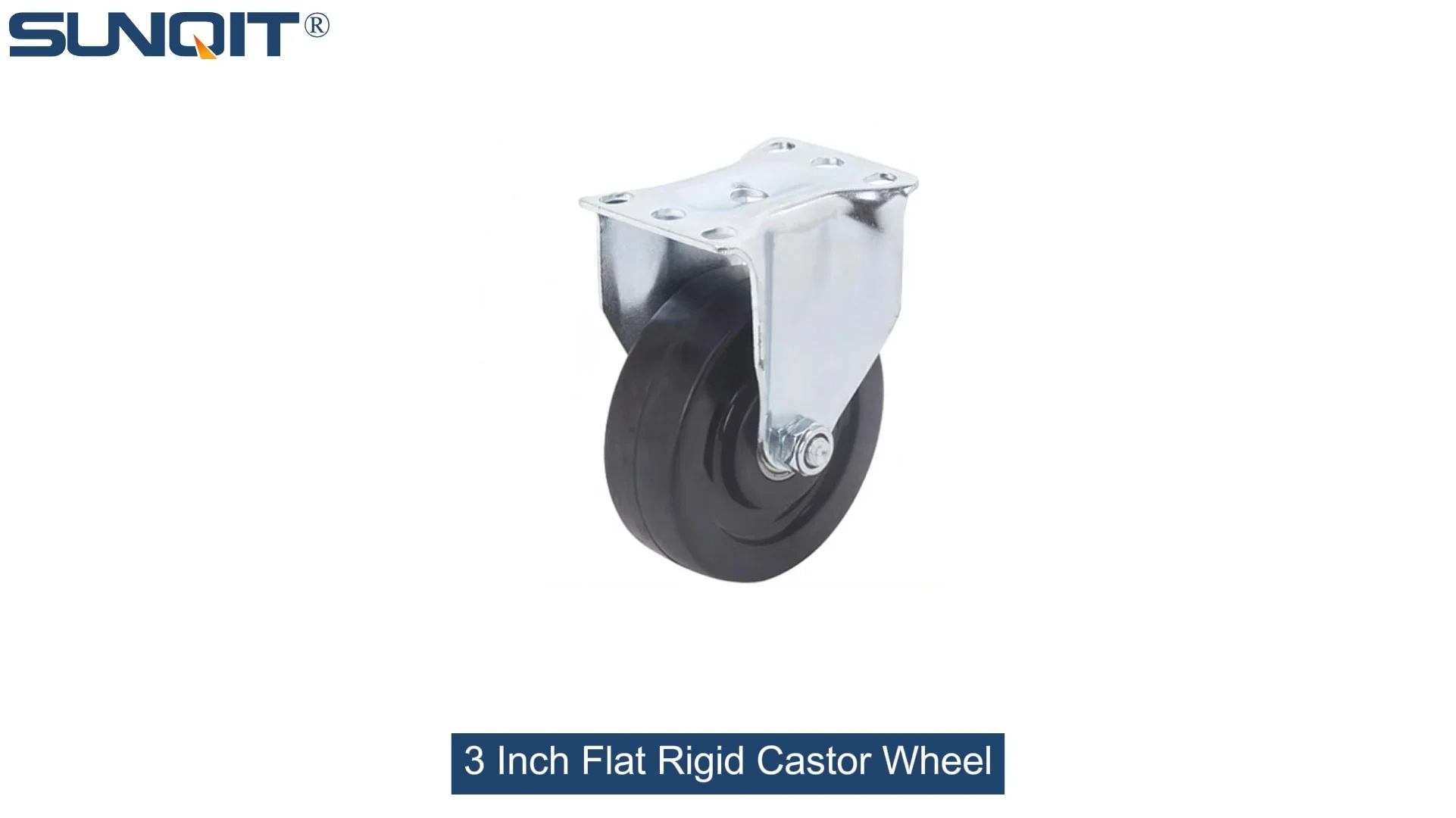
Chair Casters Ball Bearing Wheels Rubber Base. Resistant to abrasion, impact and corrosion. Heavy payload can hold 70Kgs per pcs,which can make it works at a stable and smooth status.
In the bustling world of manufacturing, warehousing, and logistics, it's often the smallest components that keep operations running like well-oiled machines. Take a moment to look around a factory floor: the workbench where assemblers piece together electronics, the trolley ferrying raw materials across the warehouse, the conveyor systems moving products toward shipping—all of these rely on a humble yet critical part: the caster wheel. Among the various types of caster wheels, the flat rigid castor wheel stands out for its unwavering stability and precision, making it a backbone in industries where reliability isn't just a preference, but a necessity. In this article, we'll dive deep into what flat rigid castor wheels are, their key components, how they differ from other casters, and why they're indispensable in industrial settings—especially when paired with workbenches, material racks, and other essential equipment.
What Is a Flat Rigid Castor Wheel? A Fundamental Definition
Let's start with the basics: a flat rigid castor wheel is a type of caster designed for straight-line movement, with a fixed (non-swiveling) bracket that keeps the wheel aligned in a single direction. Unlike swivel casters, which can rotate 360 degrees to allow multidirectional movement, flat rigid casters are all about stability and predictability. The "flat" in their name refers to the shape of the mounting bracket—a flat plate that attaches to the bottom of equipment (like a workbench or trolley), while "rigid" emphasizes their fixed orientation. Think of them as the steady hands of the industrial world: they won't zigzag or pivot, but they'll carry heavy loads in a straight path with unwavering consistency.
At their core, flat rigid castor wheels serve one primary function: to enable smooth, controlled movement in a fixed direction while supporting heavy weights. Whether it's a workbench that needs to be shifted along an assembly line or a material rack loaded with inventory, these casters ensure that movement is efficient, safe, and precise. They're the unsung heroes that prevent equipment from tipping, reduce friction on floors, and make even the heaviest loads manageable for workers.
Breaking Down the Components: What Makes a Flat Rigid Castor Wheel Tick?
To truly understand flat rigid castor wheels, we need to look at their anatomy. While they may seem simple, these casters are engineered with precision to balance load capacity, durability, and performance. Let's break down their key components:
1. The Wheel Itself:
The wheel is the part that makes contact with the floor, and its material and design directly impact performance. Common materials include rubber, polyurethane, nylon, and steel, each chosen for specific environments (e.g., rubber for floor protection, steel for heavy loads). The wheel's diameter also matters: larger wheels roll more easily over uneven surfaces, while smaller ones offer better maneuverability in tight spaces (though rigid casters prioritize stability over tight turns).
2. The Rigid Bracket:
The bracket (or yoke) is the "flat" part that holds the wheel in place. Made from materials like steel or aluminum, it's designed to be rigid—no swiveling joints here. The bracket attaches to the equipment via a mounting plate (often included as a caster accessory), ensuring a secure connection that can withstand vibrations and heavy loads.
3. Axle and Bearings:
The axle runs through the center of the wheel, connecting it to the bracket. Bearings inside the wheel reduce friction, allowing smooth rotation. Depending on the load capacity, bearings may be ball bearings (for lighter loads) or roller bearings (for heavier, industrial applications).
4. Caster Accessories (Optional):
While flat rigid casters are simple by design, some models include caster accessories to enhance functionality. These can include brake mechanisms (to lock the wheel in place when stationary), shock absorbers (for delicate equipment), or floor protectors (to prevent scratches on polished surfaces). Even small accessories like axle caps or washers play a role in extending the caster's lifespan by preventing dirt and debris from damaging the bearings.

Flat Rigid vs. Swivel Casters: A Head-to-Head Comparison
To appreciate the unique value of flat rigid castor wheels, it helps to compare them to their more flexible counterpart: the swivel caster. While swivel casters are great for maneuverability, flat rigid casters excel in stability and straight-line precision. Let's break down the differences in a table:
| Feature | Flat Rigid Castor Wheel | Swivel Castor Wheel |
|---|---|---|
| Directional Movement | Fixed (only moves forward/backward in a straight line) | 360° swivel rotation for multidirectional movement |
| Stability | High stability, ideal for heavy or tall loads (less sway) | Lower stability; may wobble with tall/heavy loads at high speeds |
| Load Capacity | Typically higher (rigid bracket distributes weight evenly) | Lower to moderate (swivel joint adds mechanical complexity) |
| Best For | Straight-line transport, fixed workbenches, heavy machinery | Tight spaces, equipment needing frequent direction changes (e.g., carts) |
| Maintenance Needs | Lower (fewer moving parts; no swivel joint to lubricate) | Higher (swivel joint requires regular lubrication and cleaning) |
| Floor Compatibility | Works well on smooth and uneven floors (stability reduces floor damage) | Better on smooth floors; may struggle with debris in swivel joints on rough surfaces |
The takeaway? Swivel casters are like the "steering wheels" of the caster world, while flat rigid casters are the "anchors." In many cases, equipment uses a combination: two swivel casters for steering and two flat rigid casters for stability. For example, a workbench might have swivel casters at the front for maneuvering into position and flat rigid casters at the back to keep it steady during use.

Materials Matter: Choosing the Right Flat Rigid Castor Wheel for the Job
Not all flat rigid castor wheels are created equal—and much of that comes down to materials. The wheel and bracket materials determine everything from load capacity to floor protection, making material selection a critical step in choosing the right caster for your needs. Let's explore the most common materials and their best uses:
Wheel Materials:
- Rubber: Offers excellent shock absorption and floor protection, making it ideal for indoor use on hardwood or polished concrete. Rubber wheels are quiet and provide good traction but may wear faster under heavy loads or in high-temperature environments.
- Polyurethane (PU): A versatile option that combines the elasticity of rubber with the durability of plastic. PU wheels resist chemicals, oils, and abrasion, making them suitable for factories and warehouses. They're also non-marking, so they won't leave scuffs on floors—perfect for cleanrooms or retail spaces.
- Nylon: Known for its high load capacity and resistance to impact, nylon wheels are a workhorse in industrial settings. They're stiffer than rubber or PU, so they roll easily over rough surfaces, but they can be noisy and may scratch delicate floors.
- Steel: The heavyweight champion, steel wheels are built for extreme loads (think tons, not pounds) and harsh environments like construction sites or foundries. They're durable but unforgiving—they'll scratch floors and are loud, so they're best for outdoor or rugged indoor use.
Bracket Materials:
- Steel: The most common bracket material, steel offers high strength and durability at an affordable price. It's often coated with zinc or paint to resist rust, making it suitable for most indoor and outdoor applications.
- Aluminum: Lighter than steel but still strong, aluminum brackets are ideal for applications where weight matters (e.g., medical equipment or portable workbenches). They're naturally resistant to corrosion, making them a good choice for humid or wet environments.
The key is to match the material to the environment. For example, a food processing plant might opt for stainless steel brackets and polyurethane wheels (resistant to water and chemicals), while a warehouse with concrete floors could use steel wheels and zinc-coated steel brackets for maximum load capacity.

Core Industrial Functions: Why Flat Rigid Castor Wheels Are Indispensable
Now that we understand what flat rigid castor wheels are and how they're built, let's explore their core functions in industrial settings. These casters aren't just "wheels on a bracket"—they're engineered to solve specific problems, from stabilizing heavy loads to ensuring precision in manufacturing. Here are their most critical roles:
1. Stability for Heavy and Tall Loads
In industries like automotive manufacturing or construction, equipment and materials can weigh thousands of pounds. A swivel caster might buckle under such stress or cause the load to sway, risking accidents. Flat rigid castor wheels, with their fixed brackets and even weight distribution, provide unmatched stability. For example, a workbench loaded with welding equipment or a material rack stacked with metal sheets needs to stay upright and steady—flat rigid casters prevent tipping by keeping the load centered and movement predictable.
2. Precision Straight-Line Movement
In assembly lines or conveyor systems, precision is everything. A product moving from station to station needs to follow a strict path to avoid jams or misalignment. Flat rigid castor wheels excel here: their fixed direction ensures that trolleys, workbenches, or even automated guided vehicles (AGVs) move in a straight line, reducing errors and improving efficiency. Imagine a pharmaceutical packaging line where vials are transported between filling and labeling stations—any deviation could lead to spills or mislabeled products. Flat rigid casters keep that line straight and reliable.
3. Durability in Harsh Environments
Industrial environments are tough: dust, chemicals, extreme temperatures, and constant use can wear down even the sturdiest equipment. Flat rigid castor wheels are built to withstand these conditions. Their simple design (fewer moving parts than swivel casters) means there are fewer points of failure. Steel wheels resist impact and heat, while polyurethane wheels stand up to oils and solvents. In a foundry, where temperatures soar and metal shavings litter the floor, a flat rigid caster with a steel wheel and zinc-coated bracket will outlast a more complex swivel caster by years.
4. Cost-Effectiveness and Low Maintenance
For businesses watching their bottom line, flat rigid castor wheels are a smart investment. Their simple design makes them cheaper to manufacture than swivel casters, and their low maintenance needs reduce long-term costs. With no swivel joint to lubricate or replace, these casters require little more than occasional cleaning and bearing checks. Over time, this translates to significant savings—especially in large facilities with hundreds of casters on workbenches, trolleys, and racks.
5. Compatibility with Workbenches and Material Handling Equipment
Flat rigid castor wheels are designed to integrate seamlessly with common industrial equipment, including workbenches, material racks, and turnover trolleys. Many manufacturers offer caster accessories like mounting plates or adapters that make installation a breeze, even for custom-built workbenches. For example, a "workbench E (single deck-without caster)" (a common model in industrial catalogs) can be retrofitted with flat rigid casters to add mobility while maintaining stability during use. This flexibility makes flat rigid casters a go-to choice for businesses looking to upgrade existing equipment without replacing it entirely.
Real-World Applications: Where Flat Rigid Castor Wheels Shine
To bring these functions to life, let's look at real-world scenarios where flat rigid castor wheels are the unsung stars:
Manufacturing Workbenches:
In electronics manufacturing, assemblers work at benches loaded with tools, circuit boards, and testing equipment. These workbenches need to be moved occasionally (to reconfigure the factory floor) but must stay steady during use. Flat rigid casters allow workers to push the bench into a new position along a straight path, then lock it in place (using caster accessories like wheel locks) for stable assembly work.
Warehouse Material Racks:
A "material rack B (3 row and 3 floor)" (a common heavy-duty rack) filled with inventory can weigh thousands of pounds. Moving such a rack requires casters that can handle the load without shifting. Flat rigid casters make it possible to slide the rack along aisles to access stored items, all while keeping the rack upright and the inventory secure.
Medical Equipment:
In hospitals, static workbenches in labs or pharmacies need to stay in place to comply with safety regulations, but they may need to be relocated during deep cleaning. Flat rigid casters with brakes allow these workbenches to be moved in straight lines (to avoid collisions with walls or other equipment) and then locked down for stable use.
Aerospace Assembly:
Building aircraft components requires precision and stability. Tool trolleys carrying heavy machinery (like torque wrenches or riveting tools) use flat rigid casters to move along the assembly line without swaying, ensuring that workers can position tools with pinpoint accuracy.
Choosing the Right Flat Rigid Castor Wheel: Key Considerations
With so many options available, how do you choose the right flat rigid castor wheel for your needs? Here are the critical factors to consider:
Load Capacity:
Start by calculating the total weight the casters will need to support (including the equipment itself plus any materials). Always choose a caster with a load capacity higher than your maximum expected weight—overloading casters is a common cause of failure.
Floor Type:
Smooth floors (like polished concrete) work well with rubber or polyurethane wheels, while rough surfaces (like gravel or industrial concrete) require nylon or steel wheels. If floor protection is a priority (e.g., in retail or offices), opt for non-marking materials like PU.
Environment:
Consider factors like temperature (extreme heat or cold), exposure to chemicals/oils, and debris. For wet environments, choose stainless steel brackets to prevent rust; for high temperatures, steel wheels are better than rubber, which can melt.
Mounting Type:
How will the caster attach to your equipment? Most flat rigid casters use a top plate mount (bolted to the equipment), but some use stem mounts (inserted into a socket). Ensure the mounting type matches your workbench or trolley—many manufacturers offer caster accessories like mounting plates if you need to adapt.
Wheel Diameter:
Larger wheels (6-8 inches) roll more easily over obstacles and reduce friction, making them better for heavy loads or uneven floors. Smaller wheels (2-4 inches) are more compact and suitable for tight spaces.
Maintenance Tips: Extending the Life of Your Flat Rigid Castor Wheels
Even the most durable flat rigid castor wheels need care to perform at their best. With minimal maintenance, you can extend their lifespan and avoid costly replacements. Here are some simple tips:
- Clean Regularly: Dirt, debris, and metal shavings can get trapped in the wheel bearings, causing friction and wear. Wipe wheels and brackets with a dry cloth weekly, and use a brush to clean out bearings if needed.
- Lubricate Bearings: While flat rigid casters have fewer moving parts than swivel casters, their bearings still need lubrication to reduce friction. Use a lithium-based grease every 6 months (or more often in dusty environments) to keep wheels rolling smoothly.
- Check for Wear: Inspect wheels for cracks, flat spots, or uneven wear, which can cause wobbling or damage floors. replace wheels immediately if they show signs of damage—don't wait for them to fail.
- Tighten Hardware: Vibrations from industrial use can loosen bolts or axles. Check mounting bolts and axle nuts monthly and tighten them as needed to prevent the caster from detaching from the equipment.
- Use Caster Accessories Wisely: If your casters have brakes or locks, engage them when the equipment is stationary to reduce unnecessary wheel movement and wear.
Conclusion: The Unsung Heroes of Industrial Mobility
Flat rigid castor wheels may not grab headlines, but they're the backbone of industrial mobility. From stabilizing heavy workbenches to ensuring precision in assembly lines, these casters play a critical role in keeping operations efficient, safe, and reliable. Their simple design, durability, and stability make them indispensable in industries where "good enough" just isn't enough—whether you're moving a loaded material rack across a warehouse or keeping a medical workbench steady during delicate procedures.
When choosing flat rigid castor wheels, remember to prioritize load capacity, material compatibility, and environment—these factors will ensure your casters stand the test of time. And don't overlook the value of caster accessories, which can enhance functionality and extend lifespan. With the right flat rigid casters, you're not just adding wheels to equipment—you're investing in the reliability and efficiency of your entire operation.
So the next time you see a workbench gliding smoothly along a factory floor or a material rack standing steady under a heavy load, take a moment to appreciate the flat rigid castor wheels making it all possible. In the world of industry, sometimes the most important innovations are the ones that keep things moving—straight, steady, and strong.