- Company Articles
- Products and Technology
- Product knowledge
- What Is a Flat Swivel Castor Wheel? Definition & Core Functions in Manufacturing

What Is a Flat Swivel Castor Wheel? Definition & Core Functions in Manufacturing
Related Product
Flat Swivel Castor Wheel
Chair Casters Ball Bearing Wheels Rubber Base. Resistant to abrasion, impact and corrosion. Heavy payload can hold 70-90Kgs per pcs,which can make it works at a stable and smooth status.
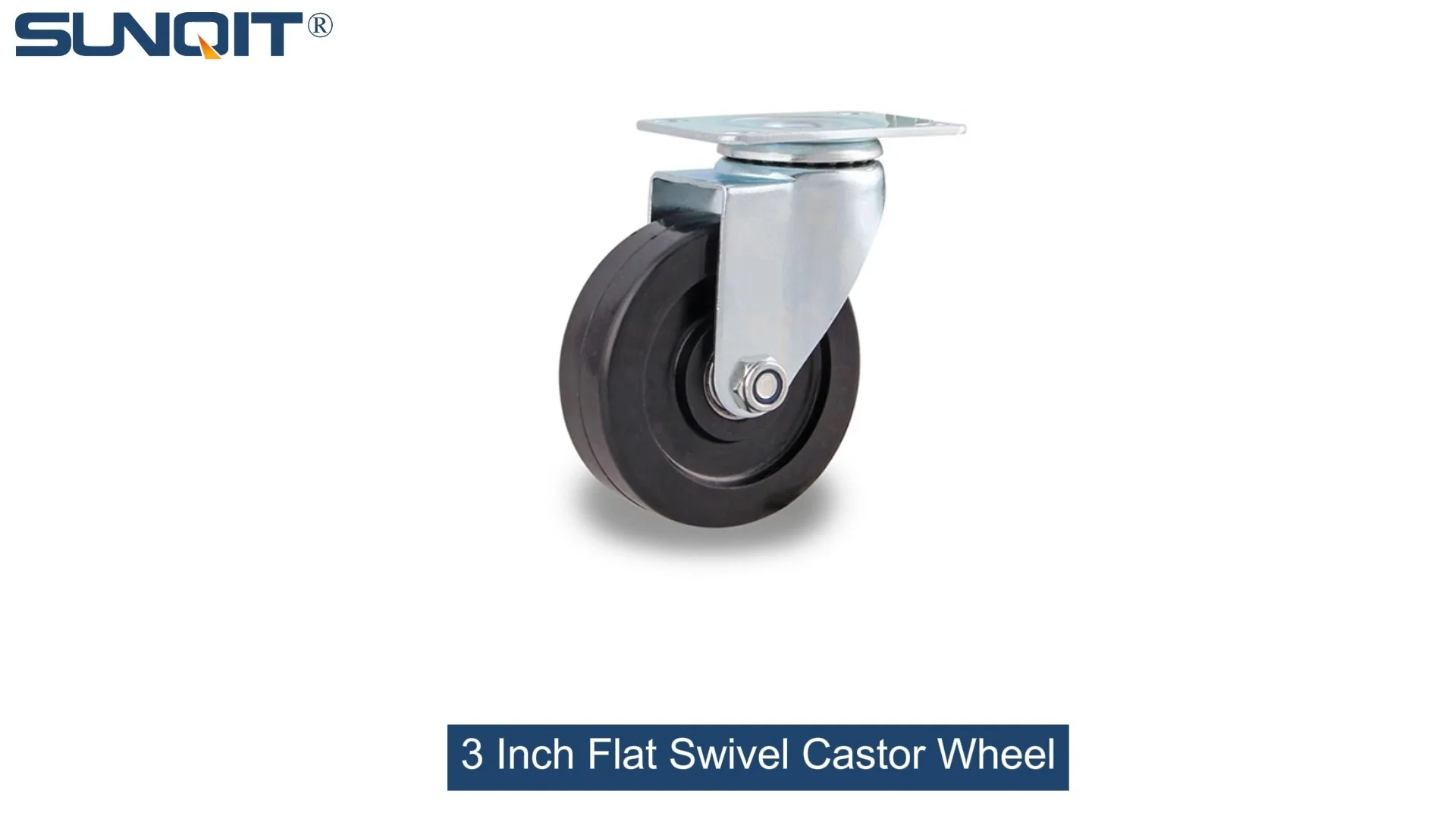
The unsung hero keeping production lines moving, one smooth roll at a time
Introduction: The Quiet Force Behind Manufacturing Mobility
Walk onto any manufacturing floor, and you'll notice the rhythm immediately: the hum of conveyor belts, the clink of tools, the steady of workers moving between stations. But beneath all that activity, there's a quieter force at work—one that keeps everything from heavy workbenches to loaded trolleys gliding where they need to be, when they need to be there. That force? Castor wheels. And among the many types of castors that power modern factories, the flat swivel castor wheel stands out as a workhorse, blending flexibility, durability, and precision to solve some of the most common mobility challenges in manufacturing.
Think about it: When a line supervisor needs to reposition a workbench to accommodate a new assembly process, or a warehouse worker needs to transport a cart full of components from storage to the production line, or a team needs to shift a material rack to clear space for a new machine—none of these tasks would be possible without reliable castors. And not just any castors: flat swivel castor wheels, with their unique design, are often the first choice for these jobs. They're the reason a 500-pound workbench can be moved with one hand, or a trolley loaded with fragile parts can navigate a tight corner without tipping. They're the unsung heroes that turn static workspaces into dynamic, adaptable environments.
In this article, we'll dive deep into what makes flat swivel castor wheels so essential. We'll start by defining exactly what they are and how they work, then explore their core functions in manufacturing settings. We'll look at why they're preferred over other types of castors, how they integrate with equipment like workbenches and turnover trolleys, and what factors manufacturers should consider when choosing the right ones for their needs. By the end, you'll have a new appreciation for these small but mighty components—and maybe even start noticing them everywhere, quietly keeping the world of manufacturing in motion.
What Is a Flat Swivel Castor Wheel? Breaking Down the Basics
Let's start with the fundamentals: What exactly is a flat swivel castor wheel? At its core, a castor wheel is a wheeled device mounted to the bottom of an object (like a trolley, rack, or workbench) to enable easy movement. But the "flat swivel" part adds specific features that set it apart from other castor types. Let's break down the name first: "flat" refers to the mounting style, and "swivel" refers to its ability to rotate. Together, these features create a castor that's both easy to install and incredibly maneuverable.
Defining the "Flat" in Flat Swivel Castor Wheel
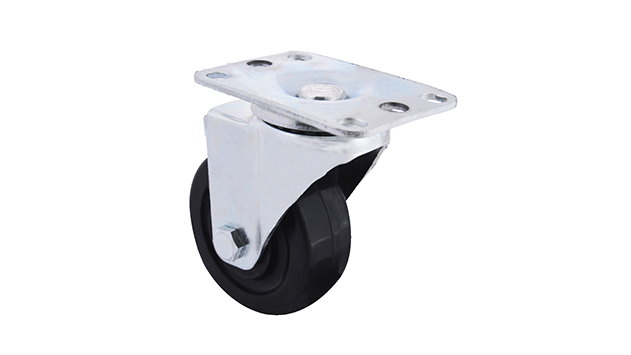
The term "flat" here describes the mounting plate—the part of the castor that attaches to the object being moved. Unlike "stem" castors, which use a rod (or "stem") to bolt or screw into a hole, flat swivel castor wheels have a flat, rectangular or square metal plate with pre-drilled holes. This plate is bolted directly to the bottom of the equipment, creating a strong, stable connection. Think of it like attaching a sturdy base to a piece of furniture: the flat plate distributes the weight of the load evenly across the mounting surface, reducing stress on the equipment and ensuring the castor stays securely in place, even under heavy use.
This flat mounting design is a key advantage in manufacturing. For one, it's versatile: flat plates can be attached to almost any flat surface, from the steel frame of a workbench to the wooden base of a turnover trolley. They're also easy to install and replace—no need for specialized tools or complex fittings. Just line up the holes, bolt it down, and you're ready to roll. And because the plate spreads the load, flat swivel castor wheels can typically handle heavier weights than stem castors of the same size, making them ideal for industrial applications where loads can range from a few hundred pounds to several thousand.
The "Swivel" Factor: 360-Degree Freedom of Movement
If the "flat" part is about stability, the "swivel" part is about flexibility. A swivel castor wheel can rotate 360 degrees around its vertical axis, allowing the equipment it's attached to move in any direction—forward, backward, sideways, or diagonally—with minimal effort. This is a game-changer in manufacturing, where space is often tight and maneuverability is critical. Imagine trying to push a trolley with fixed (non-swivel) castors around a corner: you'd have to stop, reposition, and push again. With swivel castors, the wheels pivot automatically as you push, letting you glide around obstacles or navigate narrow aisles with a simple turn of the wrist.
The swivel mechanism itself is a marvel of simple engineering. Inside the castor's housing, there's a raceway (a circular track) with ball bearings or roller bearings that allow the swivel head to rotate smoothly. High-quality flat swivel castor wheels use precision bearings to reduce friction, ensuring the swivel action remains easy even after years of heavy use. Some models also include a "swivel lock," a small lever or pedal that locks the swivel head in place, turning the swivel castor into a rigid castor when needed (useful for keeping equipment stationary during use).
Anatomy of a Flat Swivel Castor Wheel: Key Components
To truly understand how flat swivel castor wheels work, let's break them down into their basic components. While designs can vary slightly between manufacturers, most share these core parts:
- Mounting Plate: The flat, metal plate (usually steel or aluminum) that attaches to the equipment. It has pre-drilled holes for bolts or screws, ensuring a secure fit.
- Swivel Head: The housing that connects the mounting plate to the wheel. It contains the bearings and allows 360-degree rotation.
- Wheel: The circular component that touches the floor. Wheels come in various materials (rubber, polyurethane, nylon, steel) and sizes (from 2 inches to 8 inches or more), depending on the load capacity and floor type.
- Axle: The rod that runs through the wheel, holding it in place and allowing it to rotate around the horizontal axis.
- Bearings: Located in both the swivel head (for rotation) and the wheel (for rolling). Bearings reduce friction, making movement smoother and easier.
- Brake (Optional): A mechanism (often a foot pedal) that locks the wheel in place to prevent accidental movement. Some brakes lock both the wheel and the swivel head for maximum stability.
Each of these components plays a role in the castor's performance. For example, a larger wheel diameter makes it easier to roll over uneven floors or small obstacles (like cracks or debris), while a softer wheel material (like rubber) provides better traction and reduces noise. The mounting plate's thickness and material determine how much weight the castor can support, and the quality of the bearings affects how smoothly the castor swivels and rolls over time.
How Flat Swivel Castor Wheels Differ from Other Castor Types
Not all castors are created equal. In manufacturing, you'll encounter several types of castors, each designed for specific tasks. Understanding how flat swivel castor wheels compare to these alternatives will help you see why they're so widely used. Let's take a look at the most common competitors:
Rigid Castors: The Fixed Alternative
Rigid castors (also called "fixed" castors) don't swivel—they only roll forward and backward in a straight line. They're simple, durable, and often cheaper than swivel castors, but their lack of maneuverability makes them unsuitable for most manufacturing applications where equipment needs to change direction. You might see rigid castors on large, heavy machinery that rarely moves (like industrial ovens) or on the back of trolleys to provide stability (paired with swivel castors on the front). But for standalone use, they're too limiting: imagine trying to park a trolley with only rigid castors in a tight space—you'd need a perfectly straight path, which is rare on a busy factory floor.
Stem Castors: For Recessed Mounting
Stem castors use a metal stem (a long, threaded rod or smooth shaft) instead of a flat mounting plate. The stem is inserted into a pre-drilled hole in the equipment, then secured with a nut or bolt. They're popular for furniture (like office chairs) or lightweight equipment where a flat plate might be too bulky. However, in manufacturing, stem castors have two big drawbacks: they're less stable than flat plate castors (the stem can bend under heavy loads), and they're harder to install and replace (you need precise hole alignment). Flat swivel castor wheels, with their wide mounting plates, distribute weight more evenly and attach quickly with standard bolts—making them the better choice for heavy-duty industrial use.
Heavy-Duty vs. Light-Duty Castors
Castors are also categorized by load capacity: light-duty (up to 200 pounds), medium-duty (200–500 pounds), heavy-duty (500–2,000 pounds), and extra-heavy-duty (over 2,000 pounds). While flat swivel castor wheels come in all these categories, they're particularly popular in medium- to heavy-duty applications. Their flat mounting plates and robust swivel mechanisms make them better equipped to handle heavy loads than stem castors or lightweight swivel castors. For example, a heavy-duty flat swivel castor wheel with a steel mounting plate and polyurethane wheel can easily support 1,000 pounds or more, making it ideal for workbenches, material racks, and large turnover trolleys.
Brake Options: A Key Advantage of Flat Swivel Castors
Many flat swivel castor wheels come with built-in brakes, a feature that sets them apart from some cheaper castor types. Brakes are critical in manufacturing, where equipment needs to stay stationary during use to prevent accidents. There are two common types of brakes in flat swivel castors:
- Wheel Brakes: Lock the wheel itself, preventing it from rolling. These are good for keeping equipment from moving forward/backward but don't stop the swivel action.
- Total Lock Brakes: Lock both the wheel and the swivel head, making the castor completely rigid. These are ideal for workbenches or material racks that need to stay in one position during use, as they prevent both rolling and pivoting.
Rigid castors rarely come with brakes (since they don't move much anyway), and many stem castors skip them to save cost. But in a manufacturing setting, brakes aren't optional—they're a safety necessity. Flat swivel castor wheels, with their integrated brake options, check this box with ease.

Core Functions of Flat Swivel Castor Wheels in Manufacturing
Now that we understand what flat swivel castor wheels are and how they differ from other castors, let's explore their core functions—the specific roles they play in keeping manufacturing operations running smoothly. These functions aren't just "nice to have"; they're critical to productivity, safety, and adaptability in modern factories.
1. Enabling Effortless Mobility of Heavy Equipment
At their most basic level, flat swivel castor wheels solve a simple problem: moving heavy things with minimal effort. In manufacturing, "heavy things" can mean anything from a 300-pound workbench loaded with tools to a 1,000-pound turnover trolley stacked with metal parts. Without castors, moving these items would require multiple workers, forklifts, or even cranes—wasting time and increasing the risk of injury. With flat swivel castor wheels, a single worker can move even the heaviest equipment with a gentle push.
How do they make this possible? It starts with the wheel design. Larger wheels reduce rolling resistance (think of how much easier it is to roll a large tire than a small one), while high-quality bearings minimize friction in both the wheel and the swivel head. The flat mounting plate also plays a role: by distributing the equipment's weight evenly across the castor, it prevents the wheel from sinking into soft floors or getting stuck on uneven surfaces. The result? A load that might feel immovable when stationary becomes surprisingly mobile—saving time and reducing physical strain on workers.
Real-World Example: A mid-sized electronics manufacturer was struggling with a bottleneck in their assembly line. Workers had to walk 50 feet from their workbenches to a central material rack to fetch components, then walk back—wasting 15–20 minutes per hour per worker. The solution? Attach flat swivel castor wheels to the material rack. Now, the rack is wheeled directly to the assembly line, eliminating the need for workers to walk back and forth. Productivity increased by 12% in the first month alone, and worker fatigue dropped.
2. Enhancing Maneuverability in Tight Spaces
Manufacturing floors are rarely wide-open spaces. They're filled with machinery, conveyor belts, storage racks, and workers—all competing for space. In this environment, maneuverability isn't just convenient; it's essential. A trolley that can't navigate a narrow aisle or a workbench that can't be squeezed into a tight corner becomes a liability, slowing down production or forcing costly reconfigurations.
Flat swivel castor wheels excel here, thanks to their 360-degree rotation. When you push a piece of equipment with swivel castors, the wheels automatically pivot to face the direction of movement. This allows for "zero-radius" turning in some cases—meaning the equipment can spin in place—or tight cornering that would be impossible with rigid castors. For example, a turnover trolley with flat swivel castor wheels can glide through a 3-foot-wide aisle and make a 90-degree turn into a 2.5-foot-wide workstation without stopping. This kind of agility keeps workflows smooth and prevents logjams in busy areas.
3. Supporting Dynamic Workspace Reconfiguration
Modern manufacturing isn't static. Production lines change to accommodate new products, seasonal demand fluctuates, and new machinery is added as technology advances. To keep up, factories need to reconfigure their workspaces quickly and frequently. A workspace that's fixed in place (with bolted-down workbenches and stationary racks) can't adapt to these changes—leading to inefficiencies or the need for expensive renovations.
Flat swivel castor wheels turn static workspaces into dynamic ones. With castors, workbenches can be rearranged in hours instead of days, material racks can be shifted to make room for new equipment, and entire production cells can be reorganized to optimize workflow. This flexibility is a competitive advantage: manufacturers that can adapt quickly to changes in demand or product design are more likely to stay ahead in a fast-paced market.
Consider a furniture manufacturer that produces both sofas and chairs. During peak sofa season, they need large workbenches and wide aisles for moving frames. During chair season, they need smaller workstations and more storage for upholstery materials. With flat swivel castor wheels on all their equipment, they can switch between layouts in a single shift—no tools, no construction, no downtime. That's the power of mobility.
4. Improving Safety and Ergonomics
Safety and ergonomics are top priorities in manufacturing, and flat swivel castor wheels contribute to both. Let's start with ergonomics: pushing or pulling heavy equipment without proper castors requires significant physical effort, which can lead to musculoskeletal injuries (like back strain or repetitive stress injuries) over time. Flat swivel castor wheels reduce the force needed to move equipment by up to 80%, according to industry studies, making tasks far easier on workers' bodies.
On the safety front, flat swivel castor wheels with brakes prevent accidental movement. A workbench that rolls away while a worker is using it, or a trolley that slips down a slight incline, could cause serious injuries. Brake-equipped castors lock the equipment in place, ensuring stability during use. Additionally, the smooth rolling action of high-quality castors reduces the risk of trips and falls—unlike uneven or stuck castors, which can cause equipment to jerk or wobble, creating hazards.
Some flat swivel castor wheels also include features like non-marking wheels (to protect floor finishes), shock-absorbing tires (to reduce noise and vibration), or chemical-resistant materials (to withstand oils, solvents, or cleaning agents common in manufacturing). These features don't just make the castors more durable—they make the entire workspace safer and more pleasant for workers.

Applications: Where Flat Swivel Castor Wheels Shine in Manufacturing
Flat swivel castor wheels aren't just theoretical—they're practical, and they're used in hundreds of ways across manufacturing facilities. Let's look at some of the most common applications, where their unique combination of mobility, stability, and maneuverability makes them indispensable.
Workbenches: The Heart of the Production Line
Workbenches are the command centers of manufacturing. This is where assembly happens, tools are stored, and workers spend most of their day. But a workbench that's bolted to the floor is limited: if the production line moves, or a new process requires a different layout, the workbench becomes a dead weight. Enter flat swivel castor wheels. By attaching castors to workbenches, manufacturers turn them into mobile stations that can be positioned exactly where they're needed.
For example, in automotive manufacturing, a workbench used for assembling car door handles might need to be moved closer to the door assembly line during peak production, then shifted back to make room for a quality control station during inspections. With flat swivel castor wheels, this takes minutes instead of hours. Some workbenches even come with built-in swivel locks and brakes, allowing workers to lock the bench in place during use (for stability) and unlock it when it's time to move. The result? A more flexible, efficient workspace that adapts to the task at hand.
Turnover Trolleys and Racks: Moving Materials with Ease
In any manufacturing facility, materials need to move—from storage to production, from one station to the next, and from finished goods to shipping. Turnover trolleys and racks are the primary tools for this job, and they rely heavily on flat swivel castor wheels to do their work. A turnover trolley is a wheeled cart used to transport parts, components, or finished products, while a turnover rack is a larger, shelved unit for storing and moving bulk materials.
These trolleys and racks can be loaded with hundreds of pounds of goods, so their castors need to be both strong and maneuverable. Flat swivel castor wheels are perfect for this: their flat mounting plates distribute the weight evenly, preventing the trolley from tipping, while their swivel action allows workers to navigate through narrow aisles or around obstacles. For example, a turnover trolley loaded with 800 pounds of plastic injection molds can be pushed by one person from the warehouse to the injection molding machine, even if the path includes a few tight turns. And a turnover rack with flat swivel castor wheels can be rolled up to a conveyor belt for easy loading/unloading, then moved to storage when empty.
Material Racks and Flow Racks: Organizing and Accessing Inventory
Material racks (used for storing raw materials, tools, or finished goods) and flow racks (used for "first-in, first-out" inventory management) are staples in manufacturing. Like workbenches and trolleys, these racks benefit enormously from flat swivel castor wheels. A static material rack might be fine for long-term storage, but for frequently accessed items, mobility is key. With castors, a material rack can be positioned next to the production line during the day for easy access, then rolled back to the warehouse at night to free up floor space.
Flow racks, which use gravity to feed materials to workers (via roller tracks), are often paired with flat swivel castor wheels to allow for quick repositioning. For example, if a production line is reconfigured, the flow rack can be moved to align with the new line layout, ensuring materials still flow smoothly to workers. The castors also make it easy to clean under and around the rack—an important consideration for maintaining a hygienic workspace, especially in industries like food processing or pharmaceuticals.
Specialized Equipment: From Testing Stations to Mobile Workstations
Beyond the basics, flat swivel castor wheels are used on a variety of specialized manufacturing equipment. Testing stations (used to inspect products for quality), mobile tool chests (for storing and transporting tools), and even small conveyor sections (for temporary production lines) all rely on castors for mobility. For example, a testing station for electronic components might need to be moved between different production lines to test different products. With flat swivel castor wheels, it can be positioned next to each line, plugged in, and put to work—no need for multiple fixed testing stations.
Choosing the Right Flat Swivel Castor Wheel: Key Factors to Consider
Not all flat swivel castor wheels are created equal, and choosing the wrong ones can lead to frustration, downtime, or even safety risks. To ensure you select the best castors for your manufacturing needs, consider these key factors:
Load Capacity: Matching the Castor to the Load
The most critical factor is load capacity: how much weight each castor can support. This is usually listed as a per-castor weight limit (e.g., 250 pounds per castor). To calculate the total load capacity needed, take the weight of the equipment plus the maximum weight of materials it will carry, then divide by the number of castors. For example, a workbench that weighs 300 pounds and will hold 200 pounds of tools needs 500 pounds of total capacity. With 4 castors, you'd need each castor to support at least 125 pounds (but it's smart to add a 20–30% safety margin, so 150–160 pounds per castor).
Overloading castors is a common mistake, and it leads to premature wear, broken wheels, or swivel mechanisms that seize up. Always err on the side of higher capacity than you think you need—especially for equipment that might be loaded unevenly (like a trolley with materials stacked to one side).
Wheel Material: Choosing for Floor Type and Environment
The wheel material affects everything from rolling resistance to floor protection to durability. Here's a quick guide to common wheel materials and their best uses:
| Wheel Material | Best For | Pros | Cons |
|---|---|---|---|
| Polyurethane (PU) | Smooth floors (concrete, tile, vinyl) | Quiet, non-marking, good traction, absorbs shocks | Not ideal for rough surfaces; can wear quickly on gravel or uneven concrete |
| Rubber | Indoor/outdoor use, uneven floors | Excellent traction, shock-absorbent, weather-resistant | Can leave marks on smooth floors; heavier than PU |
| Nylon | Heavy loads, rough surfaces | High load capacity, durable, chemical-resistant | Harder ride (less shock absorption); noisy on smooth floors |
| Steel | Extremely heavy loads, industrial settings | Maximum durability, high temperature resistance | Damages soft floors (wood, vinyl); noisy; requires lubrication |
For most manufacturing floors (smooth concrete or epoxy), polyurethane or rubber wheels are the best choice—they're quiet, protect floors, and roll easily. For outdoor use or rough surfaces, rubber or nylon works better. For extreme loads (over 2,000 pounds), steel might be necessary.
Wheel Size: Balancing Maneuverability and Stability
Wheel size (measured by diameter) affects both maneuverability and the ability to roll over obstacles. Smaller wheels (2–3 inches) are more maneuverable and better for tight spaces but struggle with cracks, thresholds, or debris. Larger wheels (5–8 inches) roll over obstacles more easily and reduce rolling resistance (making them better for heavy loads) but take up more space and are less agile in tight corners.
A good rule of thumb: use smaller wheels (2–4 inches) for light loads and tight spaces (like workbenches in cramped assembly lines), and larger wheels (5–8 inches) for heavy loads or uneven floors (like turnover trolleys moving between warehouses and production areas).
Brake Type: Ensuring Safety During Use
As we discussed earlier, brakes are critical for safety. Decide whether you need wheel brakes (to prevent rolling) or total lock brakes (to prevent both rolling and swiveling). For workbenches and material racks that stay in one place during use, total lock brakes are best. For trolleys that are moved frequently but need to stay still during loading/unloading, wheel brakes may be sufficient.
Environmental Factors: Chemicals, Temperatures, and Cleanliness
Finally, consider the environment where the castors will be used. If the area is exposed to oils, solvents, or chemicals (like in automotive or aerospace manufacturing), choose wheels and bearings that are chemical-resistant (nylon or stainless steel). If temperatures are extreme (hot ovens or cold storage), look for heat-resistant or cold-resistant materials. In cleanrooms (like semiconductor manufacturing), choose non-shedding wheels and sealed bearings to prevent contamination.
Maintenance: Keeping Flat Swivel Castor Wheels Rolling Smoothly
Even the best flat swivel castor wheels need a little care to perform their best. Regular maintenance not only extends their lifespan but also ensures they remain safe and easy to use. Here are some simple tips to keep your castors in top shape:
Clean Them Regularly
Manufacturing floors can be dirty places—dust, debris, oil, and metal shavings can all get trapped in castor wheels or swivel mechanisms, causing friction and wear. At least once a week (more often in dirty environments), wipe down the wheels and swivel heads with a damp cloth to remove buildup. For stubborn grime, use a small brush (like a toothbrush) to clean out the bearings or wheel axles.
Lubricate Moving Parts
The swivel head and wheel bearings rely on lubrication to rotate smoothly. Every 3–6 months (or more often for heavily used castors), apply a high-quality lubricant (like lithium grease or silicone spray) to the swivel raceway and wheel axles. This reduces friction, prevents rust, and keeps the castors rolling easily. Be sure to wipe away excess lubricant to avoid attracting more dirt.
Check for Wear and Tear
Inspect castors regularly for signs of damage: cracked wheels, worn bearings, loose bolts, or bent mounting plates. If a wheel is unevenly worn (a sign of misalignment), or if the swivel action feels stiff or jerky, it may be time to replace the castor or its components. Don't wait for a castor to fail completely—small issues can quickly turn into safety hazards if ignored.
Tighten Loose Bolts
The mounting plate bolts can loosen over time, especially on heavily used equipment. Check these bolts monthly and tighten them with a wrench if they're loose. Loose bolts can cause the castor to wobble, leading to uneven wear or even detachment from the equipment.
replace Worn Components
Many castor manufacturers sell replacement parts (like wheels, bearings, or brakes) separately, so you don't have to replace the entire castor if one component fails. For example, if a wheel becomes cracked, you can simply swap it out for a new one instead of buying a whole new castor. This saves money and reduces waste.
Conclusion: Small Wheels, Big Impact
Flat swivel castor wheels may be small, but their impact on manufacturing is enormous. They're the reason factories can adapt to changing demands, workers can move heavy equipment with ease, and production lines can flow smoothly from start to finish. They turn static workspaces into dynamic, flexible environments, reduce physical strain on workers, and improve safety and productivity across the board.
From workbenches that glide to where they're needed, to turnover trolleys that navigate tight aisles, to material racks that shift with the production line—flat swivel castor wheels are the unsung heroes making it all possible. They're a reminder that in manufacturing, even the smallest components can have the biggest impact. So the next time you walk onto a factory floor, take a moment to notice the castors: quietly rolling, pivoting, and supporting the machinery of modern production. They may not get the glory, but they're the reason everything else moves forward.
Whether you're a manufacturer looking to upgrade your equipment, a facility manager aiming to improve workflow, or simply someone curious about how things work, understanding flat swivel castor wheels is key to building a more efficient, adaptable, and successful manufacturing operation. After all, in a world that's always moving, the ability to roll with the changes isn't just an advantage—it's essential. And with flat swivel castor wheels, you'll always be ready to roll.