- Company Articles
- Products and Technology
- Product knowledge
- What Is a Flat Swivel Castor Wheel with Brake? Definition & Key Features for Industrial Use

What Is a Flat Swivel Castor Wheel with Brake? Definition & Key Features for Industrial Use
Related Product
Flat Swivel Castor Wheel With Brake
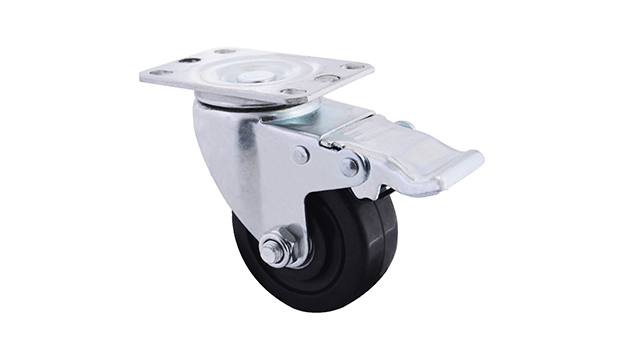
Chair Casters Ball Bearing Wheels Rubber Base with brake design. Resistant to abrasion, impact and corrosion. Heavy payload can hold 70Kgs per pcs,which can make it works at a stable and smooth status.
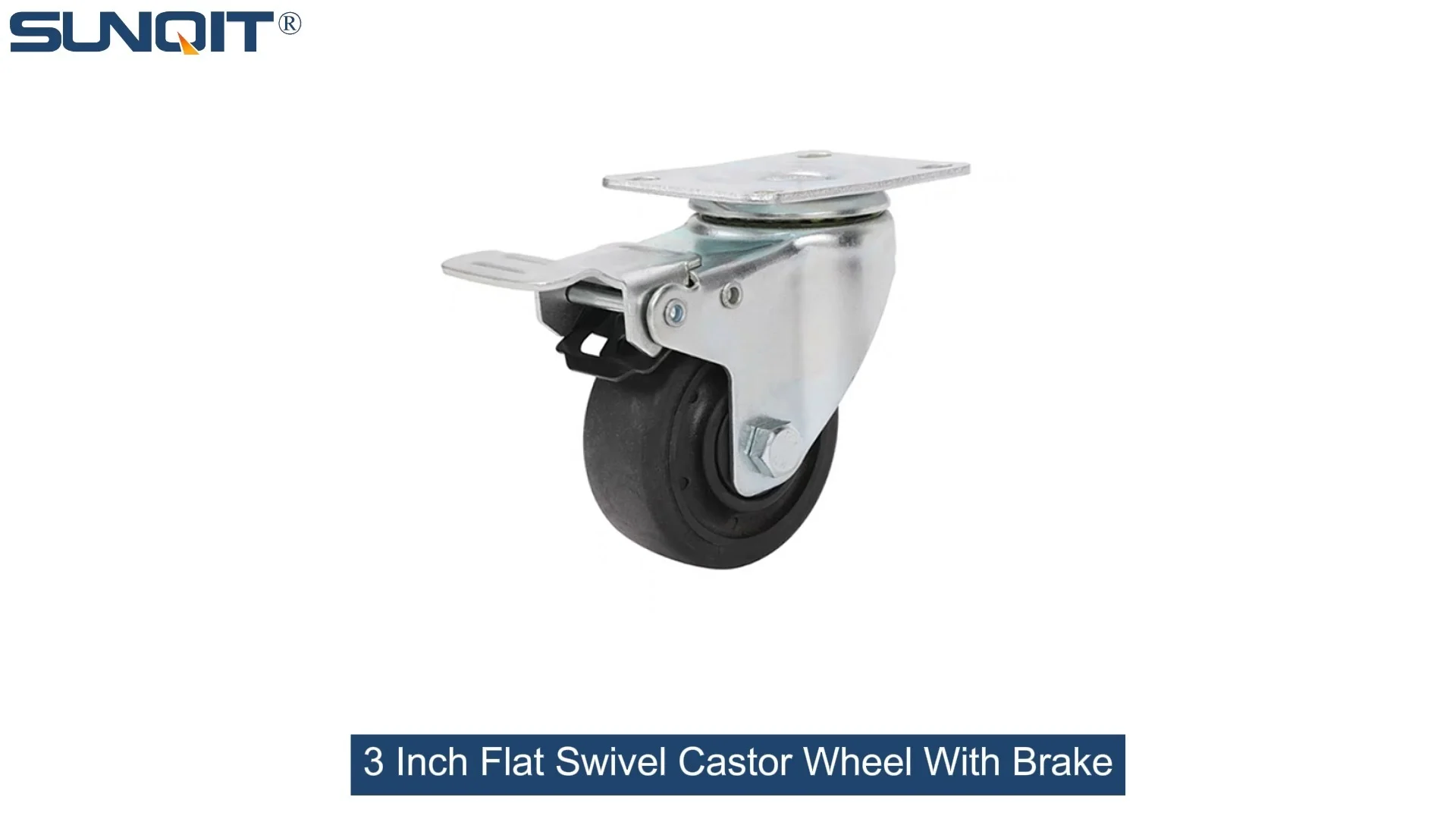
In the bustling world of industrial facilities—where assembly lines hum, materials flow, and workstations adapt to shifting demands—there's a quiet hero keeping operations moving smoothly: the caster wheel. These small but mighty components bear the weight of heavy equipment, enable quick reconfigurations, and ensure safety in dynamic environments. Among the many types of caster wheels, one stands out for its versatility and reliability in industrial settings: the flat swivel castor wheel with brake . But what exactly is it, and why does it matter in factories, warehouses, and manufacturing plants? Let's dive in.
Defining the Flat Swivel Castor Wheel with Brake
At its core, a flat swivel castor wheel with brake is a mobility solution designed to attach to equipment, allowing it to move freely while offering precise control over movement. Let's break down its name to understand its key components:
- Flat : Refers to the mounting plate—a flat, sturdy metal (often steel or aluminum) plate with pre-drilled holes. This plate bolts directly to the bottom of equipment (like workbenches, trolleys, or racks), creating a secure connection.
- Swivel : The castor can rotate 360 degrees around a vertical axis, thanks to a swivel mechanism (typically ball bearings or a raceway). This allows the equipment to maneuver around corners, tight spaces, and obstacles with minimal effort.
- Caster Wheel : The wheel itself, made from materials like polyurethane, rubber, or steel, which bears the load and rolls across floors.
- With Brake : A built-in braking system that locks the wheel (and sometimes the swivel mechanism) to prevent unwanted movement. This is critical for stability when the equipment is in use.
Unlike rigid castors (which only roll forward/backward) or swivel castors without brakes (which offer movement but no fixed position), this type strikes a balance between mobility and stability—making it indispensable in industrial settings where equipment needs to be both movable and secure.
Key Features: What Makes It Ideal for Industrial Use
Industrial environments demand durability, precision, and safety. The flat swivel castor wheel with brake is engineered with these needs in mind, boasting features that set it apart from standard casters. Let's explore the most critical ones:
1. Smooth Swivel Mechanism
The swivel function is what gives this castor its maneuverability, and its performance hinges on the quality of the swivel mechanism. Most industrial-grade models use double ball bearings or a precision raceway (a circular track for ball bearings) to ensure smooth, friction-free rotation. This allows even heavy equipment (like loaded workbenches or material racks) to be pushed or pulled with minimal force—reducing strain on workers and improving efficiency.
For example, in automotive assembly plants, where workstations are reconfigured daily to accommodate different vehicle models, a castor with a high-quality swivel mechanism ensures that tool carts and parts trolleys can glide around tight corners without jamming or requiring excessive effort.
2. Reliable Braking Systems
The brake is arguably the most important safety feature of this castor. Without it, equipment could roll unexpectedly, causing accidents, damage to materials, or disruptions to workflows. Industrial flat swivel castors with brakes typically offer two main types of braking mechanisms:
| Brake Type | Operation | Primary Function | Ideal Application | Advantages | Disadvantages |
|---|---|---|---|---|---|
| Total Lock Brake | Engaged via a foot lever; presses a pad against the wheel and locks the swivel mechanism. | Locks both wheel rotation and swivel movement. | Heavy equipment (e.g., workbenches with power tools, medical carts). | Maximum stability; prevents both rolling and swiveling. | Slightly higher profile; may require more force to engage. |
| Directional Lock Brake | Engaged via a lever that inserts a pin into the swivel raceway. | Locks swivel rotation but allows the wheel to roll straight. | Long-distance transport (e.g., turnover trolleys moving along aisles). | Maintains straight-line movement; reduces drift. | Does not prevent rolling; requires additional wheel locks for full stability. |
| Side Lock Brake | Engaged by flipping a lever on the side of the castor, pressing a brake pad against the wheel. | Locks only wheel rotation; swivel remains free. | Light to medium loads (e.g., mobile shelving, small tool carts). | Compact design; easy to engage with one foot. | Does not prevent swiveling; less stable for heavy loads. |
3. Durable Wheel Materials
The wheel is the point of contact with the floor, so its material directly impacts performance, floor protection, and longevity. Industrial flat swivel castors with brakes use wheel materials tailored to specific environments:
- Polyurethane (PU) : The most common choice for general industrial use. PU wheels are non-marking (safe for finished floors like concrete or epoxy), quiet (reducing noise in busy facilities), and offer good shock absorption (protecting fragile materials). They work well in dry, clean environments like electronics assembly plants.
- Rubber : Ideal for uneven or rough floors (e.g., warehouses with cracked concrete). Rubber wheels absorb vibrations, making them suitable for transporting delicate parts. However, they may wear faster on abrasive surfaces.
- Steel : Designed for heavy loads (up to 10,000 lbs per castor) and harsh conditions (e.g., foundries, outdoor yards). Steel wheels are resistant to chemicals, high temperatures, and impacts but can mark floors and are noisy.
- Nylon : Lightweight yet strong, nylon wheels are resistant to oils, greases, and chemicals—perfect for automotive or machining shops where spills are common. They roll easily on smooth floors but may crack under extreme impacts.
4. High Load Capacity
Industrial equipment isn't light. A single workbench might hold hundreds of pounds of tools, while a turnover trolley could carry pallets of raw materials. Flat swivel castors with brakes are rated for specific load capacities, ranging from light-duty (200–500 lbs per castor) to heavy-duty (over 2,000 lbs per castor) . This rating accounts for the strength of the mounting plate, swivel mechanism, and wheel axle.
For example, a workbench used in a manufacturing plant might require four medium-duty castors (each rated for 800 lbs) to safely support a total load of 3,200 lbs (including the bench itself and tools). Choosing a castor with a load capacity higher than the expected weight is critical to prevent failure.
5. Corrosion and Wear Resistance
Industrial environments are tough: floors may be wet, oily, or exposed to chemicals; temperatures can fluctuate; and debris (like metal shavings or dust) can grind against components. To withstand this, flat swivel castors with brakes are built with corrosion-resistant materials:
- Mounting Plate & Swivel Head : Often made from galvanized steel, stainless steel, or powder-coated steel to resist rust and scratches.
- Bearings : Sealed ball bearings prevent dust, moisture, and debris from entering the swivel mechanism, extending its lifespan.
- Brake Components : Brake levers and pads are made from durable plastics or reinforced rubber to withstand repeated use without cracking or warping.
Applications: Where It Shines in Industrial Settings
The flat swivel castor wheel with brake isn't a one-trick pony. Its versatility makes it a staple in countless industrial applications. Here are some of the most common uses:
1. Workbenches
Modern industrial workbenches are no longer fixed to the floor. With flat swivel castors with brakes, they become mobile workstations that can be moved to where they're needed most. For example, in a electronics assembly line, a workbench with these castors can be positioned next to a conveyor for easy access to components, then locked in place to ensure stability while workers assemble circuit boards. When the line reconfigures for a new product, the bench can be quickly wheeled to a new location—minimizing downtime.
2. Turnover Trolley and Rack
Turnover trolley and rack systems are used to transport materials between departments (e.g., from the warehouse to the assembly line). These trolleys often carry heavy loads (like boxes of parts or pallets of raw materials), so they need castors that can handle weight while offering control. Flat swivel castors with brakes allow workers to push the trolley smoothly through aisles, then lock it in place at the destination to unload safely—preventing the trolley from rolling away during loading/unloading.
3. Material Racks and Storage Systems
In warehouses, space is precious. Material racks equipped with flat swivel castors with brakes can be moved to make room for larger shipments or reorganized to optimize workflow. For instance, a material rack B (3 row and 3 floor) (a common industrial rack with multiple shelves) can be rolled aside when not in use, then locked in place when storing or retrieving items. The swivel feature makes it easy to position the rack exactly where needed, even in tight spaces.
4. Lean Manufacturing Systems
Lean manufacturing focuses on reducing waste and improving efficiency—and the flat swivel castor wheel with brake aligns perfectly with these goals. In lean systems , equipment must be flexible to adapt to changing production demands. For example, a mobile assembly station with these castors can be repositioned in minutes to create a U-shaped workflow (reducing worker movement), then locked down to maintain stability. The brake ensures that tools and materials stay in place, eliminating waste from dropped items or rework due to instability.

Choosing the Right Flat Swivel Castor Wheel with Brake: Key Considerations
Not all flat swivel castors with brakes are created equal. To ensure you select the best option for your needs, consider these factors:
- Load Capacity : Calculate the total weight of the equipment plus its maximum load, then divide by the number of castors (typically 4–6 per unit) to determine the required capacity per castor. Always add a 20% buffer to account for uneven loading.
- Floor Type : For smooth floors (concrete, epoxy), polyurethane or nylon wheels work best. For rough or uneven floors, opt for rubber or steel wheels. Avoid hard wheels (like steel) on delicate floors (e.g., hardwood or tile) to prevent scratches.
- Environment : If your facility is wet, oily, or corrosive (e.g., food processing, chemical plants), choose stainless steel or galvanized components. For high temperatures (e.g., foundries), heat-resistant wheels (like steel) are a must.
- Brake Type : For equipment that needs to stay completely stationary (e.g., workbenches with power tools), a total lock brake is best. For trolleys used for transport, a directional lock brake may suffice. For light loads, a side lock brake offers simplicity.
- Maneuverability : In tight spaces (e.g., narrow aisles), smaller wheels (3–4 inches) are more agile. For long-distance transport, larger wheels (5–8 inches) roll more easily and reduce worker fatigue.

Maintenance Tips: Keeping Your Castors in Top Shape
Even the best castors need care to perform well over time. Here are simple maintenance steps to extend their lifespan:
- Clean Regularly : Wipe wheels and swivel mechanisms with a damp cloth to remove debris (like dust, metal shavings, or oil). Built-up debris can jam the swivel or damage the brake.
- Lubricate the Swivel Mechanism : Apply a light machine oil or grease to the swivel bearings every 3–6 months (more often in dusty environments) to ensure smooth rotation.
- Inspect Brakes : Test brakes weekly to ensure they engage/disengage smoothly. Tighten loose brake levers or replace worn brake pads promptly—faulty brakes are a safety hazard.
- Check Wheels for Wear : Look for cracks, flat spots, or uneven wear on wheels. replace worn wheels immediately to prevent instability or floor damage.
- Tighten Mounting Bolts : Over time, vibrations can loosen the bolts attaching the castor to the equipment. Check and tighten them monthly to avoid the castor detaching.
Conclusion: The Unsung Hero of Industrial Mobility
The flat swivel castor wheel with brake may be small, but its impact on industrial operations is enormous. By combining mobility (via the swivel mechanism), control (via the brake), and durability (via robust materials), it enables safer, more efficient workflows in factories, warehouses, and manufacturing plants. Whether it's supporting a mobile workbench, a turnover trolley and rack, or a material rack in a lean system, this castor ensures equipment moves when needed and stays put when it matters most.
When selecting a flat swivel castor wheel with brake, remember: the right choice depends on your specific needs—load capacity, floor type, environment, and application. With proper selection and maintenance, these castors will keep your operations rolling smoothly for years to come.