- Company Articles
- Products and Technology
- Product knowledge
- What Is a Four Way Straight Lean Pipe Joint? Definition & Key Features

What Is a Four Way Straight Lean Pipe Joint? Definition & Key Features
Related Product
Four Way Straight Lean Pipe Joint
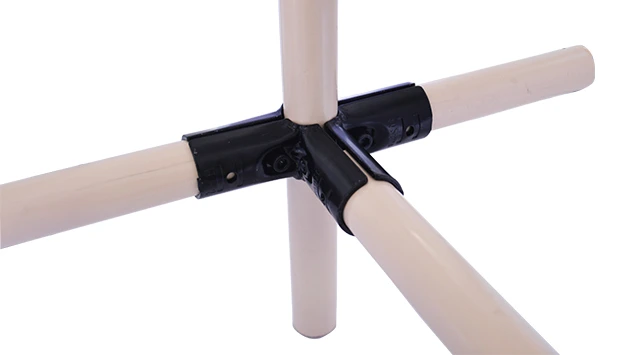
Four way lean pipe joint for 4 pcs 28MM lean pipe connection in straight angle, which used widely in workbench, flow rack, hand trolley frame connection.
Walk into any modern manufacturing facility, warehouse, or assembly line, and you'll likely spot a network of sleek, modular structures: workbenches that adjust in minutes, flow racks that glide materials from station to station, and trolleys that zip across the floor with ease. Behind all these dynamic setups lies a quiet hero of lean manufacturing: the lean pipe system. And at the heart of that system? Components like the four way straight lean pipe joint—small in size, but mighty in impact. Let's dive into what makes this unassuming connector a cornerstone of efficient, adaptable production.
Lean Manufacturing 101: Why the Right Joints Make All the Difference
First, let's take a step back. Lean manufacturing isn't just a buzzword—it's a philosophy centered on cutting waste, streamlining workflows, and making every process as efficient as possible. Whether it's reducing the time a worker spends reaching for tools or minimizing the space wasted on clunky, fixed equipment, lean is all about flexibility. And flexibility, in the world of production, often starts with the physical structures we build.
Enter lean pipe systems. These systems use lightweight, durable pipes (often steel, aluminum, or PE-coated) and a variety of joints to create everything from workbenches to material racks. Unlike traditional fixed furniture or custom-built machinery, lean pipe systems are modular—meaning you can assemble, disassemble, and reconfigure them on the fly. Need to add a shelf to a workbench? Swap out a section of a flow rack to fit larger parts? No problem. But none of this would be possible without reliable, versatile joints. And that's where the four way straight lean pipe joint comes into play.
Defining the Four Way Straight Lean Pipe Joint: More Than Just a Connector
So, what exactly is a four way straight lean pipe joint? At its core, it's a specialized connector designed to join four lean pipes together in a stable, secure configuration. Picture this: you're building a multi-level material rack (like the material rack b (3 row and 3 floor) you might see in a busy warehouse). To support the weight of boxes and ensure the structure doesn't wobble, you need a joint that can anchor pipes coming from multiple directions—maybe vertical supports, horizontal shelves, and cross-braces. A four way joint does exactly that: it acts as a central hub, linking four pipes (often in straight or perpendicular paths) to create a rigid, yet adaptable framework.
But it's not just about holding pipes together. These joints are engineered with lean principles in mind. They're typically made from materials like zinc-plated steel, stainless steel (part of the stainless steel pipe series ), or even aluminum for lighter applications, ensuring they can handle the daily wear and tear of a production environment. Most importantly, they're designed for quick assembly—no welding or complex tools required. A simple hex key or wrench is often all you need to tighten or loosen the joint, making reconfiguration a breeze.

Key Features That Set Four Way Straight Lean Pipe Joints Apart
What makes these joints so indispensable? Let's break down their standout features:
1. Multi-Directional Connectivity : As the name suggests, "four way" means the joint can connect four pipes at once. This might be in a straight line (e.g., two pipes along the x-axis, two along the y-axis) or in a cross shape, depending on the design. This versatility is a game-changer for building complex structures—think of it as the Swiss Army knife of lean pipe connectors.
2. Tool-Free (or Minimal-Tool) Assembly : Most four way joints use a clamping mechanism or set screws to secure pipes. This means workers on the shop floor can assemble or modify structures without waiting for a maintenance team with welding equipment. It's a small detail that drastically reduces downtime.
3. Compatibility Across Pipe Types : Whether you're using standard steel lean pipes, aluminum lean pipe for a lighter setup, or even PE coated lean pipe (which adds a protective layer against scratches), four way joints are designed to fit common pipe diameters (often 28mm or 30mm). This compatibility ensures you can mix and match materials without worrying about mismatched parts.
4. Load-Bearing Strength : Don't let their small size fool you. A well-made four way joint can support significant weight. For example, when used in a lean pipe workbench , it might anchor the legs and crossbars, ensuring the bench can hold heavy tools or assemblies without sagging. Manufacturers often specify weight limits (e.g., 50kg per joint), so you can choose the right joint for your needs.
5. Durability for the Long Haul : Production floors are tough environments—dust, moisture, and occasional bumps are par for the course. Four way joints are built to withstand this. Stainless steel versions resist rust, while zinc plating adds a layer of corrosion protection. Even the plastic components (like internal grips) are made from tough nylon or polypropylene to avoid cracking under pressure.

How Four Way Joints Fit Into the Bigger Lean System Picture
To truly appreciate these joints, let's look at how they work in real-world applications. Take a flow rack , for example. Flow racks use roller track and accessories (like swivel roller balls 1 inch or plastic roller track guide rail yellow ) to let materials slide from the back to the front, ensuring first-in, first-out (FIFO) inventory management. To build a flow rack that's both sturdy and efficient, you need vertical supports, horizontal rails for the roller tracks, and cross-braces to prevent swaying. A four way joint at each corner can connect the vertical support, two horizontal rails (for the top and bottom of the rack), and a diagonal brace—all in one spot. This not only saves time during assembly but also ensures the rack can handle the constant movement of goods.
Or consider a lean pipe workbench . A typical workbench might have a flat surface (like the workbench e (single deck-without caster) ), legs, and under-shelf storage. Four way joints can anchor the legs to the tabletop frame and connect the under-shelf supports, creating a stable workspace that can be adjusted if the worker needs more legroom or additional storage. If the company later decides to add casters (using caster and accessories like caster wheel and caster installation base ) to make the bench mobile, the joints make it easy to swap out fixed feet for rolling ones.
Comparing Lean Pipe Joints: When to Choose Four Way Over Other Types
Four way straight lean pipe joints are just one of many joint types available. To understand when to use them, let's compare them to common alternatives:
| Joint Type | Number of Pipes Connected | Best For | Common Materials | Typical Load Capacity |
|---|---|---|---|---|
| Two Way Straight Joint | 2 | Straight lines (e.g., long shelves, conveyor rails) | Steel, Aluminum | Medium (30-50kg per joint) |
| Three Way (Tee) Joint | 3 | Simple branches (e.g., adding a shelf to a vertical support) | Steel, Stainless Steel | Medium-High (40-60kg per joint) |
| Four Way Straight Joint | 4 | Complex structures (e.g., multi-level racks, workbench corners) | Steel, Stainless Steel, Aluminum | High (50-80kg per joint) |
| 90° Crossing Joint | 2 (perpendicular) | Crossing pipes (e.g., horizontal and vertical supports in a grid) | Steel, Zinc-Plated Steel | Medium (35-55kg per joint) |
As the table shows, four way joints excel in scenarios where you need to connect multiple pipes in different directions—think of them as the "cornerstones" of complex structures. If you're building something simple, like a straight conveyor track, a two way joint might suffice. But for a turnover trolley and rack with multiple shelves or a material rack b (3 row and 3 floor) with heavy loads, four way joints provide the stability and connectivity you need.
Material Matters: Steel vs. Aluminum Four Way Joints
When choosing a four way straight lean pipe joint, material is a key consideration. Here's how the two most common options stack up:
Steel Joints : Part of the stainless steel pipe series or zinc-plated steel, these are the workhorses of the bunch. They're heavier, more rigid, and ideal for high-load applications—like supporting full pallets on a material rack or heavy machinery on a workbench. Stainless steel versions are also corrosion-resistant, making them a good fit for environments with moisture or chemicals.
Aluminum Joints : Lighter and more corrosion-resistant than steel, aluminum joints are perfect for applications where weight matters—such as mobile trolleys or temporary structures. They pair well with aluminum lean pipe and aluminum profile systems, offering a sleek, modern look while still providing ample strength for most light to medium loads.
The choice often comes down to your specific needs: if you're building something that stays put and carries heavy items, steel is the way to go. If you need portability or work in a humid environment, aluminum might be better.
Installation and Maintenance: Keeping Your Joints (and Systems) Strong
Installing four way straight lean pipe joints is surprisingly straightforward, but a few tips can ensure a smooth process:
1. Align Pipes First : Before tightening the joint, make sure all four pipes are straight and properly aligned. Misalignment can lead to wobbly structures and uneven weight distribution.
2. Don't Over-Tighten : Most joints use set screws or clamping rings. Over-tightening can strip the threads or damage the pipe coating (especially on PE coated lean pipe ). Tighten until the joint is secure, but stop if you feel resistance.
3. Use the Right Pipe Size : Joints are designed to fit specific pipe diameters (e.g., 28mm, 30mm). Using a pipe that's too small or too large can lead to instability. Check the manufacturer's specs to ensure compatibility.
When it comes to maintenance, these joints are low-fuss. A quick visual inspection every few months is usually enough: check for loose screws, signs of corrosion (especially in steel joints), or cracks in plastic components. If a joint starts to slip or wobble, simply retighten the screws. For stainless steel or aluminum joints, a wipe with a damp cloth to remove dust and debris is all they need to stay in top shape.
The Business Impact: Why Investing in Quality Four Way Joints Pays Off
At the end of the day, lean manufacturing is about results—and four way straight lean pipe joints deliver in spades. Here's how they benefit businesses:
Reduced Downtime : When you can reconfigure a workbench or rack in minutes (thanks to easy-to-adjust joints), you minimize the time spent waiting for custom equipment. This is a lifesaver for small-batch production or industries with frequent product changes.
Lower Costs : Modular systems mean you don't have to buy new furniture every time your needs change. A single set of pipes and joints can be repurposed for years, cutting down on capital expenses.
Improved Ergonomics : Workers are more productive when their tools and materials are within reach. Four way joints let you build workbenches and racks at the perfect height, reducing strain and fatigue.
Scalability : As your business grows, so can your lean systems. Adding a new shelf or extending a conveyor is as simple as adding a few pipes and joints—no need for major overhauls.
Final Thoughts: The Quiet Hero of Lean Production
Four way straight lean pipe joints might not get the same attention as high-tech machinery or flashy software, but they're the backbone of efficient, adaptable production lines. They embody the lean spirit: simple, functional, and focused on adding value without waste. Whether you're building a flow rack to speed up order fulfillment, a lean pipe workbench for assembly, or a turnover trolley to move materials, these joints ensure your system is strong, flexible, and ready to evolve with your business.
So, the next time you walk through a well-organized warehouse or a smooth-running assembly line, take a closer look at the structures around you. Chances are, a four way straight lean pipe joint is holding it all together—quietly, reliably, and with the kind of efficiency that makes lean manufacturing possible.