- Company Articles
- Products and Technology
- Product knowledge
- What Is a Free Flow Chain Conveyor? Core Concepts & Industrial Roles

What Is a Free Flow Chain Conveyor? Core Concepts & Industrial Roles
Related Product
Free Flow Chain Conveyor
The free flow conveyor system uses a free flow chain that can increase the speed of the tooling board that supports the products. This can improve the efficiency and quality of the production process, as well as reduce the wear and tear of the system.
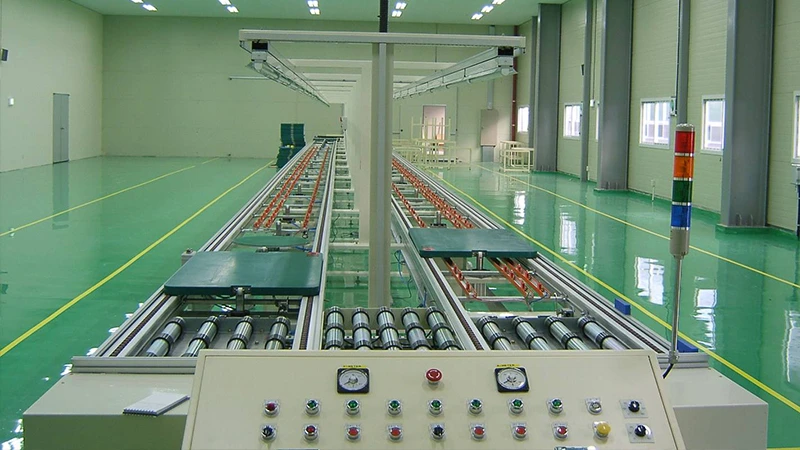
Walk into any modern manufacturing facility, and you'll notice a silent force keeping operations moving: conveyors. Among these, the free flow chain conveyor stands out as a workhorse, quietly ensuring materials and products glide from one station to the next with precision. But what exactly is this unsung hero of the production line, and why has it become indispensable in industries ranging from automotive to electronics? In this article, we'll dive deep into the core concepts of free flow chain conveyors, explore their critical roles in industrial settings, and uncover why they're a cornerstone of efficient, lean manufacturing.
Core Concepts: Breaking Down the Basics
Definition and Mechanism
At its heart, a free flow chain conveyor is a material handling system designed to transport products smoothly along a fixed path using a continuous chain loop. Unlike traditional chain conveyors, which often rely on rigid, interlocking chains to pull items directly, free flow chain conveyors incorporate a series of rollers or slats attached to the chain. This design allows products to "float" or move freely along the conveyor, hence the term "free flow." The chain itself is driven by a motorized sprocket, which rotates to pull the chain through a track or guide rail, ensuring consistent movement. Whether moving small electronic components or larger automotive parts, the system's ability to maintain steady motion while letting products rest on moving rollers makes it a versatile choice for diverse applications.
Key Components
To understand how a free flow chain conveyor operates, let's break down its essential parts:
- Conveyor Chain: Typically made of steel or stainless steel, the chain is the backbone, linking all moving parts. It's engineered to withstand heavy loads and repetitive motion, with links designed to interlock seamlessly with sprockets.
- Sprockets: These toothed wheels engage with the chain, transferring power from the motor to drive the conveyor's movement. Their size and tooth spacing determine the conveyor's speed—larger sprockets result in slower, more torque-heavy motion, while smaller sprockets enable faster movement.
- Guide Rails: Positioned along the sides of the conveyor, these rails keep products aligned and prevent them from slipping off during transport. They're often made of aluminum profile or plastic for smooth product contact, reducing friction and minimizing damage to delicate items.
- Support Structure: Usually constructed from aluminum extrusion profile or steel, this framework holds the entire system in place, ensuring stability even under heavy loads. Adjustable feet allow for leveling on uneven floors, while brackets and connectors secure the rails and motor.
- Rollers/Slats: Attached to the chain, these components provide the "free flow" surface. Rollers are ideal for round or irregularly shaped items, while slats work better for flat-bottomed products like boxes or panels.
How It Differs from Roller Conveyor and Chain Conveyor
It's easy to confuse free flow chain conveyors with other material handling systems, but key differences set them apart:
vs. Roller Conveyor: A roller conveyor uses a series of cylindrical rollers mounted on axles, where gravity or motorized rotation moves products. While roller conveyors excel at transporting heavy, flat-bottomed items (like pallets), they lack the free flow conveyor's precision with irregularly shaped products. Free flow chain conveyors, with their chain-driven rollers, allow items to move with the conveyor rather than sliding over stationary rollers, reducing friction and better controlling product orientation.
vs. Standard Chain Conveyor: Traditional chain conveyors use a single, rigid chain to drag items directly (e.g., via pusher bars). This can cause friction and damage delicate products. Free flow chain conveyors avoid this by letting items rest on rollers or slats that move with the chain, creating a gentler, more adaptable transport method.
Industrial Roles: Where Free Flow Chain Conveyors Shine
Production Assemble Lines: Streamlining Workflows
In production assemble lines, efficiency is everything. Whether assembling smartphones, automotive parts, or medical devices, the ability to move components to workers exactly when needed prevents delays and keeps the line balanced. Free flow chain conveyors excel here by providing a steady, reliable stream of materials. For example, in a electronics factory, circuit boards might travel along a free flow chain conveyor from the soldering station to the testing station. The conveyor's adjustable speed ensures it syncs with each worker's pace—slowing down for detailed tasks like component placement and speeding up for moving finished boards to quality control. This flexibility eliminates bottlenecks and ensures no worker is left waiting for parts, boosting overall productivity.
Integration with Lean System: Eliminating Waste
Lean manufacturing, focused on eliminating waste (muda), relies on efficient material flow to reduce inventory, waiting times, and unnecessary movement. Free flow chain conveyors are a natural fit for lean system principles, particularly the "just-in-time" (JIT) approach, where materials are delivered only as they're needed. By creating a continuous, pull-based system, the conveyor ensures that components are transported to the assembly line exactly when workers are ready for them, minimizing storage costs and reducing the risk of obsolete inventory. For instance, in a lean facility producing kitchen appliances, a free flow chain conveyor might carry mixer motors from the storage area to the assembly line only when the previous motor has been installed, keeping inventory levels low and cash flow healthy.
Flow Rack Complement: Enhancing Material Flow
Flow rack—storage systems with inclined shelves and rollers that allow items to slide forward as they're picked—are staples in warehouses and production facilities. Free flow chain conveyors complement flow rack perfectly by automating the transfer of picked items to the next stage. Imagine a warehouse where small parts are stored in flow rack; as workers pick parts, they drop them onto a free flow chain conveyor at the rack's base, which then transports the parts directly to the assembly line. This combination reduces manual handling, cuts down on errors, and creates a seamless loop of supply and demand. In distribution centers, this pairing ensures that orders are picked, sorted, and shipped with minimal delay, keeping customer satisfaction high.
Comparing Conveyor Systems: A Closer Look
To better understand where free flow chain conveyors fit, let's compare them to common alternatives in a handy table:
conveyor-table">
| Conveyor Type | Primary Mechanism | Best For | Load Capacity Range | Typical Speed Range | Maintenance Needs |
|---|---|---|---|---|---|
| Free Flow Chain | Chain-driven rollers/slats | Assemble lines, delicate/irregular items | 50-500 kg/m | 0.5-3 m/s | Moderate; chain lubrication, roller bearing checks |
| Roller Conveyor | Gravity or motorized rollers | Heavy, flat-bottomed items (pallets, boxes) | 100-1000 kg/m | 0.3-2 m/s (motorized) | Low; roller bearing lubrication, occasional axle tightening |
| Belt Conveyor | Motorized belt (rubber/vinyl) | Light to medium items, inclines/declines | 20-300 kg/m | 0.2-5 m/s | High; belt tension adjustment, pulley alignment, replacement |
Benefits of Free Flow Chain Conveyors in Modern Factories
Efficiency and Speed
Free flow chain conveyors are built for efficiency. By automating material transport, they eliminate the need for manual carting, freeing workers to focus on value-added tasks like assembly or quality control. Their consistent speed ensures a predictable workflow, making it easier to schedule production and meet deadlines. In high-volume settings, this can translate to significant output gains—some facilities report productivity increases of 20% or more after implementing free flow chain conveyors.
Flexibility and Adaptability
Modern manufacturing demands systems that can evolve with changing product lines, and free flow chain conveyors deliver. They can be customized with different chain types, roller sizes, and guide rail configurations to accommodate a wide range of products. Need to transport small electronic chips one week and larger plastic molds the next? Simply adjust the guide rails or swap out rollers. Additionally, modular designs make it easy to extend or reconfigure the conveyor as production needs change, avoiding the cost of replacing entire systems.
Durability and Low Maintenance
Constructed from robust materials like steel and aluminum profile, free flow chain conveyors are built to withstand the rigors of industrial environments. The chain and rollers are designed for long life, with minimal wear even under continuous use. Maintenance needs are moderate—regular chain lubrication and roller bearing checks are usually sufficient to keep the system running smoothly. Compared to belt conveyors, which require frequent belt replacements and tension adjustments, free flow chain conveyors offer lower long-term operating costs.
Key Considerations When Selecting a Free Flow Chain Conveyor
Load Capacity
Start by calculating the weight of your typical products, including packaging. Conveyors are rated for load capacity per linear meter (kg/m), so ensure the system you choose can handle your heaviest items. Overloading can strain the chain, motor, and support structure, leading to premature failure.
Speed Requirements
Conveyor speed should align with your production rhythm. A slower conveyor (0.5-1 m/s) works well for detailed assembly tasks, while a faster one (2-3 m/s) is better for moving finished products to shipping. Look for systems with variable speed controls to adapt to changing demands.
Environmental Factors
Consider your facility's conditions:
- Corrosion: In food, pharmaceutical, or chemical settings, choose stainless steel components to resist rust.
- Dust/Debris: Enclosed chain guards prevent particles from jamming the system.
- Temperature: High-heat environments may require heat-resistant materials to avoid warping.
Compatibility with Existing Systems
Ensure the new conveyor integrates with your current setup. Will it connect to flow rack, roller conveyors, or other equipment at transfer points? Work with a supplier who can assess your facility and recommend compatible components, avoiding costly modifications.
Future Trends: Innovations in Conveyor Technology
As factories embrace Industry 4.0, free flow chain conveyors are evolving too. IoT sensors are being integrated to monitor chain tension, roller health, and motor performance in real time, enabling predictive maintenance that prevents breakdowns. Modular designs are becoming more advanced, with quick-connect components that allow workers to reconfigure conveyors in hours, not days. Sustainability is also a focus—manufacturers are using lighter aluminum extrusion profile and energy-efficient motors to reduce carbon footprints. These innovations ensure free flow chain conveyors will remain a cornerstone of smart manufacturing for years to come.
Conclusion: The Indispensable Workhorse of Modern Production
Free flow chain conveyors are more than just machines—they're the backbone of efficient, lean manufacturing. By streamlining production assemble lines, integrating with lean system principles, and complementing flow rack storage, they ensure materials move smoothly, waste is minimized, and productivity soars. Whether you're running a small electronics shop or a large automotive plant, understanding the core concepts and industrial roles of free flow chain conveyors can help you unlock new levels of efficiency. As manufacturing continues to evolve, one thing is clear: the free flow chain conveyor will remain an essential tool for building the products of tomorrow.