- Company Articles
- Products and Technology
- Product knowledge
- What is a Lean Pipe Clamp B Chrome? Definition & Core Characteristics

What is a Lean Pipe Clamp B Chrome? Definition & Core Characteristics
Related Product
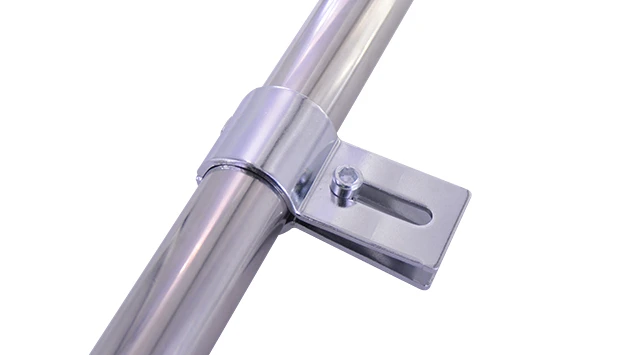
Lean Pipe Clamp B Chrome
Lean pipe clamp is used for turnover trolley, workbench, flowrack adjust the frame or fix some accessory.
Walk into any modern manufacturing facility, and you'll notice a quiet rhythm—materials gliding from station to station, workbenches tailored to precise tasks, and tools that seem to "click" into the workflow like missing puzzle pieces. Behind this harmony often lies a network of
lean systems
: flexible, modular setups designed to minimize waste and maximize efficiency. And while large machines and automated conveyors grab the spotlight, it's the small, unassuming components that often hold the system together. Today, we're focusing on one such unsung hero: the Lean Pipe Clamp B Chrome.
At first glance, it might look like just another metal bracket, but this compact component plays a critical role in building the adaptable structures that power lean manufacturing. From assembly lines in automotive plants to ESD workstations in electronics factories, the Lean Pipe Clamp B Chrome ensures that the lean pipes (the backbone of these systems) stay securely connected—even as production needs shift, and workflows evolve. Let's dive into what makes this clamp unique, how it works, and why it's become a staple in facilities worldwide.
At first glance, it might look like just another metal bracket, but this compact component plays a critical role in building the adaptable structures that power lean manufacturing. From assembly lines in automotive plants to ESD workstations in electronics factories, the Lean Pipe Clamp B Chrome ensures that the lean pipes (the backbone of these systems) stay securely connected—even as production needs shift, and workflows evolve. Let's dive into what makes this clamp unique, how it works, and why it's become a staple in facilities worldwide.
What is a Lean Pipe Clamp B Chrome?
Simply put, a Lean Pipe Clamp B Chrome is a specialized hardware component designed to connect, secure, and stabilize
lean pipes
—the cylindrical tubes used to build modular structures like workbenches, material racks, flow racks, and turnover trolleys. The "B" in its name denotes a specific design variant (often distinguished by its shape, clamping mechanism, or compatibility with other joints), while "Chrome" refers to its surface finish: a thin layer of chromium electroplated onto the base metal to enhance durability and resistance to corrosion.
Unlike generic pipe clamps, which may prioritize raw strength over flexibility, the Lean Pipe Clamp B Chrome is engineered with lean manufacturing principles in mind. Lean manufacturing, at its core, is about eliminating waste—whether that's wasted time, space, or resources. To support this, the clamp is designed to be:
Unlike generic pipe clamps, which may prioritize raw strength over flexibility, the Lean Pipe Clamp B Chrome is engineered with lean manufacturing principles in mind. Lean manufacturing, at its core, is about eliminating waste—whether that's wasted time, space, or resources. To support this, the clamp is designed to be:
- Modular : Easily reconfigured without specialized tools, allowing teams to adjust structures as production needs change.
- Secure : Provides a tight, vibration-resistant grip on pipes, preventing slippage even under heavy loads.
- Durable : Built to withstand the daily wear and tear of factory environments, from constant handling to exposure to dust and moisture.
Core Characteristics of Lean Pipe Clamp B Chrome
1. Material Composition: Strength Meets Protection
The Lean Pipe Clamp B Chrome starts with a base material—typically high-grade carbon steel or low-alloy steel—chosen for its tensile strength and rigidity. Steel provides the clamp with the structural integrity needed to hold heavy loads, whether it's supporting a shelf stacked with components or securing a section of a
flow rack
carrying boxes of finished goods.
But steel alone is prone to rust and corrosion, especially in humid factory settings or environments where chemicals are present. That's where the chrome plating comes in. Chromium plating is applied via electroplating, a process that deposits a thin layer of chromium onto the steel surface. This layer acts as a barrier, shielding the steel from moisture, oxygen, and corrosive substances. Beyond protection, chrome plating also gives the clamp a smooth, shiny finish—making it easier to clean (a boon for facilities with strict hygiene standards, like pharmaceutical labs) and more visually consistent with other metal components in the workspace.
Importantly, the chrome plating isn't just for show. Chromium is harder than steel, so it also improves the clamp's resistance to scratches and dents from daily use. Run a wrench over it, bump it with a toolbox, or drag it across a concrete floor, and chances are the finish will stay intact—preserving both its functionality and appearance.
But steel alone is prone to rust and corrosion, especially in humid factory settings or environments where chemicals are present. That's where the chrome plating comes in. Chromium plating is applied via electroplating, a process that deposits a thin layer of chromium onto the steel surface. This layer acts as a barrier, shielding the steel from moisture, oxygen, and corrosive substances. Beyond protection, chrome plating also gives the clamp a smooth, shiny finish—making it easier to clean (a boon for facilities with strict hygiene standards, like pharmaceutical labs) and more visually consistent with other metal components in the workspace.
Importantly, the chrome plating isn't just for show. Chromium is harder than steel, so it also improves the clamp's resistance to scratches and dents from daily use. Run a wrench over it, bump it with a toolbox, or drag it across a concrete floor, and chances are the finish will stay intact—preserving both its functionality and appearance.
2. Design: Engineered for Precision Clamping
The "B" in Lean Pipe Clamp B Chrome refers to its unique design, which sets it apart from other clamp types (like the "A" series, which may feature a rotary joint, or the "C" series, designed for parallel pipe alignment). While exact specifications can vary by manufacturer, most Clamp B Chrome variants share key design features:
- Fixed-Angle Clamping : Unlike swivel or rotary clamps, the Clamp B is typically designed for fixed-angle connections—most commonly 90 degrees (for perpendicular pipe intersections) or 180 degrees (for extending a straight line of pipe). This makes it ideal for building rigid, stable structures like the legs of a workbench or the vertical supports of a material rack.
- Dual-Piece Construction : Many Clamp B models consist of two interlocking halves: a base plate (which attaches to one pipe) and a clamping arm (which wraps around the second pipe). The two halves are secured with a bolt or screw, allowing for easy tightening and adjustment.
- Contoured Grip Surface : The inner surface of the clamp (the part that touches the pipe) is often textured or contoured to match the curvature of lean pipes . This ensures maximum contact area between the clamp and the pipe, reducing pressure points and preventing damage to delicate coatings (like the plastic layer on PE coated lean pipes ).
- Standardized Sizing : To ensure compatibility with common lean pipe diameters (typically 28mm, 30mm, or 40mm), the Clamp B Chrome is manufactured to standardized inner diameters. This means you can mix and match clamps from different suppliers without worrying about fit issues.
3. Compatibility: Works Seamlessly with Diverse Pipe Types
A key advantage of the Lean Pipe Clamp B Chrome is its ability to work with almost every type of lean pipe used in modern manufacturing. This compatibility is critical in lean systems, where facilities often mix pipe materials to balance cost, weight, and functionality. Let's break down which pipes pair best with this clamp:
PE Coated Lean Pipes : These are the most common lean pipes—steel tubes coated in a layer of polyethylene (PE) to prevent scratches, reduce noise, and insulate against static electricity. The Clamp B Chrome's contoured grip and adjustable bolt tension ensure it holds these pipes tightly without tearing or damaging the PE coating.
Aluminum Lean Pipes : Lightweight and corrosion-resistant, aluminum pipes are ideal for structures that need to be moved frequently (like portable workbenches or mobile trolleys). The Clamp B Chrome's chrome finish pairs well with aluminum, as both materials resist rust—making this combination popular in cleanrooms or outdoor storage areas.
Stainless Steel Pipes : In environments where hygiene is non-negotiable (e.g., medical device manufacturing or food packaging), stainless steel pipes are the go-to choice. The Clamp B Chrome, with its own corrosion-resistant finish, complements stainless steel perfectly—creating a system that can withstand frequent washing with harsh disinfectants.
Aluminum Extrusion Profiles : While not technically "pipes," aluminum extrusion profiles (with T-slots for accessories) are often used alongside lean pipes in hybrid structures. Many Clamp B Chrome models can be adapted to connect these profiles to pipes, expanding their versatility even further.
This broad compatibility means that whether you're upgrading an existing system or building a new one from scratch, the Clamp B Chrome can adapt to your pipe choices—not the other way around.
PE Coated Lean Pipes : These are the most common lean pipes—steel tubes coated in a layer of polyethylene (PE) to prevent scratches, reduce noise, and insulate against static electricity. The Clamp B Chrome's contoured grip and adjustable bolt tension ensure it holds these pipes tightly without tearing or damaging the PE coating.
Aluminum Lean Pipes : Lightweight and corrosion-resistant, aluminum pipes are ideal for structures that need to be moved frequently (like portable workbenches or mobile trolleys). The Clamp B Chrome's chrome finish pairs well with aluminum, as both materials resist rust—making this combination popular in cleanrooms or outdoor storage areas.
Stainless Steel Pipes : In environments where hygiene is non-negotiable (e.g., medical device manufacturing or food packaging), stainless steel pipes are the go-to choice. The Clamp B Chrome, with its own corrosion-resistant finish, complements stainless steel perfectly—creating a system that can withstand frequent washing with harsh disinfectants.
Aluminum Extrusion Profiles : While not technically "pipes," aluminum extrusion profiles (with T-slots for accessories) are often used alongside lean pipes in hybrid structures. Many Clamp B Chrome models can be adapted to connect these profiles to pipes, expanding their versatility even further.
This broad compatibility means that whether you're upgrading an existing system or building a new one from scratch, the Clamp B Chrome can adapt to your pipe choices—not the other way around.
4. Load Capacity: Built to Handle Real-World Weight
In manufacturing, "good enough" doesn't cut it—especially when lives, deadlines, or product quality are on the line. The Lean Pipe Clamp B Chrome is engineered to meet strict load capacity standards, ensuring it can handle the weights typical in factory settings.
While exact load limits vary by size and material thickness, most standard Clamp B Chrome models can support:
To put this in perspective: A single Clamp B Chrome can support the weight of a small refrigerator. Multiply that by the dozens of clamps in a typical workbench, and you have a structure capable of holding thousands of kilograms—all while remaining adjustable.
While exact load limits vary by size and material thickness, most standard Clamp B Chrome models can support:
- Vertical Loads : 150–300 kg per clamp (when used to support vertical pipes, like the legs of a workbench).
- Horizontal Loads : 50–150 kg per clamp (when used to secure horizontal pipes, like shelves or crossbars).
To put this in perspective: A single Clamp B Chrome can support the weight of a small refrigerator. Multiply that by the dozens of clamps in a typical workbench, and you have a structure capable of holding thousands of kilograms—all while remaining adjustable.
5. Ease of Installation & Adjustment: No Tools? No Problem
One of the biggest pain points in traditional manufacturing setups is the time it takes to build or reconfigure structures. Welding, drilling, or using permanent fasteners can turn a simple shelf adjustment into a day-long project. The Lean Pipe Clamp B Chrome eliminates this hassle with a tool-free (or minimal-tool) installation process:
- Position the Pipes : Align the two pipes at the desired angle (e.g., 90 degrees for a corner joint).
- Place the Clamp : Slide the Clamp B Chrome over the intersection, ensuring the contoured grip surfaces make full contact with both pipes.
- Tighten the Fastener : Use a standard wrench or hex key to tighten the bolt or screw until the clamp is secure. Most clamps feature a locking nut or friction washer to prevent loosening over time.
How Lean Pipe Clamp B Chrome Supports Lean Systems
To truly appreciate the Lean Pipe Clamp B Chrome, it helps to understand its role in the broader context of
lean systems
. Lean manufacturing isn't just a buzzword—it's a philosophy that demands flexibility, efficiency, and continuous improvement. Here's how the clamp contributes to each of these goals:
Flexibility : In traditional manufacturing, structures like workbenches and material racks are often custom-built for a single product. When the product line changes, these structures become obsolete, leading to wasted space and money. With the Clamp B Chrome, structures are modular: you can disassemble a workbench in the morning and rebuild it as a flow rack in the afternoon. This adaptability lets facilities pivot quickly to meet new demands—whether that's ramping up production for a hot-selling item or retooling for a seasonal product.
Efficiency : Time is money in manufacturing, and the Clamp B Chrome saves both. By reducing setup and reconfiguration time, teams can focus on value-adding tasks (like assembling products) instead of building infrastructure. For example, a study by the Lean Enterprise Institute found that facilities using modular lean systems with components like the Clamp B Chrome reduced changeover time by up to 70% compared to fixed structures.
Waste Reduction : Lean systems aim to eliminate "muda" (Japanese for waste), and the Clamp B Chrome helps in three key ways:
Flexibility : In traditional manufacturing, structures like workbenches and material racks are often custom-built for a single product. When the product line changes, these structures become obsolete, leading to wasted space and money. With the Clamp B Chrome, structures are modular: you can disassemble a workbench in the morning and rebuild it as a flow rack in the afternoon. This adaptability lets facilities pivot quickly to meet new demands—whether that's ramping up production for a hot-selling item or retooling for a seasonal product.
Efficiency : Time is money in manufacturing, and the Clamp B Chrome saves both. By reducing setup and reconfiguration time, teams can focus on value-adding tasks (like assembling products) instead of building infrastructure. For example, a study by the Lean Enterprise Institute found that facilities using modular lean systems with components like the Clamp B Chrome reduced changeover time by up to 70% compared to fixed structures.
Waste Reduction : Lean systems aim to eliminate "muda" (Japanese for waste), and the Clamp B Chrome helps in three key ways:
- Material Waste : Since structures are reusable, there's no need to discard old racks or workbenches when needs change.
- Space Waste : Modular setups can be condensed or expanded to fit available space, preventing overcrowding or underutilization.
- Time Waste : Quick adjustments mean workers spend less time walking to retrieve tools or waiting for structures to be built.
Lean Pipe Clamp B Chrome vs. Other Clamps: A Comparison
With so many pipe clamps on the market, you might wonder: What makes the Lean Pipe Clamp B Chrome stand out? Let's compare it to two common alternatives: standard zinc-plated clamps (the most basic option) and rotary clamps (designed for swivel connections).
| Feature | Lean Pipe Clamp B Chrome | Standard Zinc-Plated Clamp | Rotary Lean Pipe Clamp |
|---|---|---|---|
| Surface Finish | Chrome-plated (corrosion-resistant, scratch-resistant) | Zinc-plated (basic corrosion resistance, prone to chipping) | Typically zinc or nickel-plated (varies by model) |
| Best For | Fixed-angle connections (90°, 180°) in high-wear environments | Light-duty, indoor applications with minimal moisture | Swivel or adjustable-angle connections (e.g., tilting workbenches) |
| Load Capacity | High (150–500 kg, depending on size) | Medium (50–150 kg) | Medium-Low (30–100 kg, due to moving parts) |
| Corrosion Resistance | Excellent (ideal for humid/damp environments) | Fair (rusts in high moisture) | Fair to Good (depends on plating quality) |
| Cost | Moderate (higher than zinc, but lower than specialized clamps) | Low (budget-friendly but less durable) | High (due to swivel mechanism) |
As the table shows, the Lean Pipe Clamp B Chrome strikes a balance between durability, versatility, and cost—making it the best all-around choice for most lean manufacturing applications. Zinc-plated clamps may save money upfront, but they'll need replacement sooner in harsh environments. Rotary clamps offer flexibility for swivel connections, but they can't match the Clamp B's load capacity or rigidity.
Practical Applications: Where You'll Find Lean Pipe Clamp B Chrome
The Lean Pipe Clamp B Chrome's versatility means it pops up in nearly every corner of manufacturing and logistics. Here are a few common applications:
Automotive Manufacturing : Car assembly lines rely on sturdy, adjustable workbenches to hold tools and components. The Clamp B Chrome secures the steel or aluminum pipes that form these workbenches, ensuring they can withstand the weight of heavy power tools and resist the oil and grease common in automotive shops.
Electronics Production : ESD workstations (used to prevent static electricity from damaging sensitive components) require non-conductive or grounded structures. The Clamp B Chrome, paired with PE coated lean pipes (which insulate against static), helps build safe, adjustable workspaces for assembling circuit boards or semiconductors.
Warehousing & Logistics : Flow racks and picking stations in warehouses need to handle constant loading and unloading. The Clamp B Chrome's tight grip ensures that the roller tracks and support pipes stay aligned, preventing jams and ensuring smooth material flow.
Food & Beverage Processing : In facilities where hygiene is critical, stainless steel pipes and chrome-plated clamps are a must. The Clamp B Chrome's corrosion resistance stands up to frequent washdowns with sanitizing solutions, making it ideal for building ingredient racks or packaging lines.
Pharmaceutical Manufacturing : Cleanrooms require structures that are easy to sanitize and won't shed particles. The Clamp B Chrome's smooth, non-porous finish (thanks to chrome plating) meets strict FDA and ISO standards, making it suitable for building storage racks or equipment supports.
Automotive Manufacturing : Car assembly lines rely on sturdy, adjustable workbenches to hold tools and components. The Clamp B Chrome secures the steel or aluminum pipes that form these workbenches, ensuring they can withstand the weight of heavy power tools and resist the oil and grease common in automotive shops.
Electronics Production : ESD workstations (used to prevent static electricity from damaging sensitive components) require non-conductive or grounded structures. The Clamp B Chrome, paired with PE coated lean pipes (which insulate against static), helps build safe, adjustable workspaces for assembling circuit boards or semiconductors.
Warehousing & Logistics : Flow racks and picking stations in warehouses need to handle constant loading and unloading. The Clamp B Chrome's tight grip ensures that the roller tracks and support pipes stay aligned, preventing jams and ensuring smooth material flow.
Food & Beverage Processing : In facilities where hygiene is critical, stainless steel pipes and chrome-plated clamps are a must. The Clamp B Chrome's corrosion resistance stands up to frequent washdowns with sanitizing solutions, making it ideal for building ingredient racks or packaging lines.
Pharmaceutical Manufacturing : Cleanrooms require structures that are easy to sanitize and won't shed particles. The Clamp B Chrome's smooth, non-porous finish (thanks to chrome plating) meets strict FDA and ISO standards, making it suitable for building storage racks or equipment supports.
Maintenance Tips for Longevity
Like any tool, the Lean Pipe Clamp B Chrome will perform best with a little care. Here are simple maintenance tips to extend its lifespan:
- Clean Regularly : Wipe the clamp with a soft, dry cloth to remove dust, grease, or debris. For heavier grime, use a mild detergent (avoid abrasive cleaners, which can scratch the chrome finish).
- Lubricate Moving Parts : If the clamp has adjustable bolts or screws, apply a small amount of machine oil or anti-seize lubricant annually to prevent rust and ensure smooth tightening/loosening.
- Inspect for Damage : Check the chrome plating for chips or cracks, which can expose the underlying steel to corrosion. replace any clamps with damaged plating, as they may fail under load.
- Tighten Loose Fasteners : Over time, vibration can loosen bolts. Periodically check and retighten clamps to maintain a secure grip on pipes.
Conclusion: The Small Component with a Big Impact
The Lean Pipe Clamp B Chrome may not be the most glamorous component in a manufacturing facility, but its impact is undeniable. By enabling fast, flexible, and secure connections between
lean pipes
, it empowers teams to build the adaptable
lean systems
that drive modern manufacturing. Whether you're assembling a simple workbench or a complex material flow system, this clamp ensures that your structures are not just strong—but smart.
So the next time you walk through a factory and marvel at the efficiency of the workflow, take a closer look at the pipes and joints holding everything together. Chances are, you'll spot a Lean Pipe Clamp B Chrome—quietly doing its job, one secure connection at a time.
So the next time you walk through a factory and marvel at the efficiency of the workflow, take a closer look at the pipes and joints holding everything together. Chances are, you'll spot a Lean Pipe Clamp B Chrome—quietly doing its job, one secure connection at a time.