- Company Articles
- Products and Technology
- Product knowledge
- What Is a Lean Pipe Clamp? Definition, Functions & Key Features

What Is a Lean Pipe Clamp? Definition, Functions & Key Features
Related Product
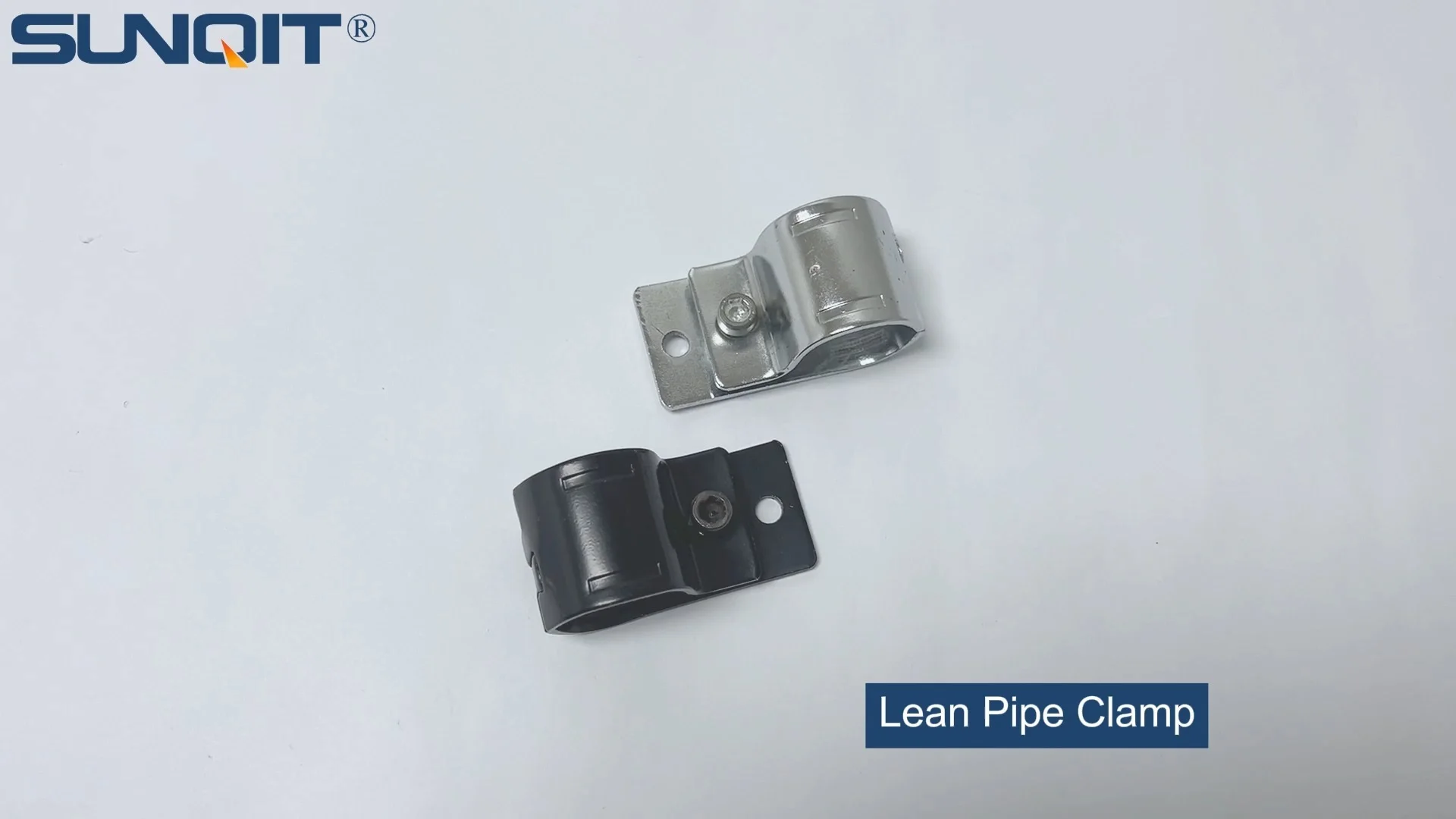
Lean Pipe Clamp
Lean pipe clamp is used for rack system hang monitor or other panel for workbenck, flowrack in production daily use.
Walk into any modern manufacturing facility, warehouse, or assembly plant today, and you'll likely notice a common thread: structures that feel less like permanent fixtures and more like dynamic, adaptable tools. Workbenches that reconfigure in hours, flow racks that shift with production demands, and turnover trolleys that adjust to new inventory sizes—these aren't accidents. They're the result of lean systems , designed to eliminate waste, boost efficiency, and keep pace with ever-changing market needs. At the heart of these flexible systems lies a small but mighty component: the lean pipe clamp . In this article, we'll dive deep into what a lean pipe clamp is, how it functions, its key features, and why it's indispensable in building the agile workspaces of tomorrow.
1. Defining the Lean Pipe Clamp: More Than Just a "Clamp"
At first glance, a lean pipe clamp might seem like a simple piece of hardware—a metal or plastic component designed to hold things together. But in the context of lean manufacturing, it's so much more. A lean pipe clamp is a specialized connecting device engineered to secure, stabilize, and join lean pipes , joints, and accessories into modular structures. Think of it as the "glue" that turns individual components—aluminum pipes, stainless steel tubes, roller tracks, and casters—into functional systems like workbenches, material racks, or conveyor lines.
Unlike traditional fasteners (welds, bolts, or screws that require tools and time to adjust), lean pipe clamps are built for speed and flexibility. They allow operators to assemble, disassemble, and reconfigure structures with minimal effort, aligning perfectly with the lean philosophy of "continuous improvement." Whether you're building a single-deck workbench (like the "Workbench E" mentioned in industry catalogs) or a multi-tiered material rack (such as "Material Rack B" with 3 rows and 3 floors), lean pipe clamps are the unsung heroes ensuring everything stays stable yet adaptable.
2. Core Functions: What Does a Lean Pipe Clamp Actually Do?
To understand the value of a lean pipe clamp, let's break down its primary functions. In short, it's not just about "holding" parts together—it's about enabling the entire lean system to thrive.
2.1 Securing Stable Connections
First and foremost, a lean pipe clamp must create secure connections. When building a structure—say, a workbench frame using aluminum lean pipes —the clamp's job is to lock pipes and joints in place, ensuring the frame can support tools, materials, or even heavy machinery without wobbling or collapsing. This stability is critical: a loose clamp could lead to accidents, damaged inventory, or inefficient workflows. Quality clamps are designed to distribute pressure evenly across the pipe surface, preventing slippage even under repeated use.
2.2 Enabling Quick Reconfiguration
Lean manufacturing thrives on adaptability. A production line that makes 500 units of Product A today might need to switch to Product B tomorrow—and that means workstations, material racks, and conveyors need to change, too. Lean pipe clamps shine here. Unlike welding (which is permanent) or traditional bolts (which require tools and time to loosen), most lean pipe clamps can be adjusted by hand or with a simple wrench. For example, a rotatory lean pipe joint paired with a clamp allows operators to swivel a section of a flow rack to a new angle in minutes, rather than hours of dismantling and rebuilding.
2.3 Compatibility Across Components
Lean systems aren't one-size-fits-all. They use a mix of materials: aluminum pipes for lightweight structures, stainless steel pipes for corrosion resistance, and PE-coated lean pipes for ESD (electrostatic discharge) protection in electronics manufacturing. A good lean pipe clamp must play well with all these. For instance, an aluminum pipe clamp should securely grip both basic aluminum tubes and internal rotary aluminum joints, while a stainless steel clamp might pair with stainless steel swivel roller balls (like the 1-inch or 0.5-inch variants) to build smooth-flowing roller tracks.
2.4 Supporting Modular Design
Modularity is the backbone of lean systems. Instead of buying pre-built, fixed structures, manufacturers invest in components—pipes, clamps, joints, casters—that they can mix and match to create custom solutions. Lean pipe clamps make this modularity possible. Want to add a shelf to your workbench? Attach a few clamps to the frame and secure a new aluminum profile. Need to extend a conveyor line? Use clamps to connect additional roller track sections (like the plastic roller track guide rails in yellow or grey). The possibilities are nearly endless, and it's all thanks to clamps that bridge the gap between components.

3. Key Features: What Makes a Lean Pipe Clamp "Lean"?
Not all clamps are created equal. A true lean pipe clamp has specific features that set it apart from generic hardware. Let's explore the most important ones.
3.1 Material: Lightweight, Strong, and Durable
Lean pipe clamps are typically made from one of three materials: aluminum, steel (often stainless steel), or plastic-coated steel. Each has its strengths:
- Aluminum: Lightweight and corrosion-resistant, aluminum clamps are ideal for clean environments (like electronics assembly) or structures that need to be moved frequently (e.g., turnover trolleys). They pair well with aluminum lean pipes and aluminum profile accessories.
- Stainless Steel: Heavier and stronger, stainless steel clamps excel in high-load applications (think material racks holding heavy parts) or harsh environments (factories with moisture, chemicals, or extreme temperatures). They're often used with stainless steel pipe series components.
- Plastic-Coated Steel: These clamps add a layer of protection, making them ESD-safe (critical for ESD workstations) or gentle on delicate materials. The plastic coating also reduces noise when structures are reconfigured.
3.2 Design: Fixed vs. Rotatory, and Everything In Between
Lean pipe clamps come in two main design categories: fixed and rotatory. Fixed clamps lock pipes at a specific angle (90°, 45°, etc.) and are used when stability is prioritized over movement. Rotatory clamps, on the other hand, allow pipes to swivel or rotate, enabling adjustable structures like tilting workbenches or pivoting conveyor sections. For example, a "Parallel Rotatory Aluminum Joint" paired with a rotatory clamp lets operators adjust the height of a shelf without disassembling the entire rack.
3.3 Load Capacity: Built for Real-World Demands
A clamp's load capacity—the maximum weight it can support without failing—is non-negotiable. This varies widely: a small plastic clamp might handle 10kg, while a heavy-duty stainless steel clamp could support 100kg or more. When choosing a clamp, it's critical to match its capacity to the structure's needs. For instance, a "Workbench E (Single Deck-Without Caster)" might use medium-load aluminum clamps, while a "Material Rack B" (with 3 rows and 3 floors holding heavy parts) would require high-load stainless steel clamps.
3.4 Ease of Installation: Tool-Free (or Close to It)
Remember: lean systems value efficiency, and that includes setup time. The best lean pipe clamps are designed for quick installation. Many use thumb screws or cam levers that can be tightened by hand, eliminating the need for wrenches or drills. Even clamps that require tools (like hex keys) are engineered to speed up the process—no more fumbling with multiple sizes or struggling to align bolts.

4. Types of Lean Pipe Clamps: A Quick Comparison
With so many options on the market, it helps to categorize lean pipe clamps by their use case. Below is a comparison table of common types, their features, and best applications.
| Clamp Type | Material | Load Capacity (Approx.) | Key Design Feature | Best For |
|---|---|---|---|---|
| Fixed Lean Pipe Clamp | Aluminum/Steel | 15–50kg | Non-adjustable angle (90°, 45°, etc.) | Stable structures like workbench frames or fixed material racks |
| Rotatory Lean Pipe Clamp | Aluminum/Plastic-Coated Steel | 10–30kg | 360° swivel or limited rotation (e.g., 180°) | Adjustable workstations, tilting shelves, or pivoting conveyor ends |
| Stainless Steel Lean Pipe Clamp | Stainless Steel | 50–150kg | Corrosion-resistant, heavy-duty build | High-load applications, wet environments, or food/beverage production |
| ESD-Safe Plastic-Coated Clamp | Steel with ESD Plastic Coating | 10–40kg | Prevents static discharge | ESD workstations, electronics assembly, or sensitive component handling |
| Parallel Lean Pipe Clamp | Aluminum | 20–60kg | Connects two parallel pipes (e.g., shelf supports) | Building multi-tiered racks or wide workbench surfaces |

5. Why Lean Pipe Clamps Matter in Modern Manufacturing
You might be wondering: Can't we just use traditional bolts or welding instead? The short answer is yes—but you'd lose the very benefits that make lean systems so powerful. Let's compare lean pipe clamps to these older methods to see why they're a game-changer.
5.1 vs. Welding: Flexibility vs. Permanence
Welding creates strong, permanent connections—but permanence is the enemy of lean manufacturing. If you weld a workbench frame, you're stuck with that design forever. Need to add a shelf? You'll have to cut the welds, re-weld, and repaint. With lean pipe clamps, you can add, remove, or adjust components in minutes. Over time, this flexibility reduces downtime and lowers costs, as you're not constantly rebuilding structures from scratch.
5.2 vs. Traditional Bolts: Speed vs. Labor
Bolts are adjustable, but they're slow. Tightening or loosening a bolt requires a wrench, and if you're building a large structure (like a 3-row material rack), that adds up to hours of labor. Lean pipe clamps, especially tool-free designs, cut that time dramatically. A team can assemble a basic workbench in under an hour with clamps, compared to 2–3 hours with bolts. For manufacturers running multiple shifts or tight deadlines, that time savings is invaluable.
5.3 vs. Generic Clamps: Compatibility vs. Guesswork
Hardware stores sell "pipe clamps," but these are generic—they might fit a 1-inch steel pipe but not a 28mm aluminum lean pipe. Lean pipe clamps are engineered specifically for the components in lean systems. They match the diameter of aluminum pipes, the threading of lean pipe joints, and the load requirements of roller tracks. This compatibility eliminates the guesswork: when you buy a clamp from a reputable lean pipe supplier , you know it will work with your existing parts.
6. Choosing the Right Lean Pipe Clamp: Key Considerations
With so many options, how do you pick the right clamp for your needs? Here are the top factors to consider:
6.1 Material Compatibility
Start by checking your pipes. If you're using aluminum lean pipes, an aluminum clamp is lightweight and corrosion-resistant. If you're working with stainless steel pipes (common in food processing), a stainless steel clamp will avoid galvanic corrosion (a reaction between dissimilar metals). For PE-coated lean pipes (used in ESD environments), plastic-coated or ESD-safe clamps are a must to prevent damaging sensitive electronics.
6.2 Load Capacity
Never underestimate load capacity. A clamp rated for 15kg shouldn't be used to hold a 30kg tool. Check the manufacturer's specs, and err on the side of caution—if your structure will hold variable weights, choose a clamp with a higher capacity than your maximum expected load.
6.3 Environment
Where will the clamp be used? In a dry, clean factory? Aluminum is fine. In a humid warehouse or outdoor area? Stainless steel or plastic-coated clamps will resist rust. In an ESD workstation? Look for ESD-safe certifications to ensure the clamp doesn't generate static electricity.
6.4 Reconfiguration Needs
Will you need to adjust the structure often? If yes, prioritize rotatory clamps or tool-free designs. If the structure is permanent (or rarely changed), fixed clamps will offer better stability at a lower cost.
7. Conclusion: The Small Component That Powers Big Change
In the world of lean manufacturing, success lies in the details. A well-designed lean pipe clamp might not grab headlines, but it's the foundation of the flexible, efficient systems that drive modern production. It turns disjointed parts into functional workspaces, adapts to new challenges in minutes, and ensures that "continuous improvement" isn't just a buzzword—it's a daily reality.
Whether you're building a simple workbench or a complex conveyor system, choosing the right clamp matters. Consider your materials, load needs, and environment, and partner with a trusted lean pipe supplier who understands the nuances of lean systems. With the right clamps in hand, you're not just building structures—you're building a factory that can grow, change, and thrive in an unpredictable world.
So the next time you walk through a lean manufacturing facility, take a closer look at those workbenches and racks. Chances are, there's a lean pipe clamp holding it all together—and behind that clamp? A whole lot of innovation.