- Company Articles
- Products and Technology
- Product knowledge
- What is a Lean Pipe Fixed Clamp? Definition, Functions & Uses

What is a Lean Pipe Fixed Clamp? Definition, Functions & Uses
Related Product
Lean Pipe Fixed Clamp
Lean pipe fixed clamp is used for pipe connector fixing the correct position during workbench flow rack hand trolley assemble work.
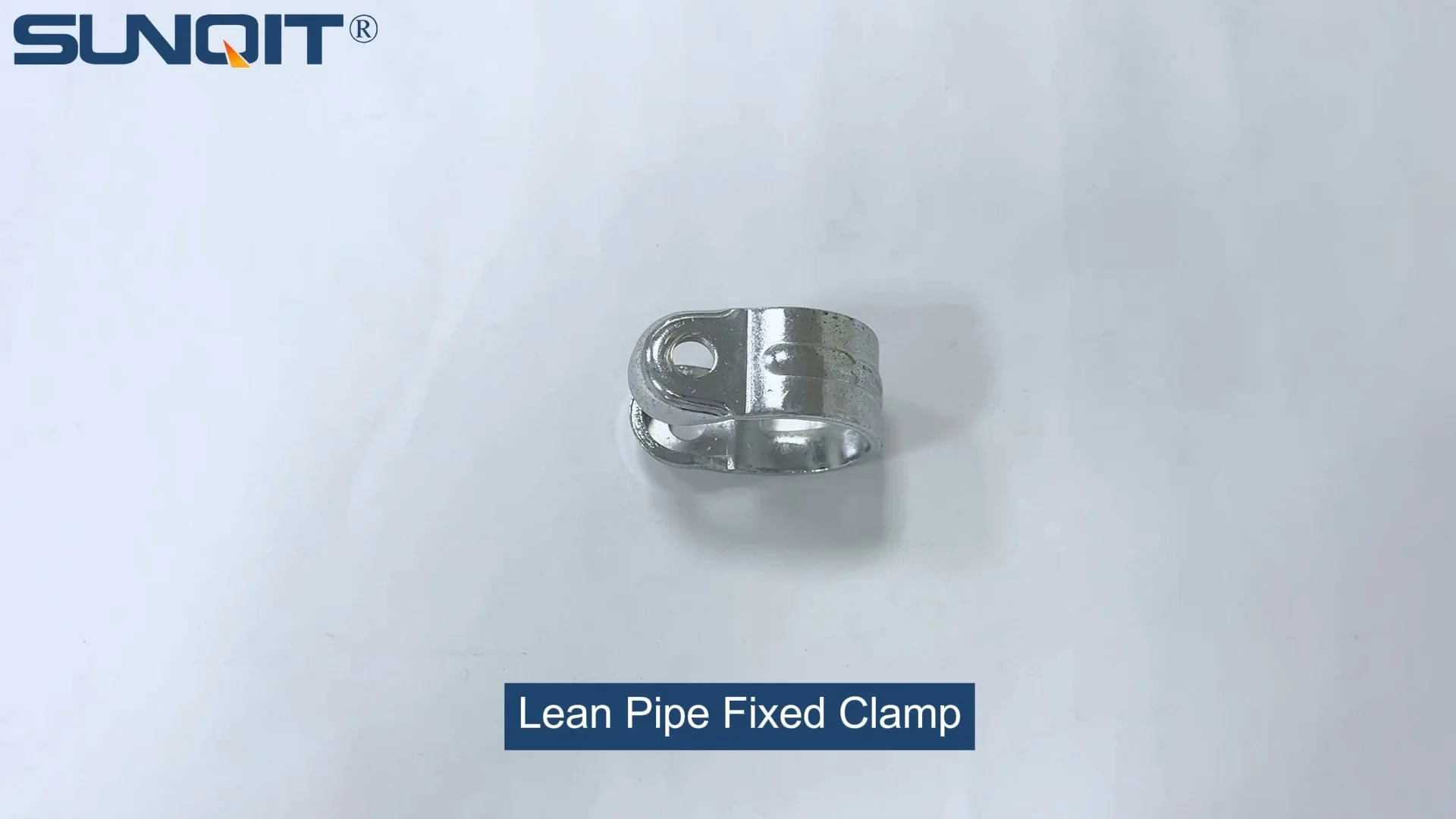
Introduction: The Backbone of Lean Manufacturing Systems
Walk into any modern manufacturing facility, and you'll likely notice a common theme: order. From neatly organized workbenches to streamlined material flow racks, every element seems designed to eliminate waste and boost efficiency. This isn't by accident—it's the result of lean manufacturing principles in action. At the heart of many of these setups lies a humble yet critical component: the lean pipe system. Composed of modular pipes, joints, and accessories, these systems are the building blocks of flexible, customizable workspaces. But today, we're zeroing in on a small part that plays a huge role in keeping everything stable: the lean pipe fixed clamp.
If lean pipe systems are the skeleton of a production line, then fixed clamps are the ligaments that hold the bones together. They might not grab headlines like high-tech machinery, but without them, the flexibility and rigidity of lean setups would fall apart. Whether you're assembling a workbench for electronics production or a flow rack for automotive parts, understanding what a fixed clamp is, how it works, and when to use it can make all the difference in creating a system that's both efficient and durable.
Defining the Lean Pipe Fixed Clamp: More Than Just a "Clamp"
Let's start with the basics: What exactly is a lean pipe fixed clamp? At its core, it's a mechanical device designed to securely fasten two or more lean pipes (also known as lean tubes) together at a fixed angle or position. Unlike swivel joints or adjustable connectors, which allow for rotation or movement, fixed clamps are all about rigidity—they lock pipes in place, ensuring the structure they support stays stable even under stress.
Think of it this way: If you're building a bookshelf with wooden planks, you might use screws to hold the shelves to the sides. The screws prevent the shelves from sliding or tipping. In lean pipe systems, fixed clamps serve a similar purpose. They're the "screws" that turn a collection of pipes and joints into a sturdy workbench, a reliable flow rack, or a robust conveyor frame.
But not all fixed clamps are created equal. They come in various sizes, materials, and designs, each tailored to specific needs. Some are made for lightweight aluminum lean pipes, others for heavier steel or stainless steel pipes. Some feature plastic coatings to protect delicate materials, while others prioritize raw strength for industrial applications. No matter the variant, the goal remains the same: to create a secure, non-movable connection between lean pipes.
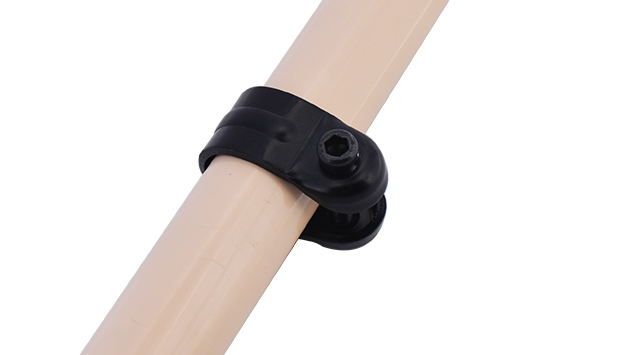
Breaking Down the Components: What Makes a Fixed Clamp Work?
To truly understand how a lean pipe fixed clamp functions, let's peek under the hood at its key components. While designs can vary slightly between manufacturers, most fixed clamps share a few essential parts:
1. The Clamp Body
This is the main structure of the clamp, typically shaped like a half-cylinder or a U-shape, designed to wrap around the outer diameter of the lean pipe. The body is usually made from metal—often steel or aluminum—for durability. Some clamps have a plastic or rubber coating on the inner surface to grip the pipe better and prevent scratches, especially important if the pipes are used with sensitive materials like electronics components.
2. The Fastening Mechanism
At the open end of the clamp body, you'll find a fastening mechanism, usually a bolt and nut or a screw. When tightened, this mechanism squeezes the clamp body around the pipes, creating friction that holds them in place. Many fixed clamps use hex bolts or wing nuts for easy installation—no special tools required, which aligns with lean manufacturing's focus on quick setup and adaptability.
3. Reinforcement Features
Some fixed clamps include extra features to boost strength, like ribbed sides or thicker metal at stress points. These reinforcements help the clamp withstand heavier loads, making them ideal for applications like supporting heavy material racks or conveyor systems.

Functions of a Lean Pipe Fixed Clamp: Why Rigidity Matters
Now that we know what a fixed clamp is and what it's made of, let's dive into its core functions. Why would you choose a fixed clamp over a more flexible joint? The answer lies in the needs of the structure it's supporting.
1. Providing Structural Stability
The most obvious function of a fixed clamp is to add stability to a lean pipe structure. Imagine building a workbench where the legs are connected to the tabletop with swivel joints. Every time you lean on the bench or place a heavy tool on it, the legs might shift or wobble. That's a recipe for inefficiency and even safety hazards. Fixed clamps eliminate this by locking the legs and tabletop pipes in a rigid, 90-degree angle, ensuring the bench stays solid no matter how much weight or pressure is applied.
2. Preventing Unintended Movement
In dynamic environments like production lines, movement is inevitable—but it should be controlled. For example, a flow rack used to transport parts between workstations relies on gravity to slide items along roller tracks. If the rack's frame isn't stable, the tracks might tilt or shift, causing parts to jam or fall off. Fixed clamps keep the rack's vertical and horizontal pipes fixed, ensuring the roller tracks stay aligned and parts flow smoothly.
3. Enhancing Load-Bearing Capacity
When you need a structure to hold heavy loads—think of a material rack stacked with metal components or a conveyor carrying bulky products—fixed clamps are a must. Their rigid connection distributes weight evenly across the pipes, reducing stress on individual joints. This not only makes the structure safer but also extends its lifespan, as there's less wear and tear on the pipes and accessories.
4. Simplifying Maintenance
While fixed clamps are all about rigidity, they're surprisingly easy to maintain. Most can be loosened with a wrench or even by hand (if they use wing nuts), allowing for quick repairs or adjustments if a pipe becomes bent or a clamp wears out. This aligns perfectly with lean manufacturing's emphasis on minimizing downtime—no need for specialized tools or lengthy disassembly.

Practical Uses: Where Fixed Clamps Shine in Lean Systems
Fixed clamps aren't just theoretical—they're workhorses in real-world manufacturing. Let's explore some of the most common applications where these small but mighty components make a big difference.
1. Workbenches: The Foundation of Productivity
Workbenches are the heart of any production line, where assembly, inspection, and testing happen. A well-designed workbench needs to be stable, durable, and tailored to the task at hand. Fixed clamps are essential here. For example, an aluminum workbench with a single deck (without casters) relies on fixed clamps to connect the vertical support pipes to the horizontal frame. This ensures the bench doesn't rock when an operator is using power tools or assembling components. Even adjustable workbenches, which might use height-adjustable legs, often use fixed clamps to lock the legs at the desired height once set.
ESD workbenches (used in electronics manufacturing to prevent static discharge) are another area where fixed clamps excel. The sensitive nature of electronic components means the bench must be perfectly stable—even a slight wobble could damage delicate parts. Fixed clamps secure the ESD-safe top to the frame, ensuring no movement that might generate static or cause misalignment during assembly.
2. Flow Racks: Keeping Materials Moving
Flow racks are designed to optimize material handling by allowing parts to "flow" from the loading end to the picking end via gravity. They're common in automotive and electronics plants, where parts need to be easily accessible to assembly line workers. The key to a flow rack's efficiency is the alignment of its roller tracks. If the rack's vertical supports or horizontal beams shift, the tracks might slope unevenly, leading to jams or slow-moving parts.
Fixed clamps are used to secure the roller track placon mounts (the brackets that hold the tracks) to the rack's vertical pipes. They also lock the horizontal crossbars in place, ensuring the entire structure remains level. For example, a material rack with 3 rows and 3 floors (like "Material Rack B" in many supplier catalogs) uses fixed clamps at every joint where vertical pipes meet horizontal supports, creating a grid-like structure that can hold hundreds of pounds of parts without bending or twisting.
3. Conveyor Systems: Supporting Continuous Motion
Conveyors are the arteries of manufacturing, moving products from one station to the next. Whether it's a roller conveyor, a belt conveyor, or a chain conveyor, the frame that supports the conveyor must be rock-solid. Any instability could cause the conveyor belt or rollers to misalign, leading to product jams, damage, or even conveyor breakdowns.
Fixed clamps play a critical role in conveyor frames. They connect the side rails (often made of aluminum profile or steel) to the support legs, ensuring the entire structure stays straight and level. For example, a roller conveyor used to transport boxes might have a frame built with aluminum lean pipes. Fixed clamps secure the horizontal rails to the vertical legs, and also fasten the roller track guide rails (like the plastic yellow or grey ones) to the frame. This rigidity ensures the rollers spin smoothly and boxes move forward without tipping.
4. Turnover Trolleys and Racks: Mobile Stability
Turnover trolleys are used to transport materials between workstations or storage areas. While they have casters for mobility, the frame itself must be stable to prevent loads from shifting during movement. Fixed clamps are used to connect the trolley's vertical and horizontal pipes, ensuring the structure doesn't flex when the trolley is pushed or pulled. Even when loaded with heavy items, the clamps keep the frame rigid, reducing the risk of tipping or damage to materials.
Materials Matter: Choosing the Right Fixed Clamp for the Job
Fixed clamps are available in a range of materials, each with its own advantages. The choice depends on the environment, load requirements, and budget. Let's break down the most common options:
1. Steel Fixed Clamps: Strength for Heavy-Duty Applications
Steel is the go-to material for fixed clamps in heavy-duty settings. It's strong, durable, and can withstand high loads without bending. Steel clamps are often coated with zinc or nickel to resist corrosion, making them suitable for use in factories with high humidity or exposure to chemicals. They're ideal for workbenches used with heavy machinery, flow racks holding metal parts, or conveyor frames supporting large products.
2. Aluminum Fixed Clamps: Lightweight and Corrosion-Resistant
Aluminum fixed clamps are perfect for applications where weight matters. Aluminum is lighter than steel, making it easier to transport and assemble. It's also naturally corrosion-resistant, which is a plus in cleanrooms or food processing facilities where hygiene is critical. Aluminum clamps pair well with aluminum lean pipes and aluminum profiles, creating lightweight yet sturdy structures. For example, an aluminum workbench used in a pharmaceutical lab might use aluminum fixed clamps to keep the frame light and easy to sanitize.
3. Plastic-Coated Fixed Clamps: Protection for Delicate Materials
Some fixed clamps feature a plastic coating (often PVC or nylon) on the inner surface. This coating serves two purposes: it provides extra grip on the lean pipe, preventing slippage, and it protects the pipe (and any materials it touches) from scratches. Plastic-coated clamps are common in electronics manufacturing, where components like circuit boards or displays could be damaged by metal-on-metal contact. They're also used with painted or anodized aluminum pipes to preserve the finish.
| Clamp Material | Key Advantage | Best For | Potential Drawback |
|---|---|---|---|
| Steel | High strength and load capacity | Heavy workbenches, industrial flow racks | Heavier; prone to corrosion without coating |
| Aluminum | Lightweight and corrosion-resistant | Cleanrooms, lightweight structures | Lower load capacity than steel |
| Plastic-Coated Steel/Aluminum | Scratch protection, better grip | Electronics manufacturing, delicate materials | Coating can wear over time with heavy use |
Integration with Other Lean Pipe Components: A Team Effort
Fixed clamps don't work in isolation—they're part of a larger ecosystem of lean pipe components. To build a functional structure, you'll need to pair them with other parts like lean pipe joints, aluminum profiles, and accessories. Let's see how they work together.
Lean Pipe Joints: The "Movable" Counterpart
Lean pipe joints (like 90-degree joints, three-way joints, or swivel joints) allow for flexibility in structure design. They let pipes rotate or connect at various angles, which is useful for building curved frames or adjustable components. Fixed clamps, on the other hand, are the "straight men" of the group—they lock joints into place once the desired angle is set. For example, when building a workbench with a sloped shelf, you might use a swivel joint to adjust the shelf angle, then secure it with a fixed clamp to keep it from moving.
Aluminum Profiles and Accessories
Aluminum profiles (like 4040 or 3030 EU standard profiles) are often used alongside lean pipes for added strength or customization. Fixed clamps can connect lean pipes to aluminum profiles, creating hybrid structures. For example, a flow rack might use aluminum profiles for the vertical supports (for rigidity) and lean pipes for the horizontal beams (for flexibility). Fixed clamps secure the pipes to the profiles, ensuring the two materials work together seamlessly.
Casters and Casters Accessories: Stability for Mobile Structures
Even mobile structures like turnover trolleys need fixed clamps. While casters allow the trolley to move, fixed clamps ensure the frame doesn't flex when in motion. They connect the caster mounting plates to the trolley's vertical pipes, keeping the casters aligned and preventing the trolley from wobbling. This is especially important for trolleys carrying heavy or fragile loads, where stability is key to preventing accidents.
Choosing the Right Fixed Clamp: Key Considerations
With so many options available, how do you pick the right fixed clamp for your project? Here are a few factors to keep in mind:
1. Load Capacity
First, calculate the maximum weight the structure will need to support. If you're building a workbench for light assembly (e.g., small electronics), an aluminum or plastic-coated clamp might suffice. For heavy machinery or material racks with hundreds of pounds of parts, opt for a steel clamp with a high load rating.
2. Pipe Diameter
Fixed clamps are designed to fit specific pipe diameters (e.g., 28mm, 30mm). Using a clamp that's too small or too large will result in a loose connection, which is unsafe. Always check the pipe diameter before purchasing clamps.
3. Environment
Consider the conditions where the clamp will be used. In wet or corrosive environments, choose stainless steel or aluminum clamps. For cleanrooms or areas with sensitive materials, plastic-coated clamps are a better choice to prevent scratches or contamination.
4. Compatibility with Other Components
Ensure the clamp works with your existing lean pipe system. For example, if you're using aluminum lean pipes, an aluminum clamp will be more compatible than a steel one (to avoid galvanic corrosion). Similarly, check that the clamp's bolt size and shape fit with your lean pipe joints and accessories.
Conclusion: The Unsung Hero of Lean Systems
In the world of lean manufacturing, every component has a purpose—and the lean pipe fixed clamp is no exception. It may not be the most glamorous part of a production line, but it's essential for creating stable, efficient, and safe workspaces. From workbenches to flow racks, conveyors to trolleys, fixed clamps ensure that lean pipe systems deliver on their promise of flexibility without sacrificing rigidity.
So the next time you walk into a manufacturing facility and admire the order and efficiency of the setup, take a moment to appreciate the small components holding it all together. Behind every stable workbench, every smooth-flowing rack, and every reliable conveyor, there's a fixed clamp doing its job—quietly, steadily, and without fanfare. It's a reminder that in lean manufacturing, even the smallest parts can make the biggest difference.