- Company Articles
- Products and Technology
- Product knowledge
- What is a Multi-Angle Fixed Aluminum Joint? Definition & Core Features

What is a Multi-Angle Fixed Aluminum Joint? Definition & Core Features
Related Product
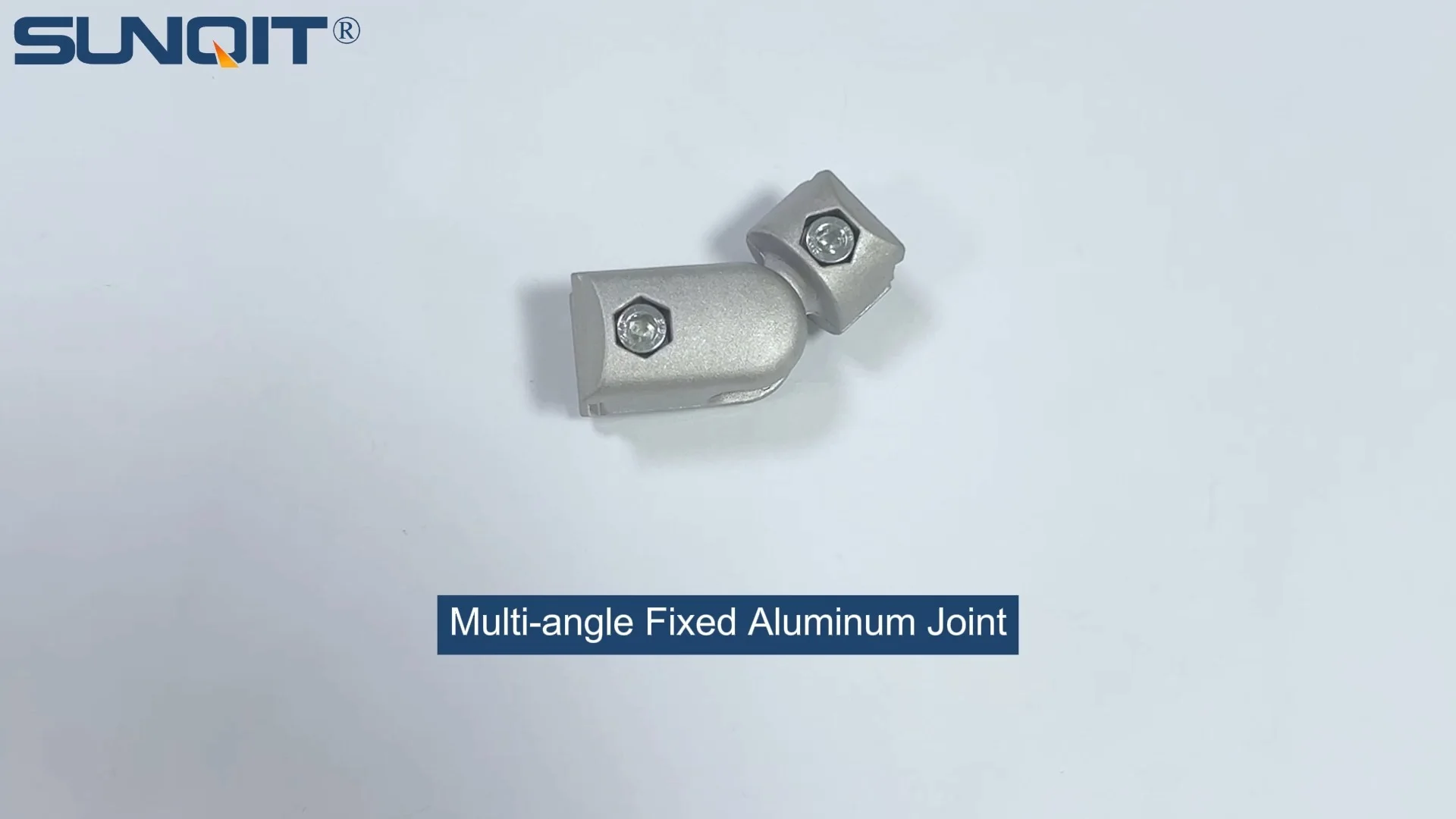
Multi-angle Fixed Aluminum Joint
Aluminum joint pipe connection for two pipe connection and work in mutiple angle.
Walk into any modern factory or production facility, and you'll notice a quiet revolution happening on the shop floor. Gone are the days of rigid, one-size-fits-all workstations and clunky material racks bolted permanently to the ground. Instead, you'll find sleek, modular setups—workbenches that adjust with a few twists of a wrench, roller tracks that glide materials from station to station, and racks that reconfigure overnight to match a new product line. At the heart of this flexibility? Components like the multi-angle fixed aluminum joint. It's not the flashiest part of the production line, but ask any plant manager, and they'll tell you: these small, unassuming connectors are the glue that holds lean manufacturing systems together.
In this article, we're diving deep into the world of multi-angle fixed aluminum joints. What are they, exactly? How do they work with aluminum lean pipe and other components? And why have they become a must-have for anyone building efficient, adaptable workspaces? Whether you're a seasoned lean system designer or just starting to explore modular production solutions, this guide will break down everything you need to know—without the jargon, and with plenty of real-world context.
First Things First: What Even Is a Multi-Angle Fixed Aluminum Joint?
Let's start with the basics. A multi-angle fixed aluminum joint is a specialized connector designed to link aluminum lean pipes, aluminum profiles, or other structural components at—you guessed it—multiple fixed angles. Unlike rigid 90-degree-only joints or flimsy plastic connectors that wear out, these joints are engineered to provide stability while offering flexibility in how you orient your pipes and profiles. Think of them as the "elbows" and "knees" of your production line's skeleton: they let you build structures that bend, turn, and rise at precise angles, all while keeping everything rock-solid.
But why aluminum? Aluminum is lightweight yet surprisingly strong, resistant to corrosion (no rusting in humid factories!), and has a clean, professional look that fits today's industrial aesthetic. When you combine that with a "fixed" design—meaning once you set the angle, it stays put unless you intentionally adjust it—you get a joint that balances adaptability with reliability. That's a big deal in manufacturing, where a wobbly workbench or a sagging material rack can slow down production or even create safety hazards.
The Role of Multi-Angle Fixed Aluminum Joints in Aluminum Lean Pipe Systems
To really understand these joints, you need to know about their most common partner: aluminum lean pipe. Aluminum lean pipe (sometimes called "aluminum lean tube") is a hollow, lightweight aluminum tube used to build everything from workbenches to flow racks. It's a staple in lean manufacturing because it's easy to cut, assemble, and reconfigure—no welding required. But here's the thing: a tube is just a tube without a way to connect it to other tubes, brackets, or accessories. That's where multi-angle fixed aluminum joints come in.
Imagine you're building a workbench. You need vertical legs, horizontal supports, and maybe a slanted shelf for tools. A straight joint can connect the legs to the top, but what about that slanted shelf? A 45-degree angle? A 30-degree angle? That's where the "multi-angle" part shines. A good multi-angle fixed aluminum joint might offer preset angles like 30°, 45°, 90°, 135°, or even custom angles, letting you lock the shelf at exactly the slope you need. And because it's fixed, you don't have to worry about the shelf gradually tilting downward as tools pile up—this joint holds tight.
These joints also play nice with aluminum profile accessories, another key part of modular systems. Aluminum profiles (think of them as thicker, more rigid aluminum rails with T-slots for attaching brackets) are often used for heavier-duty setups, like industrial workbenches or heavy material racks. Multi-angle fixed aluminum joints can bridge the gap between aluminum lean pipe and these profiles, letting you mix and match components to fit your needs. For example, you might use aluminum lean pipe for the upper shelves of a rack (lighter, easier to adjust) and sturdier aluminum profiles for the base (to handle heavier loads), with a multi-angle joint seamlessly connecting the two.

Core Features: What Makes These Joints Stand Out?
Not all joints are created equal. A cheap plastic joint from a hardware store might work for a DIY shelf in your garage, but in a factory where parts are moving 8 hours a day, 5 days a week, you need something built to last. Multi-angle fixed aluminum joints have a few key features that set them apart from the rest. Let's break them down:
1. High-Grade Aluminum Construction
We've touched on this, but it's worth emphasizing: these joints are made from high-quality aluminum, often with a powder-coated or anodized finish. Anodization adds a protective layer that resists scratches, corrosion, and wear—perfect for busy production environments where joints might get bumped by carts or tools. Compare that to plastic joints, which can crack under stress or become brittle in extreme temperatures, and stainless steel joints, which are strong but heavy (adding unnecessary weight to your structure). Aluminum hits that sweet spot of strength, weight, and durability.
2. Multiple Preset Angles (Without the Fuss)
The "multi-angle" part isn't just a marketing term. These joints are designed with precision-machined grooves or slots that let you lock them at specific angles. Common options include 30°, 45°, 90°, 135°, and sometimes even 180° (for straight-line extensions). The "fixed" aspect is crucial here: once you tighten the bolts (usually with a hex key or wrench), the angle won't shift, even under load. This is a game-changer for structures like roller tracks, where a misaligned joint could cause materials to jam or slide off track.
For example, if you're building a flow rack with a slight incline to let gravity move boxes from the top shelf to the bottom, you might use a 5-degree fixed angle joint. No guessing, no trial-and-error—just set it and forget it. That precision saves time during setup and reduces errors down the line.
3. Compatibility with a Range of Components
A good joint shouldn't limit what you can build. Multi-angle fixed aluminum joints are engineered to work with more than just aluminum lean pipe. They pair seamlessly with aluminum profiles (like the popular 4040 or 3030 aluminum extrusion profiles), aluminum profile accessories (end caps, rubber strips, etc.), and even roller track systems. Need to attach a roller track to a vertical aluminum profile at a 15-degree angle? There's a joint for that. Want to connect a side guard to a workbench frame at 45 degrees? Yep, that works too.
This compatibility is a big reason lean system suppliers love these joints. Instead of stocking 10 different joint types for 10 different components, they can rely on a few multi-angle models to cover most use cases. For you, that means fewer trips to the supplier and more time building.
4. Easy Installation (No Welding Required!)
Remember the old days of building workbenches? You'd need a welder, a cutting torch, and a lot of patience. Not anymore. Multi-angle fixed aluminum joints are designed for tool-free or minimal-tool assembly. Most use set screws, bolts, or clamping mechanisms that you can tighten by hand or with a simple hex wrench. That means your team can assemble a workbench or rack in hours, not days—and if you need to reconfigure it next month? Just loosen the bolts, adjust the angle, and retighten. No sparks, no special skills, no downtime waiting for a welder.
5. Built to Handle Real-World Loads
Let's get practical: how much weight can these joints actually hold? It depends on the size and design, but most standard multi-angle fixed aluminum joints can handle 50-150 kg of static load (that's the weight of, say, a fully loaded tool chest or a stack of heavy parts). Heavy-duty models can go even higher—up to 200 kg or more. That's more than enough for most factory applications: workbenches holding assembly tools, material racks stacked with components, or roller tracks moving boxes of finished goods.
To put that in perspective: a plastic joint might start to warp under 30 kg, and a cheap steel joint could rust and weaken over time. Aluminum joints? They'll keep holding steady, even after years of daily use. That durability translates to lower replacement costs and fewer headaches for maintenance teams.

Where Do You Actually Use These Joints? Real-World Applications
Okay, so we know what they are and what they're made of—but how do they fit into day-to-day manufacturing? Let's walk through a few common scenarios where multi-angle fixed aluminum joints shine. Chances are, you've seen these setups in action without even realizing the joints were there.
Workbenches: The Heart of the Production Line
Every factory has workbenches, but not all workbenches are created equal. A good workbench needs to be sturdy (no wobbling when you're tightening a bolt!), adaptable (maybe you need a shelf at a 30-degree angle for easy access to parts), and durable (resistant to scratches, spills, and the occasional dropped tool). Multi-angle fixed aluminum joints make all of this possible.
Take the "Workbench E (Single Deck – Without Caster)" from many lean system suppliers. It's a basic but versatile setup: a flat top, vertical legs, and optional side shelves. To add those side shelves at a slight angle (so parts don't roll off), you'd use 5-10 degree fixed joints. For the cross-braces that keep the legs from swaying, 45-degree joints add stability without getting in the way of foot space. And because the joints are aluminum, they won't react with oils or chemicals that might spill on the bench—no rust stains or degradation over time.
Roller Tracks: Keeping Materials Moving
In lean manufacturing, "flow" is everything. Materials should move smoothly from one workstation to the next, with minimal manual lifting. That's where roller tracks come in—conveyor-like systems of rollers that let boxes, bins, or parts glide along a path. But roller tracks don't just lie flat on the floor; they often need to slope, turn, or rise to reach different stations. Multi-angle fixed aluminum joints are what make those slopes and turns possible.
For example, imagine a roller track that starts at a high shelf and slopes down to a packing station. The angle here is critical: too steep, and the boxes might slide too fast and crash; too shallow, and they won't move at all. A multi-angle fixed joint lets you set that slope to exactly 3 degrees—consistent across the entire track. Then, at the corner where the track turns 90 degrees, another joint connects the straight section to the curved section, keeping the rollers aligned so boxes don't jam. Pair that with roller track accessories like plastic guide rails (yellow or grey, depending on your color-coding system), and you've got a seamless material flow system—all thanks to those joints.
Material Racks: Storing More, Using Less Space
Warehouses and factories are always short on space. Material racks that stack vertically are a no-brainer, but building them safely requires precision. Enter the multi-angle fixed aluminum joint. Take "Material Rack B (3 Row and 3 Floor)"—a common setup for storing small parts bins. Each shelf needs to be level, but the vertical supports might need to angle slightly inward at the top to prevent bins from sliding off (a 5-degree tilt is standard). With multi-angle joints, you can set that tilt uniformly across all shelves, ensuring stability and safety.
Even better, if you switch to larger bins next quarter, you can loosen the joints, adjust the shelf height, and retighten—no need to buy a whole new rack. That's the beauty of modularity: your storage system grows and changes with your needs, and the joints are the enablers.
Turnover Trolleys: Moving Materials Without the Struggle
Ever tried pushing a wobbly trolley loaded with parts? It's not just frustrating—it's dangerous. Turnover trolleys need to be lightweight (so they're easy to push) but rigid (so the load doesn't shift). Multi-angle fixed aluminum joints help here by connecting the aluminum lean pipe frame at strategic angles, ensuring the trolley stays square and stable, even when it's loaded to capacity. Add casters (swivel caster wheels with brakes, of course) to the bottom, and you've got a trolley that glides smoothly and stops securely—all built with joints that keep the frame from twisting or bending.

How Do These Joints Compare to Other Connectors? Let's Break It Down
You might be thinking: "Okay, multi-angle fixed aluminum joints sound great, but aren't there other options?" Absolutely. Let's compare them to three common alternatives to see why aluminum multi-angle joints often come out on top.
| Joint Type | Material | Adjustable Angles? | Max Load (kg) | Best For | Downsides |
|---|---|---|---|---|---|
| Multi-Angle Fixed Aluminum Joint | Anodized Aluminum | Yes (30°, 45°, 90°, 135°, etc.) | 50-200+ | Modular workbenches, roller tracks, material racks, trolleys | Slightly higher upfront cost than plastic |
| 90° Only Steel Joint | Steel (often coated) | No (only 90°) | 100-300 | Heavy-duty, straight-line structures | Rigid (can't reconfigure angles); heavy; prone to rust |
| Plastic Lean Pipe Joint | ABS Plastic | Some (flexible, but not fixed) | 20-50 | Light, temporary setups (e.g., event displays) | Wears quickly; low load capacity; warps in heat |
| Stainless Steel Swivel Joint | Stainless Steel | Yes (unlimited angles, swivels) | 80-150 | Food/pharma industries (corrosion-resistant) | Expensive; overkill for most general manufacturing |
As you can see, multi-angle fixed aluminum joints hit the sweet spot for most factory and warehouse needs. They offer the flexibility of adjustable angles, the durability of metal, and the practicality of moderate cost—without the limitations of plastic or the rigidity of steel.
Why Lean System Managers Can't Stop Talking About These Joints
At this point, you might be thinking, "Okay, they're useful—but why are they such a big deal for lean systems?" Lean manufacturing is all about eliminating waste: waste of time, waste of space, waste of materials. Multi-angle fixed aluminum joints support that mission in three key ways:
1. They Reduce Setup and Changeover Time
In traditional manufacturing, reconfiguring a workstation could take days. You'd have to unbolt old parts, weld new ones, and wait for paint to dry. With multi-angle joints, that same reconfiguration takes hours. Loosen bolts, adjust angles, retighten—that's it. This means your team can switch from producing Product A to Product B faster, reducing downtime and keeping up with customer demand.
2. They Cut Long-Term Costs
Yes, aluminum joints cost more upfront than plastic ones. But consider this: a plastic joint might need replacement every 6-12 months, especially in high-use areas. An aluminum joint? It'll last 5-10 years, even with daily use. Add in the labor savings from not having to constantly repair wobbly structures, and the ROI becomes clear. Plus, since they're compatible with standard aluminum lean pipe and profiles, you won't have to buy proprietary components—another cost saver.
3. They Support Continuous Improvement
Lean isn't a one-and-done process; it's about constantly finding better ways to work. Multi-angle joints make it easy to test new layouts. Want to try a U-shaped production line instead of a straight line? Rearrange the workbenches with a few joint adjustments. Think a steeper angle on the roller track might speed up material flow? Tweak the joints and see. This flexibility lets your team experiment, learn, and improve—without the risk of investing in permanent, unchangeable structures.
Choosing the Right Joint: What to Look For
So, you're sold on multi-angle fixed aluminum joints—now how do you pick the right one for your project? Here are a few key questions to ask:
- What's the load? If you're building a shelf for small parts, a standard 50 kg joint works. For a workbench holding heavy machinery, go heavy-duty (150+ kg).
- What angles do you need? Most joints offer 30°, 45°, 90°, and 135°, but some have more options. List your required angles first.
- What size pipe or profile are you using? Joints are sized to fit specific pipe diameters (e.g., 28mm aluminum lean pipe) or profile widths (e.g., 4040 aluminum profiles). Measure twice, buy once!
- Will it be used in a harsh environment? If your factory is humid or uses chemicals, look for anodized or powder-coated aluminum to boost corrosion resistance.
- Do you need tool-free assembly? Some joints use hand-tightened knobs, others require a hex wrench. Choose based on who'll be assembling it (maintenance team vs. line workers).
And don't forget to check with your aluminum lean pipe supplier—they'll often have compatibility charts or sample kits to help you test joints before buying in bulk.
Final Thoughts: The Quiet Hero of Lean Manufacturing
Multi-angle fixed aluminum joints might not get the same attention as flashy new robots or high-tech software, but they're every bit as critical to a smooth-running production line. They're the reason your workbench stays stable, your roller track glides smoothly, and your material rack adapts when your needs change. They're the unsung heroes of modularity, durability, and efficiency—qualities that lie at the heart of lean manufacturing.
So the next time you walk through a factory and admire how effortlessly everything flows, take a closer look at the joints holding it all together. Chances are, you'll spot a few multi-angle fixed aluminum joints doing their job—quietly, reliably, and with the kind of flexibility that makes modern manufacturing possible.
Whether you're building your first modular workstation or upgrading an entire production line, these joints are more than just connectors. They're tools for innovation, enabling you to build not just structures, but systems that grow, adapt, and thrive in an ever-changing industry. And in the world of lean manufacturing, that's worth its weight in aluminum.