- Company Articles
- Products and Technology
- Product knowledge
- What Is a One Way Rotatory Straight Lean Pipe Joint? Ultimate Definition & Functions

What Is a One Way Rotatory Straight Lean Pipe Joint? Ultimate Definition & Functions
Related Product
One Way Rotatory Straight Lean Pipe Joint
Two way lean pipe joint for 2 pcs 28MM lean pipe connection in straight angle with rotatory fucntion, which used widely in workbench, flow rack, hand trolley frame connection.
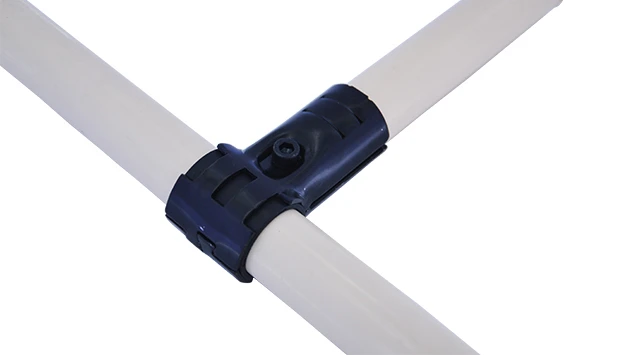
Walk into any modern factory or warehouse, and you'll notice a silent hero keeping operations running smoothly: lean systems. These setups—whether they're workbenches, roller tracks, or assembly lines—rely on countless small components working in harmony. Today, we're zooming in on one such component that often flies under the radar but plays a critical role in flexibility and efficiency: the one way rotatory straight lean pipe joint . It might sound technical, but think of it as the "hinge with a purpose" that lets lean pipes move in just the right way, exactly when you need them to. Let's break down what it is, how it works, and why it matters in the world of lean manufacturing.
What Is a One Way Rotatory Straight Lean Pipe Joint?
At its core, a one way rotatory straight lean pipe joint is a specialized connector designed to link lean pipes (the modular tubes used in lean systems) while allowing controlled, one-directional rotation. Unlike fixed joints that lock pipes rigidly in place, or multi-directional joints that swivel freely, this joint is all about precision: it lets the connected pipe rotate in one plane (usually horizontally or vertically) but resists movement in the opposite direction. This "one-way" feature is key—it prevents accidental backtracking, keeps workflows consistent, and adds a layer of stability to dynamic setups.
Picture it as a hinge with a built-in brake. When you push or pull the pipe in the allowed direction, it moves smoothly, adjusting to your needs. Try to move it backward, though, and it stays put, holding the position securely. This balance of flexibility and stability makes it a favorite in environments where repeatable, error-free movement is essential—think assembly lines where parts must glide in one direction, or workbenches that need adjustable shelves without slipping.
How Does It Work? The Mechanics Behind the Movement
Let's get a little technical, but don't worry—we'll keep it simple. Inside most one way rotatory straight lean pipe joints, you'll find a few key parts: a central axle, a spring-loaded locking mechanism, and friction pads. When you rotate the joint in the "allowed" direction, the locking mechanism disengages, letting the axle turn freely. Rotate it the other way, and the spring pushes the friction pads against the axle, creating resistance that stops movement in its tracks.
Some designs use ball bearings for smoother rotation, while others rely on nylon or rubber components to reduce noise and wear. The joint itself is typically made of durable materials like zinc-plated steel or aluminum, ensuring it can handle the daily grind of a busy production floor. And installation? It's usually tool-free: slide the lean pipe into the joint's socket, tighten a setscrew or clamp, and you're ready to go. No complicated assembly, no downtime—just quick, reliable setup.

Materials Matter: Why Build Quality Counts
Not all one way rotatory straight lean pipe joints are created equal. The best ones are built to last, using materials that can withstand heavy loads, frequent use, and even harsh environments. Here's what to look for:
- Zinc-Plated Steel: The most common choice for industrial settings. It's strong, corrosion-resistant, and affordable. Perfect for general-purpose lean systems like workbenches and material racks.
- Aluminum: Lighter than steel but still tough. Ideal for applications where weight matters, like mobile trolleys or adjustable roller tracks that need to be repositioned often.
- Stainless Steel: For cleanrooms or food processing facilities. It resists rust and bacteria growth, making it a hygienic option.
The locking mechanism's materials are just as important. High-quality joints use heat-treated steel springs and wear-resistant friction pads to ensure the one-way function stays reliable for years, not months. Cheap knockoffs might work at first, but they'll loosen or break quickly—costing you more in replacements and downtime in the long run.

The Role in Lean Systems: Why It's More Than Just a Connector
Lean manufacturing is all about eliminating waste—time, effort, space, you name it. The one way rotatory straight lean pipe joint fits this philosophy perfectly by adding flexibility without sacrificing control. Here's how it contributes to a smoother, more efficient lean system :
1. Streamlined Material Flow
On roller tracks , for example, this joint ensures parts move in a single direction—no more accidental backsliding that could jam the line or damage components. Imagine a packaging station where boxes glide from the assembly line to the sealing area. With a one way rotatory joint, the roller track stays angled just right, guiding boxes forward without slipping backward, even if someone bumps the track.
2. Adaptable Workspaces
Workbenches often need adjustable shelves or tool holders to accommodate different tasks. A one way rotatory joint lets operators tilt or rotate these accessories to the perfect angle, then locks them in place. No more fumbling with clamps or worrying about shelves shifting mid-task—just quick adjustments that keep work flowing.
3. Reduced Downtime
When a production line needs reconfiguring—say, to switch from assembling small parts to larger ones—lean systems should adapt quickly. One way rotatory joints make this easy: loosen the setscrew, adjust the pipe to the new angle, and the joint locks it in place. No need for special tools or lengthy setup—your team can get back to work in minutes, not hours.
Real-World Applications: Where You'll See It in Action
You might be surprised how many places this small joint shows up. Here are just a few examples:
Comparing to Other Lean Pipe Joints: When to Choose One Way Rotatory
Lean systems use a variety of joints—fixed, two-way rotatory, swivel, and more. So when should you pick a one way rotatory straight lean pipe joint over the others? Let's break it down:
- Fixed Joints: Best for rigid structures (like the legs of a workbench) that never need adjustment. One way rotatory joints are better when you need occasional movement with stability.
- Two-Way Rotatory Joints: Allow rotation in both directions, which is great for parts that need full swivel (like a tool hanger that swings left or right). But if you need to prevent backward movement, one way is the way to go.
- Swivel Joints: Rotate 360 degrees, ideal for flexible hoses or overhead racks. One way rotatory joints are more specialized—they trade full rotation for controlled, directional movement.
In short, choose a one way rotatory joint when you need controlled flexibility . It's not about movement for movement's sake—it's about movement that serves a purpose, reduces errors, and keeps your team focused on what matters: getting the job done right.
The Bottom Line: Small Joint, Big Impact
At the end of the day, the one way rotatory straight lean pipe joint is a testament to the power of small innovations in lean manufacturing. It might not be the flashiest component on the production floor, but it's the kind of detail that separates a good system from a great one. By blending flexibility with control, it helps teams work smarter, adapt faster, and reduce waste—all while keeping operations running smoothly, day in and day out.
So the next time you walk through a factory or warehouse, take a closer look at the workbenches, roller tracks, and assembly lines. Chances are, there's a one way rotatory straight lean pipe joint hard at work, quietly making sure everything moves in the right direction—because in lean systems, every detail counts.