- Company Articles
- Products and Technology
- Product knowledge
- What Is a Parallel Fixation Aluminum Pipe Joint? Definition & Core Functions

What Is a Parallel Fixation Aluminum Pipe Joint? Definition & Core Functions
Related Product
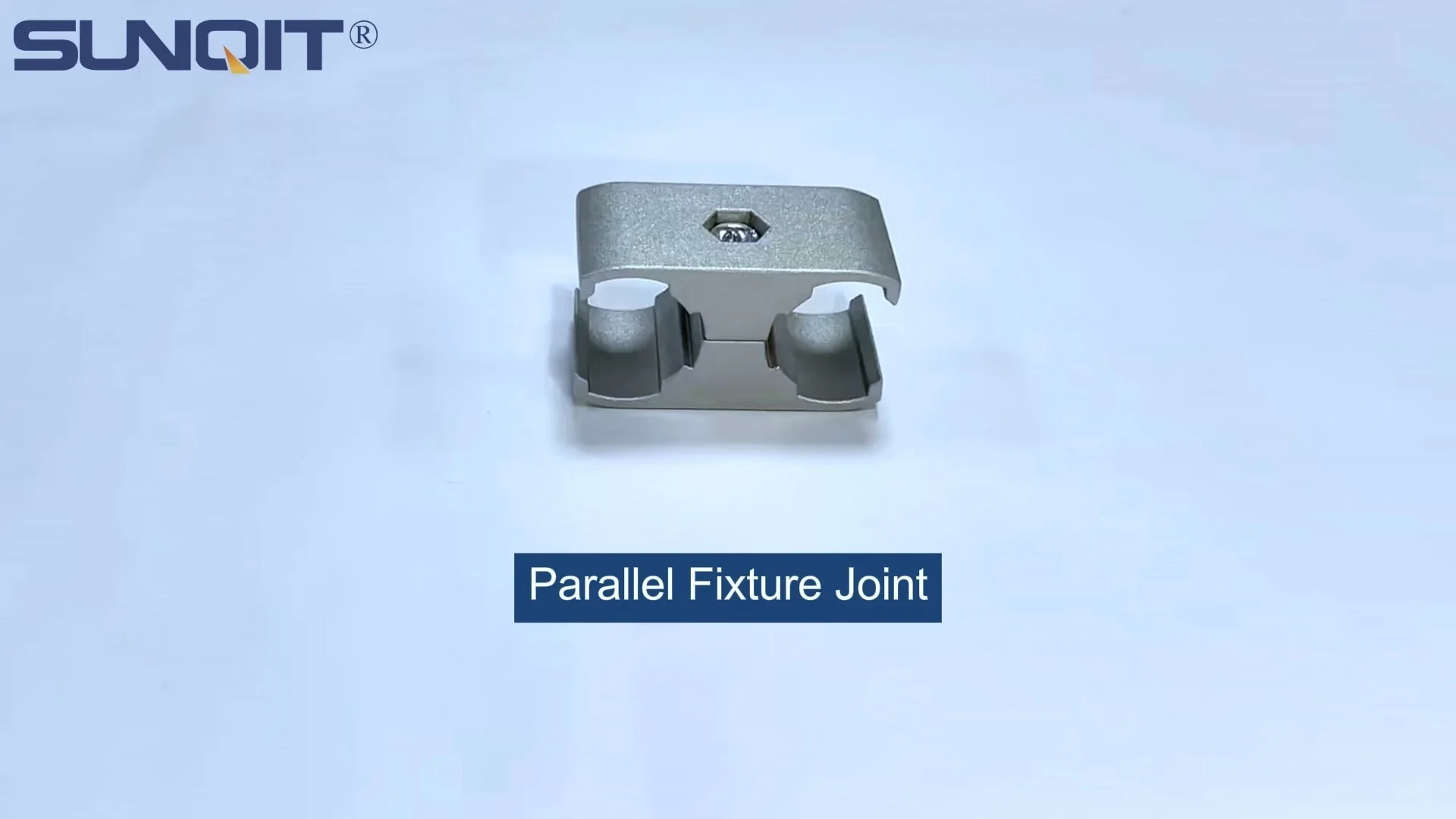
Parallel Fixation Aluminum Pipe Joint
Aluminum parallel joint for two pcs 28mm aluminum pipe connected by parallel direction.
Walk into any modern manufacturing facility, warehouse, or assembly plant, and you'll likely notice a common theme: efficiency. Every tool, every workstation, every piece of equipment is designed to keep operations running smoothly, minimize waste, and adapt to changing needs. Behind this efficiency lies a network of modular systems—structures built from pipes, profiles, and connectors that can be reconfigured in minutes rather than days. Among these unsung heroes of modular design is a component that might not grab headlines but plays a critical role in stability and flexibility: the parallel fixation aluminum pipe joint. In this article, we'll unpack what this joint is, how it works, and why it's become a cornerstone of lean manufacturing and modular workspace design.
Understanding the Basics: What Is a Parallel Fixation Aluminum Pipe Joint?
Let's start with the basics. At its core, a parallel fixation aluminum pipe joint is a specialized connector designed to join two or more aluminum pipes in a parallel orientation. Unlike joints that angle pipes at 90° or 45°, this joint ensures that connected pipes run alongside each other—think of two railroad tracks staying perfectly aligned, never crossing or diverging. This might sound simple, but in the world of modular construction, maintaining parallel alignment is often the difference between a wobbly workstation and a rock-solid structure that can withstand daily use.
But why aluminum? Aluminum is a go-to material in manufacturing for good reason: it's lightweight yet surprisingly strong, resistant to corrosion, and easy to machine. When paired with pipes—often called aluminum lean pipe or basic aluminum tube—these joints create a system that's both durable and adaptable. Unlike heavy steel connectors or brittle plastic alternatives, aluminum joints strike a balance between strength and versatility, making them ideal for everything from lightweight workbenches to heavy-duty material racks.
You might be wondering, "Why not just weld the pipes together?" Welding is permanent, time-consuming, and requires skilled labor. If a production line needs to be reconfigured next month, welded structures become obstacles, not assets. Parallel fixation aluminum pipe joints, on the other hand, are designed for quick assembly and disassembly. They use simple tools—often just a hex key or wrench—and require no special training, putting the power to adapt directly into the hands of plant managers and workers.
Design Breakdown: What Makes It "Parallel Fixation"?
To truly grasp how these joints work, let's zoom in on their design. Most parallel fixation aluminum pipe joints consist of a central housing with two or more clamping mechanisms—think of a small, sturdy block with slots or holes where pipes fit. These clamps are typically lined with rubber or plastic inserts to grip the pipes tightly, preventing slippage even under load. Some models feature adjustable screws that let users fine-tune the tension, ensuring a snug fit regardless of minor variations in pipe diameter.
The "fixation" part is key here. Unlike some flexible joints that allow rotation or swiveling, parallel fixation joints lock pipes into place. Once secured, the pipes won't twist, bend, or shift relative to each other. This stability is crucial for applications where alignment matters, like roller tracks (used to move materials along a production line) or shelving units where uneven weight distribution could cause collapse.
Another design feature worth noting is compatibility. Most parallel fixation joints are engineered to work with standard aluminum pipe sizes—common diameters include 28mm, 30mm, or 40mm—making them easy to integrate with existing modular systems. They also often pair with other aluminum profile accessories , like end caps, T-slot nuts, or hinge brackets, allowing users to build complex structures by mixing and matching components.
Core Functions: Beyond Just Connecting Pipes
At first glance, a pipe joint might seem like a simple component—its job is to hold pipes together, right? But the parallel fixation aluminum pipe joint does much more than that. Its design is optimized to solve specific challenges in manufacturing and workspace design. Let's break down its core functions:
1. Ensuring Structural Stability Under Load
Imagine a workbench in an electronics assembly plant. It holds circuit boards, tools, and maybe even a small testing machine—all up to 100kg or more. If the joints connecting the bench's frame are weak, the whole structure could wobble, risking damage to components or injury to workers. Parallel fixation joints excel here because they distribute weight evenly across connected pipes. By keeping pipes parallel and rigid, they prevent "racking" (sideways movement) and bending, even when heavy objects are placed off-center.
Tests show that well-designed parallel fixation joints can support loads of up to 500kg per connection, depending on pipe thickness and material. That's why they're often used in material racks—like material rack b (3 row and 3 floor) —where shelves need to hold boxes of parts or raw materials without sagging over time.
2. Enabling Quick Reconfiguration for Lean Manufacturing
Lean manufacturing is all about eliminating waste—including the waste of time spent on retooling. Traditional fixed structures (like welded steel frames) force manufacturers into rigid workflows. If a product design changes, or a new production line is needed, the old structure has to be cut apart and rebuilt. Parallel fixation joints turn this process on its head. Because they're tool-operated and non-permanent, workers can disassemble a structure, move pipes to a new location, and reassemble them in hours instead of days.
For example, a car parts supplier might use parallel fixation joints to build a temporary assembly line for a new component. Once production ends, the line can be broken down, and the pipes and joints reused to build a material trolley or a storage rack. This flexibility reduces the need to buy new equipment, cutting costs and supporting sustainability goals.
3. Maintaining Precision Alignment in Automated Systems
Automated systems—like conveyor belts or robotic assembly arms—rely on precise alignment to function. A roller track that's even slightly misaligned can cause products to jam or fall off, halting production. Parallel fixation joints ensure that the rails of these tracks stay perfectly parallel, keeping materials moving smoothly. This is especially critical in high-speed environments, where even a 1mm deviation can lead to costly downtime.
Consider a food packaging plant using a roller conveyor to move boxes from filling to sealing. The conveyor's roller track is built from aluminum pipes connected by parallel fixation joints. Because the joints keep the pipes aligned, the boxes glide forward without tipping, ensuring the sealing machine can do its job accurately. No alignment issues mean no wasted packaging, no product loss, and no frustrated operators.
4. Resisting Corrosion and Wear in Harsh Environments
Manufacturing facilities are tough on equipment. Pipes and joints might be exposed to oil, chemicals, moisture, or constant vibration. Aluminum's natural corrosion resistance helps, but the joint's design plays a role too. Many parallel fixation joints are made from anodized aluminum—an electrochemical process that adds a protective oxide layer—making them resistant to rust and chemical damage. The rubber or plastic clamping inserts also act as a buffer, absorbing vibration and preventing metal-on-metal wear that could loosen the connection over time.
This durability is why parallel fixation joints are used in industries like pharmaceuticals, where cleanrooms require equipment that can withstand frequent washing with disinfectants, or in automotive plants, where oil and grease are part of daily operations.

How Does It Compare to Other Joints? A Quick Comparison
To understand why parallel fixation aluminum pipe joints stand out, let's compare them to two common alternatives: 90° aluminum profile connectors and standard lean pipe joints.
| Feature | Parallel Fixation Aluminum Pipe Joint | 90° Aluminum Profile Connector | Standard Lean Pipe Joint (Steel/Plastic) |
|---|---|---|---|
| Primary Orientation | Parallel pipes | Perpendicular (90°) pipes | Variable (30°, 45°, 90°, etc.) |
| Load Capacity | High (up to 500kg per joint) | Medium-High (300-400kg per joint) | Medium (200-300kg per joint) |
| Assembly Time | Fast (2-3 minutes per joint) | Moderate (5-7 minutes per joint) | Fast (1-2 minutes per joint) |
| Corrosion Resistance | High (anodized aluminum) | High (anodized aluminum) | Low (steel) or Medium (plastic-coated steel) |
| Best For | Stable parallel structures (racks, tracks, workbenches) | Corner connections (frames, enclosures) | Flexible, temporary structures (trolleys, light shelves) |
| Compatibility | Aluminum pipes and profiles | Aluminum T-slot profiles | Steel or plastic-coated lean pipes |
As the table shows, parallel fixation joints excel at supporting heavy loads in parallel configurations, making them ideal for stability-focused applications. They're not meant to replace 90° connectors or flexible lean pipe joints—instead, they complement them. A typical modular system might use 90° connectors for the corners of a workbench frame, parallel fixation joints for the horizontal support rails, and lean pipe joints for adjustable shelving.

Real-World Applications: Where You'll Find Parallel Fixation Joints
Now that we understand the "what" and "how" of parallel fixation aluminum pipe joints, let's look at where they're actually used. These joints are versatile, but they shine in specific scenarios:
1. Workbenches and Assembly Stations
A workbench is the heart of any production line. Whether it's for assembling smartphones, packaging cosmetics, or repairing machinery, the workbench needs to be sturdy, customizable, and easy to adjust. Parallel fixation joints are used to build the bench's frame, connecting the front and back rails to the legs. They also secure accessories like tool hangers or parts bins, ensuring everything stays within reach without adding unnecessary weight.
For example, the "workbench e (single deck-without caster)" model—a popular choice in electronics factories—uses parallel fixation joints to connect its aluminum frame pipes. This ensures the deck (where components are placed) remains flat and stable, even when technicians lean on it or place heavy test equipment.
2. Material Racks and Storage Systems
Warehouses and distribution centers rely on storage racks to keep inventory organized. Material rack b (3 row and 3 floor) is a common design, with three levels of shelves for boxes or pallets. Parallel fixation joints connect the vertical posts to the horizontal shelf supports, ensuring each shelf can hold hundreds of kilograms without bowing. They also allow workers to adjust shelf heights by moving the joints up or down the posts—a useful feature when storing items of different sizes.
3. Roller Tracks and Conveyor Systems
Roller tracks use a series of wheels to move materials (like boxes, bins, or parts) along a path. To work smoothly, the tracks' side rails must be perfectly parallel—if they're misaligned, materials can get stuck or derail. Parallel fixation joints secure these rails to the track's frame, keeping them in sync even when heavy loads pass over. They're also used to connect sections of roller track, ensuring the entire line flows without gaps or bumps.

Choosing the Right Parallel Fixation Joint: Key Considerations
Not all parallel fixation aluminum pipe joints are created equal. When selecting one for your application, keep these factors in mind:
Pipe Size and Compatibility
First, check the joint's pipe diameter rating. Most joints are labeled for specific sizes (e.g., 28mm, 30mm). Using a joint with a pipe that's too small will result in a loose fit; too large, and you won't be able to secure the clamp. If you're unsure, measure your pipes' outer diameter with a caliper before buying.
Load Requirements
Consider how much weight the joint will need to support. If you're building a heavy-duty material rack, opt for joints with reinforced housing and thick aluminum walls. For lighter applications (like a small workbench), a standard-duty joint should suffice.
Environmental Conditions
Will the joint be exposed to moisture, chemicals, or extreme temperatures? Look for anodized aluminum joints for corrosion resistance, or joints with stainless steel components if hygiene is critical (e.g., food processing plants).
Accessories and System Integration
If you plan to add accessories like casters, hinges, or brackets, ensure the joint has T-slots or holes compatible with those parts. Many manufacturers sell joint-and-accessory kits that take the guesswork out of compatibility.
The Future of Parallel Fixation Joints: Innovation in Modular Design
As manufacturing evolves—with trends like Industry 4.0, automation, and sustainability driving change—modular systems will only grow in importance. Parallel fixation aluminum pipe joints are adapting to meet these needs. Here are a few innovations to watch:
Smart Joints with Built-In Sensors
Imagine a joint that can detect when it's loose or under too much strain. Some manufacturers are experimenting with embedding sensors into parallel fixation joints that send alerts to a factory's management system if the connection weakens. This could prevent accidents and reduce downtime by catching issues before they lead to failure.
Lightweight, High-Strength Alloys
New aluminum alloys—like those reinforced with carbon fiber—are making joints even stronger while reducing weight. This is especially useful for mobile structures, like turnover trolleys, where every kilogram saved improves maneuverability.
Eco-Friendly Manufacturing
Sustainability is a top priority for many companies. Manufacturers of parallel fixation joints are increasingly using recycled aluminum and eco-friendly coatings (like water-based anodizing) to reduce their environmental footprint. Some even offer take-back programs, where old joints are recycled into new ones.
Final Thoughts: The Quiet Hero of Modular Systems
Parallel fixation aluminum pipe joints might not be the most glamorous components in a factory, but they're essential to keeping operations efficient, flexible, and safe. By connecting aluminum pipes in a stable, parallel orientation, they enable the creation of workbenches, racks, and conveyors that adapt to changing needs without sacrificing strength. Whether you're building a small assembly station or a large-scale material handling system, these joints offer the perfect blend of stability, flexibility, and durability.
So the next time you walk through a manufacturing plant, take a closer look at the structures around you. Chances are, you'll spot parallel fixation joints hard at work—holding everything together, one connection at a time.