- Company Articles
- Products and Technology
- Product knowledge
- What is a Parallel Lean Pipe Joint? Definition and Key Roles in Lean Systems

What is a Parallel Lean Pipe Joint? Definition and Key Roles in Lean Systems
Related Product
Parallel Lean Pipe Joint
Parallel lean pipe joint used for 2 pcs 28MM lean pipe connection in parallel direction to enhance frame structure, usually for heavy payload requirement for workbench. flow rack, hand trolley.
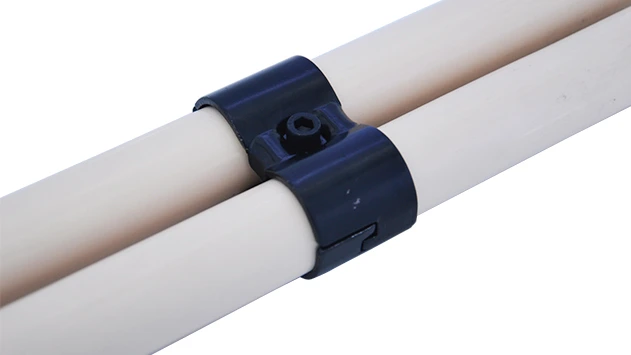
On any busy manufacturing floor, where every second of downtime eats into productivity, you've likely seen the frustration: workstations that feel more like obstacles than tools. A tool cart that won't roll smoothly, a material rack that's hard to adjust, a workbench that just doesn't fit the task at hand. These are the silent productivity killers that lean systems aim to eliminate—and one unsung hero making that possible is the parallel lean pipe joint. Small in size but massive in impact, this unassuming component is the backbone of flexible, adaptable workspaces that keep production lines moving, workers efficient, and waste to a minimum. Let's dive into what makes the parallel lean pipe joint so critical, how it works, and why it's become a staple in modern lean manufacturing.
What Exactly Is a Parallel Lean Pipe Joint?
At its core, a parallel lean pipe joint is a specialized connector designed to link lean pipes—typically lightweight, durable tubes made of steel, aluminum, or plastic-coated materials—in parallel alignment. Unlike rigid, fixed joints that lock pipes into a single position, parallel lean pipe joints are engineered for flexibility: they allow pipes to stay parallel while still offering adjustability, rotation, or secure locking, depending on the design. Think of it as the "hinge" that turns individual pipes into a cohesive, customizable structure—whether that's a workbench, a flow rack, a material trolley, or even a temporary assembly line.
You might be wondering, "Why 'parallel' specifically?" In lean systems, parallel structures are everywhere: the shelves of a flow rack that keep materials moving in a straight line, the legs of a workbench that need to stay evenly spaced for stability, or the rails of a conveyor that guide products without jamming. Parallel lean pipe joints ensure these structures stay aligned, even when adjusted or reconfigured. Without them, you'd be stuck with wobbly, misaligned setups that hinder workflow rather than enhance it.
These joints come in various designs to suit different needs. Some are fixed, locking pipes into a permanent parallel position for heavy-duty applications. Others are rotary, letting pipes swivel slightly to accommodate angled loads or dynamic workflows. Many are coated in chrome for corrosion resistance, making them ideal for factories with strict cleanliness standards (like food processing or electronics manufacturing). No matter the variant, the goal remains the same: to turn simple pipes into smart, responsive tools that adapt to your team's needs, not the other way around.
Breaking Down the Design: Key Components of a Parallel Lean Pipe Joint
To truly appreciate how a parallel lean pipe joint works, let's zoom in on its design. While sizes and materials vary, most share a few core components that make them both strong and flexible:
1. The Outer Casing
This is the visible part of the joint, usually made of high-strength steel or aluminum. It's shaped to cradle the lean pipes, with grooves or clamps that grip the pipe's outer surface. For added durability, many casings are chrome-plated, which resists scratches, rust, and wear from repeated adjustments.
2. The Locking Mechanism
At the heart of the joint is its locking mechanism. Fixed parallel joints often use set screws or bolts that tighten directly against the pipe, creating a rigid connection. Rotary or adjustable joints might feature a spring-loaded pin, a cam lever, or a threaded collar that lets you loosen, reposition, and retighten the joint in seconds. This is where the "lean" in lean pipe joint really shines: no need for welding, drilling, or specialized tools—just a quick twist or turn to reconfigure your setup.
3. Internal Grip Rings
Beneath the casing, many joints have rubber or metal grip rings that line the inner surface. These rings bite into the pipe when the joint is tightened, preventing slippage even under heavy loads. It's a small detail, but it's what makes parallel lean pipe joints so reliable—you can trust that your workbench or flow rack won't shift mid-operation, even with constant use.
4. Compatibility Features
Since lean systems rely on mixing and matching components, parallel lean pipe joints are designed to work with standard pipe sizes (often 28mm or 30mm in diameter for steel pipes, or slimmer profiles for aluminum). Many also include slots or holes for attaching lean pipe accessories like brackets, casters, or roller tracks—turning a basic joint into a hub for building complex structures.

The Unsung Hero of Lean Systems: How Parallel Lean Pipe Joints Drive Efficiency
Lean manufacturing is all about eliminating waste—whether that's wasted time, wasted space, or wasted effort. Parallel lean pipe joints play a starring role in this mission by enabling three key principles of lean systems: flexibility, modularity, and continuous improvement. Let's break down how they make each possible.
Flexibility: Adapt to Change in Seconds, Not Days
In traditional manufacturing setups, changing a workbench height or reconfiguring a material rack might require a call to maintenance, a trip to the tool shed, and hours of downtime. With parallel lean pipe joints, it's a one-person job that takes minutes. Loosen the locking mechanism, slide the pipes to the new position, retighten, and you're done. This is a game-changer for facilities that produce multiple products or shift workflows frequently. For example, imagine an electronics plant that assembles both smartphones and tablets. A lean pipe workbench built with parallel joints can be quickly adjusted to accommodate the smaller phone components in the morning and the larger tablet parts in the afternoon—no need for separate workstations, and no idle time between shifts.
Modularity: Build What You Need, When You Need It
Lean systems thrive on modularity—the ability to mix and match components to create custom solutions. Parallel lean pipe joints are the glue that holds this modularity together. Need a temporary flow rack for a rush order? Connect a few pipes with parallel joints, add some roller tracks, and you've got a functional rack in under an hour. Once the order is done, disassemble it and reuse the pipes and joints for something else. This not only reduces waste (no more buying one-off, single-use equipment) but also keeps costs low. Instead of investing in expensive, fixed machinery, you can build and rebuild with the same basic components—making parallel lean pipe joints a cost-effective choice for small and large facilities alike.
Continuous Improvement: Learn, Adjust, and Get Better
The lean philosophy isn't just about setting up efficient systems—it's about constantly improving them. Parallel lean pipe joints make experimentation easy. Let's say your team notices that materials on a flow rack are getting stuck halfway down. With a few adjustments to the parallel joints holding the roller tracks, you can tweak the angle of the rack to improve flow. If that doesn't work, adjust again. This trial-and-error process is how great workflows are born, and parallel lean pipe joints remove the barrier to trying new ideas. Workers feel empowered to suggest changes because they know implementing them won't disrupt the entire line—they can simply grab a wrench, adjust the joints, and test the new setup immediately.

From Workbenches to Flow Racks: Real-World Applications of Parallel Lean Pipe Joints
To truly understand the impact of parallel lean pipe joints, let's look at some common setups where they're indispensable. These examples show how a simple joint transforms pipes into tools that solve real manufacturing challenges.
1. Lean Pipe Workbenches: The Heart of the Assembly Line
Walk into any lean-focused factory, and you'll likely see lean pipe workbenches everywhere—and parallel lean pipe joints are what make them so versatile. A typical workbench might use parallel joints to connect the legs (keeping them evenly spaced for stability), the shelf brackets (adjustable to hold tools at the perfect height), and the back rail (for hanging supplies). What makes this setup special is that it's tailored to the worker, not the other way around. A taller employee can raise the work surface by a few inches; a shorter one can lower it. If the job requires more storage, add a second shelf using parallel joints. Over time, as tasks change, the workbench evolves—all thanks to the adjustability of the joints.
2. Flow Racks: Keep Materials Moving, No Pushing Required
Flow racks are designed to let materials glide from the back to the front, so workers always have easy access to what they need (a principle called "first in, first out," or FIFO). Parallel lean pipe joints are critical here because they ensure the roller tracks stay perfectly aligned. If the tracks are even slightly misaligned, materials can jam or slow down, leading to frustration and delays. With parallel joints, you can fine-tune the angle and spacing of the tracks to match the weight and size of your materials—whether you're moving small electronic components or larger automotive parts. And if you switch to a heavier material later? Just adjust the joints to steepen the angle slightly, and the flow rack adapts.
3. Material Trolleys: Mobile Solutions for Busy Floors
Material trolleys need to be sturdy enough to carry heavy loads but light enough to push around easily. Parallel lean pipe joints strike this balance by creating a lightweight frame that's still strong. The joints connect the vertical and horizontal pipes, ensuring the trolley doesn't wobble or bend under weight. Many trolleys also use parallel joints to attach casters (wheels), making it easy to roll materials from one station to another. And when the trolley isn't in use? Disassemble it with a few twists of the joints and store the pipes compactly—no need to waste space on a bulky, permanent cart.
Why Parallel Lean Pipe Joints Beat Traditional Alternatives
You might be thinking, "Can't I just weld pipes together or use fixed brackets?" While those methods work, they fall short in key areas that matter most in lean systems. Let's compare parallel lean pipe joints to traditional options to see why they're the better choice.
| Feature | Parallel Lean Pipe Joints | Welded Pipes | Fixed Brackets |
|---|---|---|---|
| Adjustability | Easily reposition pipes in minutes with basic tools | Permanent; requires cutting and rewelding to change | Limited; holes must align perfectly, no room for error |
| Downtime for Changes | 5–15 minutes (one person) | Hours to days (requires maintenance team) | 30–60 minutes (tools needed, risk of stripping screws) |
| Cost Over Time | Low; reusable for multiple setups | High; fixed structures can't be repurposed | Medium; brackets may break if adjusted frequently |
| Durability | High; grip rings and chrome coating resist wear | High, but welds can weaken with vibration | Low; plastic brackets crack, metal brackets rust |
| Safety | No sharp edges; smooth adjustments reduce pinch points | Sharp weld spatter; risk of structural failure if welds weaken | Screws can loosen over time, causing instability |
As the table shows, parallel lean pipe joints outshine traditional methods in flexibility, cost, and safety—three areas that are non-negotiable in lean systems. They're not just a "nice-to-have"; they're a "must-have" for any facility serious about reducing waste and boosting productivity.
Choosing the Right Parallel Lean Pipe Joint for Your Needs
Not all parallel lean pipe joints are created equal. To get the most out of your lean system, you'll need to choose the right joint for your specific application. Here are the key factors to consider:
1. Load Capacity: How Much Weight Will It Hold?
Start by calculating the maximum weight your structure will need to support. A small workbench for hand tools might only need a lightweight joint, while a flow rack carrying heavy automotive parts will require a heavy-duty model. Look for joints rated for at least 20% more weight than you expect—this gives a safety buffer for unexpected loads.
2. Environment: Will It Stand Up to Your Workplace Conditions?
Consider your factory's environment. If you work with food, chemicals, or in a humid space, opt for chrome-plated or stainless steel joints to resist corrosion. For cleanrooms (like in electronics manufacturing), look for joints with smooth surfaces that are easy to sanitize. Avoid plastic joints in high-heat areas—they can warp or melt.
3. Adjustability Needs: Fixed or Rotary?
Do you need the joint to lock pipes in a permanent parallel position, or do you want the flexibility to swivel or rotate them slightly? Fixed parallel joints are best for structures that won't change often (like a permanent workbench). Rotary joints are better for dynamic setups (like a flow rack that needs occasional angle adjustments). Some joints even offer both options—look for "swivel-locking" designs that let you switch between fixed and rotary modes.
4. Compatibility: Will It Work with Your Existing Pipes?
Most parallel lean pipe joints are designed for standard pipe sizes, but double-check the diameter before buying. If you're using aluminum lean pipes, make sure the joint's grip rings are soft enough to avoid damaging the metal (steel pipes can handle firmer grips). Also, check if the joint is compatible with your lean pipe accessories—brackets, casters, and roller tracks should attach easily without extra adapters.
Final Thoughts: Small Joints, Big Impact
In the world of lean manufacturing, it's often the smallest components that make the biggest difference. The parallel lean pipe joint is a perfect example. It doesn't have the flash of a high-tech robot or the size of a conveyor belt, but it's the reason those robots and conveyors can work in harmony with human workers. By enabling flexible, modular, and adaptable systems, parallel lean pipe joints turn ordinary pipes into extraordinary tools—tools that reduce waste, save time, and make work feel less like a chore and more like a well-oiled machine.
So the next time you walk through a manufacturing floor and see a sleek, efficient workbench or a smoothly flowing rack, take a closer look. Chances are, there's a parallel lean pipe joint holding it all together—quietly, reliably, and always ready for whatever the day brings. In the end, that's what lean systems are all about: not just working harder, but working smarter. And with parallel lean pipe joints, smart work has never been easier.