- Company Articles
- Products and Technology
- Product knowledge
- What is a Parallel Lean Pipe Joint with One Side Rotatory? Definition & Core Functions

What is a Parallel Lean Pipe Joint with One Side Rotatory? Definition & Core Functions
Related Product
Parallel Lean Pipe Joint
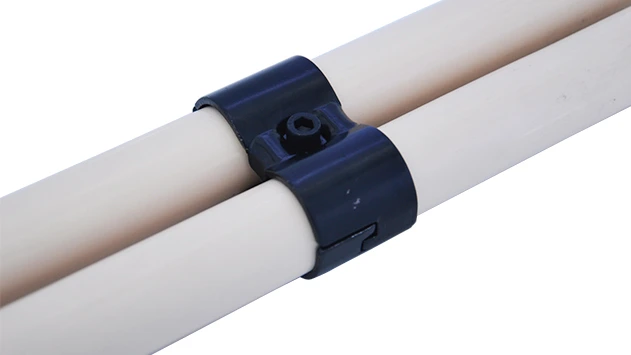
Parallel lean pipe joint used for 2 pcs 28MM lean pipe connection in parallel direction to enhance frame structure, usually for heavy payload requirement for workbench. flow rack, hand trolley.
In the fast-paced world of modern manufacturing, where adaptability and efficiency are the cornerstones of success, every component in a production system matters. Lean manufacturing principles have revolutionized how factories operate, emphasizing waste reduction, flexibility, and continuous improvement. At the heart of this revolution lies a network of modular tools and components designed to evolve with changing needs—none more critical than the humble yet ingenious lean pipe joint . Among these, the Parallel Lean Pipe Joint with One Side Rotatory stands out as a silent workhorse, enabling the kind of dynamic, reconfigurable systems that keep assembly lines, workbenches, and material flow operations running smoothly. Let's dive into what this joint is, how it works, and why it's become indispensable for businesses aiming to stay agile in today's competitive landscape.
Understanding the Basics: Lean Pipes and the Need for Flexible Joints
Before we zoom in on the Parallel Lean Pipe Joint with One Side Rotatory, let's set the stage with a quick refresher on lean pipes. Often made from materials like aluminum (think aluminum lean pipe ) or steel with a plastic coating, lean pipes are lightweight, durable, and designed to be easily assembled into structures like workbenches, material racks, and conveyor systems. What makes them so powerful is their modularity—they rely on lean pipe and accessories (joints, connectors, casters, etc.) to form custom configurations, no welding or complex tools required.
In lean environments, change is constant. A workshop might need to reconfigure a workbench to accommodate a new product size one week, then adjust a roller track to speed up material flow the next. Fixed, rigid structures simply can't keep up. This is where specialized joints come in. While fixed joints work for static setups, dynamic operations demand joints that offer movement without sacrificing stability. Enter the Parallel Lean Pipe Joint with One Side Rotatory—a component built to balance flexibility and function.
Definition: What is a Parallel Lean Pipe Joint with One Side Rotatory?
At its core, the Parallel Lean Pipe Joint with One Side Rotatory is a connector designed to join two or more lean pipes in a parallel arrangement while allowing one side of the joint to rotate along a single axis. Unlike fixed joints that lock pipes rigidly in place, or multi-axis joints that offer 360-degree swivel, this joint is engineered for controlled, one-directional movement. Imagine a hinge that keeps two parallel bars aligned but lets one swing up or down—this joint works similarly, but for lean pipes.
Let's break down its key features:
- Parallel Alignment: Its design ensures that connected pipes stay parallel, even when rotated. This is crucial for structures like shelving or roller tracks, where misalignment could cause jams or instability.
- One-Side Rotation: Only one arm of the joint rotates, while the other remains fixed (or rotates in a limited range). This controlled movement prevents over-rotation and keeps the structure predictable.
- Clamping Mechanism: Most models use a screw or lever-based clamp to secure the pipes. Loosening the clamp allows rotation; tightening it locks the position firmly, ensuring stability under load.
- Material Compatibility: It's typically designed for use with aluminum lean pipe (a popular choice for its lightweight and corrosion resistance) but can also work with steel or plastic-coated pipes, depending on the joint's material (often aluminum or zinc-plated steel).
Simply put, this joint is the bridge between rigidity and adaptability. It lets you build structures that can "bend without breaking"—adjusting to new tasks while maintaining the strength needed for daily operations.

Core Functions: What Does It Actually Do?
To understand why this joint is so valuable, let's explore its core functions—the problems it solves and the benefits it brings to real-world manufacturing.
1. Enabling Controlled Rotation for Adaptive Workspaces
The star feature here is, of course, rotation. Let's say you're assembling small parts on a workbench, and you need the surface to tilt slightly to reduce strain on your wrists. With a fixed joint, you'd be stuck with a flat surface. But with a Parallel Lean Pipe Joint with One Side Rotatory, you can attach the workbench top to a frame using these joints, loosen the clamp, tilt the surface to your desired angle, and lock it in place. No disassembly, no tools beyond a hex key—just quick, easy adjustment.
Another example: roller tracks. In a warehouse, you might need a section of roller track to feed materials downhill at a gentle slope for fragile items, then switch to a steeper angle for heavier boxes. By integrating this joint into the roller track frame, you can tilt the track as needed, ensuring materials flow smoothly without damage.
2. Maintaining Parallelism for Structural Integrity
Rotation is useful, but if the pipes start to skew or twist out of parallel, the structure becomes unstable. Imagine a shelf held up by two parallel pipes—if one rotates and the other doesn't, the shelf could tilt, risking a collapse. This joint solves that with precision engineering. Its body is shaped to keep connected pipes aligned along the same plane, even when rotated. Internal guides or notches prevent lateral movement, ensuring that "parallel" stays "parallel," no matter how many times you adjust the angle.
3. Balancing Load-Bearing Capacity with Flexibility
Flexibility often comes at the cost of strength, but not with this joint. Made from robust materials like aluminum or reinforced plastic, it's designed to handle typical workshop loads—think 50-100 kg per joint, depending on size. The clamping mechanism (usually a hex screw or cam lever) grips the pipe tightly when locked, distributing weight evenly across the connection. This means you can use it for more than just light-duty tasks; it's sturdy enough for workbenches holding tools, material racks with heavy components, or even mobile trolleys with casters.
4. Compatibility with Standard Lean Pipe and Accessories
One of the biggest advantages of lean systems is interoperability—components from different suppliers often work together. The Parallel Lean Pipe Joint with One Side Rotatory is no exception. It's designed to fit standard lean pipe diameters (common sizes include 28mm for aluminum lean pipe) and pairs seamlessly with other accessories: casters for mobile structures, roller track connectors for material flow, or end caps to protect pipe edges. This compatibility means you can mix and match it with existing components, avoiding the need for costly overhauls.

Anatomy of the Joint: What Makes It Tick?
Let's take a closer look at the components that make this joint work. While designs vary slightly by manufacturer, most models share these key parts:
The Body
Usually made from die-cast aluminum or zinc alloy, the body is the "backbone" of the joint. It houses the rotation mechanism and provides connection points for the pipes. Aluminum is a popular choice here (matching aluminum lean pipe ) for its lightweight and rust-resistant properties, making it ideal for humid or cleanroom environments.
The Rotating Arm
One side of the joint features a rotating arm with a pipe socket (the part that holds the lean pipe). This arm is attached to the body via a pivot pin or bearing, allowing it to swing up, down, or sideways (depending on orientation) within a limited range (often 0-180 degrees). Some models include stops to prevent over-rotation, adding an extra layer of safety.
The Fixed Arm (or Second Rotating Arm)
The other side of the joint is either fixed (stationary relative to the body) or a second rotating arm (for two-way rotation, though "one side rotatory" typically means only one arm moves). Like the rotating arm, it has a pipe socket to hold the parallel pipe.
Clamping Mechanism
To lock the rotation in place, the joint uses a clamping mechanism—usually a hex screw that tightens against the pipe. When loosened, the socket releases the pipe, allowing the arm to rotate. When tightened, it presses a metal or rubber pad against the pipe, creating friction to hold it steady. Some models use a quick-release lever instead of a screw for even faster adjustments.
How It Works: A Step-by-Step Look at Assembly and Adjustment
Wondering how easy it is to use this joint? Let's walk through a typical assembly process for a simple adjustable workbench shelf—something you might find in a small electronics workshop.
- Measure and Cut the Pipes: Start by cutting two lengths of aluminum lean pipe to the desired shelf width. Let's say 120cm for this example.
- Attach the Joints: Slide a Parallel Lean Pipe Joint with One Side Rotatory onto each end of one pipe (the "fixed" pipe). These will connect to the workbench legs. Then, slide the second pipe (the "rotating" pipe) into the rotating arms of the joints.
- Position the Shelf: Hold the rotating pipe parallel to the fixed pipe and align the joints with the workbench legs. Tighten the clamps on the fixed arms first to secure the joints to the legs.
- Adjust the Angle: Loosen the clamps on the rotating arms. Tilt the rotating pipe (and the shelf board attached to it) to your desired angle—say, 15 degrees for easier access to tools. Tighten the clamps to lock the position.
- Test Stability: Give the shelf a gentle shake to ensure it doesn't wobble. If it does, check that the clamps are tight and the pipes are parallel. You're done!
The beauty here is that if you need to flatten the shelf later, you just loosen the clamps, rotate it back to horizontal, and retighten. No disassembly, no wasted time—just adaptability on demand.
Real-World Applications: Where This Joint Shines
Now that we understand how it works, let's explore where the Parallel Lean Pipe Joint with One Side Rotatory adds the most value. From workshops to warehouses, its versatility makes it a staple in several key areas:
1. Adjustable Workbenches and Assembly Stations
Workbenches are the heartbeat of any production floor, and one-size-fits-all surfaces rarely work. With this joint, you can build workbenches with tiltable tops, height-adjustable shelves, or fold-down extensions. For example, a mechanic might use a tilted surface to keep tools from rolling off, while an electronics assembler could lower a shelf to eye level for precision work. The joint ensures the adjustments are quick and stable, even with tools and parts on the bench.
2. Dynamic Roller Tracks and Material Flow Systems
Roller tracks rely on gravity (or minimal force) to move materials from point A to B. But not all materials move at the same speed: heavy boxes need steeper slopes, light parts need gentler angles. By installing this joint along a roller track, you can create "adjustable slope" sections. Loosen the joint, tilt the track up or down, and lock it—no need to rebuild the entire track. It's also useful for merging tracks: angle one track to feed into another at a precise 30-degree angle, reducing jams during high-volume operations.
3. Mobile Trolleys and Turnover Racks
Turnover trolleys (used to transport materials between stations) often need foldable sides to save space when empty. With this joint, you can attach trolley sides that rotate down flat when not in use. Similarly, mobile workbenches with casters can have adjustable tool holders that swing out of the way when moving through tight doorways.
4. Ergonomic Workstations
Ergonomics is a top priority in modern workplaces, and this joint helps create setups that reduce strain. For example, a standing desk can use the joint to adjust the keyboard tray height, or a packing station might have a rotating platform to bring packages closer without bending. By allowing workers to tailor their environment to their body, the joint helps cut down on fatigue and injuries.
Why Choose This Joint? Key Benefits Over Other Options
With so many lean pipe joints on the market, why opt for the Parallel Lean Pipe Joint with One Side Rotatory? Let's compare it to two common alternatives to highlight its unique advantages:
| Joint Type | Rotation Capability | Parallel Alignment | Best For | Limitations |
|---|---|---|---|---|
| Parallel Lean Pipe Joint with One Side Rotatory | One side rotates (0-180°) | Built-in; pipes stay parallel | Adjustable workbenches, roller tracks, ergonomic setups | Limited to one-axis rotation |
| Fixed Lean Pipe Joint | None (rigid) | Yes, but permanent | Static structures (shelving, fixed racks) | No flexibility for adjustments |
| 90-Degree Crossing Lean Pipe Joint | None (fixed 90° angle) | No (pipes cross at 90°) | Corner connections, vertical/horizontal joints | No rotation; only for perpendicular setups |
As the table shows, this joint fills a niche between fixed rigidity and overly complex multi-axis joints. It's not trying to do everything—but what it does, it does exceptionally well: provide controlled, parallel rotation for adaptive, everyday use.
Other benefits worth noting:
- Cost-Effective: Reconfiguring with joints is cheaper than buying new structures. A single joint can extend the life of a workbench or roller track by years.
- Tool-Free Adjustments (Often): Many models use quick-release levers, so workers can make on-the-fly changes without hunting for a hex key.
- Durable: Aluminum and steel construction resists wear and tear, even in busy workshops.
- Compatible with Lean Principles: By enabling quick changes, it supports "just-in-time" production and waste reduction—no more storing unused fixed structures.
Installation and Maintenance Tips for Long-Lasting Performance
To get the most out of your Parallel Lean Pipe Joint with One Side Rotatory, follow these simple tips:
Installation Do's and Don'ts
- Do measure twice, cut once: Ensure pipes are the same length to keep alignment precise.
- Don't over-tighten clamps: This can strip threads or damage the pipe coating. Tighten until the pipe doesn't wiggle—you don't need to crank it.
- Do check rotation range before assembly: Some joints have built-in stops; make sure the rotation angle fits your needs (e.g., 0-90° vs. 0-180°).
- Don't mix pipe materials unnecessarily: Pair aluminum joints with aluminum lean pipe and steel joints with steel pipes to avoid galvanic corrosion.
Maintenance Made Simple
- Inspect monthly: Check for loose clamps, bent arms, or worn bearings. Tighten or replace parts as needed.
- Lubricate rotation points: A drop of light machine oil on the pivot pin every 6 months keeps rotation smooth.
- Clean regularly: Wipe away dust, grease, or debris that could jam the rotation mechanism.
- replace worn clamps: If the rubber or metal clamping pad starts to crack, swap it out—this ensures a secure grip on the pipe.
The Future of Lean Manufacturing: Where This Joint Fits In
As manufacturing grows more automated and data-driven, the demand for flexible, adaptable tools will only increase. The Parallel Lean Pipe Joint with One Side Rotatory is poised to play a role in this future, too. Imagine smart workbenches where sensors in the joint track rotation angles, feeding data to managers about how often setups change. Or joints made from advanced composites that are lighter but stronger, supporting heavier loads in automated warehouses.
Even as factories adopt robots and AI, the human need for adaptable workspaces remains. Workers will always need to adjust, tweak, and reconfigure their tools—and this joint will be right there with them, making those changes fast, easy, and reliable.
Conclusion: Small Joint, Big Impact on Lean Success
The Parallel Lean Pipe Joint with One Side Rotatory might seem like a small component, but its impact on lean manufacturing is huge. By balancing rotation and stability, it turns static structures into dynamic, adaptable systems that can keep up with the pace of modern production. Whether you're building a workbench that needs to tilt, a roller track that needs to angle, or any other setup that demands flexibility, this joint delivers—proving that sometimes, the most powerful solutions are the ones that let you "bend" without breaking.
So the next time you walk through a workshop or warehouse, take a closer look at the structures around you. Chances are, there's a Parallel Lean Pipe Joint with One Side Rotatory hard at work, making adaptability look easy. And in lean manufacturing, easy adaptability is everything.