- Company Articles
- Products and Technology
- Product knowledge
- What Is a Parallel Rotatory Lean Pipe Joint? Key Definitions & Core Functions

What Is a Parallel Rotatory Lean Pipe Joint? Key Definitions & Core Functions
Related Product
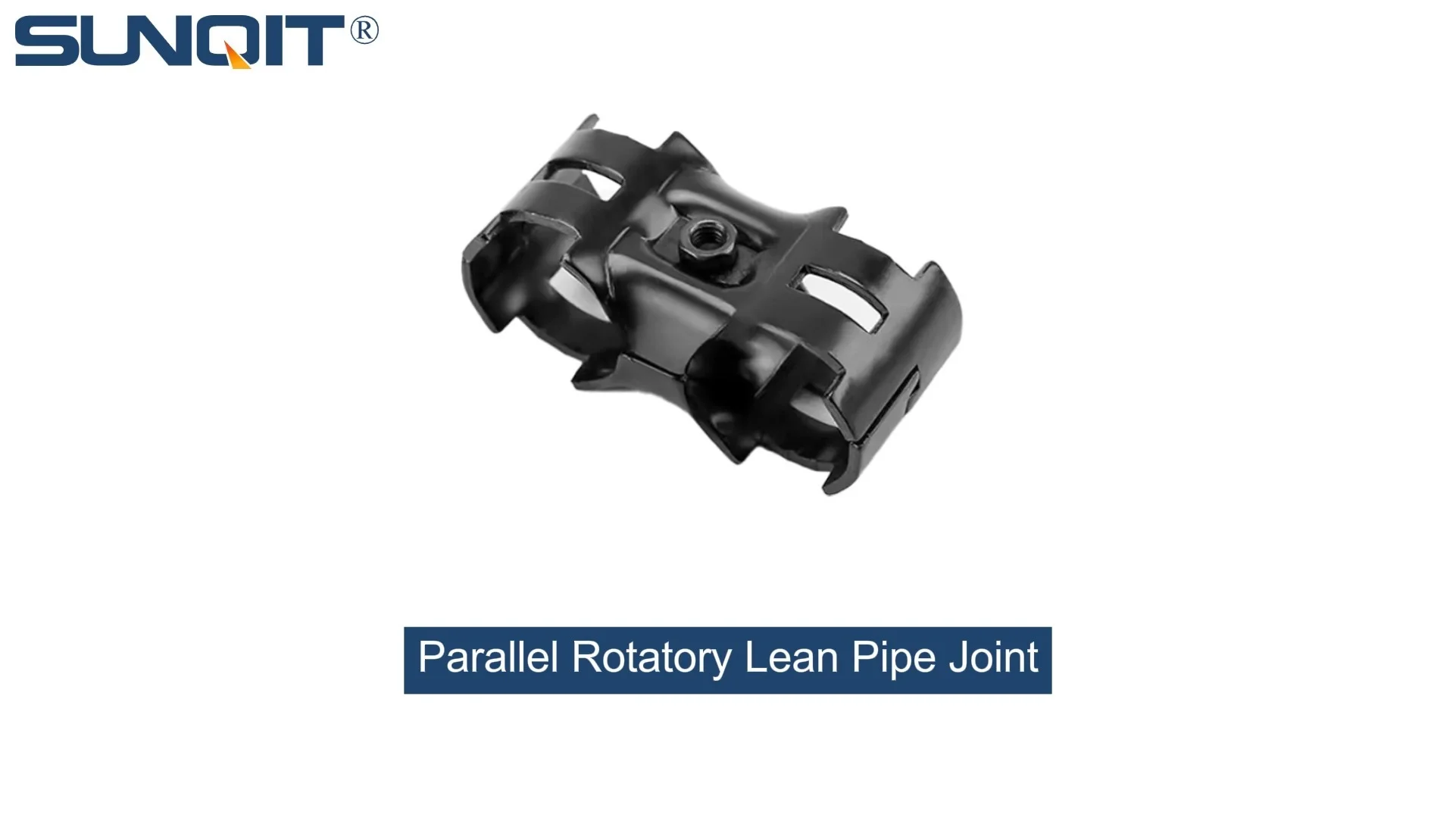
Parallel Rotatory Lean Pipe Joint
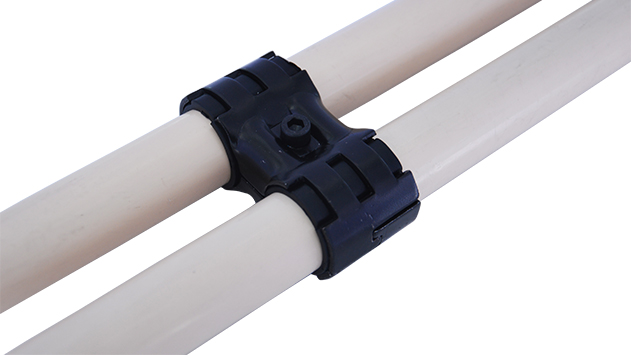
Parallel rotatory lean pipe joint, for 2 pcs pipe conenction in parallel direction with rotatory function.
In the fast-paced world of manufacturing, where efficiency and adaptability can make or break a production line, the term "lean" has become more than just a buzzword—it's a philosophy. At its core, lean manufacturing is about minimizing waste, streamlining processes, and creating systems that can evolve with changing demands. And while much attention is paid to high-tech machinery or software, some of the most critical innovations in lean systems are the small, unassuming components that hold everything together. Enter the parallel rotatory lean pipe joint : a humble yet powerful connector that plays a starring role in the flexibility and functionality of lean pipe systems.
Lean pipe systems—often made from steel, aluminum, or plastic-coated pipes—are the backbone of modular workstations, material racks, and production lines. They're beloved for their ability to be customized, reconfigured, and repurposed without needing heavy machinery or specialized tools. But none of this flexibility would be possible without the joints that link the pipes together. And among these joints, the parallel rotatory lean pipe joint stands out for its unique ability to balance movement and stability, making it a go-to choice for manufacturers who need both structure and adaptability.
Defining the Parallel Rotatory Lean Pipe Joint: What Sets It Apart?
At its simplest, a parallel rotatory lean pipe joint is a specialized connector designed to join two or more lean pipes while allowing for controlled rotational movement—all while keeping the connected pipes aligned in parallel. Unlike fixed joints that lock pipes in place or 90-degree joints that force angular connections, this joint offers a middle ground: it lets pipes rotate around a central axis without losing their parallel orientation. Think of it as a hinge that keeps two parallel bars moving in sync, rather than a swivel that lets them spin freely in any direction.
To visualize this, imagine a workbench shelf supported by two vertical lean pipes. If those pipes are connected to the shelf using fixed joints, the shelf height is set in stone. But with parallel rotatory lean pipe joints, you could pivot the shelf up or down, adjusting its height while keeping the vertical pipes perfectly parallel—no tilting, no misalignment, just smooth, stable movement. That's the magic of this joint: it combines flexibility with precision, ensuring that even as parts move, the overall structure remains balanced and functional.
Most parallel rotatory lean pipe joints are made from durable materials like zinc-plated steel, stainless steel, or aluminum, with some featuring plastic or rubber components to reduce friction during rotation. They typically consist of a central body with two or more pipe sockets (the parts that grip the lean pipes) and an internal mechanism—a bearing, bushing, or friction-fit design—that allows the sockets to rotate relative to each other. Many also include a locking feature, like a setscrew or lever, to secure the joint in place once the desired angle is achieved, preventing unwanted movement during use.
Key Definitions: Breaking Down the Language of Lean Pipe Joints
To fully grasp the role of the parallel rotatory lean pipe joint, it helps to understand a few key terms that form the foundation of lean pipe systems. Let's break them down:
- Lean Pipe: Also known as "lean tube," this is the primary building block of lean systems. Typically made from steel (often with a PE coating for corrosion resistance), aluminum, or stainless steel, lean pipes are hollow, lightweight, and strong enough to support tools, materials, and even heavy workbenches. Sizes vary, but common diameters include 28mm (for standard steel pipes) and 30mm (for aluminum lean pipe).
- Lean Pipe Joint: A generic term for any connector used to join lean pipes. Joints come in countless designs, each tailored to specific needs: fixed joints lock pipes rigidly; 45-degree or 90-degree joints create angles; swivel joints allow 360-degree rotation; and parallel rotatory joints, as we've discussed, enable rotational movement while maintaining parallel alignment.
- Parallel Alignment: When two pipes (or structural elements) run side by side at a constant distance, never converging or diverging. This is critical for stability—imagine a ladder with legs that aren't parallel; it would wobble or collapse. Parallel rotatory joints ensure that even as pipes rotate, they stay evenly spaced.
- Lean Pipe and Accessories: The broader ecosystem of components that make lean systems work. Beyond pipes and joints, this includes casters (for mobile workstations), roller tracks (for material flow), workbench surfaces, and end caps (to protect pipe ends). The parallel rotatory joint is just one piece of this puzzle, but it's a piece that enables many of the system's most flexible configurations.
With these definitions in mind, it's easier to see why the parallel rotatory lean pipe joint is so valuable: it bridges the gap between rigidity and movement, ensuring that lean systems can adapt without sacrificing structure. It's the kind of component that quietly solves big problems—like how to adjust a workstation's height for a taller worker, or reangle a material rack to improve flow—without requiring a complete overhaul.
Core Functions of the Parallel Rotatory Lean Pipe Joint: Beyond Just Connecting
At first glance, a joint's job seems simple: connect pipes. But the parallel rotatory lean pipe joint does much more. Its core functions are what make it indispensable in dynamic manufacturing environments. Let's explore the key roles it plays:
1. Enabling Smooth Rotational Movement (Without Chaos)
The most obvious function of this joint is rotation. Unlike fixed joints, which lock pipes in place, or swivel joints, which can spin freely (sometimes too freely), the parallel rotatory joint allows for controlled, limited rotation. Most models let pipes rotate 180 degrees or more around a central axis, but they're designed to resist "wobble" or unintended movement. This is thanks to internal mechanisms like friction washers, ball bearings, or locking collars that keep rotation smooth but stable. For example, a material rack using these joints can have shelves that tilt downward to let parts slide into place, then lock back into a horizontal position—no jerky movements, no risk of parts spilling.
2. Maintaining Parallel Alignment (Even When Moving)
While rotation is important, the joint's ability to keep pipes parallel is what truly sets it apart. This is achieved through its design: the pipe sockets (the parts that grip the lean pipes) are positioned on opposite sides of the joint's rotating axis, ensuring that as one socket turns, the other turns in sync, keeping the pipes aligned. Without this feature, rotating pipes would quickly drift out of parallel, leading to instability. Imagine a folding table with legs that rotate but don't stay parallel—you'd never trust it to hold a heavy load. The parallel rotatory joint eliminates that risk, making it safe for everything from lightweight tool holders to heavy-duty workbenches.
3. Compatibility with Standard Lean Pipes (No Special Order Needed)
Manufacturers hate nothing more than proprietary parts that only work with one brand or size. The parallel rotatory lean pipe joint is designed to play well with others. Most models are compatible with standard lean pipe diameters (like 28mm steel or 30mm aluminum lean pipe) and can be used with both PE-coated and uncoated pipes. This means you don't need to buy special pipes to use these joints—just grab the pipes you already have, slide them into the joint's sockets, tighten the set screws (or clamp, depending on the design), and you're ready to go. This compatibility reduces costs and inventory, as you can mix and match joints and pipes as needed.
4. Quick Assembly and Disassembly (Minimizing Downtime)
In manufacturing, downtime is the enemy. Every minute spent building or reconfiguring a workstation is a minute not spent producing. Parallel rotatory lean pipe joints are built for speed. Most require no tools beyond a hex key (Allen wrench) or even just hand-tightening. Their simple design—usually a few parts: a central body, rotating sockets, and locking screws—means assembly takes seconds, not hours. Need to reposition a shelf? Loosen the joint's lock, rotate the pipes to the new angle, retighten, and you're back to work. This speed makes lean systems with these joints ideal for environments where production lines change frequently, like small-batch manufacturing or prototype shops.
5. Durability Under Load (Built for the Factory Floor)
Flexibility doesn't mean fragility. These joints are built to withstand the rigors of industrial use. Made from materials like zinc-plated steel (resistant to rust) or aluminum (lightweight but strong), they can support hundreds of pounds without bending or breaking. The rotating components are often treated with lubricants or made from low-friction materials to prevent wear, even with frequent adjustment. And because they're designed to distribute weight evenly across connected pipes (thanks to that parallel alignment), they reduce stress on individual components, extending the life of the entire system.

How Does It Compare? A Look at Joint Types (With Table)
To understand just how unique the parallel rotatory lean pipe joint is, it helps to compare it to other common joint types. Below is a table breaking down key features, ideal uses, and limitations of four popular lean pipe joints:
| Joint Type | Rotational Movement | Parallel Alignment | Best For | Limitations |
|---|---|---|---|---|
| Fixed Lean Pipe Joint | None (locks rigidly) | Yes (if installed correctly) | Permanent structures (e.g., fixed workbench frames) | No flexibility; requires disassembly to reconfigure |
| 90-Degree Lean Pipe Joint | None (locks at 90 degrees) | No (creates right angles) | Corners, vertical/horizontal connections (e.g., shelf brackets) | Limited to 90-degree angles; no adjustability |
| Swivel Lean Pipe Joint | 360 degrees (full rotation) | No (pipes can rotate out of parallel) | Hanging tools, rotating displays | Unstable for heavy loads; pipes may misalign |
| Parallel Rotatory Lean Pipe Joint | 180+ degrees (controlled rotation) | Yes (maintained during rotation) | Adjustable shelves, tilting racks, ergonomic workbenches | More complex than fixed joints; slightly higher cost |
As the table shows, the parallel rotatory joint fills a unique niche: it offers movement without sacrificing alignment, making it ideal for applications where adjustability and stability are equally important. It's not the right choice for every scenario—fixed joints are better for permanent structures, and swivel joints work for lightweight, free-moving parts—but when you need both flexibility and structure, it's hard to beat.

Applications: Where You'll Find Parallel Rotatory Lean Pipe Joints in Action
Theory is one thing, but seeing how a component works in real life is where its value truly shines. Parallel rotatory lean pipe joints are used across industries, from automotive manufacturing to electronics assembly, and in settings as varied as large factories and small workshops. Here are a few common applications where these joints make a tangible difference:
1. Adjustable Workbenches: Ergonomics Meets Flexibility
Workbenches are the heart of any production line, and one size rarely fits all. A tall worker might need a higher surface to avoid hunching; a shorter worker might need it lower. With parallel rotatory lean pipe joints, workbench heights (or the heights of shelves, tool rails, and monitor arms attached to the bench) can be adjusted in seconds. For example, a workbench E (single deck—without caster) might use these joints to connect its vertical support pipes to the horizontal shelf, allowing the shelf to pivot up or down to match the user's height. No more one-size-fits-all workstations; instead, you get a bench that adapts to the worker, reducing strain and boosting productivity.
2. Material Racks and Flow Racks: Controlling the Flow of Parts
Material racks—like the material rack B (3 row and 3 floor)—are used to store and organize parts, from small components to heavy assemblies. To make picking parts easier, many racks tilt slightly forward, using gravity to feed parts toward the front. Parallel rotatory joints make it simple to adjust this tilt angle. If a rack is holding lightweight plastic parts, a gentle 5-degree tilt might be enough. For heavier metal parts, a steeper 15-degree tilt could be needed. With these joints, workers can tweak the angle without rebuilding the entire rack, ensuring parts flow smoothly and reducing the risk of jams or spills.
3. Turnover Trolleys: Moving Materials with Ease
Turnover trolleys are mobile carts used to transport materials between workstations. They often have shelves or racks that need to be loaded and unloaded from multiple sides. Parallel rotatory lean pipe joints let these shelves rotate, so workers can access parts from any angle without having to walk around the trolley. Imagine a trolley with a shelf that's facing the back—instead of moving the entire cart, you could simply rotate the shelf (using the joint) to face you. This saves time and reduces the risk of strain from reaching or twisting.
4. Custom Production Lines: Adapting to New Products
In industries like consumer electronics, where new models are released every few months, production lines need to evolve constantly. A line that assembles smartphones might need to be reconfigured for tablets, then for smartwatches, and back again. Parallel rotatory lean pipe joints make this reconfiguration possible. For example, roller tracks (used to move products along the line) can be tilted or angled using these joints to accommodate different product sizes or weights. If a new phone is thicker than the last, the track angle can be adjusted to ensure smooth movement—no need to buy a whole new track system.
Materials and Maintenance: Keeping Your Joints Working Like New
Like any industrial component, the lifespan and performance of a parallel rotatory lean pipe joint depend on two things: the materials it's made from and how well it's maintained. Let's start with materials.
Materials: Steel, Aluminum, or Coated? Choosing the Right Build
Most parallel rotatory joints are made from one of three materials:
- Zinc-Plated Steel: The most common choice. Zinc plating adds corrosion resistance, making these joints suitable for dry or moderately humid environments (like assembly lines). They're strong, affordable, and compatible with standard steel lean pipes.
- Stainless Steel: Ideal for wet or corrosive environments (e.g., food processing, pharmaceutical manufacturing). Stainless steel resists rust and bacteria growth, though it's more expensive than zinc-plated steel.
- Aluminum: Lightweight and corrosion-resistant, aluminum joints are perfect for applications where weight matters (e.g., mobile trolleys). They pair well with aluminum lean pipe, creating a lightweight yet sturdy system.
Some joints also feature plastic components, like nylon washers, to reduce friction during rotation or rubber grips to prevent pipes from slipping. These materials enhance performance but may need replacement sooner than metal parts—something to keep in mind during maintenance.
Maintenance: Simple Steps to Extend Lifespan
Parallel rotatory lean pipe joints are low-maintenance, but a little care goes a long way. Here's how to keep them working smoothly:
- Inspect Regularly: Check joints for loose screws, cracks, or excessive wear (e.g., if rotation feels gritty or uneven). Tighten loose screws with a hex key—overly loose joints can cause pipes to misalign.
- Lubricate Moving Parts: If your joint has metal-on-metal rotating components, apply a small amount of machine oil or silicone lubricant every few months to reduce friction. Avoid over-lubricating, as this can attract dust and debris.
- Clean When Needed: Wipe joints with a damp cloth to remove dirt, grease, or debris that could hinder rotation. For stainless steel joints, use a mild detergent to avoid scratching the surface.
- replace Worn Components: If a joint's rotating mechanism fails (e.g., it won't lock in place), replace it promptly. Most suppliers sell replacement joints at a fraction of the cost of a new system.
Conclusion: The Quiet Hero of Lean Flexibility
In the grand scheme of manufacturing, the parallel rotatory lean pipe joint might seem small. It doesn't have the flash of a robotic arm or the complexity of a production management system. But in the world of lean manufacturing—where every second, every dollar, and every square foot of space counts—these joints are nothing short of essential. They embody the lean philosophy: they reduce waste (by enabling reuse and reconfiguration), they streamline processes (by making adjustments quick and easy), and they empower workers (by creating systems that adapt to their needs).
Whether you're building a simple workbench, a complex material rack, or a dynamic production line, the parallel rotatory lean pipe joint offers something rare: the freedom to change without sacrificing stability. It's a reminder that in manufacturing, as in life, the most powerful solutions often come from balancing opposing needs—rigidity and flexibility, structure and adaptability. And in a world where change is the only constant, that balance is worth its weight in (lean) gold.