- Company Articles
- Products and Technology
- Product knowledge
- What Is a Roller Track Placon Mount Connector? Definition & Key Features

What Is a Roller Track Placon Mount Connector? Definition & Key Features
Related Product
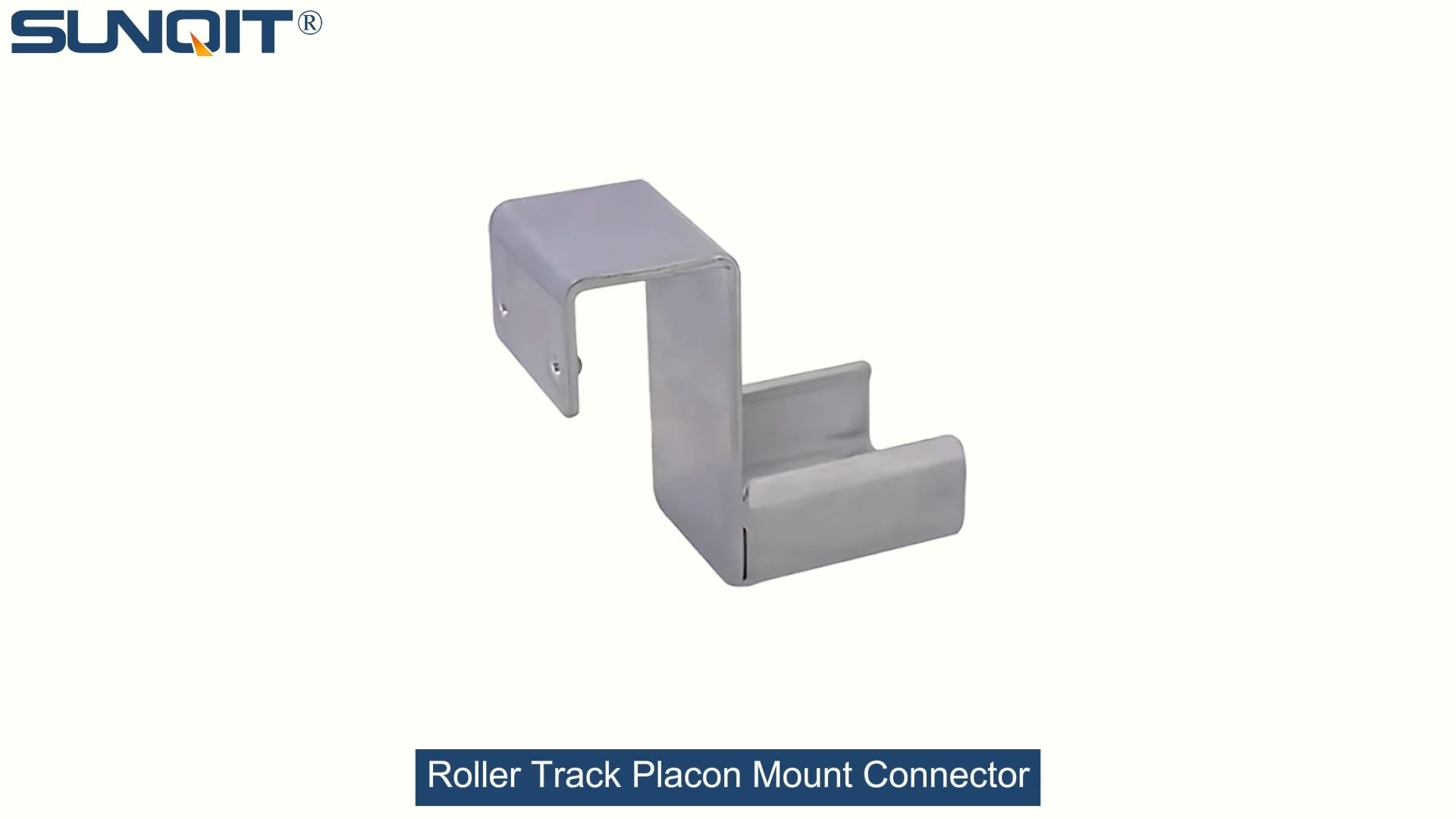
Roller Track Placon Mount Connector
Roller track placon mount work as a connector for roller track and pipe or aluminum profile in rack syetem, it is a necessary parts in rack system which widely used in industrial plant and logistic,warehouse storage.
In the fast-paced world of manufacturing, where every second counts and efficiency is king, there's a silent hero working behind the scenes: the roller track placon mount connector. You might not see it front and center on the production line, but without it, the smooth flow of materials—from the moment components arrive to the final assembly—could grind to a halt. Whether you're building smartphones in a 3C factory, assembling medical devices, or managing a busy warehouse, this small but mighty component plays a big role in keeping your operations lean, flexible, and frustration-free. Let's dive into what makes it so essential.
So, What Exactly Is a Roller Track Placon Mount Connector?
Let's start with the basics. A roller track placon mount connector is a specialized hardware component designed to securely join roller track sections to aluminum profiles —the backbone of modern lean manufacturing systems. Think of it as the "glue" that holds your roller tracks in place, but with superpowers: it's adjustable, durable, and built to handle the daily chaos of a busy factory floor.
Imagine you're setting up a flow rack for warehouse storage or a conveyor line for assembly. You've got the roller tracks (the metal rails with wheels that let boxes glide), and you've got the aluminum profiles (the sturdy frames that support everything). The placon mount connector is what bridges the gap: it attaches the roller track to the profile, ensuring everything stays aligned, stable, and ready to handle whatever you throw at it—whether that's lightweight circuit boards or heavy automotive parts.
But it's not just about "holding things together." In lean manufacturing, where adaptability is key, these connectors are designed to be reusable and reconfigurable . Need to adjust the height of your roller track? Swap out a section for a longer one? The placon mount connector makes it possible without drilling new holes or replacing entire systems. That's the beauty of it: it grows and changes with your production needs.
How Does It Actually Work? Let's Break It Down
You might be wondering, "Okay, it connects roller tracks to aluminum profiles—but how exactly?" Let's walk through a quick mental installation:
- Mounting to the Aluminum Profile: Most aluminum profiles (like the 4040 or 3030 series you'll find in workbenches or racks) have T-slots—long, narrow grooves running along their length. The placon mount connector uses these slots to "grab on" via bolts or screws. This means you can slide it along the slot to find the perfect position, no pre-drilled holes required.
- Attaching the Roller Track: On the other side, the connector has a flat or angled surface that bolts directly to the roller track. Depending on the model (like the "flat" or "drop high" variants), it can hold the track flush with the profile or at a slight height, giving you flexibility in how materials flow.
- Locking It In: Once positioned, you tighten the screws, and voilà! The connector locks into place, creating a rigid bond that can withstand vibrations, heavy loads, and the constant movement of materials sliding over the rollers.
Real-World Example:
Let's say you're building a workstation for assembling laptops (like our Workbench E). The roller track needs to feed components from the left side to the assembly area. Using a placon mount connector, you attach the roller track to the aluminum profile frame of the workbench. If tomorrow you need to shift the track 2 inches to the right to make space for a new tool, just loosen the screws, slide the connector, and retighten. No fuss, no downtime.

Key Features: Why This Connector Stands Out
Not all connectors are created equal. What makes a roller track placon mount connector worth investing in? Let's break down its standout features—ones that matter when your production line's efficiency is on the line.
| Feature | What It Means for You | Best For |
|---|---|---|
| Aluminum Alloy Construction | Lightweight but surprisingly tough—resists rust and stands up to daily wear without adding extra bulk to your setup. | Medical device lines (where cleanliness and corrosion resistance are critical) or food packaging facilities. |
| Tool-Free Adjustability | Slide it along T-slots and tighten with basic hand tools—no need for drills or specialized equipment. Perfect for quick line reconfigurations. | 3C assembly lines (where product models change frequently) or small-batch manufacturing. |
| High Load Capacity | Designed to support heavy roller tracks and the materials on them—some models handle up to 50kg per linear meter without bending or slipping. | Automotive parts warehouses or heavy machinery assembly. |
| Wide Compatibility | Works with most standard roller tracks (like 40 steel roller track or 85 staggered roller track) and aluminum profiles (2020, 3030, 4040 series, etc.). | Factories using mixed equipment or upgrading from older systems. |
| Low Maintenance | No lubrication needed, and the aluminum finish resists scratches and dents—just wipe it down occasionally, and it's good to go. | Busy warehouses or production lines with little time for upkeep. |

Why It Matters in Lean Manufacturing: More Than Just a "Connector"
Lean manufacturing is all about eliminating waste —whether that's wasted time, wasted materials, or wasted effort. The roller track placon mount connector fits right into this philosophy in a few key ways:
1. It Reduces Downtime During Line Changes
Ever had to shut down production for hours to reconfigure a conveyor or flow rack? With traditional fixed connectors, you'd be drilling new holes, sawing parts, or even replacing entire sections. But with placon mount connectors, reconfiguring takes minutes, not hours. Loosen a few screws, adjust the position, retighten, and you're back up and running. That's less downtime, more productivity, and fewer headaches for your team.
2. It Supports "Sustainable Improvement"
One of the core principles of lean is "kaizen"—continuous improvement. Your production line today might not be the same as next month, and that's a good thing! Placon mount connectors let you experiment: try a new layout, test a faster flow path, or scale up for a big order. And if it doesn't work? Just adjust the connectors and try again. No wasted materials, no sunk costs—just progress.
"In our 3C assembly plant, we reconfigure our lines every 2-3 months to keep up with new phone models. The placon mount connectors mean we can do that overnight instead of over a week. It's been a game-changer for meeting tight deadlines." — A production manager at a leading electronics manufacturer
3. It Keeps Your Workplace Safer
A loose roller track isn't just inefficient—it's dangerous. Materials can jam, boxes can tip, and workers might strain themselves trying to fix jams. Placon mount connectors lock everything down tight, so you don't have to worry about wobbly tracks or unexpected slips. Plus, their smooth aluminum finish means no sharp edges to catch on gloves or clothing—small details that make a big difference in daily safety.

Where Do You Actually Use These Connectors? Real-World Scenarios
You'd be surprised how many places these connectors pop up. Here are a few common scenarios where they shine:
1. 3C Assembly Lines (Phones, Laptops, and More)
In factories building smartphones or laptops, precision and speed are everything. Roller tracks with placon mount connectors feed components (like screens, batteries, and circuit boards) to workers along the line. The connectors ensure the tracks stay aligned, so parts glide smoothly—no jams, no delays, and no damaged components.
2. Medical Device Manufacturing
Medical equipment (think MRI machines or surgical tools) requires ultra-clean, reliable workflows. Placon mount connectors, made from corrosion-resistant aluminum, stand up to frequent sanitization. They also support the lightweight but precise roller tracks needed for delicate parts, ensuring nothing gets bumped or misaligned during assembly.
3. Warehouse Flow Racks and Picking Stations
Ever walked through a warehouse and seen those sloped racks where boxes slide down to the picking area? Those are flow racks, and they rely on roller tracks held in place by placon mount connectors. The connectors keep the tracks angled just right (for gravity-fed flow) and secure, even when loaded with heavy cartons.
4. Custom Workstations (Like Workbench E or Material Rack B)
Many manufacturers use custom workstations—like our Workbench E (single deck, no casters) or Material Rack B (3 rows, 3 floors)—to fit their unique needs. Placon mount connectors let you integrate roller tracks directly into these workstations, so materials flow right to the operator's hands, reducing reach and fatigue.
Why Choose a Quality Placon Mount Connector? Not All Are Created Equal
Okay, so you get it—this connector is important. But why invest in a high-quality one instead of a cheap generic version? Let's be real: a $5 connector might save you money today, but it could cost you big tomorrow. Here's why quality matters:
- Durability: Cheap connectors often use thin, flimsy metal that bends under load or strips screws easily. A quality one, like those made from 6063 aluminum alloy, will last for years—even in dusty, humid, or high-vibration environments.
- Precision Fit: Off-brand connectors might not align perfectly with standard roller tracks or aluminum profiles, leading to wobbly tracks or stuck materials. Quality connectors are engineered to tight tolerances, so everything fits like a glove.
- Support for Lean Goals: Remember that "continuous improvement" idea? A cheap connector that breaks when you try to adjust it defeats the purpose. Quality connectors are designed to be reused and reconfigured, so you can keep improving without replacing parts.
At the end of the day, this isn't just a "part"—it's an investment in your team's productivity, your products' quality, and your bottom line.
Wrapping Up: The Small Component That Makes a Big Difference
So, what have we learned? A roller track placon mount connector might not be the most glamorous part of your production line, but it's one of the most essential. It's the reason your roller tracks stay put, your materials flow smoothly, and your team can adapt to whatever manufacturing throws their way. From 3C assembly to medical device production, from warehouses to workbenches, it's the silent partner keeping your operations lean, flexible, and ready for tomorrow's challenges.
Whether you're setting up a new line or upgrading an old one, don't overlook the power of a good connector. After all, in manufacturing, the smallest parts often make the biggest impact.