- Company Articles
- Products and Technology
- Product knowledge
- What is a Single Side Aluminum Pipe? Key Features and Applications Explained

What is a Single Side Aluminum Pipe? Key Features and Applications Explained
Related Product
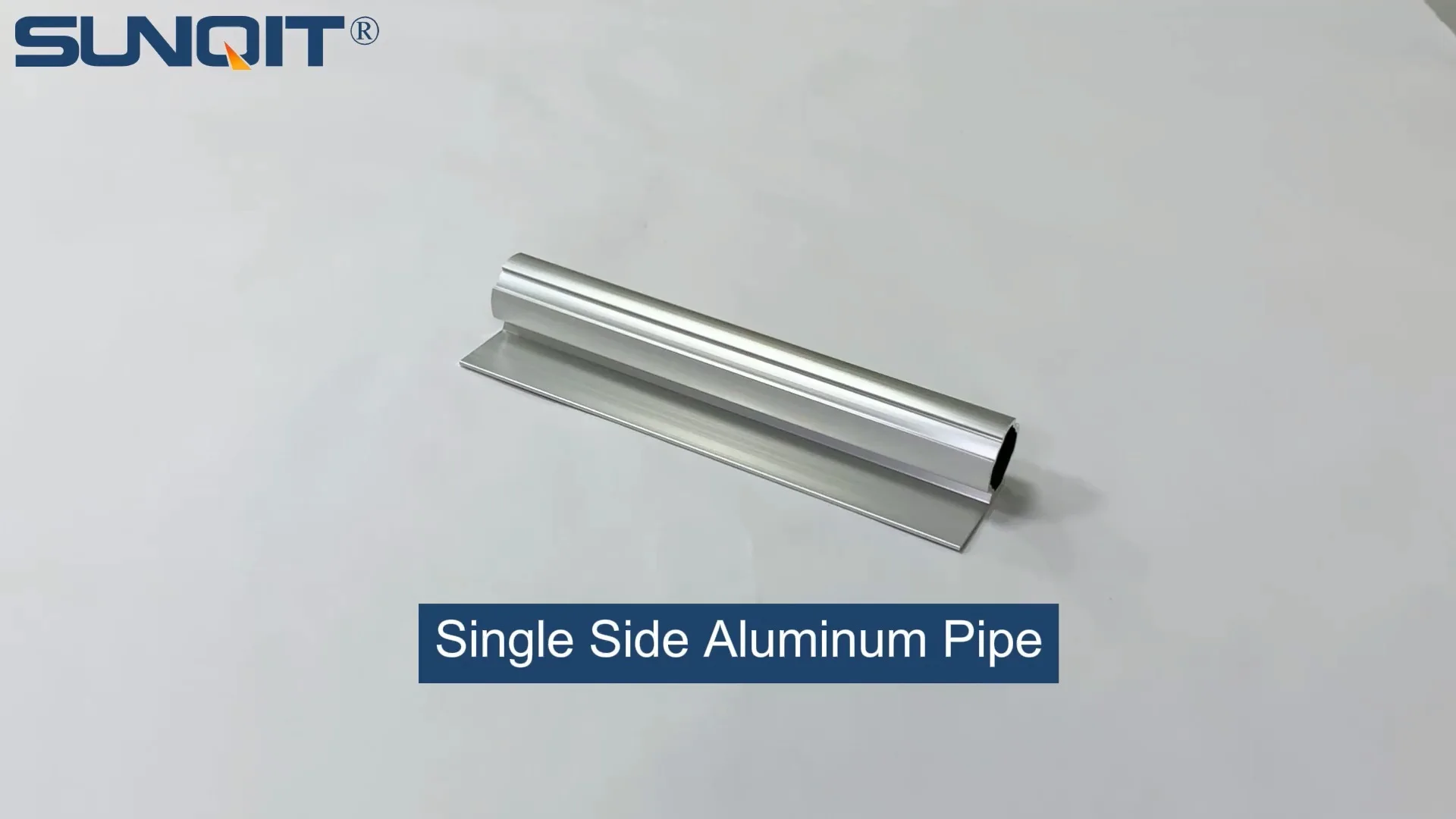
Single Side Aluminum Pipe
The single-sided plane can be installed with a back-mounted material box, and can also be used as a sidewall or partition.
In the fast-paced world of manufacturing, warehousing, and lean production, the tools and components that keep operations running smoothly are often the unsung heroes. Among these, the single side aluminum pipe has emerged as a versatile workhorse, quietly powering everything from custom workbenches to intricate material handling systems. But what exactly is this component, and why has it become a staple for businesses aiming to boost efficiency and flexibility? Let's dive in.
What is a Single Side Aluminum Pipe?
At its core, a single side aluminum pipe is a specialized extruded aluminum profile designed with a distinct structural focus: one side features a precision-engineered groove (often a T-slot) that serves as a mounting point for accessories, while the remaining sides remain smooth or minimally textured. Unlike standard round aluminum pipes or dual-sided T-slot profiles, this design prioritizes targeted functionality—making it ideal for applications where attachment points are needed on only one face, such as upright supports, frame edges, or linear guide rails.
Crafted from high-grade aluminum alloys (typically 6063-T5, known for its excellent strength-to-weight ratio and corrosion resistance), these pipes blend durability with lightweight handling. They're often confused with aluminum lean pipe (a broader category of aluminum tubes used in lean manufacturing), but their single-sided T-slot sets them apart, offering a unique balance of simplicity and utility that resonates with engineers, facility managers, and lean system suppliers alike.
Key Features of Single Side Aluminum Pipes
1. Material Composition: Lightweight Strength Meets Corrosion Resistance
Aluminum is the backbone here, and for good reason. Unlike steel pipes, which are heavy and prone to rust, single side aluminum pipes leverage aluminum's natural advantages: they weigh up to 40% less than steel counterparts of the same dimensions, making them easier to transport, install, and reconfigure. The addition of alloying elements like magnesium and silicon (in 6063-T5) enhances their structural integrity, allowing them to support significant loads without bending or warping.
Most single side aluminum pipes also undergo anodization—a process that forms a protective oxide layer on the surface. This layer not only boosts scratch resistance but also makes the pipes suitable for use in humid or semi-outdoor environments, where rust and corrosion could otherwise compromise longevity. For industries like food processing or pharmaceutical manufacturing, where cleanliness is critical, this resistance to oxidation is a game-changer.
2. Structural Design: The Power of the T-Slot
The star of the show is undoubtedly the single-sided T-slot. This groove, precision-extruded along one edge of the pipe, is more than just a notch—it's a universal mounting interface. The T-shape allows for quick, tool-free attachment of aluminum pipe accessories like brackets, clamps, end caps, and even small electrical components. Imagine sliding a T-nut into the slot, tightening a bolt, and instantly securing a shelf bracket or a roller track—no drilling, welding, or complicated measurements required.
This design is a far cry from traditional methods, where attaching components to a pipe might involve drilling holes (risking structural weakening) or using adhesives (which fail under stress). With the T-slot, adjustments are effortless: if a workbench needs a taller shelf, or a material rack requires repositioned dividers, simply loosen the bolts, slide the accessory to the new location, and retighten. It's this adaptability that makes single side aluminum pipes a favorite among teams practicing lean manufacturing, where minimizing downtime and waste is paramount.
3. Compatibility with Aluminum Pipe Accessories
A pipe is only as useful as the accessories it works with, and single side aluminum pipes excel here. They're engineered to pair seamlessly with a vast ecosystem of aluminum pipe accessories , from simple end caps that protect against sharp edges to complex connectors that join pipes at 90° or 135° angles. Let's break down a few key accessories and how they enhance functionality:
- Brackets and Mounts: L-shaped or flat brackets slide into the T-slot to create shelves, support crossbars, or mount tools. For example, a "roller track placon mount for aluminum profile flat" (a specific bracket designed to attach roller tracks to flat aluminum surfaces) can be secured to the single side pipe's T-slot, turning it into a gravity conveyor for small parts.
- Connectors: Internal or external joints (like "internal rotatary aluminum joint" or "90° aluminum pipe joint inside connection") link pipes together to form frames, workbench legs, or rack uprights. These connectors often feature built-in rotation or locking mechanisms, adding even more flexibility.
- End Caps and Covers: Plastic or rubber end caps snap onto the pipe's ends, preventing debris buildup inside the tube and protecting workers from sharp edges. For T-slots that aren't in use, "T-slot rubber seal cover" accessories keep out dust and moisture.
This compatibility means that a single length of single side aluminum pipe can be repurposed repeatedly—today as part of a workbench, tomorrow as a section of a material rack, and next week as a guide rail for a conveyor. It's this modularity that keeps costs low and creativity high.
4. Durability and Load Capacity
Don't let its lightweight nature fool you—single side aluminum pipes are surprisingly strong. Their load capacity depends on factors like diameter (common sizes range from 20mm to 40mm), wall thickness (typically 1.2mm to 2.0mm), and the quality of the aluminum alloy. For example, a 30mm diameter pipe with a 1.5mm wall can comfortably support 75–100 kg per linear meter when used as a vertical upright, making it suitable for holding tools, parts bins, or even small machinery on a workbench.
The anodized finish also plays a role in durability. By resisting scratches, dents, and chemical exposure, it ensures the pipe maintains its structural integrity even in high-traffic areas. Unlike painted steel pipes, which chip and fade over time, the anodized layer is integral to the aluminum, so it won't peel or wear off with regular use.
5. Customization Flexibility
No two workplaces are identical, and single side aluminum pipes thrive on customization. They can be cut to length with standard tools (a miter saw or pipe cutter works well), allowing teams to create components that fit their exact space constraints—whether that's a 1.2m workbench leg or a 3.5m upright for a tall material rack. This is a stark contrast to off-the-shelf steel pipes, which often come in fixed lengths and require specialized tools to modify.
Beyond length, the T-slot itself can be customized. Some manufacturers offer variations in slot width (e.g., 6mm, 8mm) to accommodate different accessory sizes, while others add rubber inserts to reduce vibration or improve grip for sliding accessories. For businesses with unique needs, custom extrusions are even possible (though less common), ensuring the pipe's design aligns perfectly with their application.

Applications: Where Single Side Aluminum Pipes Shine
Now that we understand the "what" and "why" of single side aluminum pipes, let's explore where they're making the biggest impact. From factory floors to warehouses, their versatility has led to adoption across industries—but these are the standout use cases:
1. Lean Manufacturing Workbenches
A well-designed workbench is the heart of any production line, and single side aluminum pipes are the backbone of many modern workbench setups. Take the workbench e (single deck-without caster) , a popular model among lean system suppliers: its frame is often constructed using single side aluminum pipes, with the T-slot on the front edge used to mount tool holders, LED task lights, or small parts bins. The smooth sides of the pipes reduce snagging on cables or fabrics, while the T-slot ensures tools are always within arm's reach.
What makes this setup so effective? Adaptability. If a worker needs a larger surface area, additional pipes can be added to extend the bench. If the task changes and requires a vice or a monitor mount, those accessories can be bolted directly to the T-slot. Even better, since the pipes are lightweight, the entire workbench can be disassembled and reconfigured in hours (not days) if the production line layout shifts—a critical advantage in agile manufacturing environments.
2. Material Racks: The Case for "Material Rack B (3 Row and 3 Floor)"
Material storage is a constant challenge in warehouses: too much space wasted, too little accessibility, or racks that can't adapt to changing inventory. Enter the material rack b (3 row and 3 floor) —a prime example of how single side aluminum pipes transform storage. This rack, designed with three vertical rows and three horizontal floors, relies on single side pipes for its upright supports and horizontal beams.
Here's how it works: the uprights are single side aluminum pipes, with their T-slots facing inward (toward the rack's interior). Aluminum angle brackets slide into these slots to support the horizontal beams (also single side pipes), which in turn hold the rack's "floors"—often made of plywood, metal sheets, or even roller tracks for easy part sliding. The 3-row, 3-floor design maximizes vertical space, while the T-slot allows for adjustable shelf heights: if a batch of taller parts arrives, simply move the brackets up to create more clearance.
What sets this rack apart from traditional steel alternatives? Weight. A steel rack of similar size might require a forklift to move; the aluminum version can be assembled by two people and repositioned with a hand truck. And if the warehouse adopts a new inventory system that requires fewer rows but more floors? Disassemble, reconfigure, and reuse the pipes—no need to buy a whole new rack.
3. Lean System Integration
Lean manufacturing is all about eliminating waste—whether that's wasted time, space, or materials. Single side aluminum pipes are a natural fit here, as they align perfectly with lean principles like modularity and continuous improvement. Lean system suppliers often recommend them for building everything from kanban boards to kitting stations, thanks to their ability to evolve with the system.
Consider a typical lean cell: it might include a workbench, a material rack, and a small conveyor. With single side pipes, all three components can share the same base design and accessories, reducing the need for specialized parts. If the cell needs to produce a new product with different part sizes, the conveyor can be extended by adding more pipes and roller tracks. If the team implements 5S (sort, set in order, shine, standardize, sustain), tool holders can be added to the workbench's T-slot to keep everything "set in order." Even better, since the pipes are reusable, there's no waste from scrapping old equipment when processes improve.
4. T-Slot Aluminum Pipe: Beyond Racks and Workbenches
While workbenches and racks are common applications, single side aluminum pipes (often referred to as t slot aluminum pipe in supplier catalogs) have uses beyond the obvious. For example:
- Conveyor Guides: In gravity conveyors, single side pipes with T-slots can be mounted alongside roller tracks to act as side guides, preventing parts from falling off. Accessories like "plastic roller track guide rail yellow" (a flexible plastic strip) can be snapped into the T-slot to reduce friction and noise.
- Assembly Line Frames: For small-scale assembly lines, single side pipes form the frame that holds lights, power strips, and part feeders. The T-slot makes it easy to add or remove components as the assembly process is refined.
- Mobile Carts: When paired with casters (another key aluminum pipe accessory ), single side pipes build lightweight, durable carts for transporting tools or parts across the factory floor. The T-slot allows for custom shelves or bins tailored to the cart's purpose.

How Single Side Aluminum Pipes Compare to Alternatives
To truly appreciate the value of single side aluminum pipes, it helps to compare them to common alternatives. Let's look at a side-by-side breakdown:
| Feature | Single Side Aluminum Pipe | Traditional Steel Pipe | Standard Round Aluminum Pipe |
|---|---|---|---|
| Weight | Lightweight (40% lighter than steel) | Heavy; requires tools/equipment to move | Lightweight, but no T-slot for accessories |
| Corrosion Resistance | High (anodized finish) | Low (prone to rust without painting) | High, but no T-slot |
| Accessory Attachment | Easy (T-slot; no drilling/welding) | Hard (requires drilling or welding) | Hard (no built-in attachment points) |
| Customization | High (cut to length, reconfigurable) | Low (fixed lengths; hard to modify) | Medium (can be cut, but limited accessories) |
| Cost (Long-Term) | Moderate upfront; low over time (reusable) | Low upfront; high over time (replacement costs) | Moderate upfront; moderate over time (limited reuse) |
The table tells a clear story: single side aluminum pipes strike a balance between strength, flexibility, and cost that's hard to match. They're not the cheapest option upfront, but their reusability and low maintenance make them a smarter long-term investment—especially for businesses that anticipate growth or changes in their operations.

Choosing the Right Single Side Aluminum Pipe: Key Considerations
Not all single side aluminum pipes are created equal. To ensure you select the right one for your needs, keep these factors in mind:
1. Diameter and Wall Thickness
Pipes come in various diameters (e.g., 20mm, 25mm, 30mm, 40mm) and wall thicknesses (1.0mm to 2.0mm). Smaller diameters (20-25mm) work well for light-duty applications like shelving or small workbenches. Larger diameters (30-40mm) with thicker walls are better for heavy loads, such as uprights in material racks or industrial workbenches.
2. Load Requirements
Always check the manufacturer's load rating. A pipe rated for 50kg per linear meter isn't suitable for a rack holding 100kg boxes. When in doubt, overspecify slightly—aluminum's strength-to-weight ratio means you won't pay a huge penalty for a sturdier pipe.
3. Accessory Compatibility
Ensure the pipe's T-slot size matches your accessories. Most T-slots are standardized (e.g., 6mm, 8mm), but double-check before buying. A mismatch could mean accessories won't fit, rendering the pipe useless.
4. Supplier Expertise
Work with a reputable lean system supplier or aluminum profile specialist. They can help you select the right pipe, recommend accessories, and even provide design support for custom projects. A good supplier will also offer samples, so you can test the pipe's fit and finish before placing a large order.
Conclusion: The Future of Flexible Manufacturing
In a world where adaptability is no longer a luxury but a necessity, the single side aluminum pipe stands out as a component that grows with your business. Its blend of lightweight strength, T-slot versatility, and compatibility with aluminum pipe accessories makes it ideal for everything from workbenches to material racks like the 3-row, 3-floor "material rack b." Whether you're a small workshop looking to organize your space or a large manufacturer aiming to streamline lean operations, this unassuming pipe has the power to transform how you work—one T-slot at a time.
So the next time you walk through a factory or warehouse and spot a custom workbench, a nimble material rack, or a sleek conveyor system, take a closer look—chances are, single side aluminum pipes are holding it all together. And as industries continue to embrace agility and sustainability, their role will only grow stronger.