- Company Articles
- Products and Technology
- Product knowledge
- What is a Swivel Stem Caster Wheel? Definition, Structure & Functions

What is a Swivel Stem Caster Wheel? Definition, Structure & Functions
Related Product
Swivel Stem Caster wheel
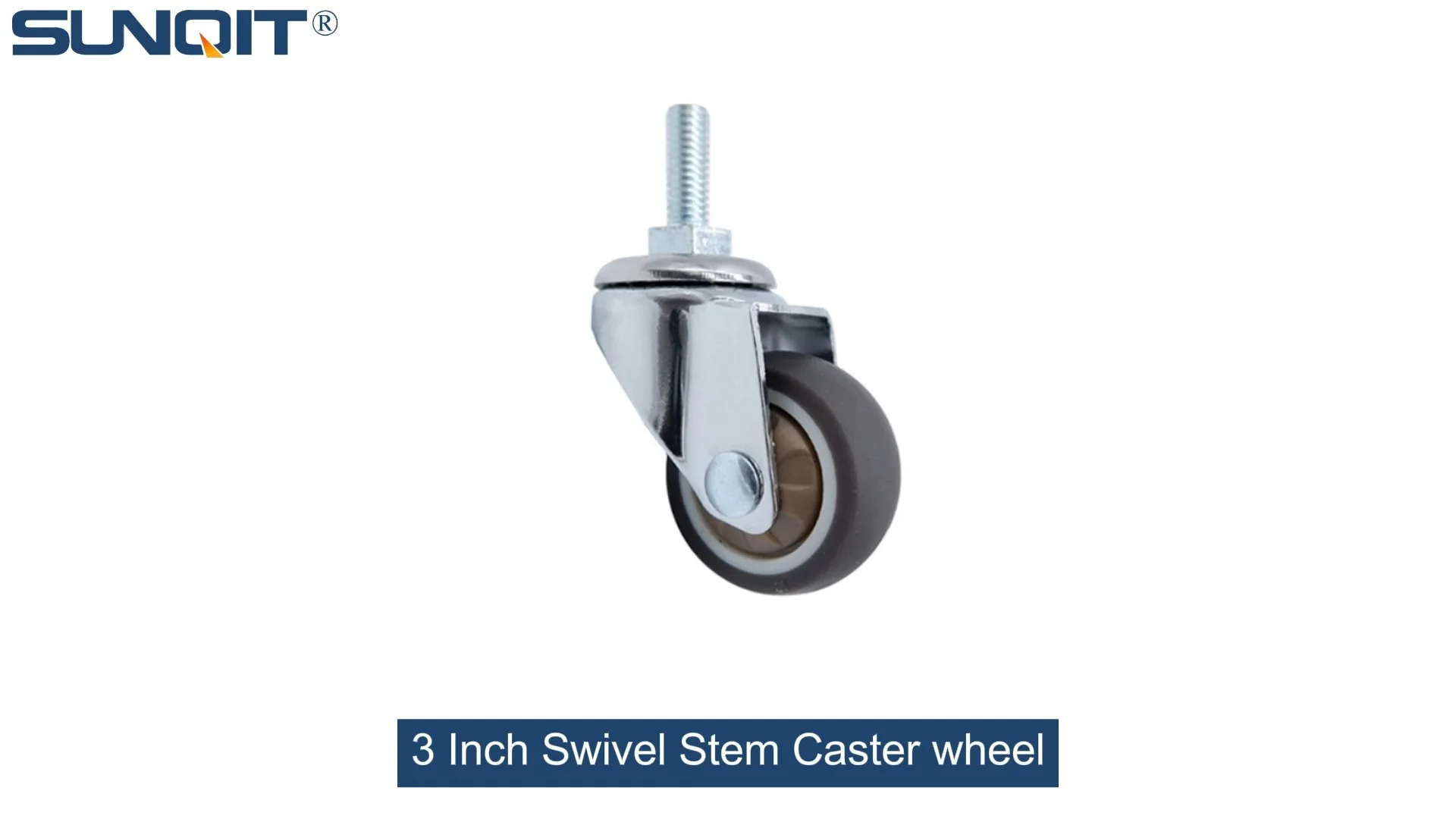
360 Degree Swivel Stem Caster. Threaded-post mount design, castors diameter 3 inch.Each swivel caster wheels loading 70KGS. Heavy enough and widely suit for carts, chairs, cabinet, flow rack, workbench, turnover rolley.
What is a Swivel Stem Caster Wheel? Definition, Structure & Functions
In the bustling world of manufacturing, warehousing, and even office operations, the ability to move equipment, workstations, and materials with ease is often the unsung hero of productivity. Think about a busy factory floor where assembly lines shift daily, a warehouse where inventory needs constant reorganization, or a workshop where tools and workbenches must adapt to new projects. Behind this flexibility lies a small but mighty component: the swivel stem caster wheel. These unassuming wheels are the reason heavy workbenches glide smoothly, flow racks adjust to new layouts, and conveyors reposition to meet changing demands. In this article, we'll dive deep into what swivel stem caster wheels are, their structure, functions, and why they're indispensable in modern workplaces.
What is a Swivel Stem Caster Wheel?
At its core, a swivel stem caster wheel is a wheel assembly designed to attach to equipment, furniture, or structures via a "stem"—a rod, bolt, or cylindrical projection—that allows the wheel to rotate 360 degrees. Unlike fixed casters, which only move forward and backward along a straight path, swivel stem casters offer unparalleled maneuverability. This rotation is what makes them ideal for tight spaces, frequent direction changes, and tasks that require precision movement. Whether it's a lean pipe workbench in a electronics factory or a mobile flow rack in a distribution center, swivel stem caster wheels turn static structures into dynamic, adaptable tools.
The "stem" in swivel stem caster wheels is critical to their design. Stems come in various forms: threaded stems (for screwing into pre-drilled holes), press-fit stems (for tight insertion into sockets), or plate-mounted stems (attached via a metal plate). This versatility means they can be installed on everything from lightweight carts to heavy-duty industrial machinery. And while the wheel itself bears the load, the stem ensures a secure connection between the caster and the equipment, preventing wobbling or detachment even under stress.
Anatomy of a Swivel Stem Caster Wheel: Breaking Down the Components
To truly understand how swivel stem caster wheels work, let's dissect their structure. Each caster is a carefully engineered system of parts working together to enable smooth movement and rotation. Here are the key components:
- Stem: The "backbone" of the caster, connecting it to the equipment. Threaded stems are common for easy installation, while non-threaded stems may use pins or clips for a secure fit.
- Swivel Head: The upper part of the caster that houses the rotation mechanism. Inside the swivel head, you'll find bearings (often ball bearings or roller bearings) that reduce friction, allowing the wheel to turn smoothly without jamming.
- Raceway: A circular track within the swivel head where the bearings roll. High-quality raceways are precision-machined to ensure even weight distribution and consistent rotation.
- Wheel: The part that contacts the floor, made from materials like rubber, polyurethane, nylon, or steel. Wheel material determines load capacity, floor protection, and noise levels.
- Axle: A metal rod that runs through the wheel, holding it in place and allowing it to spin freely. Axles are typically made from steel for strength.
- Brake (Optional): A critical caster accessory for safety, brakes lock the wheel (preventing rolling) or the swivel mechanism (preventing rotation). Common types include foot brakes, side brakes, and total-lock brakes that immobilize both wheel and swivel.
Together, these components create a system that balances mobility, stability, and durability. For example, a swivel stem caster wheel on a lean pipe workbench might use a polyurethane wheel (for floor protection) with a total-lock brake (to keep the workbench steady during assembly) and a threaded stem (for easy attachment to the workbench frame).
Key Functions of Swivel Stem Caster Wheels
Swivel stem caster wheels aren't just about movement—they serve several critical functions that make them indispensable in industrial and commercial settings:
1. 360-Degree Maneuverability
The most defining feature of swivel stem casters is their ability to rotate a full 360 degrees. This allows equipment to move in any direction—forward, backward, sideways, or diagonally—making it easy to navigate tight corners or crowded spaces. In a warehouse, for example, a flow rack with swivel casters can be shifted to align with a new conveyor line without needing to be disassembled.
2. Load Distribution
Swivel stem casters are engineered to distribute weight evenly across the wheel and stem, preventing stress on any single component. This is especially important for heavy equipment like metal workbenches or loaded material carts. A typical setup uses four casters (two swivel, two fixed) to balance the load and ensure stability during movement.
3. Floor Protection
The wheel material plays a key role here. Soft materials like rubber or polyurethane are gentle on delicate floors (e.g., polished concrete or vinyl), while harder materials like steel are better for rough surfaces (e.g., asphalt or gravel). For example, a lean pipe workbench in an electronics cleanroom might use polyurethane wheels to avoid scratching the floor or generating static electricity.
4. Safety and Control
Brakes, a vital caster accessory, transform swivel casters from mobile tools into stable workstations. When engaged, brakes prevent accidental movement, keeping workers safe during tasks that require precision (like assembling small parts on a workbench) or when loading/unloading materials from a flow rack.
Types of Swivel Stem Caster Wheels: Choosing the Right One
Swivel stem casters come in a variety of types, each tailored to specific needs. The right choice depends on load capacity, floor type, environment, and mobility requirements:
| Wheel Material | Load Capacity (lbs) | Floor Protection | Best For |
|---|---|---|---|
| Rubber | 300 – 800 | Excellent (gentle on hardwood, tile, vinyl) | Indoor use, light to medium loads, quiet environments |
| Polyurethane | 500 – 1,200 | Very Good (resists marks, even on smooth concrete) | Heavy-duty workbenches, flow racks, indoor/outdoor use |
| Nylon | 800 – 2,000+ | Fair (may scratch soft floors) | Industrial settings, heavy machinery, rough surfaces |
Beyond material, swivel stem casters are categorized by brake type (e.g., wheel lock, swivel lock, total lock) and stem size (e.g., 3/8-inch, 1/2-inch threads). For example, a conveyor used in a food processing plant might require stainless steel swivel stem casters with total-lock brakes to meet hygiene standards and prevent movement during operation.
Applications: Where Swivel Stem Caster Wheels Shine
Swivel stem caster wheels are everywhere, though you might not notice them at first glance. Here are some common applications where they play a starring role:
Lean Pipe Workbenches
Lean pipe workbenches, built with modular aluminum or steel pipes, are staples in manufacturing and assembly lines. Swivel stem casters turn these workbenches into mobile stations, allowing workers to reposition them for team projects, line changes, or cleaning. Casters with brakes ensure the workbench stays put during precision tasks like electronics assembly.
Flow Racks
Flow racks use gravity to move materials from the back to the front, but their position in the warehouse often needs adjustment. Swivel stem casters make it easy to shift flow racks to align with new picking routes or seasonal inventory changes, reducing downtime and improving efficiency.
Conveyors
Portable conveyors, used in shipping departments or construction sites, rely on swivel stem casters for setup flexibility. Casters allow workers to angle the conveyor to match truck heights or navigate around obstacles, making loading and unloading faster and safer.
Medical Equipment
Hospital carts, patient beds, and mobile exam tables use swivel stem casters with soft rubber wheels to move quietly and smoothly, protecting floors and ensuring patient comfort. Brakes are critical here to keep equipment stable during procedures.
Benefits of Using Swivel Stem Caster Wheels
The advantages of swivel stem caster wheels extend far beyond simple mobility. Here's why they're a smart investment for any workspace:
- Ergonomic Relief: Moving heavy equipment manually strains muscles and increases injury risk. Swivel casters reduce the force needed to push or pull, making tasks easier on workers.
- Space Optimization: In small workshops or warehouses, swivel casters let you rearrange equipment to maximize space. A lean pipe workbench can be tucked away when not in use, then rolled out when needed.
- Cost Savings: By reducing downtime (no need to disassemble/reassemble equipment) and lowering injury rates, swivel casters save money in the long run.
- Adaptability: In today's fast-paced industries, flexibility is key. Swivel casters let businesses adapt to new projects, product lines, or customer demands without major overhauls.
Maintenance Tips for Longevity
To keep swivel stem caster wheels performing at their best, regular maintenance is essential. Here's how to extend their lifespan:
- Clean Regularly: Wipe wheels and swivel heads with a damp cloth to remove dirt, debris, or oil. Built-up grime can cause jamming or uneven wear.
- Lubricate Bearings: Apply a high-quality lubricant (like lithium grease) to the swivel head bearings every 3–6 months, depending on use. This reduces friction and prevents rust.
- Inspect Brakes: Test brakes monthly to ensure they engage fully. replace worn brake pads or springs promptly—faulty brakes are a safety hazard.
- Check for Wear: replace wheels that are cracked, flattened, or have uneven tread. Loose stems or bent axles should also be repaired or replaced to avoid equipment damage.
Conclusion: The Unsung Heroes of Workplace Mobility
Swivel stem caster wheels may be small, but their impact on productivity, safety, and flexibility is enormous. From lean pipe workbenches that adapt to assembly line changes to flow racks that reconfigure with warehouse needs, these wheels are the backbone of modern, agile workspaces. By choosing the right type (considering material, load capacity, and brakes) and maintaining them properly, businesses can ensure smooth operations, happy workers, and long-lasting equipment. So the next time you glide a heavy cart across the factory floor or reposition a workbench with ease, take a moment to appreciate the swivel stem caster wheel—proof that great things really do come in small packages.