- Company Articles
- Products and Technology
- Product knowledge
- What is a Swivel Stem Caster Wheel with Brake? Definition & Core Functions

What is a Swivel Stem Caster Wheel with Brake? Definition & Core Functions
Related Product
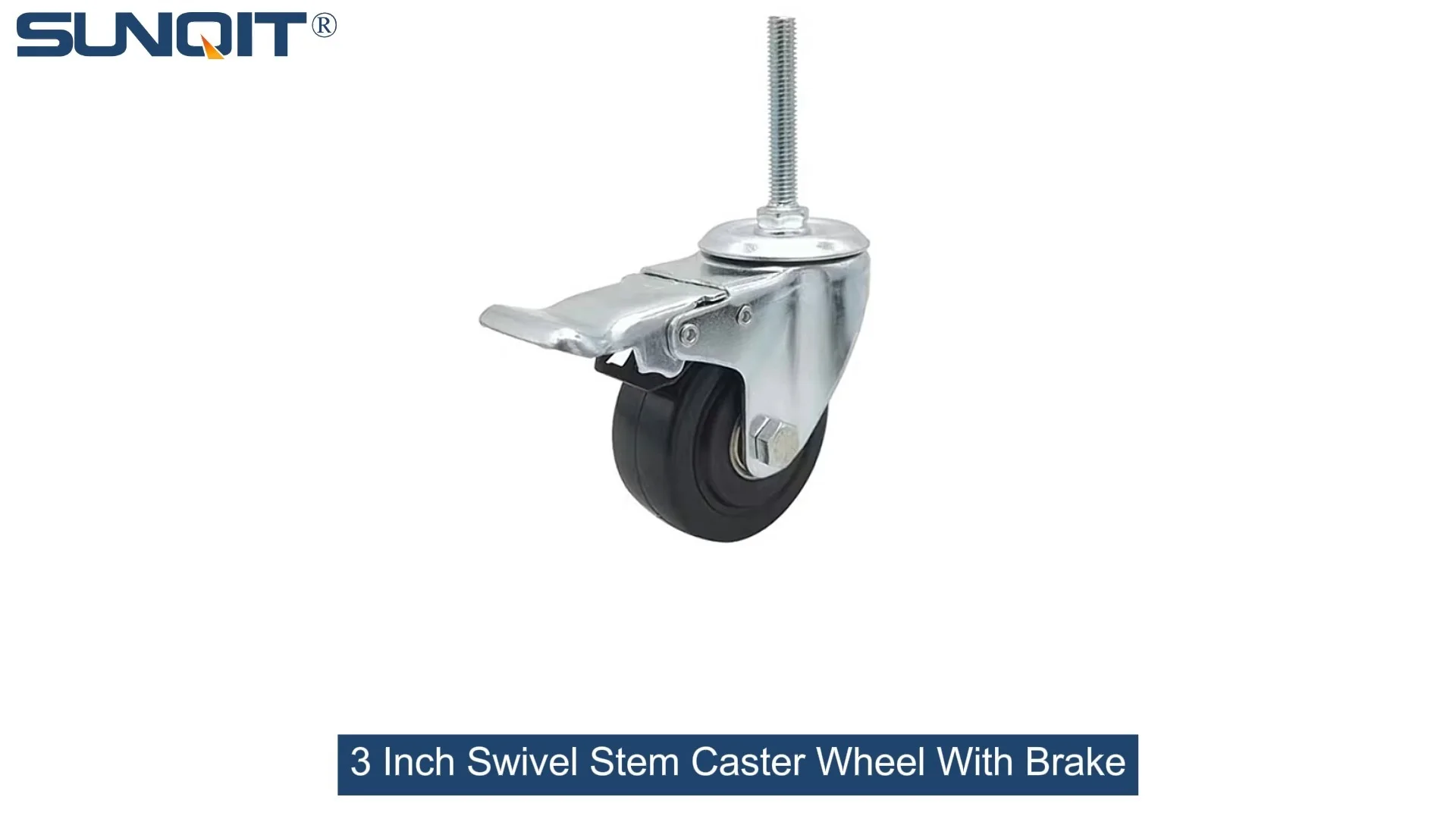
Swivel Stem Caster Wheel with Brake
360 Degree Swivel Stem Caster with brake. Threaded-post mount design, castors diameter 3 inch.Each swivel caster wheels loading 70KGS. Heavy enough and widely suit for carts, chairs, cabinet, flow rack, workbench, turnover rolley.
Walk into any busy factory, warehouse, or workshop, and you'll likely notice a common sight: workbenches gliding smoothly across the floor, trolleys carrying heavy loads with ease, and racks that can be repositioned in seconds to adapt to shifting production needs. Behind this seamless mobility lies a small but mighty component: the swivel stem caster wheel with brake. These unassuming devices are the unsung heroes of efficient workflow, quietly enabling everything from lean manufacturing setups to quick material handling. But what exactly is a swivel stem caster wheel with brake, and why is it so critical in industrial and commercial spaces? In this article, we'll dive deep into its definition, components, how it works, core functions, and real-world applications—including how it integrates with essential tools like lean pipe workbenches and turnover trolleys. By the end, you'll understand why this tiny tool is a cornerstone of modern, flexible work environments.
Defining the Swivel Stem Caster Wheel with Brake
At its core, a swivel stem caster wheel with brake is a wheeled mechanism designed to attach to the bottom of furniture, equipment, or structures, allowing them to move smoothly while also providing the ability to lock into place. Let's break down the name to understand its key features:
- Swivel : Unlike fixed casters, which only roll forward and backward, swivel casters can rotate 360 degrees around a vertical axis. This allows the attached equipment to maneuver around tight corners, navigate narrow aisles, and change direction with minimal effort.
- Stem : The "stem" refers to the vertical rod or post that connects the caster to the equipment. Stems are typically threaded, press-fit, or welded, ensuring a secure attachment to the base of workbenches, trolleys, or racks.
- Caster Wheel : The wheel itself is the part that makes contact with the floor, crafted from materials like rubber, polyurethane, steel, or nylon to suit different surfaces and load capacities.
- With Brake : The brake is a critical safety feature that, when engaged, locks either the wheel (preventing rotation) or both the wheel and swivel mechanism (preventing both movement and turning), keeping the equipment stable and stationary.
In short, this caster combines mobility, maneuverability, and control into a single, compact unit. It's not just a "wheel on a stick"—it's a precision-engineered tool that balances flexibility with stability, making it indispensable in environments where adaptability and safety are non-negotiable.
Anatomy of a Swivel Stem Caster Wheel with Brake: Key Components
To truly appreciate how a swivel stem caster with brake works, let's dissect its components. Each part plays a unique role in ensuring smooth movement, reliable braking, and long-lasting performance. Here's a closer look:
1. The Stem: The Connection Point
The stem is the "backbone" of the caster, linking it to the equipment. Stems come in various designs to fit different mounting needs:
- Threaded Stem : The most common type, featuring external threads that screw into a threaded hole in the equipment base. Ideal for lightweight to medium loads, as the threads create a tight, secure fit.
- Press-Fit Stem : A smooth, unthreaded stem that is pressed into a pre-drilled hole, often with a retaining ring to prevent slipping. Used for heavier loads where a threaded connection might loosen over time.
- Expanding Stem : A stem with a split design that expands when a bolt is tightened, gripping the inside of a hollow tube (common in lean pipe workbench frames, where aluminum or steel pipes form the structure).
The stem's length and diameter vary based on the equipment's height and load capacity. For example, a turnover trolley might use a shorter, thicker stem to support heavy material bins, while a lightweight workbench could use a longer, thinner stem for better clearance.
2. The Swivel Head: Enabling 360° Movement
The swivel head is the component that allows the caster to rotate freely. It sits between the stem and the wheel assembly, containing a raceway (a circular track) filled with ball bearings or roller bearings. As the equipment is pushed or pulled, the bearings reduce friction, letting the caster spin smoothly around the stem. High-quality swivel heads use precision bearings to ensure quiet operation and minimal wear, even under heavy loads. Some models also include a "swivel lock" feature, which, when engaged, prevents rotation—useful for equipment that needs to move in a straight line only.
3. The Wheel: Contact with the Floor
The wheel is where the rubber meets the road—literally. Its material, size, and tread pattern determine how well the caster handles different surfaces, loads, and speeds. Common wheel materials include:
- Rubber : Offers excellent shock absorption and quiet operation, making it ideal for indoor use on smooth floors (e.g., warehouses with concrete or tile).
- Polyurethane : Durable and resistant to chemicals, oils, and abrasion. Polyurethane wheels glide easily over rough surfaces and are often used in industrial settings.
- Steel : Built for heavy loads (up to several thousand pounds) and outdoor use, though they can be noisy and may scratch delicate floors.
- Nylon : Lightweight and cost-effective, with low rolling resistance. Best for light to medium loads on smooth surfaces.
Wheel diameter also matters: larger wheels (4–6 inches) roll more easily over obstacles like cracks or thresholds, while smaller wheels (2–3 inches) offer better precision for tight spaces.
4. The Brake Mechanism: Control and Safety
The brake is what transforms a mobile caster into a stable one. Most swivel stem casters with brakes use a foot-operated lever that, when pressed, activates the braking system. There are two main types of brakes:
- Wheel Lock Brake : Engages a pad or clamp that presses against the wheel's tread, stopping it from rotating. This prevents the equipment from rolling but still allows the caster to swivel (useful for positioning the equipment without moving it).
- Total Lock Brake : Locks both the wheel and the swivel head, preventing both rotation and movement. This is the most secure option, ideal for equipment that needs to stay completely stationary during use (e.g., a workbench where precision assembly is required).
Brakes are often made from steel or heavy-duty plastic, with springs that return the lever to the "unlocked" position when released. Some advanced models include a "brake and swivel lock" combo, giving users full control over mobility and positioning.
5. Caster Accessories : Enhancing Performance
While not part of the core caster, caster accessories can extend functionality. These include stem extenders (to increase height), floor protectors (to prevent scratches), and dust covers (to keep debris out of the swivel head). For example, in a cleanroom environment, a dust cover might be essential to maintain sterility, while in a warehouse with uneven floors, a stem extender could ensure the equipment remains level.

How It Works: From Movement to Immobility
Now that we've explored the components, let's walk through how a swivel stem caster with brake operates in real time. Imagine a worker pushing a lean pipe workbench across a factory floor to reposition it near a new assembly line:
- Unlocked and Ready to Move : The brake lever is in the "up" position, so the wheel and swivel head are free to move. As the worker pushes the workbench, the swivel heads rotate, allowing the casters to turn in the direction of the push—like how a shopping cart wheels follow your path.
- Smooth Rolling : The wheel's bearings reduce friction, so even a heavy workbench feels light to push. The polyurethane wheel glides over the concrete floor, absorbing small bumps to keep tools and parts on the bench from shifting.
- Positioning : When the workbench is in the desired spot, the worker steps down on the brake lever. For a total lock brake, this action simultaneously clamps the wheel (stopping rotation) and locks the swivel head (preventing turning). The workbench now stays firmly in place, even if bumped.
- Releasing the Brake : When it's time to move again, the worker lifts the brake lever with their foot. The springs in the brake mechanism disengage the clamps, and the caster is ready to roll once more.
This process—effortless movement, precise positioning, secure locking—is what makes the swivel stem caster with brake so valuable. It turns static equipment into dynamic tools that adapt to the needs of the moment, without sacrificing safety or stability.

Core Functions: Why This Caster Stands Out
Beyond its basic ability to roll and lock, the swivel stem caster with brake offers several core functions that make it indispensable in modern workplaces. Let's explore these key benefits:
1. Maximizing Mobility Without Sacrificing Stability
Traditional fixed casters limit movement to forward and backward, making it hard to navigate tight spaces or reposition equipment quickly. Swivel stem casters, by contrast, allow 360° rotation, so equipment can pivot, turn, and glide in any direction. This mobility is a game-changer in lean manufacturing, where production lines are constantly reconfigured to optimize workflow. Yet, when the brake is engaged, the caster transforms into a stable base—no more worrying about workbenches rolling away mid-task or trolleys shifting during loading. It's the best of both worlds: flexibility when you need it, stability when you don't.
2. Enhancing Workplace Safety
Uncontrolled movement is a common hazard in industrial settings. A turnover trolley loaded with heavy parts could roll into a worker, or a workbench might shift during assembly, causing errors or injuries. The brake mechanism eliminates these risks by keeping equipment firmly in place when not in use. Additionally, many casters are designed with non-marking wheels (to prevent floor damage) and shock-absorbing materials (to reduce noise and vibration), creating a safer, more comfortable work environment.
3. Improving Efficiency and Productivity
Time is money in any workplace, and swivel stem casters with brakes save plenty of both. Instead of struggling to lift or drag heavy equipment, workers can reposition a lean pipe workbench or trolley with a gentle push. The ability to lock the caster in place also speeds up tasks: assemblers don't waste time stabilizing wobbly workbenches, and material handlers can load/unload trolleys without worrying about them rolling. Over time, these small efficiencies add up to significant gains in productivity—especially in fast-paced environments like warehouses or assembly plants.
4. Supporting Adaptable Workspaces
Today's workplaces are no longer static. Agile manufacturing, just-in-time production, and flexible workstations require equipment that can change with the job. Swivel stem casters with brakes enable this adaptability. A single workbench can serve as a packing station in the morning, an assembly area in the afternoon, and a storage unit in the evening—all with a few quick moves and brake locks. This versatility reduces the need for multiple specialized workstations, saving space and cutting costs.

Real-World Applications: Where Swivel Stem Casters with Brakes Shine
Swivel stem casters with brakes are used across countless industries, from manufacturing to healthcare to retail. Let's highlight three key applications where they play a starring role:
1. Lean Pipe Workbenches: The Heart of Flexible Manufacturing
Lean pipe workbenches are modular workstations built from aluminum or steel pipes and joints, designed to be customized for specific tasks. They're a staple in lean manufacturing, where minimizing waste and maximizing efficiency are priorities. Swivel stem casters with brakes are essential to their design, allowing the workbench to be moved to where it's needed most—whether next to a conveyor belt for assembly, near a testing station for quality checks, or out of the way during cleaning. When locked, the casters ensure the workbench stays stable, so workers can focus on tasks like assembling electronics or packing orders without distractions. For example, in an automotive parts plant, a lean pipe workbench with casters might be used to hold tools and components for one shift, then moved to a different line the next day to support a new production run. The casters make this transition seamless, eliminating downtime and reducing the need for duplicate workstations.
2. Turnover Trolleys and Racks: Streamlining Material Handling
Turnover trolley and rack systems are used to transport materials, parts, and finished goods between stations. These trolleys often carry heavy loads—think stacks of boxes, bins of components, or even machinery parts. Swivel stem casters with brakes make them easy to maneuver through narrow warehouse aisles or around other equipment. When loading or unloading, the brakes lock the trolley in place, preventing it from rolling and ensuring workers can safely lift items on and off. In a distribution center, for instance, a turnover trolley with swivel casters might be used to move orders from picking stations to packing areas. The casters allow the trolley to navigate around pallet jacks and other obstacles, while the brakes keep it steady during packing, so boxes don't slide off. This not only speeds up order fulfillment but also reduces the risk of accidents.
3. Industrial Workbenches: Precision and Flexibility Combined
Industrial workbench es are used for everything from electronics assembly to mechanical repairs, where precision and stability are critical. A workbench with swivel stem casters with brakes can be moved to a well-lit area for detailed tasks or positioned near a power source for tool use. Once in place, the brakes lock the bench down, ensuring it doesn't shift while a worker uses a drill, soldering iron, or other tools. In a electronics manufacturing facility, for example, a workbench with casters might be used to assemble circuit boards. The casters allow the bench to be moved to a static-free zone, and the brakes keep it stable, so tiny components don't roll off the table. After assembly, the bench can be wheeled to a testing station, then to storage—all without disrupting the workflow.
Swivel Stem Caster with Brake vs. Other Caster Types: A Comparison
Not all casters are created equal. To understand why swivel stem casters with brakes are the top choice for many applications, let's compare them to other common types:
| Feature | Swivel Stem Caster with Brake | Fixed Caster | Swivel Caster Without Brake |
|---|---|---|---|
| Mobility | 360° rotation; moves in any direction | Only forward/backward; no swiveling | 360° rotation; moves in any direction |
| Braking | Locks wheel and/or swivel; secure when stationary | No brake; must be blocked to stay still | No brake; rolls freely when unlocked |
| Stability | High (brake prevents movement) | High (no swivel, but can't reposition easily) | Low (may roll or swivel unexpectedly) |
| Best For | Lean pipe workbenches, turnover trolleys, workstations needing mobility + stability | Heavy, rarely moved equipment (e.g., large machinery) | Lightweight, frequently moved items (e.g., shopping carts) |
As the table shows, swivel stem casters with brakes offer the perfect balance of mobility, control, and stability—making them the most versatile option for dynamic workplaces. Fixed casters lack flexibility, and swivel casters without brakes sacrifice safety. For environments where equipment needs to move, stop, and stay put reliably, there's no substitute.
Maintenance Tips: Keeping Your Casters Rolling Smoothly
Like any piece of equipment, swivel stem casters with brakes require regular maintenance to perform their best. Neglecting them can lead to squeaky wheels, stuck brakes, or premature wear—all of which can slow down workflow and compromise safety. Here's how to keep your casters in top shape:
- Clean Regularly : Dirt, debris, and oil can build up in the swivel head and wheel bearings, causing friction and squeaking. Wipe casters down with a damp cloth weekly, and use a brush to remove debris from the brake mechanism. For industrial settings with heavy dust, consider compressed air to blow out hard-to-reach areas.
- Lubricate Moving Parts : Apply a high-quality lubricant (like lithium grease) to the swivel head bearings and wheel axles every 3–6 months, depending on use. This reduces friction and prevents rust. Avoid over-lubricating, as excess grease can attract dirt.
- Inspect Brakes : Test the brake lever regularly to ensure it engages and releases smoothly. If the brake feels loose or doesn't lock properly, tighten the bolts or replace worn brake pads. A stuck brake can be freed with lubricant, but if the mechanism is damaged, replace the caster to avoid accidents.
- Check Wheels for Wear : Inspect wheel treads for cracks, flat spots, or uneven wear. replace wheels that are worn, as they can cause the equipment to wobble or damage floors. Also, ensure wheels are properly aligned—misaligned wheels can strain the swivel head and reduce lifespan.
- Tighten Loose Stems : Over time, stems can loosen, especially on threaded models. Check stem tightness monthly and tighten as needed to prevent the caster from wobbling or detaching from the equipment.
By following these simple steps, you can extend the life of your swivel stem casters with brakes and ensure they continue to support your workflow for years to come.
Conclusion: The Unsung Hero of Modern Workspaces
Swivel stem caster wheels with brakes may be small, but their impact on workplace efficiency, safety, and flexibility is enormous. From lean pipe workbenches that adapt to changing production needs to turnover trolleys that streamline material handling, these casters are the backbone of dynamic, agile work environments. They combine mobility and stability in a way no other caster can, allowing equipment to move when needed and stay put when required. By understanding their components, how they work, and how to maintain them, you can ensure your casters continue to support your team's success. So the next time you see a workbench glide into place or a trolley lock securely during loading, take a moment to appreciate the swivel stem caster with brake—it's proof that even the smallest tools can make the biggest difference.