- Company Articles
- Products and Technology
- Product knowledge
- What Is a Three Way Lean Pipe Joint Chrome? A Comprehensive Guide

What Is a Three Way Lean Pipe Joint Chrome? A Comprehensive Guide
Related Product
Three Way Lean Pipe Joint Chrome
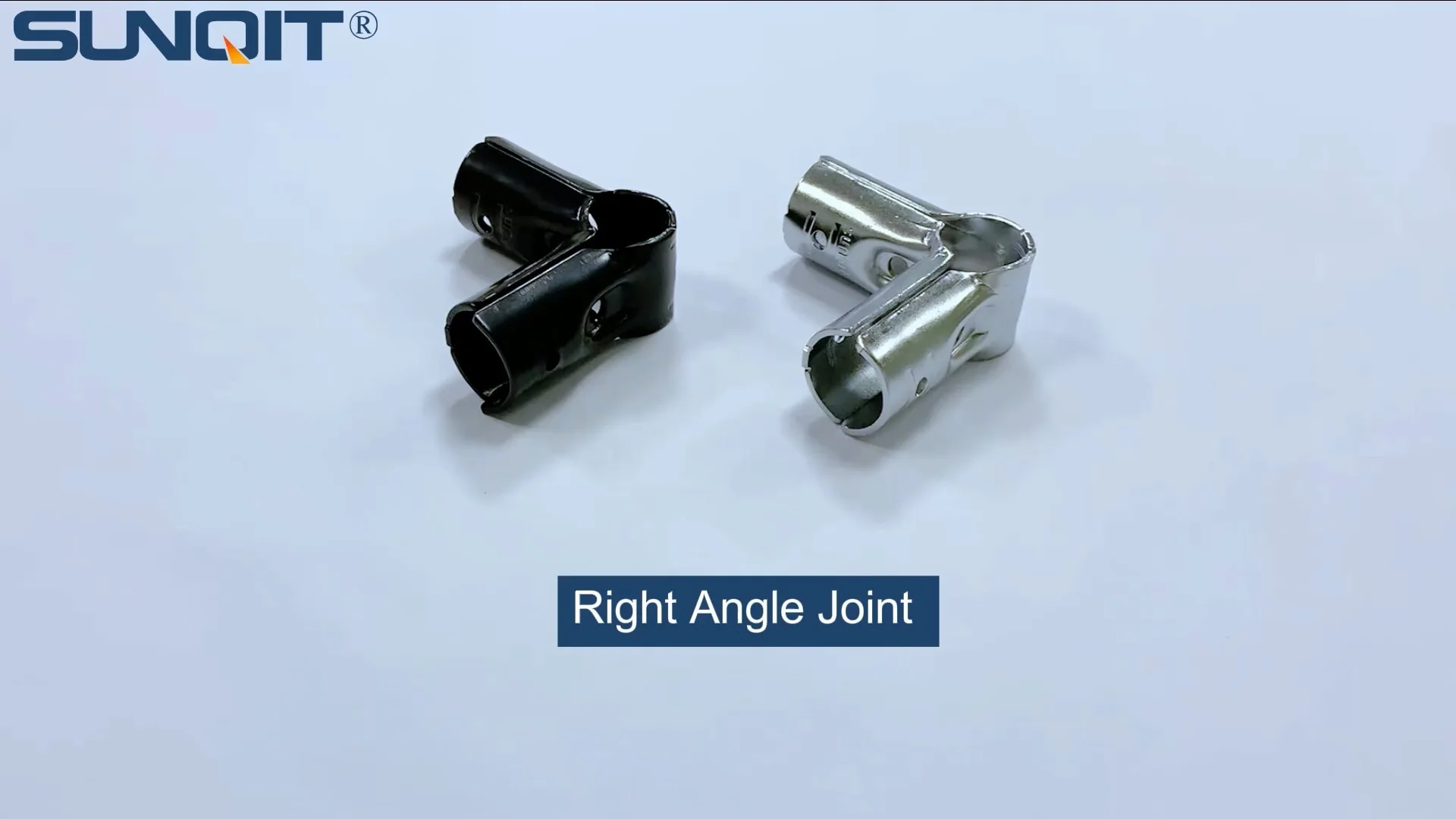
Three way lean pipe joint for 3 pcs 28MM lean pipe connection in straight angle, which used widely in workbench, flow rack, hand trolley frame connection.
Introduction: The Unsung Hero of Lean Manufacturing
Walk into any modern manufacturing facility, warehouse, or assembly line, and you'll likely notice a symphony of organized chaos: workbenches tailored to specific tasks, material racks that feed parts to workers with precision, and trolleys gliding smoothly to transport goods. Behind this seamless workflow lies a hidden network of components working together to keep operations efficient—and at the heart of this network are lean pipe joints. Among these, the three way lean pipe joint chrome stands out as a versatile, durable, and essential piece that turns simple pipes into powerful, modular structures. Whether you're building a lean pipe workbench, a flow rack, or a custom material handling system, this joint is the quiet force that holds everything together, enabling the flexibility and adaptability that modern lean systems demand.
What Is a Three Way Lean Pipe Joint Chrome?
At its core, a three way lean pipe joint chrome is a specialized connector designed to join three lean pipes at various angles, forming the backbone of modular lean systems. Think of it as the "cornerstone" of lean manufacturing setups—simple in design but critical in function. Unlike fixed, one-size-fits-all connectors, this joint is engineered to provide flexibility: it can link pipes horizontally, vertically, or at custom angles (often 90°, 45°, or 180°), allowing teams to build everything from basic workbenches to complex material flow racks.
The "chrome" in its name refers to its protective plating—a thin layer of chromium applied to the surface via electroplating. This isn't just for aesthetics; the chrome finish adds a hard, corrosion-resistant barrier that ensures the joint can withstand the wear and tear of industrial environments, from humid warehouses to busy assembly lines. For manufacturers and facility managers, this means longer-lasting equipment, fewer replacements, and a consistently professional look across the workspace.

Key Features: Why This Joint Stands Out
What makes the three way lean pipe joint chrome a favorite among lean system designers? Let's break down its most important features:
1. Three-Way Connectivity: Flexibility by Design
Unlike two-way joints (which only connect two pipes) or four-way joints (which are bulkier and less common in simple setups), the three way joint offers a sweet spot of versatility. It lets you branch pipes in multiple directions without requiring additional adapters, making it ideal for building structures with depth—like a workbench with overhead shelving, or a flow rack with multiple levels. For example, when constructing a material rack, you might use this joint to connect the vertical support pipes to both the horizontal shelves and the cross-bracing that adds stability.2. Chrome Plating: Durability Meets Cleanliness
The chrome plating is more than just a shiny surface. Chromium is naturally resistant to rust and corrosion, which is crucial in environments where spills, moisture, or chemicals are present. This plating also makes the joint easy to clean—simply wipe it down with a damp cloth to remove dust or debris, ensuring compliance with 5S principles (a key part of lean management that emphasizes "shine" and organization). In food processing or pharmaceutical facilities, where hygiene is non-negotiable, the chrome finish even helps meet strict cleanliness standards.3. Precision Engineering: A Tight, Secure Fit
Quality three way lean pipe joints are machined to tight tolerances, ensuring a snug fit with standard lean pipes (typically 28mm or 30mm in diameter). Most models feature internal threads or set screws that lock pipes in place, preventing wobbling or shifting during use. This precision is critical for safety: a loose joint could compromise the stability of a workbench or rack, putting workers at risk. With this joint, you get peace of mind knowing that your structure can handle daily use—whether it's supporting heavy tools on a workbench or holding boxes of parts on a flow rack.4. Compatibility: Works with Standard Lean Pipes
One of the biggest advantages of lean systems is their modularity, and this joint plays right into that. It's designed to work seamlessly with standard lean pipes, including both steel and aluminum lean pipes, as well as accessories like casters, shelves, and roller tracks. This compatibility means you can mix and match components from different suppliers without worrying about fit issues—a huge plus for facilities that need to adapt quickly to changing production needs.
Materials & Manufacturing: What Goes Into Making It
To understand why this joint is so reliable, let's look at what it's made of and how it's produced.
Base Material: Steel for Strength
Most three way lean pipe joints start with a base of high-quality carbon steel. Steel is chosen for its strength-to-weight ratio—strong enough to support heavy loads (often up to 500kg per joint, depending on the design) but light enough to keep structures manageable. The steel is first forged or cast into the joint's shape, which includes three cylindrical "ports" (the openings where pipes insert) and a central body that distributes weight evenly across all three connections.Chrome Plating: The Electroplating Process
Once the steel joint is shaped, it undergoes electroplating to add the chrome layer. Here's how it works: the joint is cleaned to remove oils, rust, or impurities, then dipped into a bath of chromium sulfate solution. An electric current is passed through the bath, causing chromium ions to bond to the steel surface, forming a thin (usually 0.001–0.005 inches thick) but hard layer. This process, called "electrolysis," ensures the plating adheres evenly, even in hard-to-reach areas like the inner edges of the ports. The result? A surface that's 50% harder than bare steel, with unmatched resistance to scratches and corrosion.Quality Control: Testing for Reliability
Reputable suppliers subject each batch of joints to rigorous testing. This includes load tests (to ensure they can handle the advertised weight), corrosion tests (exposing them to salt spray or moisture for extended periods), and fit tests (checking that standard lean pipes insert smoothly and lock securely). Only joints that pass these tests make it to market—giving buyers confidence that they're investing in a product that won't fail when it matters most.How It Works: Bringing Lean Pipes Together
The magic of the three way lean pipe joint chrome lies in its simplicity. Here's a step-by-step look at how it functions within a lean system:
1. Pipe Insertion: A Snug Fit
First, you insert the ends of three lean pipes into the joint's three ports. Most joints are designed for a "press-fit" or "slip-fit" connection, meaning the pipes slide into the ports with minimal effort but stay in place until secured. The inner diameter of the ports is slightly larger than the outer diameter of standard lean pipes (typically 28mm pipes fit into 29mm ports), creating a gap that allows for easy assembly but prevents excessive movement.2. Locking Mechanism: Securing the Connection
To lock the pipes in place, the joint uses set screws—small, threaded bolts located on the side of each port. Using a hex key (usually included with the joint), you tighten these screws until they press firmly against the pipe. This creates friction that holds the pipe steady, even under load. Some advanced models also feature "threaded ports," where the pipe itself is threaded and screws directly into the joint, offering an even tighter connection for heavy-duty applications.3. Angle Adjustment: Customizing Your Structure
While many joints are pre-set to 90° angles (the most common for workbenches and racks), some are designed to rotate, allowing you to set custom angles. For example, if you need a sloped flow rack (to let parts slide down by gravity), you might adjust two ports to a 15° angle while keeping the third vertical for support. This adjustability is what makes the joint so valuable—no two lean systems are the same, and this joint adapts to your unique needs.Applications: Where You'll Find This Joint in Action
The three way lean pipe joint chrome is a workhorse in lean manufacturing, with applications across industries. Here are some of the most common ways it's used:
1. Lean Pipe Workbenches: The Foundation of Productivity
Workbenches are the "command centers" of assembly lines, and the three way joint is essential to their design. It connects the vertical legs to the horizontal tabletop frame, and often to overhead shelves or tool hooks. For example, a basic workbench might use four three way joints: one at each corner to connect the legs, the tabletop rails, and the lower shelf supports. This modular design lets teams add or remove shelves, adjust height, or reconfigure the bench if tasks change—all without welding or specialized tools.2. Flow Racks: Streamlining Material Flow
Flow racks (also called " gravity racks") use inclined shelves to let parts roll forward as they're used, ensuring workers always have easy access to inventory. The three way joint is critical here, as it connects the vertical supports to the sloped roller tracks and the horizontal cross-bracing. For a three-level flow rack, you might use multiple three way joints to branch the vertical pipes into each shelf level, creating a sturdy structure that can hold hundreds of pounds of parts.3. Turnover Trolleys: Mobile Material Handling
Trolleys are essential for moving materials between workstations, and they rely on the three way joint for both structure and mobility. The joint connects the trolley's frame pipes to the caster wheels (at the bottom) and the handle (at the top), ensuring the trolley is stable and easy to push. Since trolleys are often exposed to bumps and vibrations, the chrome-plated joint's durability is key—it won't rust or loosen, even after years of use.4. Custom Material Racks: Adapting to Unique Needs
Every facility has odd-shaped or oversized parts that don't fit standard racks. The three way joint shines here, as it lets teams build custom racks tailored to specific items—like a rack for large machinery components or a shelf for bulky tools. By combining multiple three way joints, you can create L-shaped, U-shaped, or multi-tiered structures that maximize space and efficiency.Comparing Lean Pipe Joints: How Does Three Way Stack Up?
To understand why the three way lean pipe joint chrome is so popular, it helps to compare it to other common joint types. Below is a table highlighting key differences:
As the table shows, the three way joint offers the best balance of versatility, load capacity, and durability for most lean system needs. While two way joints are simpler, they can't create the branching structures that make lean systems so adaptable. Four way joints are strong but bulkier, making them overkill for small to medium setups. For most teams, the three way lean pipe joint chrome hits the sweet spot.
| Joint Type | Number of Connections | Best For | Load Capacity (Avg.) | Key Advantage |
|---|---|---|---|---|
| Three Way Lean Pipe Joint Chrome | 3 pipes | Branching structures (workbenches, flow racks, shelves) | 300–500kg per joint | Versatile angle options; chrome durability |
| Two Way Lean Pipe Joint | 2 pipes | Straight lines (rails, long shelves) | 200–400kg per joint | Simple, low-cost for linear structures |
| Four Way Straight Joint | 4 pipes (all in one plane) | Grid-like structures (multi-level racks) | 400–600kg per joint | Connects pipes in four directions; high stability |
| 90° Crossing Joint | 2 pipes (crossing at 90°) | Overhead rails crossing vertical supports | 150–300kg per joint | Saves space by allowing pipes to cross without interference |
Installation Guide: Tips for Getting It Right
Installing a three way lean pipe joint chrome is straightforward, but a few tips can ensure a secure, long-lasting connection:
1. Prepare Your Pipes First
Before assembling, cut your lean pipes to the desired length using a pipe cutter or hacksaw. Deburr the ends (remove sharp edges) with a file to prevent injury and ensure a smooth fit into the joint. If using threaded pipes, apply a small amount of thread locker (like Loctite) to the threads to prevent loosening over time.2. Don't Over-Tighten the Set Screws
It's tempting to crank down on the set screws to "make sure" the pipe is tight, but this can damage the pipe or strip the screw threads. Instead, tighten until you feel resistance, then give a quarter-turn more. The friction from the screw is enough to hold the pipe—over-tightening only causes problems.3. Use a Level for Alignment
When building vertical structures (like workbench legs), use a spirit level to ensure pipes are straight. Misaligned pipes can put extra stress on the joint, leading to premature wear. For horizontal shelves, check that they're level to prevent materials from sliding off or accumulating on one side.4. Test the Structure Before Full Use
Once assembled, give the structure a gentle shake or apply light pressure to the joints. If anything wobbles, check the set screws and retighten as needed. For heavy-duty setups (like flow racks holding large parts), do a "load test" with weighted boxes to ensure the joints can handle the intended weight.Maintenance: Keeping Your Joints in Top Shape
With proper care, a three way lean pipe joint chrome can last for years. Here's how to maintain it:
1. Regular Cleaning
Wipe down the joint with a damp cloth every few weeks to remove dust, grease, or debris. For stubborn grime, use a mild detergent (avoid abrasive cleaners, which can scratch the chrome). Dry thoroughly to prevent water spots.2. Inspect Set Screws Monthly
Over time, vibrations from daily use can loosen set screws. Once a month, check each screw with a hex key and tighten if needed. This takes just a few minutes and prevents pipes from slipping or wobbling.3. Address Corrosion Early
While chrome is corrosion-resistant, damage to the plating (like scratches) can expose the steel underneath, leading to rust. If you notice a scratch, clean the area and apply a small amount of rust-inhibiting paint to prevent spread. For severe corrosion, replace the joint—better to invest in a new one than risk a structural failure.4. Lubricate Moving Parts (If Applicable)
If your joint has rotating components (for angle adjustment), apply a drop of machine oil to the pivot points every 6 months to keep them moving smoothly.Benefits for Lean Systems: Why This Joint Boosts Efficiency
Lean manufacturing is all about eliminating waste—whether it's time, space, or resources. The three way lean pipe joint chrome aligns perfectly with this philosophy, offering benefits that directly improve efficiency:
1. Reduced Setup Time
Unlike welded structures (which require skilled labor and time to build), lean systems using these joints can be assembled in hours. Teams can set up a new workbench or reconfigure a flow rack in a morning, minimizing downtime and keeping production on track.2. Adaptability to Change
Production needs evolve—product lines change, order volumes fluctuate, and new tools are introduced. With modular joints, you can easily disassemble and rebuild structures to match these changes. For example, if a workbench needs to be taller to accommodate new equipment, simply loosen the joints, adjust the pipes, and retighten—no need to buy a whole new bench.3. Lower Costs Over Time
While chrome-plated joints cost slightly more than unplated steel versions upfront, their durability means fewer replacements. They also reduce the need for custom fabrication, as you can reuse joints across multiple projects. Over time, this translates to significant savings.4. Improved Safety
Loose or unstable equipment is a safety hazard. The three way joint's secure locking mechanism and chrome plating (which resists wear) ensure structures stay stable, reducing the risk of accidents. Plus, the smooth chrome surface is less likely to snag clothing or tools, further enhancing workplace safety.Conclusion: The Backbone of Modern Lean Systems
The three way lean pipe joint chrome may not be the most glamorous component in a manufacturing facility, but it's undoubtedly one of the most important. Its versatility, durability, and ease of use make it the go-to choice for building lean systems that adapt to your needs, reduce waste, and keep operations running smoothly. Whether you're a small workshop looking to organize your space or a large factory optimizing production lines, this joint is the key to creating structures that work as hard as your team does.
So the next time you walk through a well-organized facility, take a moment to appreciate the joints holding it all together. Behind every efficient workbench, every streamlined flow rack, and every adaptable lean system, there's a three way lean pipe joint chrome—quietly doing its job, and doing it well.