- Company Articles
- Products and Technology
- Product knowledge
- What is a Three Way Lean Pipe Joint? Definition & Core Functions

What is a Three Way Lean Pipe Joint? Definition & Core Functions
Related Product
Three Way Lean Pipe Joint
Three way lean pipe joint for 3 pcs 28MM lean pipe connection in straight angle, which used widely in workbench, flow rack, hand trolley frame connection.
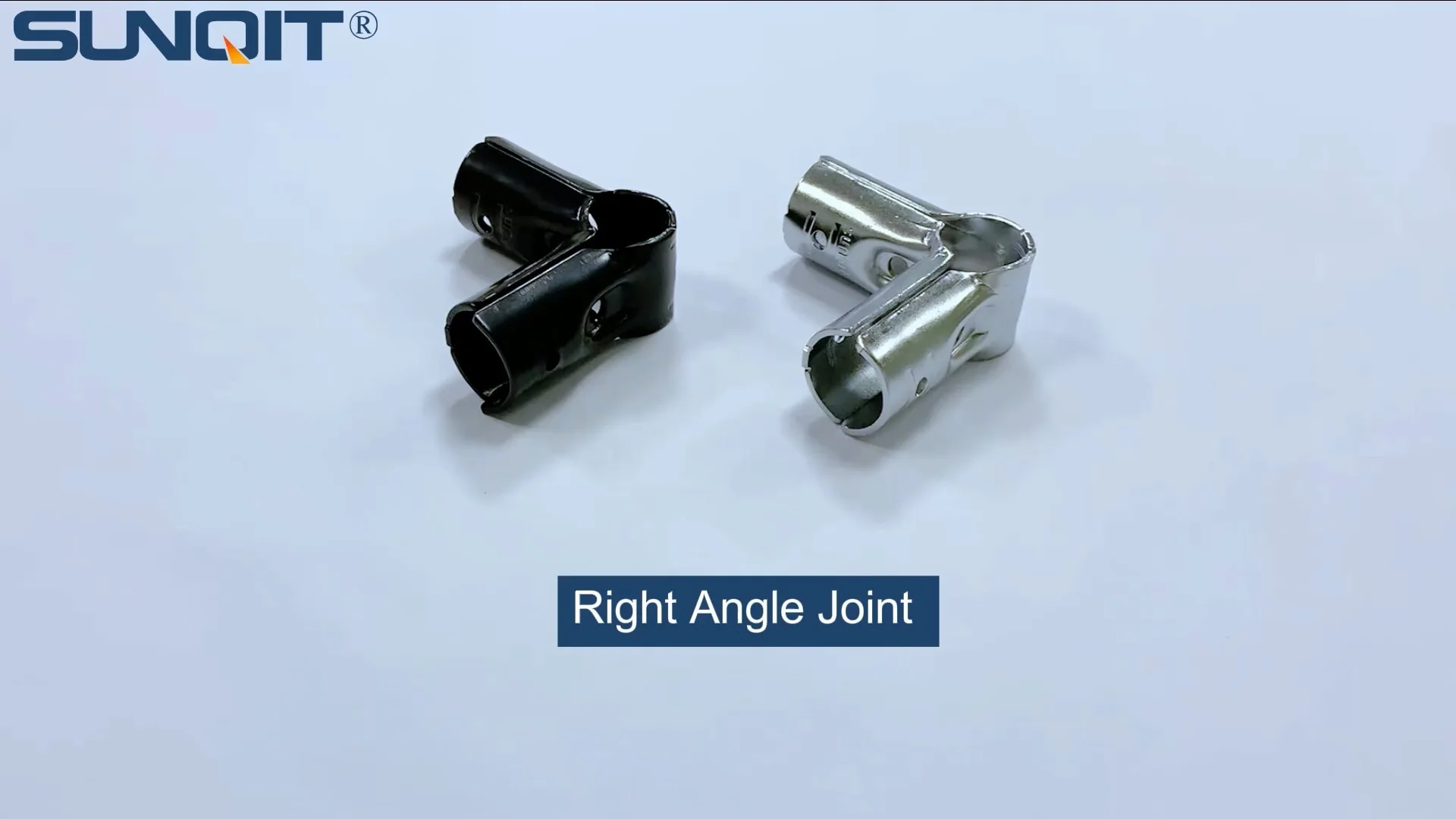
In the bustling world of manufacturing, where every second counts and efficiency is the name of the game, there's a silent workhorse that often goes unnoticed: the humble lean pipe joint. While production lines, conveyor belts, and high-tech machinery steal the spotlight, it's the small, unassuming components that hold everything together—quite literally. Today, we're shining a light on one such unsung hero: the three way lean pipe joint. If you've ever walked through a factory floor, admired a neatly organized workshop, or wondered how teams reconfigure workspaces in a snap, chances are this little joint played a big role.
Lean manufacturing isn't just a buzzword; it's a philosophy built on eliminating waste, streamlining processes, and empowering teams to adapt. At the heart of this philosophy lies flexibility—and that's where lean pipe systems, and their connecting joints, come into play. Whether you're building a workbench, a turnover trolley, or a complex flow rack, the joints you choose determine how quickly you can adjust, how much weight your structure can bear, and how seamlessly your team can collaborate. So, let's dive in: what exactly is a three way lean pipe joint, and why does it matter in the world of lean systems?
Defining the Three Way Lean Pipe Joint: The Backbone of Flexible Structures
Let's start with the basics. A three way lean pipe joint is a specialized connector designed to link three lean pipes (also known as "lean tubes") at various angles, creating stable, multi-directional structures. Unlike simpler two way joints that connect two pipes in a straight line or 90-degree angle, the three way joint adds a third arm, allowing for branching in three directions. Think of it as the "T-junction" of the lean pipe world, but with the added versatility to adjust angles—some models even swivel or lock into place for extra stability.
These joints are typically made from durable materials like steel, often coated in chrome for rust resistance, or sometimes plastic for lighter-duty applications. Their design is deceptively simple: a central hub with three (or more) openings, each sized to fit standard lean pipe diameters (usually 28mm for traditional steel pipes or 30mm for aluminum variants). Inside each opening, you'll find a mechanism to secure the pipe—often a set screw, a spring-loaded pin, or a friction-fit design that tightens as the pipe is inserted. This simplicity is key: it means no welding, no complex tools, and no specialized training to assemble or disassemble.
But don't let the simplicity fool you. A well-made three way lean pipe joint can support hundreds of pounds, making it suitable for everything from lightweight material racks to heavy-duty workbenches. And because they're reusable, they align perfectly with lean principles: instead of building a fixed structure that becomes obsolete when your needs change, you can disassemble the joints, rearrange the pipes, and build something new—saving time, money, and resources in the process.
Design & Materials: Built to Last, Designed to Adapt
The magic of three way lean pipe joints lies in their design and material choice. Let's break down what makes them tick.
Materials Matter: Most industrial-grade three way joints are made from cold-rolled steel, which offers the perfect balance of strength and malleability. To protect against corrosion—especially in factories where moisture or chemicals are present—they're often chrome-plated. Chrome not only adds a sleek, professional finish but also acts as a barrier, preventing rust and extending the joint's lifespan. For lighter applications, like in cleanrooms or offices, you might find plastic three way joints, which are affordable and easy to handle but have lower load capacities.
In recent years, aluminum lean pipe systems have gained popularity, and with them, aluminum three way joints. These are lighter than steel, making them ideal for mobile structures like turnover trolleys, and they resist corrosion naturally, eliminating the need for plating. If you're working in an environment where weight is a concern—say, a warehouse where employees need to move trolleys by hand—aluminum joints are a game-changer.
Design Features for Flexibility: Not all three way joints are created equal. Some are "fixed," meaning their three arms are set at specific angles (e.g., 90 degrees for a T-shape, 45 degrees for a Y-shape), while others are "swivel" or "rotary," allowing the arms to pivot before locking into place. This adjustability is crucial for custom projects: imagine building a workbench with a side shelf that needs to angle upward slightly to prevent tools from sliding off— a swivel three way joint makes that possible without cutting pipes or welding.
Many joints also feature reinforced edges or ribbing around the hub to distribute weight evenly, preventing stress cracks under heavy loads. Some even have built-in slots or holes for attaching accessories like tool hooks, label holders, or cable management clips—turning a simple connector into a multi-functional component. It's these small details that make three way joints indispensable in lean systems: they don't just connect pipes; they enhance the functionality of the entire structure.

Core Functions: What Makes Three Way Joints Indispensable?
Now that we know what a three way lean pipe joint is, let's explore its core functions—the reasons it's a staple in workshops, factories, and warehouses worldwide.
1. Multi-Directional Connectivity: Building in 3D, Not Just 2D
The most obvious function of a three way joint is enabling three-dimensional structures. With two way joints alone, you're limited to flat, linear designs: straight lines, rectangles, squares. But add a three way joint, and suddenly you can build upward, outward, and at angles. Need a workbench with a vertical shelf on one side and a horizontal tool rack on the other? A three way joint connects the main workbench frame to both the shelf and the rack. Want a flow rack with a top level for incoming materials, a middle level for assembly, and a bottom level for finished products? Three way joints branch off the main support poles to create each tier.
This 3D capability is a game-changer for space optimization. In cramped factories where floor space is at a premium, building upward with the help of three way joints lets teams maximize vertical storage without sacrificing accessibility. It also opens the door to ergonomic designs: adjustable-height workbenches, angled conveyor tracks, and mobile trolleys with multiple shelves—all made possible by branching pipes in three directions.
2. Quick Assembly & Disassembly: Adapt in Minutes, Not Days
In traditional manufacturing setups, reconfiguring a workspace meant calling in the maintenance team, hauling out welding equipment, or even ordering custom metal brackets—processes that could take days, if not weeks. Three way lean pipe joints eliminate that hassle. Most models require no tools to assemble: you simply slide the pipes into the joint's openings, twist or tighten a set screw (often by hand, no wrench needed), and you're done. Disassembly is just as easy: loosen the screws, pull out the pipes, and the components are ready to be reused.
This speed is a cornerstone of lean manufacturing. When a new product line is introduced, or a team needs to rearrange their assembly station to reduce motion waste, they don't have to wait for external help. Employees on the floor can grab a handful of three way joints, some lean pipes, and reconfigure their workspace in an hour or two. It's empowerment in action—and it directly translates to reduced downtime and faster response to changing needs.
3. Load-Bearing Reliability: Strength Without the Bulk
Flexibility is great, but if a structure can't hold weight, it's useless. Three way lean pipe joints are engineered to balance flexibility with strength. A high-quality steel three way joint can typically support 200–300 pounds per arm, depending on the pipe material and joint design. That means you can load a workbench with heavy tools, stack boxes on a flow rack, or mount a conveyor belt on a structure held together by these joints—all without worrying about collapse.
The secret to their load-bearing capacity lies in their design: the central hub distributes weight evenly across all three pipes, so no single arm bears the brunt of the load. For extra-heavy applications, manufacturers offer "reinforced" three way joints with thicker steel or larger diameters, ensuring they can handle 500+ pounds. This reliability makes them suitable for everything from light-duty electronics assembly to heavy automotive parts storage.
4. Compatibility: Play Well With Others
Lean pipe systems are all about modularity, and three way joints are designed to play nice with other components. They work seamlessly with standard lean pipes (steel, aluminum, or even plastic), as well as a host of accessories: casters for mobile trolleys, roller tracks for material flow, workbench tops (wood, metal, or anti-static ESD surfaces), and even lighting or power strips. This compatibility means you can mix and match components to create custom solutions without being locked into a single brand or system.
For example, a three way joint can connect a vertical steel pipe (supporting a shelf) to a horizontal aluminum pipe (holding a roller track) and a diagonal plastic pipe (attaching a tool hook). This versatility is why lean pipe systems are so popular across industries: from food and beverage to aerospace, teams can design structures that fit their unique needs, using the same basic joints and pipes.

Types of Three Way Lean Pipe Joints: Finding the Right Fit
Not all three way joints are created equal. Depending on your project's needs—load capacity, adjustability, material type—you'll want to choose the right variant. Here are the most common types you'll encounter:
Fixed Angle Three Way Joints: Sturdy and Simple
As the name suggests, fixed angle joints have arms set at a permanent angle—usually 90 degrees (forming a "T") or 60/120 degrees (forming a "Y"). They're the most affordable and widely used option, ideal for straightforward structures like shelves, workbench frames, or vertical racks where angles don't need to change. Chrome-plated steel fixed joints are a workshop staple, offering durability and resistance to wear and tear.
Swivel/Rotary Three Way Joints: Adjust on the Fly
Swivel joints take flexibility up a notch: their arms can rotate 360 degrees around the central hub before locking into place with a screw or lever. This is perfect for projects where angles need to be precise or adjustable—think flow racks with sloped shelves (to let materials glide downward) or workbenches with tilting surfaces. Some swivel joints even have built-in angle markers, making it easy to replicate setups across multiple workstations.
Aluminum Three Way Joints: Lightweight and Corrosion-Resistant
Designed for use with aluminum lean pipes, these joints are lighter than steel versions, making them ideal for mobile structures like turnover trolleys or temporary workstations. Aluminum naturally resists rust, so they're a great choice for humid environments (e.g., food processing plants) or cleanrooms where steel might corrode. They often feature a sleek, silver finish that blends well with modern workspaces.
ESD-Safe Three Way Joints: Protect Sensitive Electronics
In industries like electronics manufacturing, static electricity can damage sensitive components. ESD (Electrostatic Discharge)-safe three way joints are made from conductive materials (often steel with a special coating) that ground static charges, protecting products as they move through the production line. These joints are typically marked with ESD symbols and are used in conjunction with ESD workbenches and anti-static lean pipes.

Real-World Applications: Where Three Way Joints Shine
Talk is cheap—let's look at how three way lean pipe joints are used in real life. From the factory floor to the workshop, these joints turn simple pipes into powerful tools for efficiency.
Workbench Construction: Building the Heart of the Workshop
Workbenches are the center of daily operations for most teams, and three way joints are their building blocks. A typical lean workbench might use fixed three way joints to connect the vertical legs (supporting the structure) to horizontal rails (holding the worktop) and diagonal braces (adding stability). Swivel joints can then attach side shelves, tool racks, or overhead lighting, allowing teams to customize the workspace to their tasks. For example, an auto mechanic might add a 45-degree shelf above their bench to hold parts, using a swivel three way joint to angle it for easy reach.
ESD workbenches, used in electronics assembly, rely on three way joints to integrate anti-static surfaces, grounding straps, and ESD-safe roller tracks—all connected securely to prevent static buildup. And because the joints are tool-free, teams can reposition shelves or add new accessories (like a monitor mount) in minutes, adapting to new projects without disrupting workflow.
Turnover Trolleys and Racks: Moving Materials With Ease
Turnover trolleys (also called "material handling carts") are essential for moving goods around a facility, and three way joints make them both sturdy and customizable. A typical trolley might use fixed three way joints to build a rectangular frame (base, sides, and top), with swivel joints adding extra shelves at varying heights. Casters (wheels) attached to the base joints let the trolley roll smoothly, while a handle—connected via a three way joint—makes it easy to push.
For example, a warehouse team might use a turnover trolley with three levels (built using three way joints) to transport different sizes of boxes: large on the bottom, medium in the middle, small on top. When the needs change—say, they start handling longer items—they can disassemble the joints, remove the middle shelf, and reconfigure the trolley in 15 minutes. No need to buy a new trolley; just reuse the existing pipes and joints.
Flow Racks: Streamlining Material Flow
Flow racks are designed to move materials from "receiving" to "production" with minimal effort, using gravity to slide items along roller tracks. Three way joints are critical here, as they allow for branching lanes and tiered levels. For instance, a flow rack might have a main vertical support pole with three way joints at 12-inch intervals, each branching into a horizontal arm that holds a roller track. By angling the horizontal arms slightly downward (using swivel three way joints), materials glide forward as items are removed from the front—no manual lifting required.
In a distribution center, this could mean a flow rack with 10 lanes (each connected via three way joints) holding different SKUs, letting pickers grab items quickly without walking back and forth. In a manufacturing plant, it might be a small parts flow rack near the assembly line, with components sliding directly to the operator—reducing motion waste and speeding up production.
Three Way vs. Two Way vs. Four Way Joints: Which Should You Choose?
With so many joint types available, how do you decide when to use a three way joint over a two way or four way? Let's break it down with a quick comparison:
| Joint Type | Best For | Load Capacity (Typical) | Flexibility | Common Applications |
|---|---|---|---|---|
| Two Way | Straight lines, 90-degree corners, simple frames | 200–400 lbs per joint | Low (fixed angles only) | Basic shelves, table legs, straight conveyor rails |
| Three Way | Branching structures, multi-level shelves, T/Y-junctions | 150–350 lbs per joint (varies by design) | Medium to High (fixed or swivel angles) | Workbenches with side shelves, flow racks, turnover trolleys |
| Four Way | Complex 3D structures, central hubs with multiple branches | 100–300 lbs per joint (more arms = lower per-arm capacity) | High (often swivel or multi-angle) | Large storage racks, overhead tool systems, multi-directional flow racks |
The takeaway? Three way joints strike the perfect balance between flexibility and simplicity for most mid-sized projects. They're not as limited as two way joints, but not as overkill (or expensive) as four way joints for basic setups. If you're building something with branches in three directions—like a workbench with a shelf and a tool rack—stick with three way. For straight lines, use two way. For complex hubs (like a central pole with four shelves), opt for four way.
Why Three Way Joints Matter in Lean Manufacturing: Aligning With Lean Principles
At this point, you might be thinking, "Okay, these joints are useful—but why are they so tied to lean manufacturing?" Great question. Lean principles focus on five key areas: value, value stream, flow, pull, and perfection. Three way lean pipe joints support all of these, making them more than just connectors—they're enablers of lean culture.
Eliminating Waste (Muda): The Power of Reusability
One of the biggest wastes in manufacturing is "overproduction" of fixed assets—building custom workbenches or racks that become obsolete when processes change. Three way joints eliminate this by making structures reusable. Instead of scrapping a workbench when you need a taller one, you disassemble the joints, add longer pipes, and rebuild. This reduces waste in materials, time, and money—core to lean's waste-reduction goals.
Empowering Teams (Jidoka): Letting Employees Own Their Workspace
Lean manufacturing isn't just about processes—it's about people. When teams can design and reconfigure their own workspaces using three way joints, they take ownership of their efficiency. A line worker might notice that a tool rack is too far away, so they grab a few joints and pipes, and within an hour, they've moved it closer—no need to file a request or wait for maintenance. This empowerment leads to happier, more engaged teams and a culture of continuous improvement.
Speeding Up Flow (Mura): Reducing Downtime
In lean, "flow" refers to the smooth movement of materials and information through the production process. When you can reconfigure a flow rack or workbench in minutes (thanks to three way joints), you reduce downtime during changeovers. For example, a bakery switching from producing muffins to cookies can adjust their cooling racks using three way joints to fit the new tray size, cutting changeover time from 2 hours to 30 minutes. Faster flow means more output—and more value for customers.
Real-World Success: How a Small Manufacturer Used Three Way Joints to Boost Efficiency
Let's put this all into context with a real story. Meet "TechWorks," a small electronics manufacturer with 50 employees, specializing in custom circuit boards. A few years ago, their assembly line was struggling with two issues: workbenches were too small for new, larger boards, and material flow was slow—components had to be fetched from a distant storage room, wasting time.
Their solution? Lean pipe systems, centered around three way joints. First, they replaced their fixed wooden workbenches with modular lean pipe workbenches. Using three way joints, they added extendable side shelves (for tools) and overhead racks (for component bins), doubling the usable space per workstation. Swivel three way joints let them angle the shelves toward the operator, reducing neck strain.
Next, they built flow racks near the assembly line using three way joints and roller tracks. Components now slide directly to each workstation, eliminating 15-minute trips to the storage room. The best part? When TechWorks landed a contract for even larger boards six months later, they didn't need new workbenches—they simply loosened the three way joints, added longer pipes, and extended the work surfaces. Total cost for the initial setup: $2,000 (pipes, joints, and accessories). Estimated savings in labor and downtime: $15,000 per year.
This is the power of three way lean pipe joints: they turn small investments into big returns, all while keeping teams agile and adaptable.
Caring for Your Three Way Joints: Tips for Longevity
Like any tool, three way lean pipe joints need a little care to last. Here are simple tips to keep them in top shape:
- Clean Regularly: Wipe joints with a dry cloth to remove dust and debris, especially if they're in a dirty environment (e.g., woodworking shops). For chrome-plated joints, a quick polish with a metal cleaner can prevent tarnishing.
- Check for Wear: Over time, set screws can loosen or the inner grip surfaces can wear down. Inspect joints monthly—if a pipe wiggles in the joint, tighten the screw or replace the joint if it's stripped.
- Avoid Overloading: Each joint has a maximum load capacity—don't exceed it! If you need to support heavier items, use reinforced joints or add extra support pipes.
- Store Properly: If you're not using joints, store them in a dry place to prevent rust. A simple bin or tool chest works—just keep them organized so you can find the right type quickly.
The Future of Three Way Lean Pipe Joints: Lightweight, Smart, and Sustainable
As manufacturing evolves, so do lean pipe systems—and three way joints are keeping up. Here are a few trends to watch:
Aluminum Dominance: Lighter, corrosion-resistant, and eco-friendly, aluminum lean pipes and joints are growing in popularity, especially in industries like aerospace and medical device manufacturing where weight and cleanliness matter.
Smart Joints: Imagine joints with built-in sensors that alert you when a pipe is loose or a structure is overloaded. While still in development, "smart" lean pipe systems could add a new layer of safety and efficiency.
Sustainable Materials: Manufacturers are experimenting with recycled steel and bio-based plastics for joints, aligning with global sustainability goals. Some companies even offer take-back programs for old joints, recycling them into new ones.
Conclusion: Small Joints, Big Impact
The three way lean pipe joint may be small, but its impact is huge. It's the quiet force that turns simple pipes into flexible workbenches, mobile trolleys, and efficient flow racks. It empowers teams to adapt, reduces waste, and aligns with the core principles of lean manufacturing. Whether you're a seasoned manufacturer or just starting to explore lean systems, understanding the role of three way joints is key to building a workspace that's not just efficient—but ready for whatever the future brings.
So, the next time you walk through a factory or workshop, take a closer look at the structures around you. Chances are, you'll spot a three way joint holding it all together—and now, you'll know just how much work that little connector is really doing.